What factors should be considered when choosing a floor cleaning method for commercial properties?
Choosing a commercial floor cleaning method depends on the floor material, type and severity of soiling, surface condition, safety requirements, drainage, access, drying time and maintenance schedule. The method should remove contamination effectively without damaging the surface or disrupting site operations, whether that means pressure washing, steam cleaning, scrubbing, soft washing or a targeted treatment.
The right commercial floor cleaning method is determined by the floor material, the type and severity of contamination, the condition of the surface, site safety requirements and the practical limits of the premises. A method must remove dirt, oil, algae, chewing gum, construction residue or other contamination effectively without damaging the surface, spreading pollutants or creating unacceptable disruption.
Assess the floor material first. Concrete, asphalt, block paving, natural stone, clay or concrete paving, resin flooring and tiled surfaces all respond differently to pressure, heat, chemicals and agitation. Sound concrete may tolerate a pressure-washing or rotary-scrubbing approach, whereas worn concrete, open joints or friable areas may require lower pressure and more controlled water use. Asphalt can soften or lose surface material if treated too aggressively. Resin coatings and painted floors may be marked, lifted or dulled by excessive pressure or unsuitable solvents. Natural stone may be porous, acid-sensitive or prone to etching, so the cleaning process and any treatment should be selected for the specific stone rather than assumed from its appearance.
The condition of the floor is as important as its material. Cracks, failed joints, loose blocks, spalled concrete, damaged coatings and areas of settlement can allow water or cleaning solution to penetrate beneath the surface. A pre-cleaning inspection should identify these defects, along with drainage channels, inspection covers, expansion joints and vulnerable edges. Cleaning should not be used to conceal defects that require repair. Where the surface is already degraded, a test area helps establish whether the proposed method is safe and gives a realistic indication of the achievable finish.
Identify the contamination and its cause. General dust and atmospheric soiling may need only mechanical agitation and controlled washing. Algae, moss and other biological growth often need physical removal followed by an appropriate biocide or treatment to reduce regrowth. Oil, grease and hydraulic-fluid residues usually require a suitable degreaser, sufficient dwell time and recovery of the contaminated wash water. Rust staining, cement residue, tyre marks, food deposits and chewing gum each need different techniques. Using a stronger chemical or higher pressure than necessary can damage the surface and may spread contamination across a larger area.
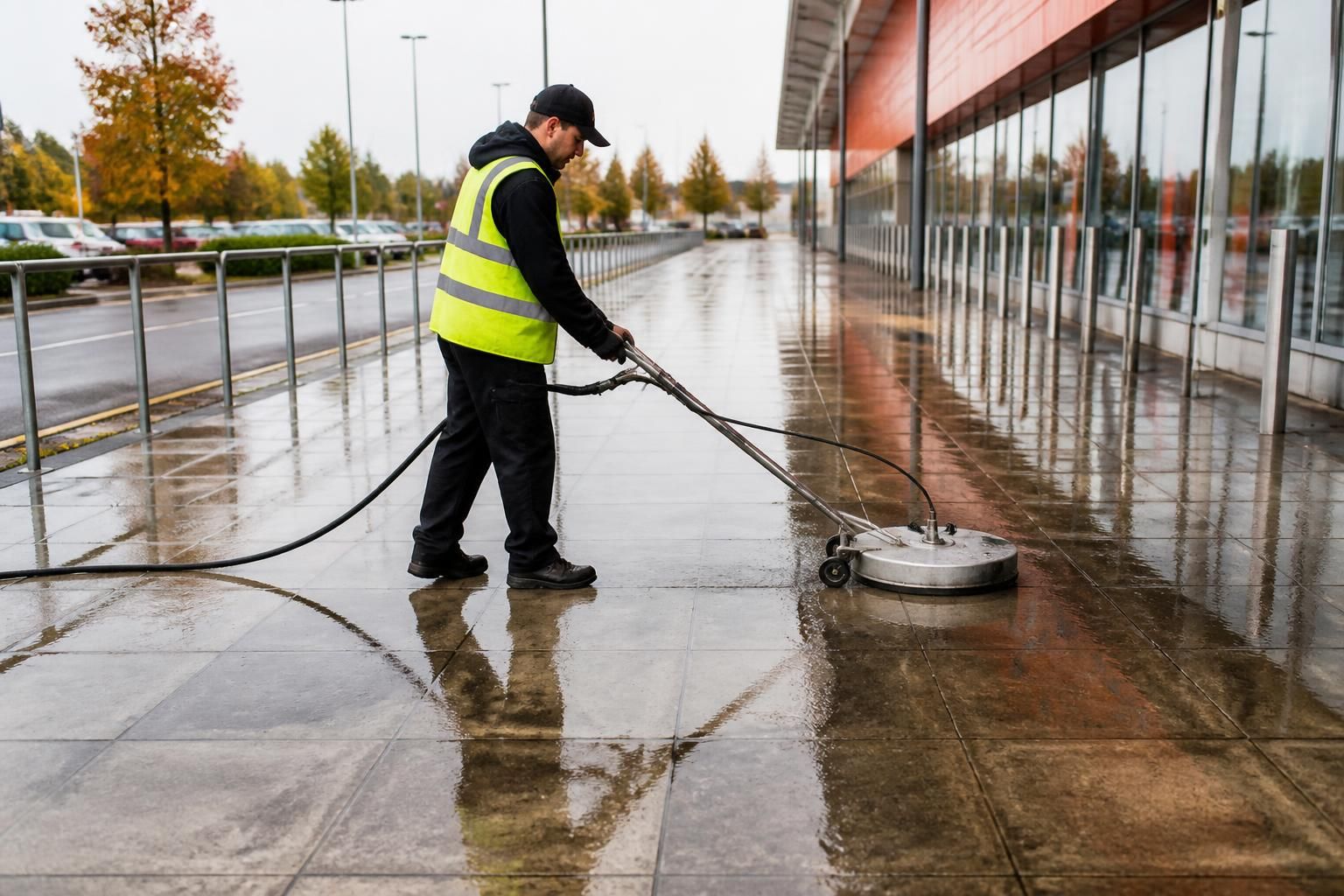
Consider whether the contamination is loose, bonded, porous or deeply embedded. A surface cleaner or rotary scrubber can provide a more even result on suitable hard-standing areas than a hand-held lance, while steam cleaning can be useful for targeted work, sensitive locations and certain deposits where reduced water use or controlled heat is beneficial. Steam is not automatically suitable for every floor: heat can affect coatings, sealants, joints and some synthetic materials. Soft washing or low-pressure application may be more appropriate for biological contamination on vulnerable surfaces, provided the treatment is compatible with the material and is thoroughly controlled.
Balance cleaning effectiveness with surface protection. Pressure should be selected according to the substrate, its condition and the required result. Excessive pressure can erode concrete, remove jointing material, mark paving, damage coatings and force water into cracks or building edges. Chemical products should be used at the correct dilution and allowed to work for the required time, rather than relying on increasingly aggressive pressure. A competent contractor will normally carry out a small test area, check the result once dry and adjust pressure, temperature, agitation or chemical choice before treating the full site.
Plan for health and safety. Wet floors create slip hazards, while hoses, cables, equipment and access machinery can obstruct pedestrian or vehicle routes. Cleaning may also produce spray, aerosol, noise and splashes that affect staff, visitors, residents or nearby work areas. The method should therefore be assessed alongside segregation, signage, barriers, personal protective equipment, traffic management and emergency access requirements. Where work takes place near loading bays, entrances, ramps or public routes, the sequence should maintain a safe alternative route and prevent people entering the cleaning area before the surface is safe to use.
Consider the substances that may be disturbed during cleaning. Bird fouling, waste residues, oil, chemical deposits and biological growth can present hygiene or environmental risks. The work plan should specify suitable containment, handling and disposal arrangements. Cleaning chemicals must not be allowed to enter surface-water drains unless the discharge is permitted and appropriately controlled. Where run-off could reach a drain, watercourse, planted area or neighbouring property, recovery equipment, drain covers, bunding or a low-water method may be necessary.
Check drainage and water management before work starts. External commercial floors often include falls, gullies, channels and drainage systems that may be partially blocked or unable to accept a large volume of water. A pressure-washing method may be unsuitable if wash water cannot be contained and recovered. This is particularly important where oil or other pollutants are present. The contractor should establish where water will flow, protect vulnerable points and confirm how slurry, sediment and contaminated water will be collected. Simply pushing dirty water towards a drain is not an adequate waste-management plan.
Access and site layout also influence the choice. The available water supply, electrical points, vehicle access, hose routes, working height, plant-room locations and restrictions on equipment may limit the practical options. Large car parks, yards and loading areas may suit mechanised scrubbing or pressure-washing equipment, while confined walkways, enclosed courtyards and congested service areas may need smaller equipment or a staged manual process. If specialist access equipment is required, the floor must be assessed for loading, stability and protection against damage.
Allow for drying time and business disruption. A method that leaves substantial standing water may be unsuitable outside an occupied entrance, on a busy walkway or in a facility that must reopen quickly. Drying depends on the weather, ventilation, shade, surface porosity and the amount of water used. Work may need to be scheduled during quieter periods, in sections or alongside temporary closures. Steam or low-water cleaning can sometimes reduce drying and run-off issues, but the best option depends on the contamination and surface rather than on the equipment alone.
Cleaning should be coordinated with the operation of the premises. Protect stock, vehicles, sensitive equipment, door thresholds, air intakes, electrical installations and finished façades from spray or chemical contact. Agree the work area, access restrictions, cleaning sequence and handover standard in advance. For industrial and construction sites, the method may also need to align with permit systems, induction requirements and other contractors working nearby.
Compare the full cost rather than the initial cleaning price. The assessment should include labour, equipment, water, chemicals, recovery and disposal, access arrangements, surface protection, traffic management, drying time and any closure or relocation requirement. A low-cost method that causes coating failure, joint loss, staining or repeated disruption may be more expensive over the life of the floor. Conversely, a highly intensive process is not necessarily better where routine maintenance could remove the contamination with less water, pressure and downtime.
The required finish should be defined realistically. Cleaning can remove soiling and some staining, but it may not restore areas affected by permanent abrasion, chemical attack, oil penetration, rust migration or failed coatings. Where a presentation standard is required, inspect the floor in representative conditions and agree what constitutes an acceptable result before the full clean. This prevents unsuitable expectations and helps identify areas that need repair, re-sealing or replacement rather than further cleaning.
Choose a method that supports ongoing maintenance. A one-off deep clean may be appropriate after construction, flooding, neglect or a contamination incident, but regular light cleaning is usually easier to control than allowing deposits to build up. The maintenance plan should reflect how quickly the site becomes dirty, the source of the contamination, seasonal algae growth, vehicle movements, pedestrian traffic and the floor’s tolerance for water and chemicals. It should also state when inspections, spot treatments, sweeping, scrubbing, pressure washing or biocide applications are appropriate.
For most commercial properties, the decision is best made after a site survey rather than from the floor type alone. The survey should record the substrate, defects, contamination, drainage, access, nearby assets, environmental controls, operating constraints and the intended cleaning standard. A test patch and a documented method statement can then confirm the safest combination of pressure, temperature, agitation, treatment, water use and recovery. This approach produces a cleaning method that is effective for the particular floor while protecting people, the property and the surrounding environment.
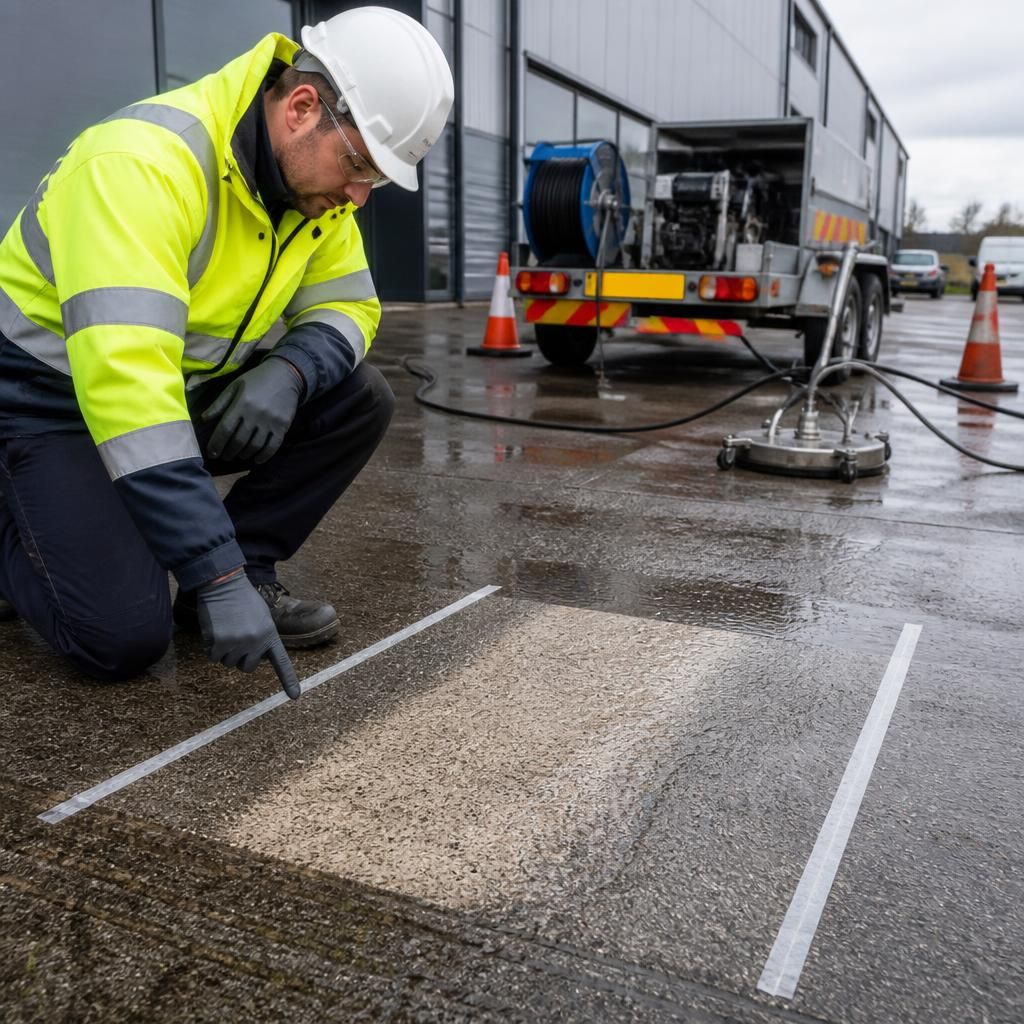
A test area is an important part of selecting a commercial floor cleaning method because it shows how the surface and contamination will respond before the whole area is treated. The trial should use the proposed pressure, temperature, agitation and cleaning products, then be assessed once the floor has dried.
This process can reveal problems that are not obvious during a visual inspection, including coating damage, colour change, joint erosion, water penetration or staining that cannot be removed by cleaning alone. It also helps confirm whether the planned finish is realistic and whether wash water can be controlled safely. The method can then be adjusted to protect the floor while achieving the required standard, reducing the risk of costly rework or disruption across the wider site.
Arrange a commercial floor cleaning assessment
Arrange a commercial floor cleaning assessment with Encanto Exterior Cleaning to review the surface, contamination, drainage, access and operating requirements. We can recommend a suitable cleaning method and confirm the practical controls needed for safe, effective work.
For a free quote & consultation
Contact usAccreditations