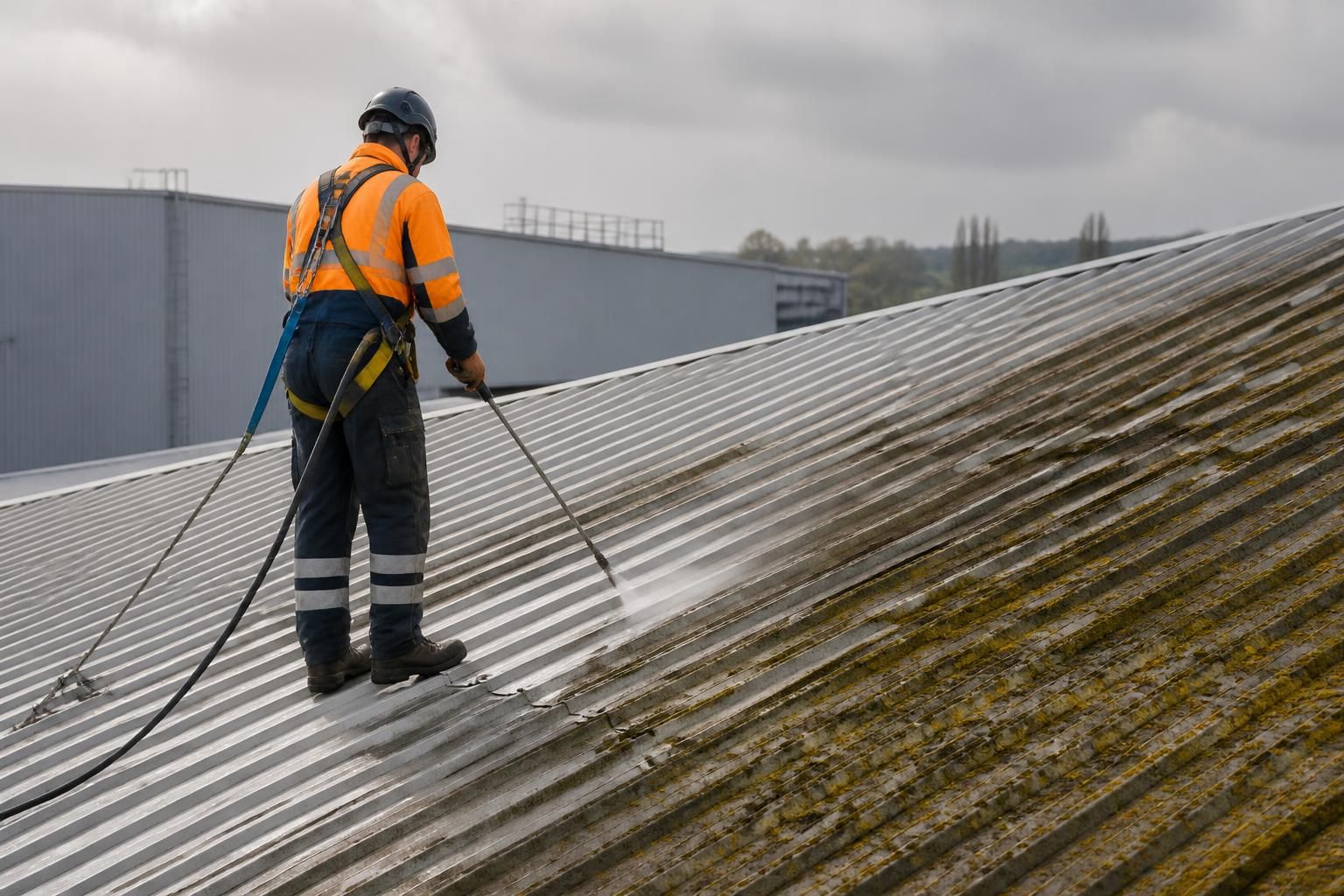
What are the benefits of using biocide treatments in roof cleaning?
Biocide treatments help control moss, algae, lichen and other organic growth on roof surfaces after cleaning, reducing the likelihood of rapid regrowth. They can also improve roof appearance, support longer-lasting cleanliness and help protect tiles and other roofing materials from moisture-retaining growth.
Biocide treatments are applied to roof surfaces to kill or suppress moss, algae, lichen and other organic growth after, or sometimes as part of, a cleaning programme. Their main benefit is that they continue working after visible contamination has been removed, helping to delay regrowth and maintain a cleaner, more presentable roof for longer than cleaning alone.
Roof cleaning removes established dirt and biological growth, but it does not always eliminate every microscopic spore or root structure from porous tiles, joints and surface imperfections. A suitable biocide helps address this residual contamination. It is not a replacement for proper cleaning, and it should be selected and applied according to the roof material, the type of growth and the surrounding environment.
- Longer-lasting moss and algae control: Treatment reduces the biological activity that causes moss, algae and lichen to return quickly. This is particularly useful on shaded or damp roofs where organic growth is likely to recur.
- Improved appearance: Removing staining and treating the remaining biological residue can restore a more uniform appearance across roof tiles, cladding and other suitable roof surfaces. This helps maintain the professional appearance of commercial and industrial premises.
- Protection from moisture retention: Moss and other growth can hold moisture against roofing materials. Over time, this may contribute to surface deterioration, blocked drainage paths and increased dampness around vulnerable areas. Controlling the growth helps reduce these risks, although it does not repair defective roofing.
- Reduced maintenance pressure: By slowing regrowth, a biocide treatment can extend the interval between intensive roof-cleaning visits. Ongoing inspections and planned maintenance are still important, particularly on large or heavily exposed buildings.
- Support for roof drainage: Moss and debris can migrate into gutters, outlets and drainage channels. Removing the growth and treating the roof can help reduce the amount of loose organic material reaching these areas. Gutters and outlets should still be checked and cleaned separately.
- Lower need for aggressive cleaning: Where the roof is suitable, chemical treatment can reduce reliance on repeated high-pressure cleaning. This may be beneficial for older, weathered or more delicate materials that could be damaged by excessive mechanical force.
The treatment process normally begins with a survey of the roof and surrounding areas. The condition of the covering, drainage system, access requirements and nearby vegetation must be assessed before any product is used. Existing moss may be removed manually or by a suitable low-pressure cleaning method, while ingrained staining may require a carefully controlled treatment approach. The biocide is then applied evenly at the correct concentration and allowed to work for the specified dwell time.
Some treatments produce an immediate visual improvement, while others continue breaking down organic growth gradually. Weather conditions are important: rain soon after application can dilute or wash away the product, whereas strong sunlight or wind can cause it to dry too quickly. An experienced contractor will plan the work around suitable conditions and follow the product manufacturer’s instructions.
Biocides are not suitable for every roof or every situation. Unsealed porous materials, coated surfaces, painted areas, metalwork and ageing roof coverings may require different products or application methods. A pre-cleaning inspection should identify loose tiles, damaged coatings, failed sealants, open joints and existing leaks. Cleaning and treatment cannot compensate for structural defects, and damaged areas should be referred for repair where necessary.
Responsible application is also essential. The work area should be controlled to protect people, vehicles, façades, windows, external plant, landscaping and watercourses. Run-off must be managed in accordance with the product instructions and applicable environmental requirements. Operatives should use appropriate personal protective equipment, safe access systems and suitable methods for collecting or controlling contaminated water where required.
Biocide treatment is most effective when combined with a practical maintenance plan. Regular inspections can identify early regrowth, blocked gutters, damaged tiles and drainage problems before they become more disruptive. Buildings surrounded by trees, exposed to persistent shade or located in damp conditions may need more frequent monitoring than open, well-drained roofs.
In summary, a correctly specified biocide treatment provides residual control of moss, algae and lichen, improves roof presentation, reduces moisture-retaining growth and can help limit the need for frequent intensive cleaning. The best results depend on accurate roof assessment, compatible products, controlled application and planned follow-up maintenance rather than treating biocide as a standalone solution.
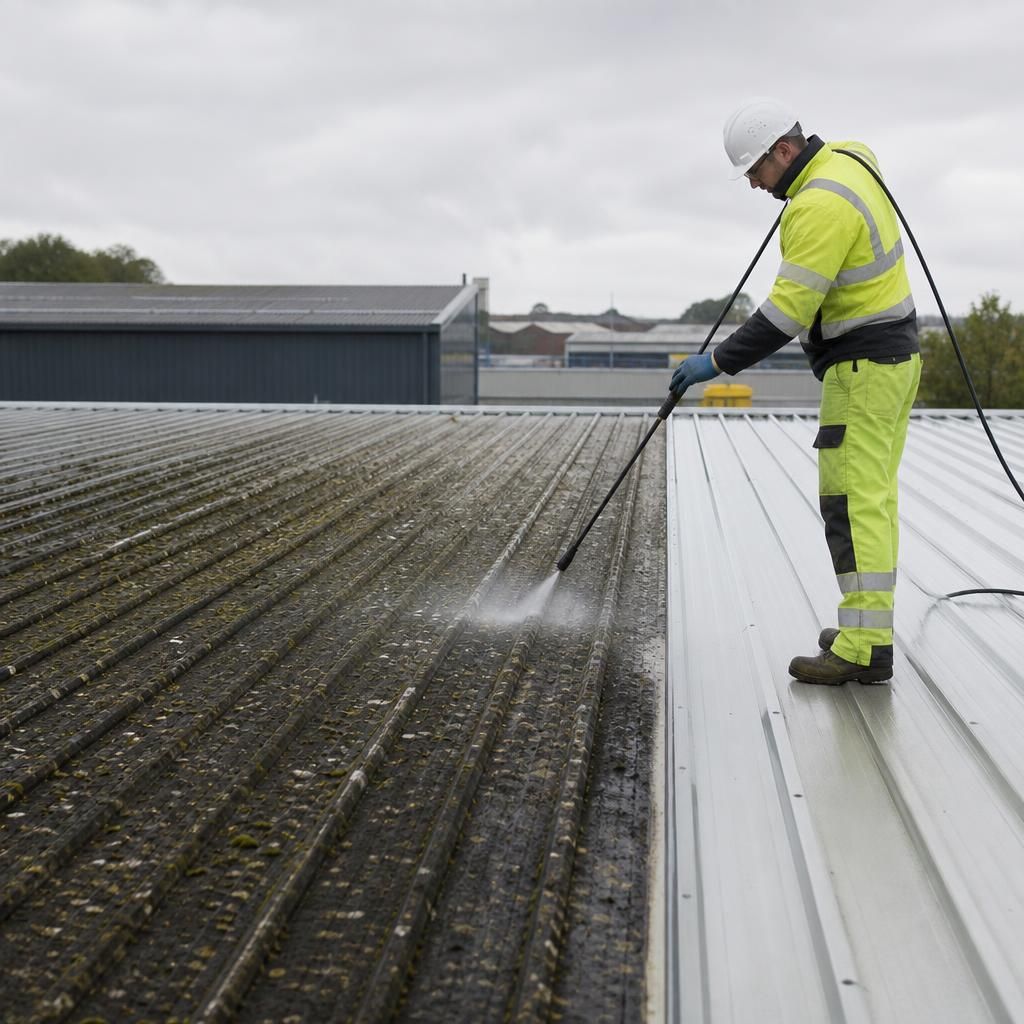
Biocide treatments provide residual control after roof cleaning by suppressing moss, algae and lichen that remain in microscopic traces on porous tiles and surface imperfections. This helps delay regrowth, particularly on shaded or damp roofs where organic growth can return quickly.
Applying the correct treatment can also reduce moisture-retaining growth and the need for repeated aggressive cleaning. It must be compatible with the roof material and applied in suitable weather conditions, with run-off controlled to protect surrounding surfaces, drainage systems and landscaping.
Arrange a Roof Assessment and Biocide Treatment
Arrange a roof assessment to confirm whether biocide treatment is suitable for your roof covering, existing growth and surrounding drainage. We can then recommend an appropriate cleaning and treatment plan for your property.

For a free quote & consultation
Contact usAccreditations