
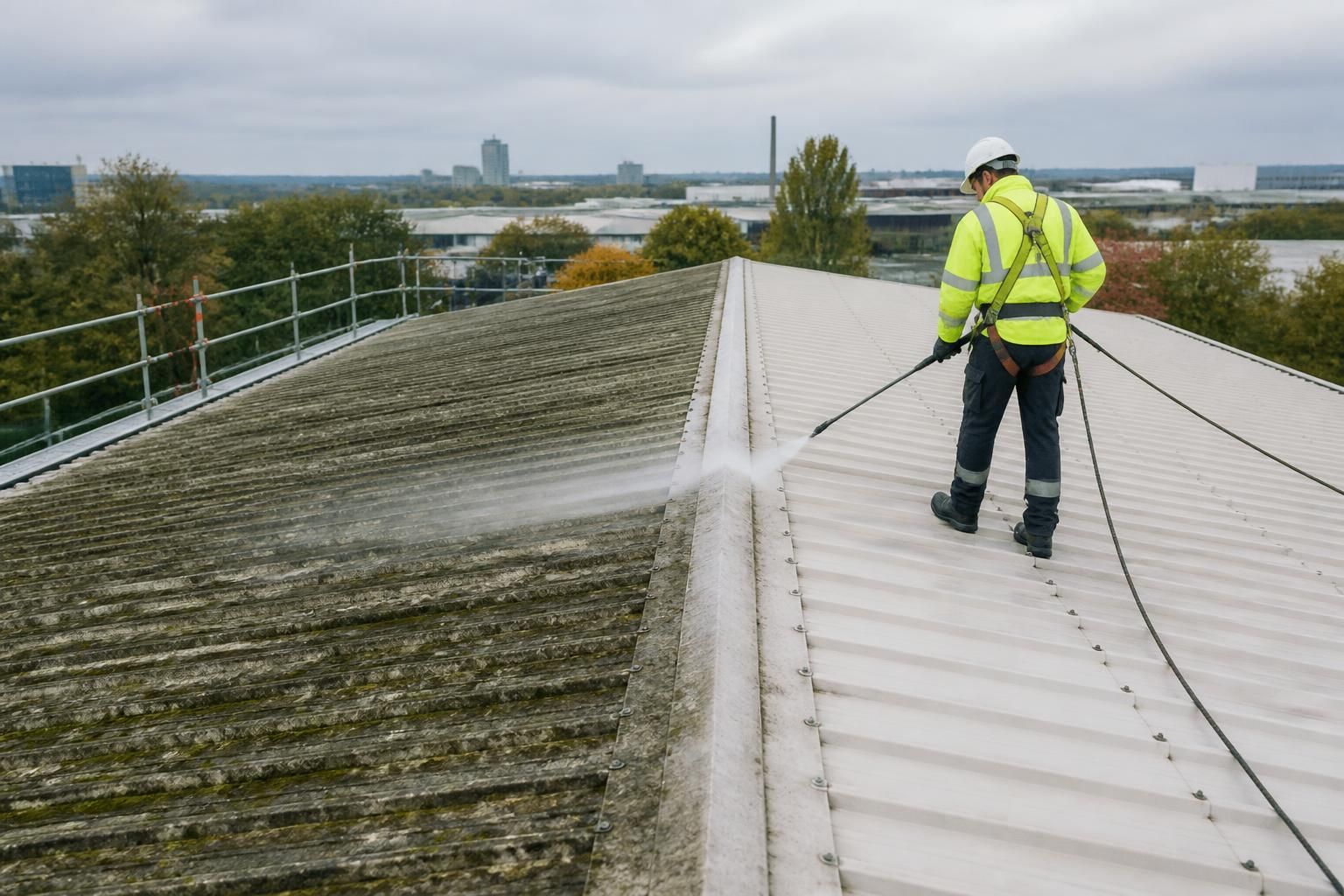
What roofing materials are suitable for soft wash roof cleaning?
Soft wash roof cleaning is suitable for many common roofing materials, including slate, concrete and clay tiles, metal roofing, asphalt shingles and coated roof surfaces. The cleaning solution and application method must be adjusted to the material and its condition, with particular care for aged, damaged, porous or manufacturer-restricted roofs; thatch and some fragile coverings may not be suitable.
Soft wash roof cleaning is suitable for many commonly used roofing materials, including slate, concrete and clay tiles, metal roofing, asphalt shingles and some coated roof systems. It uses a low-pressure application of a carefully selected cleaning solution rather than aggressive water pressure, but the treatment must still be matched to the roof covering, its age, condition and manufacturer’s guidance.
Slate roofing
Natural slate can often be soft washed to remove algae, moss staining, lichen and other organic growth. The low-pressure approach helps reduce the risk of breaking or dislodging slate compared with high-pressure cleaning. However, old slate may be brittle, delaminating or poorly fixed, so the roof should be inspected before cleaning. Particular care is needed around exposed nail holes, cracked slates, ridges, valleys and areas where previous damage has weakened the covering.
Concrete roof tiles
Concrete tiles are generally well suited to soft wash cleaning. Their textured surface can retain moss, algae and lichen, while pressure washing may remove surface coatings or force water beneath laps and junctions. A controlled soft wash can treat organic growth without relying on force to scour the tile. Heavily weathered concrete tiles may have exposed aggregate, surface erosion or weakened edges, so the solution strength and rinsing method should be adjusted accordingly.
Clay roof tiles
Clay tiles can also be suitable, provided they are sound and securely fixed. Soft washing is usually preferable to high-pressure cleaning on older clay roofs because excessive pressure can chip the surface, damage the profile or disturb overlapping tiles. Handmade, historic or highly porous tiles require a more conservative assessment, as their finish and condition can vary considerably.
Metal roofing
Metal roofs, including painted, plastisol-coated and other factory-finished systems, may be cleaned using a low-pressure soft wash method. The cleaning process must take account of the coating, corrosion, exposed fixings, joints and roof penetrations. Strong or unsuitable chemicals can affect paint, protective coatings, sealants and non-metal components. Rusting areas, damaged coatings and loose fasteners should be identified before treatment rather than concealed by cleaning.
Some metal roofs are particularly vulnerable to trapped moisture or galvanic corrosion where different metals meet. Run-off should therefore be controlled, and the cleaning solution should be compatible with the roof finish and surrounding materials.
Asphalt shingles
Asphalt shingles can often be treated with a suitable low-pressure solution to remove organic staining and growth. Pressure washing is generally inappropriate because it can dislodge granules, lift shingle edges and shorten the serviceable life of the covering. A soft wash should not be used to disguise shingles that are curling, split, blistered, missing granules or approaching the end of their life. Fragile shingles may need repair or replacement instead of cleaning.
Coated and membrane roof systems
Some coated roofs and low-slope membrane systems can be soft washed, but they need a material-specific assessment. The compatibility of the solution with the coating, membrane, insulation, seams, adhesives and drainage details must be confirmed before work starts. Ponding water, open seams, exposed insulation or failed detailing can make cleaning unsuitable until remedial work has been completed.
Flat roofs also require additional care because water can remain on the surface or enter through defective outlets and joints. Cleaning should not obstruct drainage routes, and contaminated run-off must be managed so it does not affect walls, paving, planting or neighbouring areas.
Materials requiring extra caution
Soft washing is not automatically suitable simply because it uses low pressure. Extra care or specialist advice may be required for:
- aged, cracked, delaminated or visibly unstable roof coverings;
- historic or listed roofs where the material and finish must be preserved;
- fragile or highly porous tiles;
- roof coatings with unknown chemical resistance;
- asbestos cement sheets or other potentially hazardous materials;
- thatch, green roofs and specialist living roof systems;
- roofs with failing flashings, open joints, damaged mortar or defective drainage; and
- surfaces affected by severe corrosion, structural movement or extensive water ingress.
Thatch is not normally treated using a standard soft wash process. Its structure, moisture behaviour and fire-safety requirements are different from those of tiled or metal roofs. Green roofs also need a specialist approach to protect plants, growing media, drainage layers and waterproofing.
How suitability is assessed
Before cleaning, the roof should be assessed for its material, age, surface finish, fixing condition, slope, access arrangements and existing defects. The surrounding areas also matter: windows, painted surfaces, render, gutters, plants, rainwater systems and external equipment may require protection from solution and run-off.
A suitable cleaning plan normally specifies the solution, dilution, application method, dwell time, rinsing requirements and precautions for the particular roof. The solution should be applied evenly at low pressure and allowed to work on organic contamination rather than removed through forceful jetting. Where appropriate, residual treatment may continue to reduce regrowth after the visible contamination has been removed.
Test applications are useful when the material, coating or staining is uncertain. They allow the cleaning contractor to check the surface response, confirm that the finish is not being adversely affected and establish an appropriate treatment strength before the full roof is cleaned. Manufacturer instructions should be followed where they are available, especially for coated metal, membranes and proprietary roof systems.
Condition is as important as material
Two roofs made from the same material may not have the same cleaning requirements. A relatively new, sound tile roof may tolerate treatment that would be unsuitable for an old, porous or damaged roof. Cleaning cannot restore failed waterproofing, repair broken tiles or correct poor installation. Defects found during the assessment should be recorded and dealt with separately where necessary.
In practical terms, slate, clay and concrete tiles, metal roofing, asphalt shingles and many coated surfaces are commonly compatible with soft wash roof cleaning when they are structurally sound and treated with an appropriate solution. The safest decision depends on a material-specific inspection rather than the name of the roof covering alone.
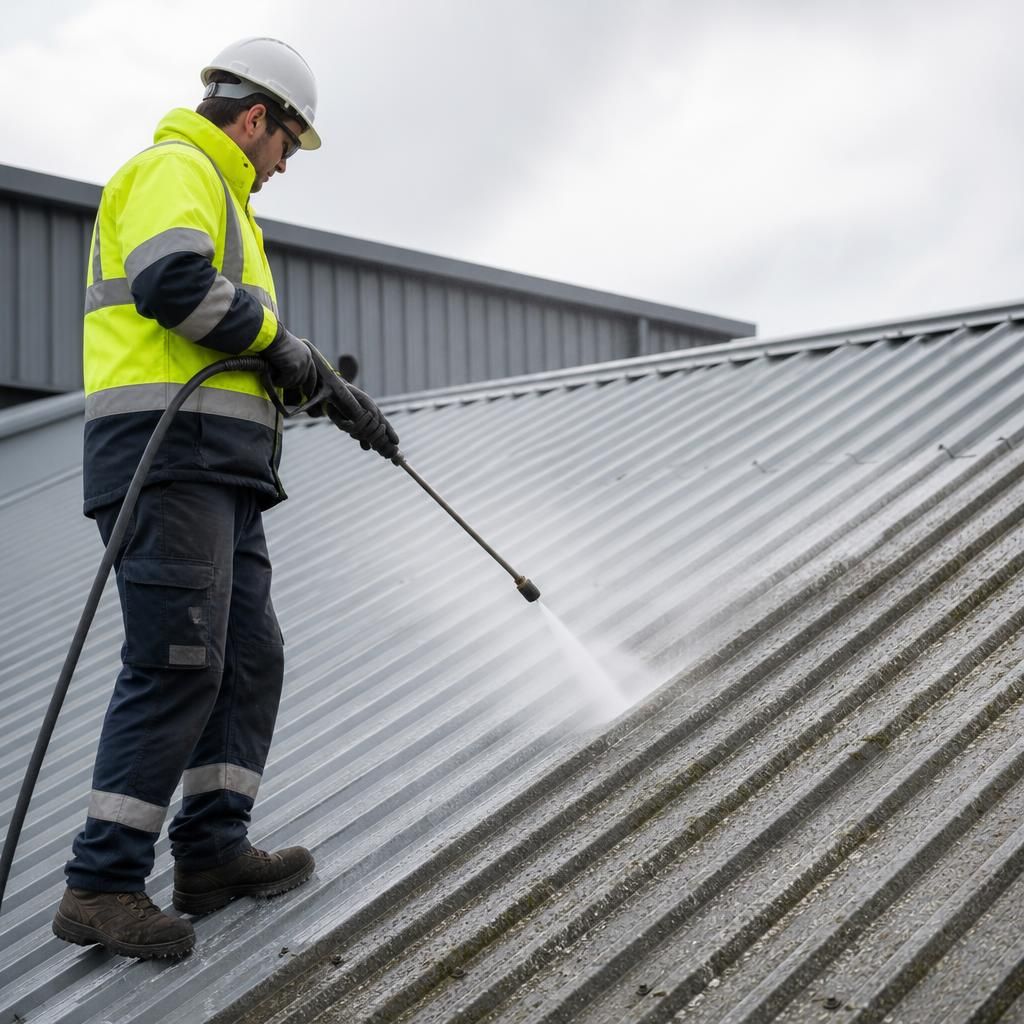
Soft wash roof cleaning is suitable for many sound slate, clay and concrete tile roofs, as well as compatible metal, asphalt shingle and coated roof systems. The low-pressure application removes organic growth without relying on forceful jetting, helping to reduce the risk of dislodging tiles, stripping granules or damaging protective finishes.
Suitability depends on the roof’s condition as well as its material. Cracked, delaminated, highly porous or poorly fixed coverings require a careful inspection and may need repair before cleaning. The solution should also be tested and adjusted for coatings, membranes, fixings, flashings and nearby surfaces so the treatment is effective without affecting the roof finish or surrounding property.