
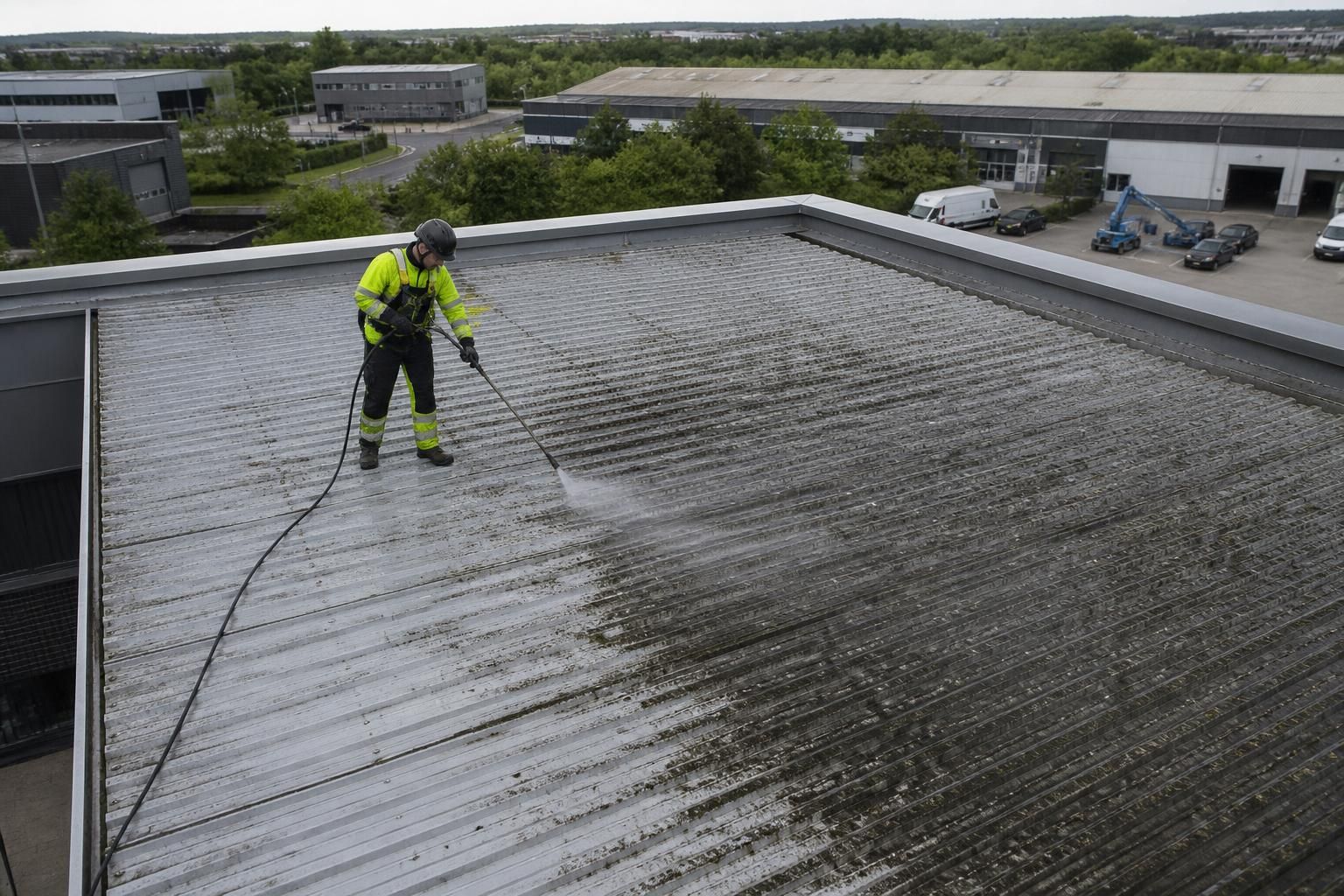
What measures should be taken to prepare a roof for the soft wash cleaning process?
Preparing a roof for soft wash cleaning involves inspecting the roofing material and condition, clearing accessible areas, securing or protecting nearby property, and confirming safe access. Windows and doors should be closed, outdoor furniture and vehicles moved away where possible, and any vulnerable plants or surfaces covered before the biodegradable cleaning solution is applied.
Preparing a roof for soft wash cleaning involves assessing the roof and surrounding property, removing or securing obstacles, protecting vulnerable surfaces, and confirming safe access before any cleaning solution is applied. The cleaning team should complete the technical preparation, including checking the roofing material, identifying defects, controlling runoff and selecting a suitable biodegradable treatment for the surface and level of organic growth.
A proper preparation process normally includes the following measures:
- Inspect the roof and identify its construction. The roof should be checked to establish whether it is tiled, slate, metal, felted, coated or made from another material. The condition of the surface, the type of contamination, areas of moss or lichen and any previous coatings should also be recorded. Soft washing is not a substitute for repairs, so cracked tiles, loose flashings, failed sealant, damaged membranes and unstable ridge or verge sections need to be noted before cleaning starts.
- Check whether the roof is suitable for treatment. A visual inspection from ground level and, where safe, from suitable access equipment helps determine whether the surface can withstand the proposed application method. Fragile, heavily weathered or defective materials may require a modified process, additional precautions or repair work before cleaning. The treatment should be selected according to the roofing material rather than applying the same solution and method to every roof.
- Arrange safe access. Roof cleaning should be planned around appropriate access equipment, such as scaffold, access platforms or other professionally selected systems. Ladders should not be treated as a substitute for a safe working arrangement on a large, steep or fragile roof. The team should consider roof pitch, height, nearby structures, overhead obstructions, ground conditions and safe positioning for hoses and equipment. Access routes should be kept clear so that cleaning can be carried out without unnecessary foot traffic on the roof.
- Clear accessible areas around the property. Garden furniture, tools, toys, bins, decorations and other loose items should be moved away from the working area where possible. Vehicles should be parked clear of the building, particularly beneath roof edges, valleys, downpipes and areas where rinse water or loosened debris may fall. Items that cannot be moved should be securely covered and protected.
- Close windows, doors and ventilation openings. Windows, doors, rooflights, air vents and other openings should be closed before application begins. Any openings that could allow solution or loosened debris into the building should be identified and protected. Commercial premises may also need temporary arrangements for air-intake systems, staff access points and delivery areas.
- Protect plants, lawns and external surfaces. Plants, shrubs, grass, painted surfaces, timber, decorative stone, signage and sensitive finishes near the building should be identified in advance. Suitable sheeting or temporary coverings may be used where appropriate, while plants can be pre-wetted and rinsed during the work to reduce contact with cleaning solution. Coverings should not be left in place in a way that traps solution, heat or moisture, and they must not create a trip hazard or restrict ventilation.
- Protect electrical and mechanical equipment. External lighting, electrical sockets, cameras, alarms, heat pumps, air-conditioning equipment and other exposed services should be located before cleaning. Sensitive equipment may need temporary protection or isolation by a competent person. Water and cleaning solution should not be directed into electrical fittings, ventilation systems or unsealed service penetrations.
- Check gutters, downpipes and drainage. Gutters should be inspected for blockages, loose sections and poor discharge arrangements. Debris removed from the roof can quickly obstruct gutters and outlets, so access for clearing them should be planned. Downpipe outlets and surface drains should be assessed to control runoff and prevent dirty water from collecting against walls, paths or neighbouring areas. Where necessary, temporary measures can be used to manage or collect discharge in accordance with site requirements.
- Agree how loose debris will be handled. Moss, lichen and accumulated organic matter may loosen during treatment. Protective sheets, collection methods and post-cleaning clearing should be agreed before work begins, particularly where the property borders a public footpath, car park, road or another building. Debris should not be allowed to obstruct access routes or enter drainage systems.
- Confirm water supply and site facilities. The team should establish where water can be obtained, whether a suitable connection is available and whether hose routes can be managed safely. On commercial or industrial sites, this should be coordinated with site management so that hoses do not cross busy walkways, loading areas or vehicle routes without suitable control measures.
- Consider weather and site conditions. Soft wash work should be scheduled when conditions allow the solution to be applied and controlled safely. Strong wind can cause overspray, heavy rain can dilute or move the treatment, and freezing conditions can create hazards on access equipment and surrounding surfaces. The work may need to be postponed if weather conditions prevent adequate control of the application or rinsing process.
- Make site users aware of the work. Residents, employees, visitors and neighbouring occupiers should be told when cleaning is planned. Access restrictions, temporary noise, wet surfaces, moving equipment and the need to keep windows closed should be communicated in advance. For commercial sites, the cleaning plan should account for deliveries, pedestrians, emergency routes and other ongoing activities.
Before work starts, the cleaning contractor should confirm the treatment method, the areas included, the expected appearance immediately after cleaning and any limitations caused by existing damage or permanent staining. Soft washing removes organic growth and surface contamination through a controlled application rather than relying on high water pressure. Some weathering, etched marks or discolouration may remain where the surface itself has deteriorated.
It is also important not to attempt repairs, apply sealants or remove fragile roof components without suitable training. If the inspection identifies loose tiles, damaged pointing, defective gutters or unsafe access, these issues should be referred to the appropriate qualified professional. Cleaning can then proceed once the roof and surrounding area are safe for treatment.
After preparation is complete, the team can protect adjacent surfaces, apply the selected solution evenly, allow the treatment to work for the required period and rinse or clear the area using a controlled method. A final inspection should check the roof, gutters, walls, windows, access routes and landscaped areas, with any remaining debris or runoff dealt with before the site is handed back.

Protecting the areas around the roof is an essential preparation measure before soft wash cleaning begins. Close windows, doors, rooflights and ventilation openings, and move vehicles, furniture, bins and other loose items away from the building. External lights, cameras, air-conditioning units, electrical fittings and other sensitive equipment should be identified and protected where necessary.
Plants, lawns, painted surfaces, timber, signage and decorative finishes near the work area may also require protection. Plants can be pre-wetted and rinsed during the work, while suitable temporary coverings can shield vulnerable surfaces from overspray and loosened debris. Gutters, downpipes and surface drains should be checked so that runoff and organic matter can be controlled without affecting walls, paths or neighbouring areas.