
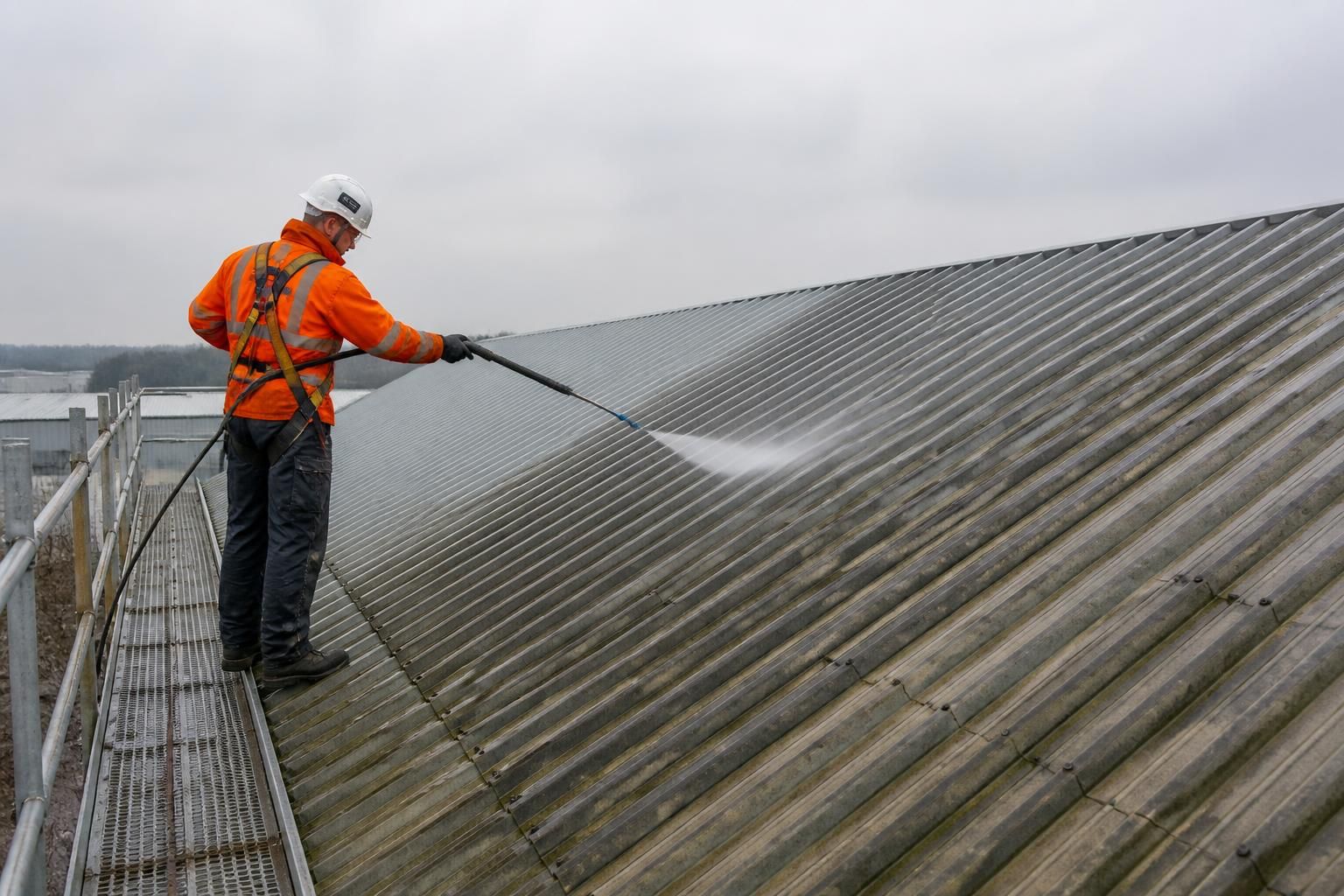
What materials or roof conditions are best suited for soft wash cleaning?
Soft wash cleaning is best suited to sound, water-resistant roofs such as concrete and clay tiles, slate, and many metal roofing systems, particularly where moss, algae, lichen or atmospheric soiling is present. It is also appropriate for older or more delicate surfaces that could be damaged by high pressure, provided the roof is structurally sound and free from serious defects, loose coverings or failed waterproofing.
Soft wash cleaning is best suited to sound, water-resistant roofs where moss, algae, lichen, bird fouling or general atmospheric soiling has built up. It is particularly useful for surfaces that could be marked, displaced or damaged by high-pressure cleaning, including concrete and clay tiles, slate and many metal roofing systems. The roof must still be structurally sound, with secure coverings, intact flashings and no significant water ingress.
Unlike pressure washing, soft washing uses a controlled application of cleaning solution with low-pressure rinsing where appropriate. The solution breaks down biological growth and organic staining rather than relying on force to remove it. This makes the method suitable for many established roofs, but it does not make an unsafe or defective roof safe to clean. A condition survey should always take place before work begins.
Roof materials commonly suited to soft washing include:
- Concrete tiles: These generally tolerate carefully controlled soft wash treatment, particularly when moss and algae have formed on the surface. Loose or badly weathered tiles require attention before cleaning.
- Clay tiles: Soft washing is often preferable to aggressive pressure washing, which can erode the surface, disturb overlapping tiles or force water beneath the covering. Older handmade or historic clay tiles need a particularly cautious assessment.
- Slate: Natural slate can be cleaned using a low-pressure approach where the slates are secure and not already delaminating, cracked or excessively fragile. The fixings, laps and roof edges should be checked carefully before access equipment or cleaning begins.
- Metal roofing: Coated steel, aluminium and other metal roof systems can often be soft washed to remove organic growth and surface dirt. The cleaning method must be compatible with the coating, sealants and fixings, and any exposed corrosion should be identified first.
- Some coated or profiled roof systems: Industrial and commercial roofs with painted or factory-applied finishes may be suitable, provided the coating is stable and the cleaning solution will not affect it. A small test area is useful where the finish or age of the coating is uncertain.
- Selected flat-roof membranes: Some single-ply, liquid-applied and other membrane systems can be cleaned with a suitable low-pressure process. Compatibility varies considerably, so the membrane specification, condition and drainage arrangements must be considered before treatment.
The most suitable roof conditions are usually:
- surface growth such as moss, algae, lichen or mildew that is attached to otherwise stable coverings;
- light to moderate atmospheric dirt, soot, bird fouling or organic staining;
- sound tiles, slates, panels or membranes that are firmly fixed in place;
- intact ridge tiles, verges, flashings, pointing and sealants;
- clear or serviceable gutters and outlets, so loosened contamination can be managed safely; and
- adequate access and weather conditions that allow the roof, surrounding elevations and drainage routes to be protected during cleaning.
A soft wash may be appropriate for an older roof because it avoids the mechanical force associated with conventional pressure washing. Age alone, however, is not a reason to proceed. Older coverings can have brittle fixings, hairline cracks, failed mortar, open laps or weakened coatings that are not obvious from ground level. These defects may worsen during access or rinsing, regardless of the cleaning method.
Soft washing is not a suitable remedy for a defective roof. Cleaning should be postponed or modified where there are widespread cracked, slipped or missing tiles, loose slates, active leaks, substantial corrosion, exposed underlay, failed waterproofing, unstable roof features or extensive coating loss. A roof requiring repairs should be made safe first, and cleaning should not be used to conceal defects or replace planned maintenance.
Extra care is required with thatch, untreated timber shingles, heavily deteriorated fibre-cement sheets, fragile heritage materials and roofs containing suspected asbestos. These surfaces may need a specialist assessment or a different maintenance approach. Fibre-cement sheets and other older products should not be disturbed until their composition is confirmed, particularly where cutting, brushing or water pressure could release hazardous fibres.
The cleaning solution must also be selected for the specific material and level of contamination. It should be applied in a controlled manner, allowed to work as intended and kept away from sensitive plants, watercourses, ventilation openings and vulnerable finishes. Run-off and rinse water need to be managed so that contaminated solution does not enter drainage systems or affect neighbouring property. On metal roofs and coated surfaces, compatibility testing helps prevent discolouration, coating damage or accelerated corrosion.
Before treatment, the roof should be inspected from ground level and, where safe, from suitable access equipment. The assessment should consider the covering, pitch, drainage, access points, rooflights, solar panels, plant, flashings and areas of existing damage. Photographs and a small test clean can help establish how the surface responds without committing the whole roof to treatment.
In practical terms, a stable tiled, slate or metal roof with biological growth is generally a strong candidate for soft wash cleaning. A roof with loose coverings, failed details or uncertain materials is not. Where the condition is borderline, the safest approach is to repair or isolate vulnerable areas, use the least aggressive effective process and agree any limitations before work starts.
After cleaning, the roof should be monitored for returning moss, blocked gutters, damaged tiles and failed joints. Removing overhanging vegetation and keeping drainage clear can reduce recurring contamination, while periodic inspections allow small defects to be addressed before the next cleaning treatment is considered.
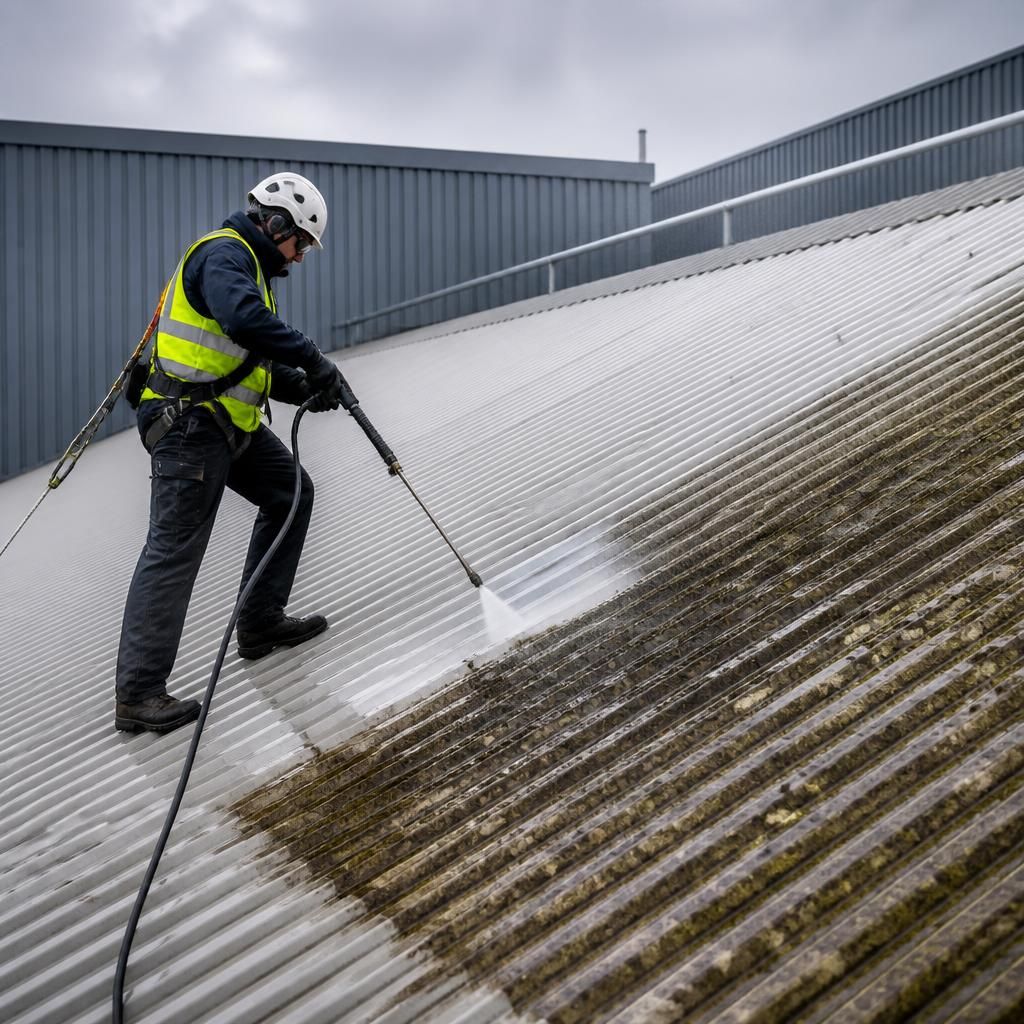
Soft wash cleaning is most suitable for roofs that are structurally sound but affected by moss, algae, lichen or general organic staining. Low-pressure application reduces the risk of dislodging tiles, damaging slate or disturbing protective coatings, while the cleaning solution breaks down growth without relying on force.
A condition assessment remains essential before treatment. Loose or cracked coverings, active leaks, failed flashings, severe corrosion and uncertain materials must be addressed first. The solution should also be checked for compatibility with the roof finish, sealants and drainage arrangements, particularly on coated metal roofs and membrane systems.