
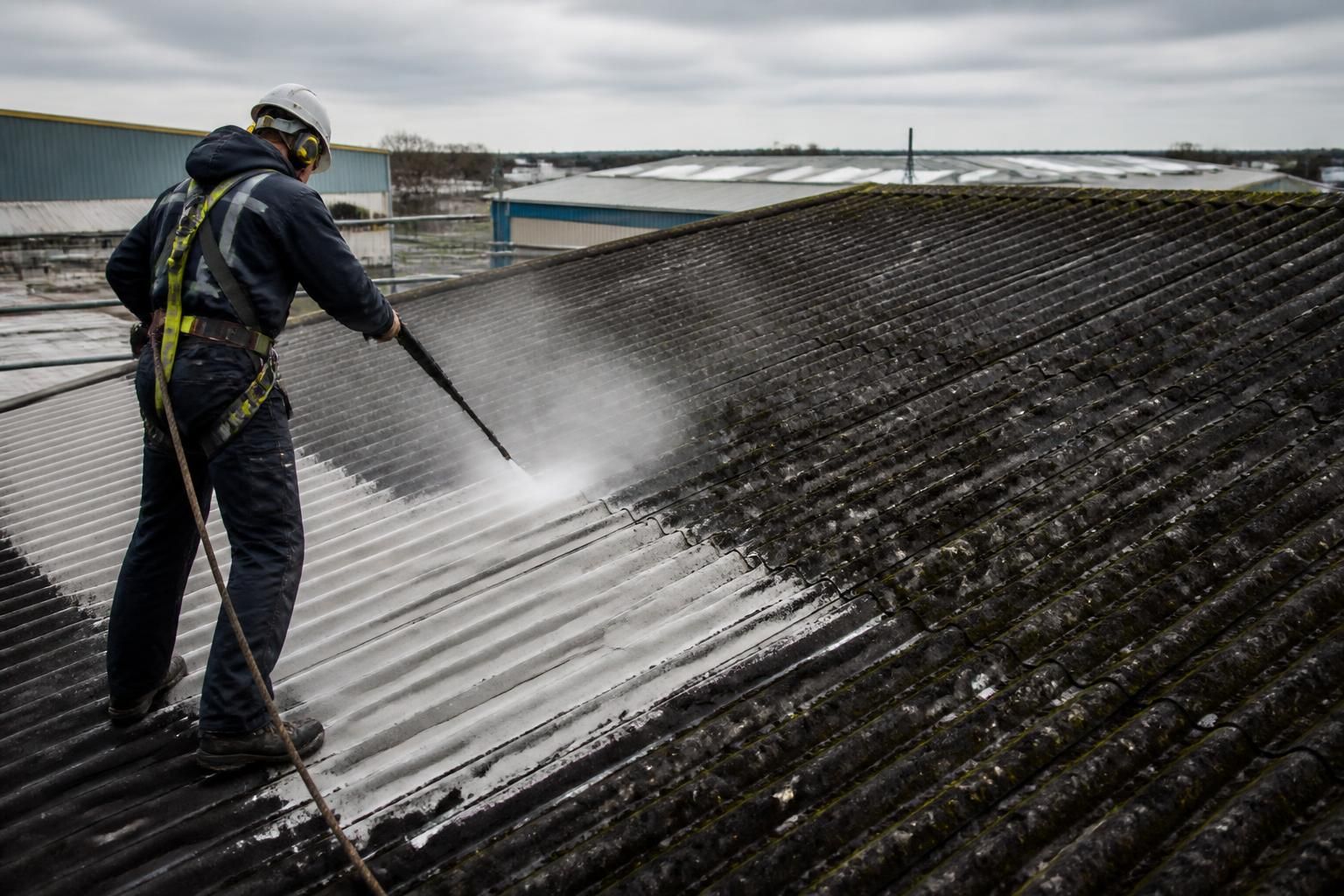
What is the difference between soft washing and pressure washing when it comes to cleaning roofs?
Soft washing uses low-pressure application of specialist cleaning solutions to remove moss, algae, lichen and organic staining, while pressure washing relies on a stronger water jet to clean the surface mechanically. For most roofs, soft washing is the safer and more suitable method because it reduces the risk of dislodging tiles, damaging protective coatings or forcing water beneath the roofing materials.
Soft washing is generally the safer and more suitable method for cleaning most roofs, while pressure washing relies on mechanical force and carries a greater risk of damage. Soft washing applies a specialist cleaning solution at low pressure to break down moss, algae, lichen and organic staining. The surface is then rinsed carefully. Pressure washing uses a concentrated, higher-pressure water jet to remove contamination from the roof surface, often without treating the underlying growth.
The main difference is how the contamination is removed. Soft washing targets the biological causes of staining, allowing the cleaning solution to loosen and kill organic growth before it is rinsed away. Pressure washing mainly blasts dirt and growth off the surface. This can produce an immediate visual improvement, but remaining spores and fragments may allow moss or algae to return if the roof is not treated afterwards.
Soft washing reduces the risk of physical damage. High-pressure water can dislodge or crack roof tiles, remove protective surface coatings, disturb pointing and force water beneath tiles, flashings or other joints. On concrete or clay tiles, it may erode the surface over time. On roofs with fragile, weathered or porous materials, these risks are particularly important. Pressure can also remove the granules from asphalt-based roofing products, weakening the exposed surface.
Low pressure does not mean that the process is less effective. The cleaning solution does much of the work by breaking down organic contamination. This means the operator does not need to rely on a forceful water jet to remove moss, lichen and algae. Some staining may continue to fade naturally after treatment as the solution acts on residual organic matter, rather than being forcibly removed in a single pass.
Pressure washing can have a role in carefully controlled situations, but it is not automatically suitable for every roof. A professional assessment should consider the roofing material, age, condition, pitch, previous repairs, protective coatings, areas of failed pointing and the location of roof membranes or insulation. Where pressure washing is appropriate, the pressure, nozzle, spray distance and direction of the water must be controlled to avoid driving water beneath the roofing system.
Soft washing is commonly considered for:
- concrete and clay roof tiles affected by moss, algae or lichen;
- roof surfaces where aggressive mechanical cleaning could remove a coating or finish;
- commercial and industrial buildings requiring controlled cleaning around façades, plant and access equipment; and
- roofs where reducing the risk of displaced tiles and water ingress is a priority.
It is not a universal treatment. The cleaning solution must be selected for the roofing material and existing condition. Metal roofs, coated systems, membranes, slate and older or damaged tiles may require different techniques, and some surfaces should not be treated until defects have been repaired. A roof inspection is therefore important before deciding between soft washing, pressure washing, steam cleaning or a combination of methods.
A typical soft wash roof-cleaning process starts with an inspection and preparation of the area. Gutters, outlets, vents, roof fixtures and vulnerable surrounding surfaces are identified and protected where necessary. The solution is applied evenly at low pressure, allowed to dwell for an appropriate period, and then rinsed using a controlled flow. Loose debris is removed safely, and gutters and drainage points are checked so that organic material does not obstruct the system.
Both methods require suitable access equipment, work-at-height controls and protection for people, vehicles, landscaping and drainage. Cleaning solutions must be handled responsibly, with runoff managed in accordance with the site and environmental requirements. Pressure washing also requires particular care because spray can travel onto façades, windows, signage and neighbouring areas.
In practical terms, pressure washing may appear quicker because it removes surface contamination immediately, but it can be unnecessarily aggressive for roofing. Soft washing is usually preferred where the objective is to clean the roof while preserving the tiles, coatings, joints and waterproofing details. The most appropriate method ultimately depends on the roof material and condition, but for moss, algae and lichen on a sound roof, a properly specified soft wash normally offers the better balance of cleaning performance, safety and long-term protection.
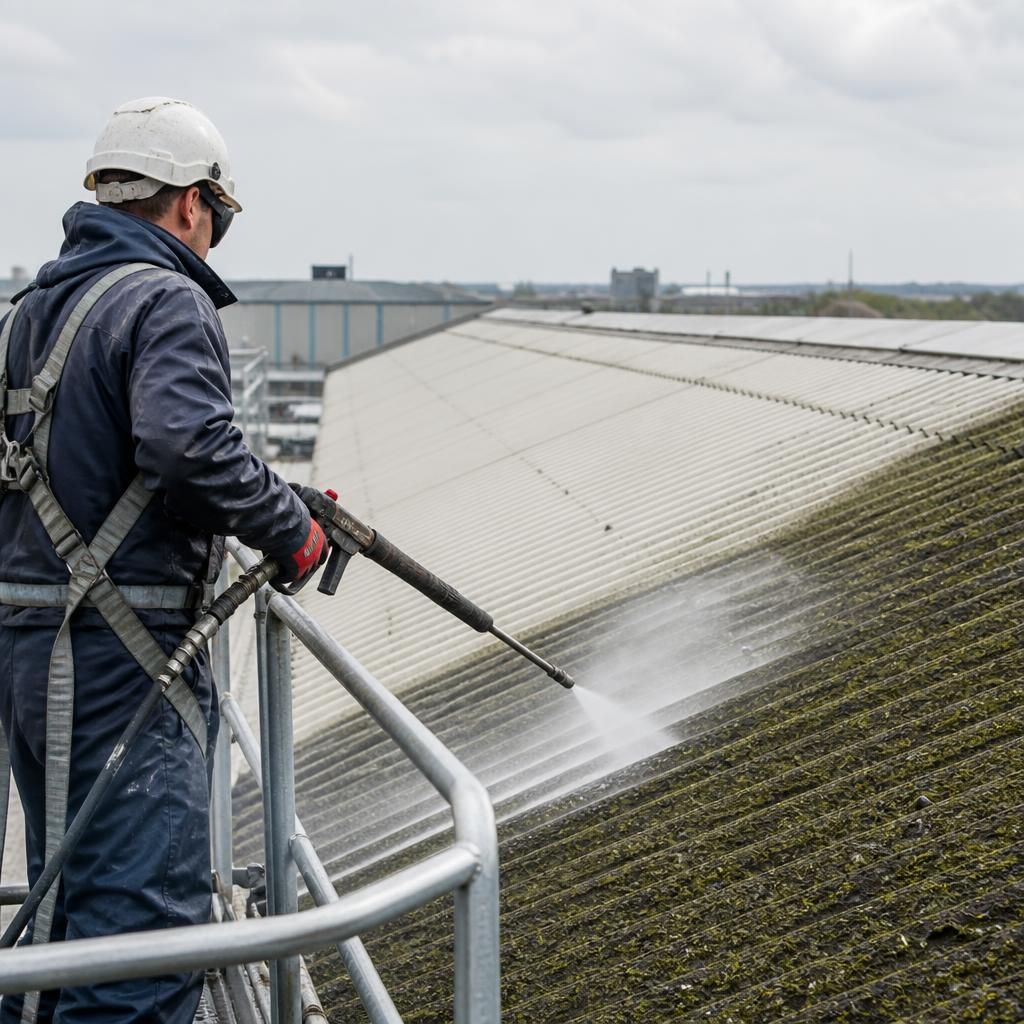
Soft washing cleans a roof with a low-pressure application of a suitable treatment solution, while pressure washing relies mainly on a forceful water jet. The solution breaks down moss, algae, lichen and organic staining so they can be rinsed away without placing unnecessary mechanical stress on tiles, coatings, pointing or roof joints.
Pressure washing can remove surface growth quickly, but it may dislodge weathered tiles, strip protective finishes or drive water beneath laps and flashings. It is therefore not automatically suitable for every roof. The roofing material, condition, pitch and any existing defects should be assessed before a method is selected. For sound tile roofs affected by organic growth, a correctly specified soft wash usually provides the safer balance of effective cleaning and material protection.