
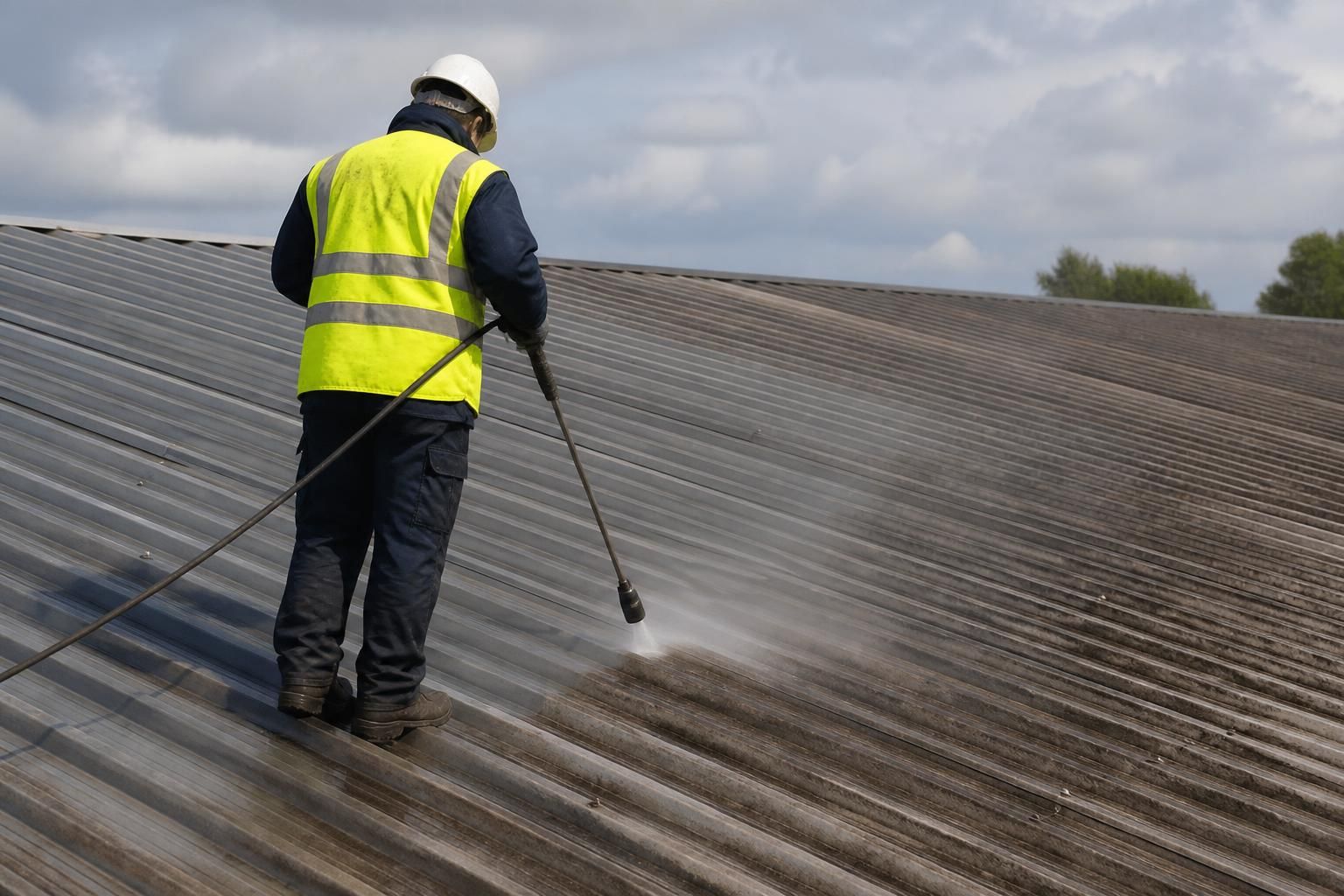
What are the environmental benefits of soft wash roof cleaning?
Soft wash roof cleaning can reduce environmental impact by using low-pressure application, targeted treatment and less water than high-pressure cleaning, while biodegradable solutions can break down moss, algae and lichen without relying on unnecessarily harsh chemicals. When runoff is controlled and cleaning solutions are selected and used responsibly, the process also helps protect surrounding landscaping, drainage systems and the roof itself from avoidable damage.
Soft wash roof cleaning can reduce the environmental impact of roof maintenance by using low-pressure application, targeted treatment and less water than conventional high-pressure washing. The process uses a suitable cleaning solution to break down moss, algae, lichen and organic staining, allowing these contaminants to be rinsed away without aggressive mechanical force. Its environmental performance depends on the products used, the quantity applied, and how wastewater and surrounding areas are managed.
Reduced water consumption
Soft washing generally requires less water than pressure washing because the cleaning solution does much of the work. A low-pressure application is applied evenly to affected areas rather than relying on a high-volume jet to remove every deposit mechanically. This can reduce water use, particularly where moss, algae and lichen have bonded to the surface and would otherwise require prolonged pressure washing.
Using less water also reduces the volume of contaminated runoff that needs to be controlled. However, water savings should not be assumed automatically. The result depends on the roof condition, the amount of organic growth, the equipment used and whether the roof requires a follow-up rinse. An experienced contractor will select the lightest effective treatment and avoid unnecessary repeated applications.
Lower risk of roof damage and material waste
High-pressure cleaning can dislodge protective surface coatings, force water beneath tiles or damage fragile areas such as weathered pointing, flashing and roof edges. Soft washing uses controlled pressure, helping to remove biological growth without subjecting the roof to the same mechanical stress.
Reducing avoidable damage has an environmental benefit because sound roofing materials are less likely to require premature replacement. Manufacturing, transporting and disposing of replacement tiles, sheets, membranes and associated materials all consume resources. Preserving a roof for its intended service life is therefore preferable to cleaning it in a way that creates additional repair or replacement work.
Soft washing is not risk-free, and it is not suitable for every roof condition without assessment. Loose tiles, failing coatings, damaged membranes and defective drainage should be identified before cleaning. The treatment method must be adapted to the roofing material so that environmental benefits are not undermined by preventable damage.
More targeted use of cleaning solutions
Soft wash treatments can be applied directly to affected roof surfaces rather than dispersing a strong jet across the entire building. This targeted approach helps limit the amount of product required and reduces unnecessary contact with walls, windows, vegetation and hard-standing areas.
Biodegradable or readily degradable products may be preferable where they are suitable for the type of contamination and roofing material. They are designed to break down more readily in the environment than persistent substances. This does not mean that every biodegradable product is harmless in concentrated form. Cleaning solutions can still affect plants, aquatic life, soil and drainage systems if they are over-applied or allowed to enter watercourses.
For that reason, product selection should consider more than the word “biodegradable”. The product label, safety data, dilution instructions and site conditions should all be reviewed. Solutions should be used at the lowest effective concentration, stored securely and kept away from surface water and unprotected planting.
Controlled runoff protects the surrounding environment
Roof cleaning can release moss fragments, algae, lichen, dirt and cleaning solution into gutters and downpipes. If this material is allowed to flow directly into storm drains, ponds, watercourses or planted areas, it can cause avoidable pollution or physical blockages. Responsible soft wash cleaning includes measures to control and monitor runoff throughout the work.
Typical precautions may include protecting vulnerable vegetation, checking the direction of drainage, collecting larger debris before treatment, managing gutter outlets and stopping work if conditions make runoff control unreliable. Rinse water should be directed appropriately and handled in line with site requirements and relevant environmental controls. The correct approach depends on the roof design, the cleaning product, local drainage arrangements and the condition of nearby land.
Rain and wind also need to be considered. Applying a treatment immediately before heavy rain can increase the chance of uncontrolled runoff, while strong wind can carry spray beyond the intended area. Scheduling the work in suitable weather is a practical way to improve control and reduce waste.
Less disturbance to nearby areas
Low-pressure application can reduce overspray, splashback and airborne debris compared with aggressive jet washing. This is particularly useful around landscaped areas, occupied commercial premises, neighbouring properties and sensitive building façades. Protecting plants and external surfaces reduces the need for additional washing or replacement work after the roof has been cleaned.
Soft washing can also reduce noise and vibration compared with some high-pressure methods. This may limit disturbance for occupied offices, retail sites, residential blocks, schools and public buildings, although access equipment, pumps and other machinery will still produce operational noise.
Improved long-term maintenance efficiency
Removing moss and other organic growth helps prevent it from retaining moisture against the roof surface. Moss can also obstruct gutters and encourage debris to collect, increasing the likelihood of overflowing water and damp-related maintenance issues. Keeping the roof and drainage system clear can support more efficient planned maintenance and reduce the need for reactive repairs.
This is an indirect environmental benefit rather than a guarantee of extended roof life. Soft washing cannot correct defective installation, storm damage, failed waterproofing or advanced material deterioration. A roof inspection should identify underlying problems so that cleaning is not used as a substitute for necessary repairs.
What makes soft wash cleaning environmentally responsible?
- Use a treatment appropriate for the roofing material and the type of organic growth.
- Apply only the quantity and concentration needed to achieve the cleaning objective.
- Use low-pressure equipment and avoid aggressive treatment of fragile or damaged surfaces.
- Protect plants, soil, façades, vehicles and other nearby assets before application.
- Prevent contaminated runoff from entering watercourses, ponds or unsuitable drainage systems.
- Plan work around suitable weather and stop if wind or rainfall makes control difficult.
- Inspect gutters, downpipes, roof edges and vulnerable details before and after cleaning.
- Follow product instructions, safety data and applicable site or environmental requirements.
Overall, the environmental benefits of soft wash roof cleaning come from combining lower-pressure methods with careful product selection, efficient water use and effective runoff control. The method is not automatically sustainable simply because it uses less pressure or a biodegradable solution. When properly assessed and managed, it can clean the roof effectively while reducing water demand, limiting chemical spread, protecting surrounding areas and avoiding the material waste associated with unnecessary roof damage.
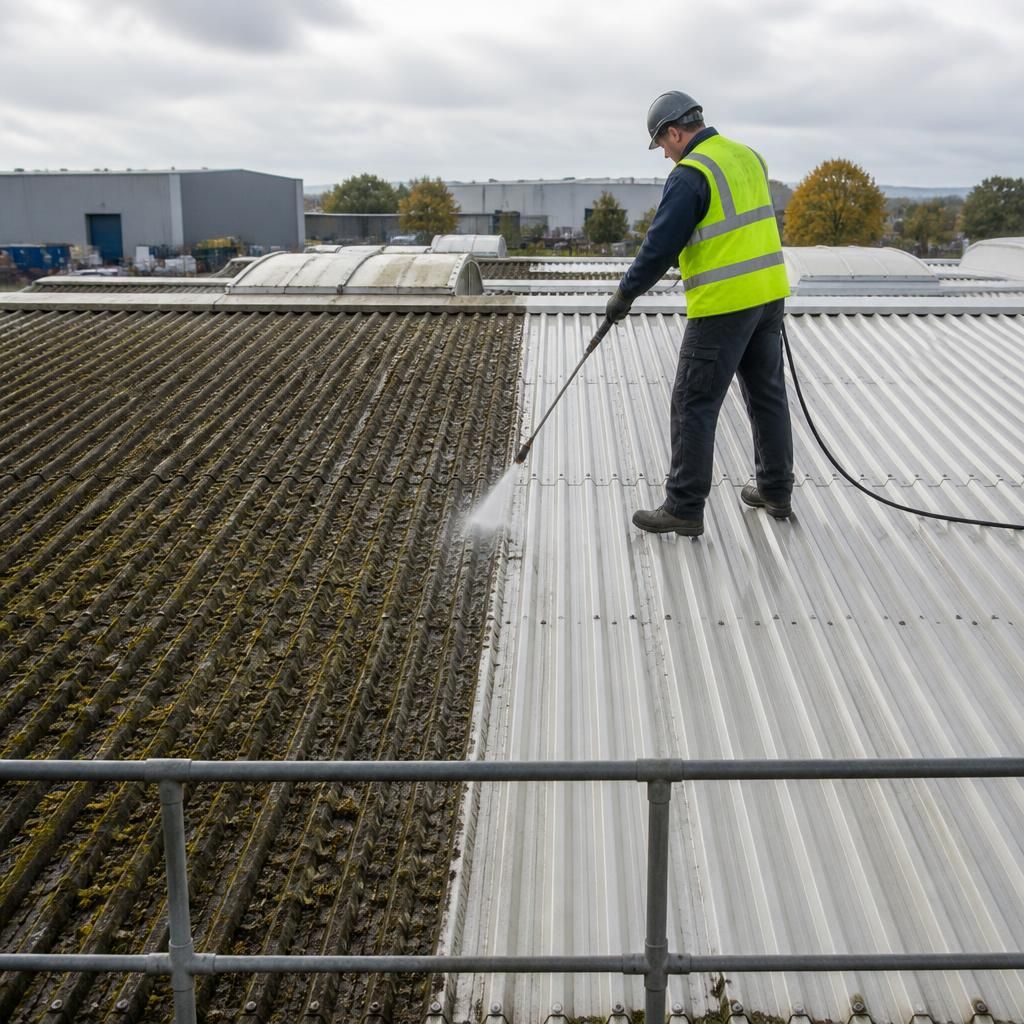
One important environmental benefit of soft wash roof cleaning is the reduced risk of avoidable roof damage. Low-pressure application treats moss, algae and lichen without the aggressive mechanical force associated with high-pressure washing, helping to protect tiles, coatings, flashing and roof edges where they remain in sound condition.
Preserving usable roofing materials can reduce the need for premature repairs or replacement. This helps avoid the additional resources involved in manufacturing, transporting and disposing of tiles, sheets and associated materials. The method still requires a roof assessment first, as damaged, loose or deteriorating surfaces may need repair rather than cleaning.
Arrange a Soft Wash Roof Cleaning Assessment
Arrange a soft wash roof cleaning assessment with Encanto Exterior Cleaning to review the roofing material, organic growth, drainage and surrounding areas. We can recommend an appropriate treatment and outline the measures needed to control water, products and runoff responsibly.