
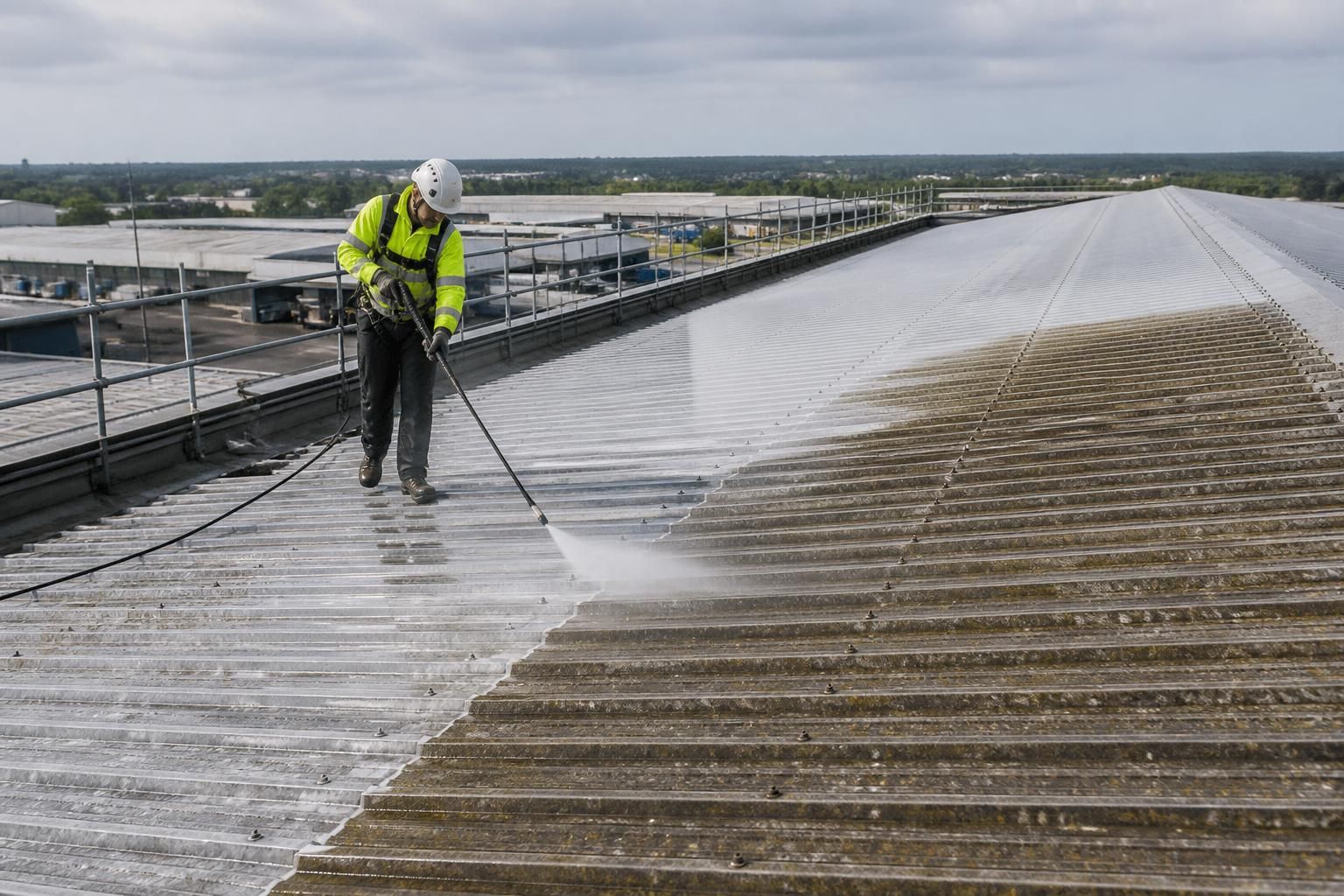
What are the environmental and long-term benefits of using a biodegradable solution in soft wash roof cleaning?
Using a biodegradable solution for soft wash roof cleaning helps reduce the persistence of cleaning chemicals in runoff, limiting potential harm to soil, plants and surrounding waterways when the work is properly controlled. It can also remove moss, algae and lichen without the aggressive pressure that may damage roofing materials, helping preserve the roof’s condition and extend its service life.
Using a biodegradable solution in soft wash roof cleaning can reduce the persistence of cleaning chemicals in the environment while helping remove moss, algae, lichen and organic staining without the physical wear associated with high-pressure cleaning. The long-term benefit is greatest when the solution is selected for the roofing material, applied at the correct strength and managed so that contaminated runoff does not enter drains, watercourses, soil or planted areas.
Biodegradable does not mean harmless in every circumstance. A product may break down more readily than a persistent chemical, but it can still affect plants, aquatic life, soil organisms or building materials if it is over-applied or allowed to run off uncontrolled. Responsible soft washing therefore combines a suitable biodegradable treatment with careful preparation, application and rinsing practices.
Environmental benefits
- Lower chemical persistence: A biodegradable formulation is designed to break down through natural biological processes rather than remain in the environment for an extended period. This can reduce the length of time residues remain in soil or on hard surfaces after cleaning.
- Reduced impact on surrounding areas: When overspray and runoff are controlled, a biodegradable solution can help limit potential exposure for nearby planting, lawns, soil and surface water. Guttering, downpipes, drainage points and vulnerable vegetation still need to be protected during the work.
- Less reliance on aggressive pressure: Soft washing uses chemical treatment and low-pressure application to loosen and kill organic growth. This avoids the concentrated mechanical force that can dislodge protective surface finishes, damage fragile tiles or drive water beneath roof coverings.
- Lower risk of displaced debris: Moss and lichen can be removed in a controlled way rather than being blasted across a site. This helps reduce the spread of contaminated wash water and loose material into adjacent areas.
- More controlled maintenance: Treating organic growth before it becomes dense can reduce the need for repeated intensive cleaning. Fewer disruptive cleaning operations may mean less water use, less equipment movement and fewer applications of treatment over the roof’s service life.
These benefits depend on site conditions. A biodegradable solution should not be discharged directly into a watercourse, storm drain or unprotected planted area. Before work begins, the cleaning plan should consider the roof pitch, weather, drainage layout, nearby ponds or streams, sensitive plants, neighbouring property and the type of roof covering. Runoff may need to be contained, collected, diverted or diluted in accordance with the site’s requirements and the product instructions.
Long-term benefits for the roof
- Reduced surface damage: Low-pressure application is generally gentler than pressure washing. It can remove organic contamination without unnecessarily eroding tile surfaces, stripping coatings or forcing water under laps, flashings and joints.
- Slower return of organic growth: A suitable treatment addresses the living growth rather than simply removing its visible surface. This can help keep tiles cleaner for longer, although the result varies with shade, moisture, nearby trees, roof orientation and the condition of the covering.
- Improved drainage: Moss and debris can obstruct gutters, valleys and outlets. Removing this material helps rainwater follow its intended route and reduces the likelihood of persistent dampness around roof edges and drainage components.
- Earlier identification of defects: Cleaning provides an opportunity to inspect for slipped or cracked tiles, damaged pointing, blocked gutters, deteriorated seals, exposed fixings and defective flashing. Finding these issues earlier can prevent a minor defect becoming a more extensive repair.
- Preservation of roof components: Organic growth retains moisture against surfaces. Keeping the roof clearer can reduce prolonged damp conditions that contribute to staining, frost-related deterioration, corrosion of unsuitable metal components and decay in adjacent timber elements.
A longer-lasting roof is also an environmental benefit because it can delay replacement. Extending the useful life of sound tiles or panels reduces the demand for new materials, transport, removal and disposal. This does not mean cleaning can compensate for a roof that has reached the end of its serviceable life. Soft washing should not be used to conceal structural deterioration, defective waterproofing or coverings that require replacement.
How the solution should be used responsibly
- Inspect the roof and identify the covering, existing coatings, defects and areas where water could enter the building.
- Check the product information and safety data to confirm that the biodegradable solution is suitable for the roof material and the surrounding environment.
- Protect or temporarily divert vulnerable vegetation, rainwater collection systems, air intakes, electrical equipment and other sensitive areas.
- Apply the solution at low pressure and at the manufacturer’s recommended concentration. More product is not necessarily more effective and may increase the risk of damage or runoff.
- Control the dwell time and monitor the treatment rather than allowing it to dry uncontrolled on glazing, painted surfaces, metals or plants.
- Manage runoff and rinse water in line with the site drainage arrangements and applicable environmental requirements.
- Inspect the finished roof and gutters, remove remaining debris where appropriate and record any defects that need separate repair.
Weather also affects environmental control. Strong wind can carry spray beyond the intended area, while heavy rain can create uncontrolled runoff before the treatment has worked. Cleaning should be postponed when conditions make application or containment unreliable. Care is particularly important near ponds, streams, public areas and properties with rainwater harvesting systems.
Biodegradable treatment is therefore one part of a lower-impact roof-cleaning approach, not a guarantee that no environmental controls are required. The most sustainable result comes from using the mildest effective method, avoiding unnecessary repeat treatments, protecting drainage and vegetation, and maintaining the roof before organic growth and water-management problems become severe.
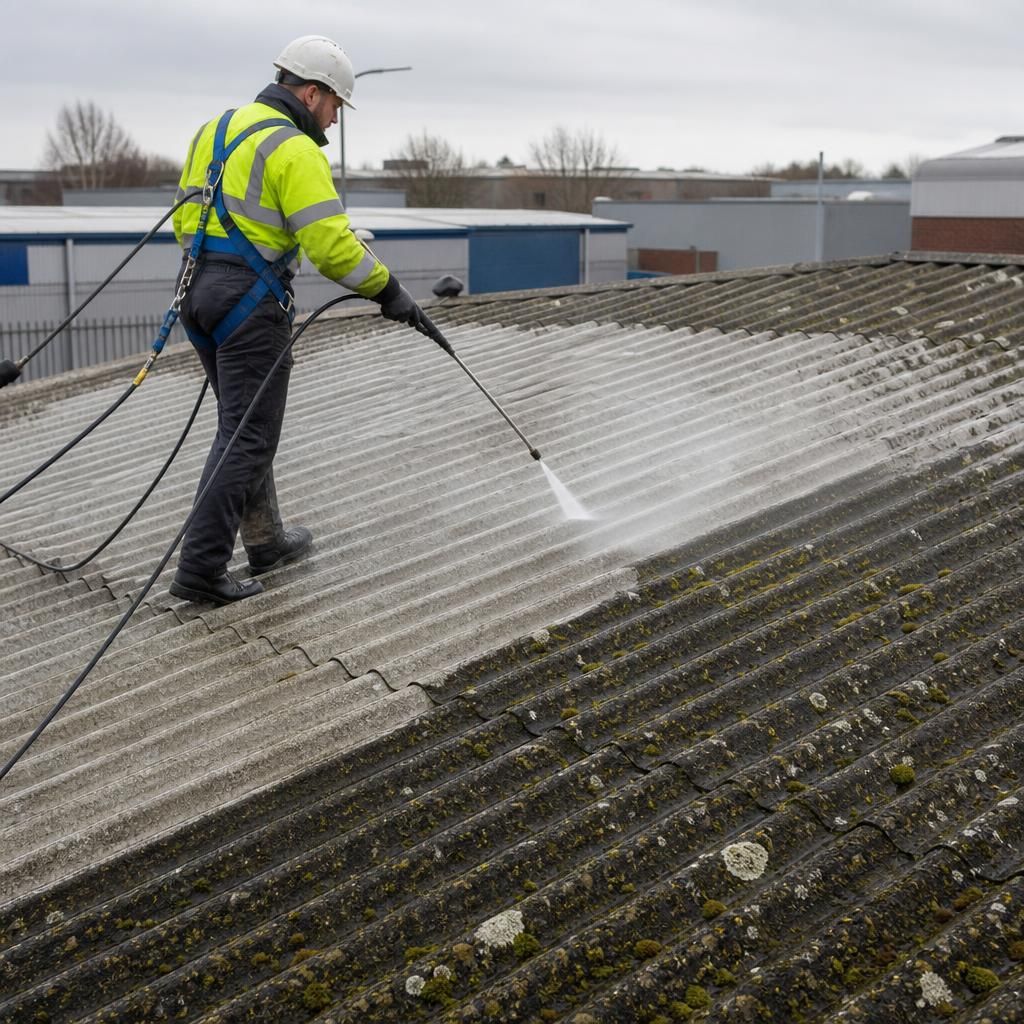
A biodegradable soft wash solution can support longer roof life by treating moss, algae and lichen without the aggressive force of high-pressure cleaning. Low-pressure application reduces the risk of eroding tile surfaces, disturbing protective coatings or forcing water beneath laps, flashings and joints.
Removing organic growth also helps prevent moisture being held against the roof covering and reduces blockages in gutters and outlets. When the treatment is suitable for the material and runoff is properly controlled, preserving sound tiles or panels can delay unnecessary replacement and reduce the environmental cost of manufacturing, transporting and disposing of new roofing materials. Biodegradable does not mean harmless, so vegetation, drainage and nearby watercourses must still be protected during application.