What are the benefits of using biodegradable solutions in soft wash roof cleaning?
Biodegradable solutions used in soft wash roof cleaning break down naturally after application, helping reduce the impact on surrounding soil, planting and drainage systems. They can also remove algae, moss and organic staining effectively with lower risk of surface damage than high-pressure cleaning, provided the solution is selected and applied correctly for the roofing material.
Biodegradable solutions in soft wash roof cleaning are treatments designed to break down naturally after use, while targeting algae, moss, lichen and organic staining without relying on high-pressure water. Their main benefits are reduced persistence in the environment, lower risk of damage to roofing materials and effective cleaning when the product, dilution and application method are matched to the roof.
Reduced environmental persistence
Unlike substances that remain unchanged for extended periods, a suitably biodegradable treatment can break down through natural biological and environmental processes after application. This can reduce the potential for persistent residues around the property, particularly when compared with unsuitable or unnecessarily harsh cleaning chemicals. It is still important to control runoff, as biodegradable does not mean that a solution is harmless to plants, aquatic life or drainage systems while it is concentrated.
Professional roof cleaning should therefore include protection for nearby planting, collection or controlled management of runoff where necessary, and careful application around gutters, downpipes, ponds and watercourses. Product instructions, safety data and local drainage requirements should always be followed.
Effective removal of organic growth
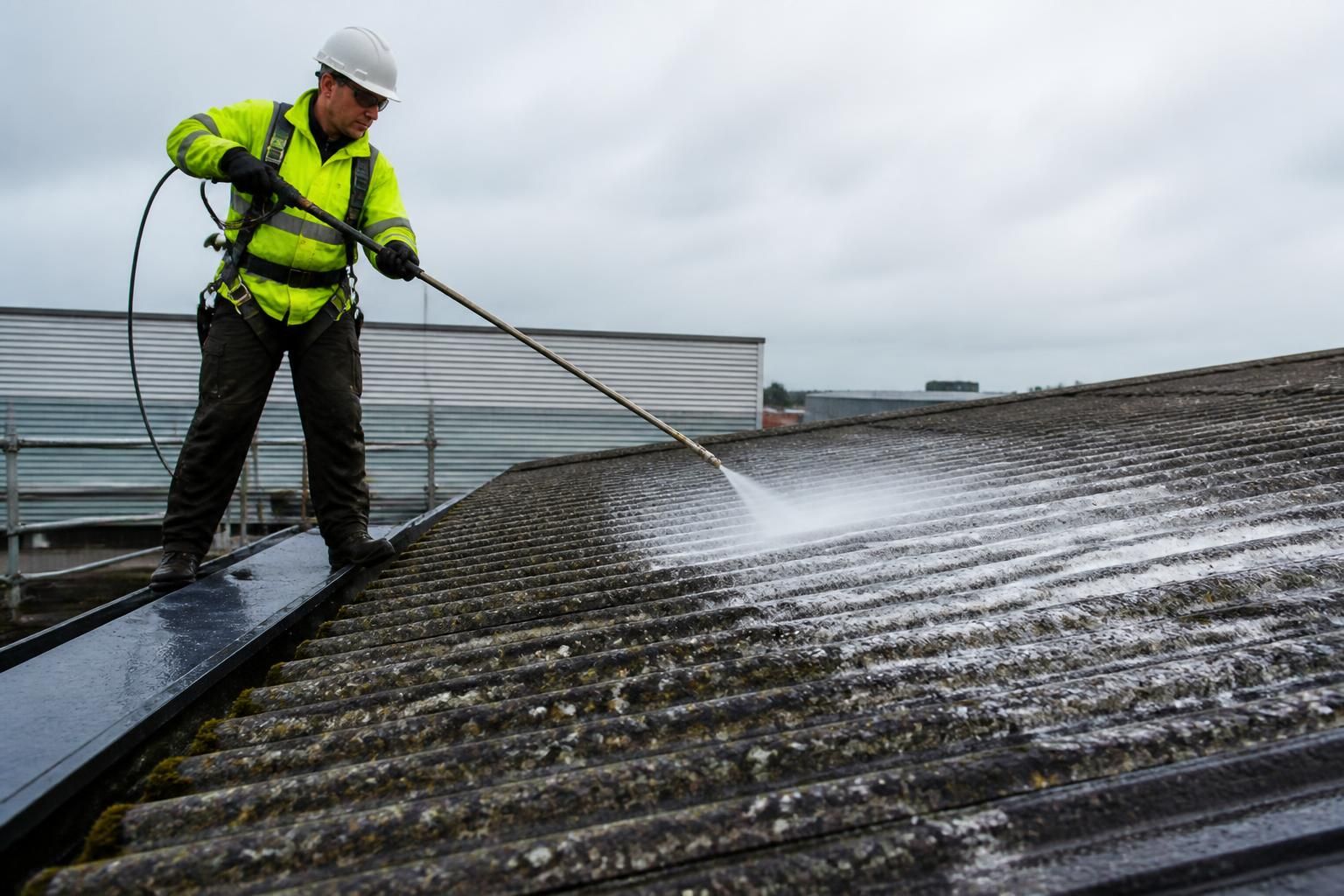
Soft wash treatments work by applying a cleaning solution at low pressure and allowing it to break down biological growth and staining. This avoids the need to rely on force alone. A biodegradable formulation can be effective against the organisms responsible for green, black or weathered staining, provided the roof is assessed correctly and the solution is given sufficient contact time.
Some growth may loosen immediately, while established moss and lichen can require further weathering or a follow-up visit. The purpose is not simply to make the roof look clean on the day; it is to treat the organic contamination without unnecessarily disturbing the surface.
Lower risk of surface damage
High-pressure cleaning can dislodge tiles, drive water beneath laps, remove surface finishes and accelerate wear on older or fragile roofing. Soft washing uses controlled pressure, so the cleaning action comes primarily from the treatment rather than from aggressive water impact. This is particularly useful for weathered tiles, coated surfaces and roofs where the substrate or fixings need to be treated carefully.
Biodegradability alone does not determine whether a product is suitable. The solution must also be compatible with the roofing material, existing coatings, sealants, flashings and adjacent surfaces. A professional assessment should identify cracked tiles, defective pointing, exposed underlay, damaged coatings and other conditions that cleaning may reveal or worsen.
Improved protection for surrounding areas
Correctly selected biodegradable products can help reduce the chemical burden on lawns, beds, soil and hard surfaces around the building. Before work starts, vulnerable vegetation should be identified and protected, and overspray should be kept away from windows, painted surfaces, vehicles and external equipment. Any product that reaches an unintended surface should be dealt with promptly in accordance with its safety data.
This preparation is as important as the product itself. Poor application, excessive concentration or uncontrolled runoff can create environmental and surface risks even when the label describes the solution as biodegradable.
Potentially longer-lasting results
Removing the organisms that cause staining can help a roof remain presentable for longer than cleaning the visible marks alone. Soft washing can reach growth on and between roof surfaces without the widespread abrasion associated with pressure washing. How long the result lasts depends on shade, moisture, nearby trees, roof orientation, local weather and the condition of the roofing material.
Biodegradable treatment should not be presented as a permanent preventative barrier. Regular inspection, keeping gutters clear and addressing overhanging vegetation can help reduce the conditions in which moss and algae return. If regrowth is substantial, a further treatment may be more appropriate than attempting to remove it with increased pressure.
Suitable use requires professional controls
A responsible soft wash process includes a roof and site survey, identification of the roofing material, selection of a compatible product, controlled dilution and low-pressure application. Operatives should use appropriate personal protective equipment, follow the manufacturer’s instructions and manage access safely. Where chemical use is involved, the relevant risk assessments and control measures should be in place.
Biodegradable solutions are not automatically suitable for every roof. Natural slate, concrete and clay tiles, metal roofing, membranes and coated systems can have different cleaning requirements. Some surfaces may need a gentler formulation, additional rinsing or no chemical treatment at all. Areas with damaged tiles, failing coatings or significant water ingress should be repaired or stabilised before cleaning.
Overall, biodegradable solutions can provide a practical balance between effective organic-growth removal, protection of roofing materials and reduced environmental persistence. The environmental benefit depends on the complete cleaning method: accurate product selection, controlled application, protection of surrounding areas and responsible wastewater management are all essential.
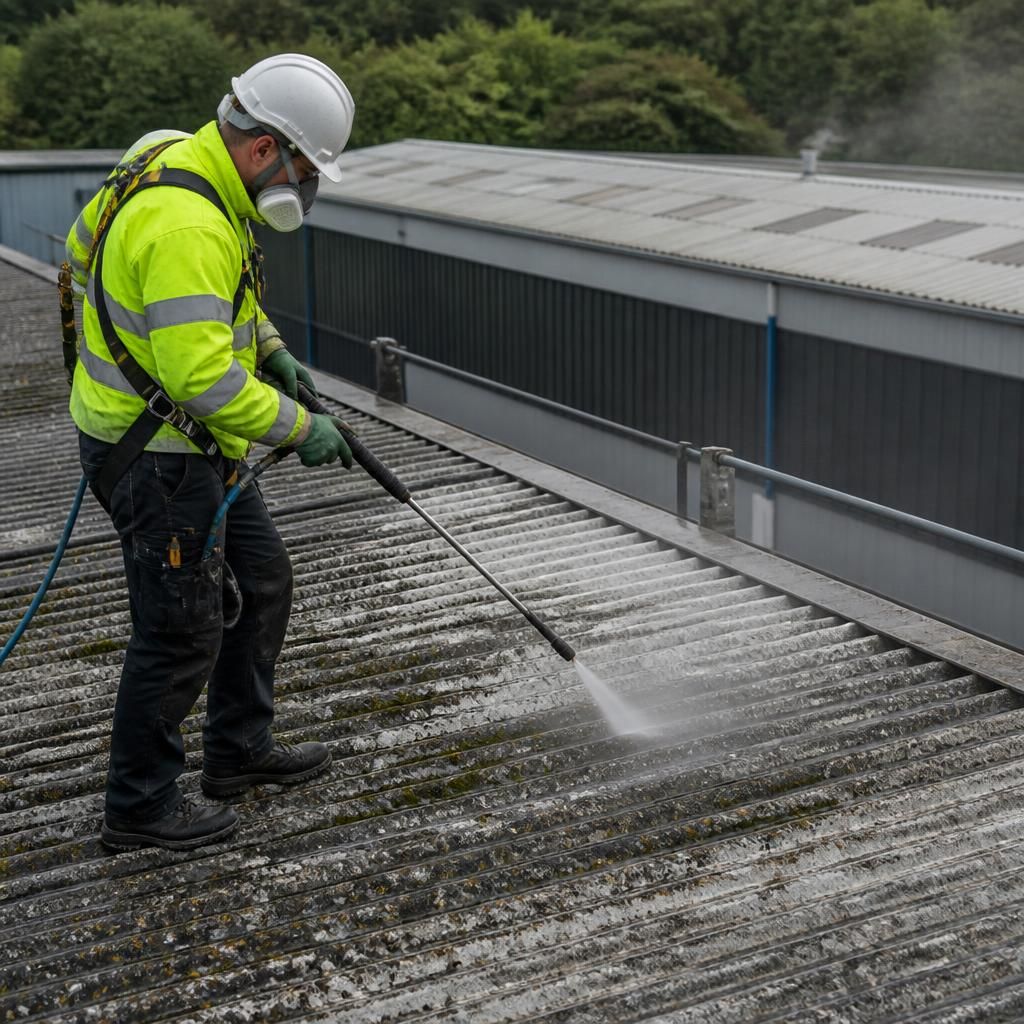
Biodegradable roof-cleaning solutions can reduce persistent chemical residues, but they still require careful handling while they are concentrated. During soft washing, the cleaning team should protect nearby planting, keep overspray away from windows and vehicles, and control runoff entering gutters, drains, ponds or watercourses.
This means the environmental benefit depends on more than the product label. Correct dilution, low-pressure application, suitable contact time and responsible rinsing help ensure that the treatment removes moss, algae and lichen without creating avoidable risks to surrounding surfaces or drainage systems. Product instructions and safety data should always be followed.