
Is steam cleaning suitable for all weather conditions during roof maintenance?
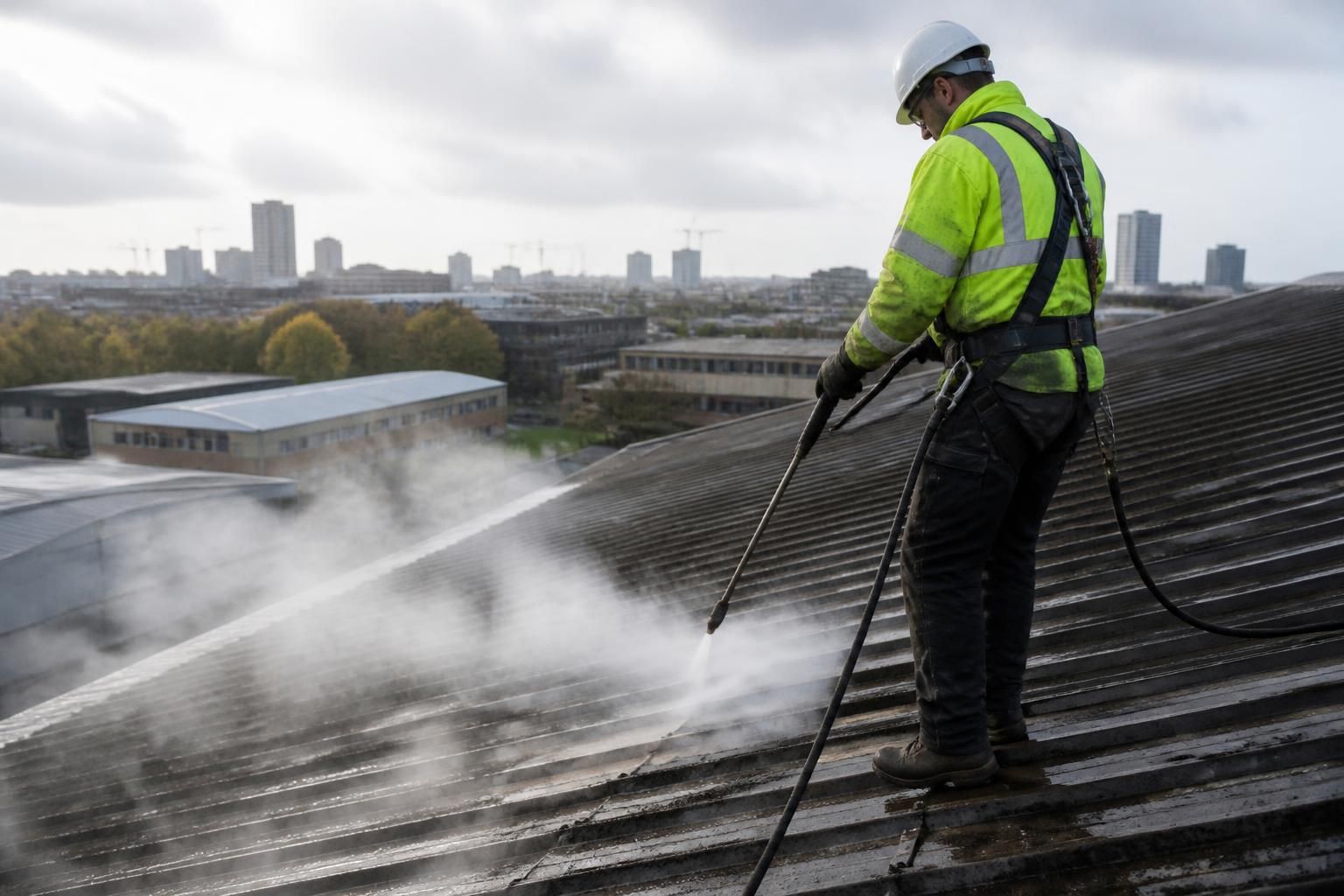
Steam cleaning is not suitable in all weather conditions. It is generally safest and most effective in dry, calm weather, while rain, frost, high winds, thunderstorms and extreme temperatures can affect access, cleaning results, drying and roof safety.
Steam cleaning is not suitable in all weather conditions. It is generally safest and most effective in dry, calm weather, when the roof surface is free from frost or ice and there is sufficient time for the tiles and surrounding areas to dry. Rain, high winds, thunderstorms, freezing temperatures and extreme heat can affect roof access, cleaning results, drying times and the safety of everyone on site.
Weather is assessed before work begins and monitored throughout the cleaning process. A suitable forecast is important, but conditions at roof level also matter. Wind can be stronger on exposed elevations, while shaded areas may remain damp or icy even when ground-level conditions appear acceptable.
Dry, calm conditions
Dry weather with limited wind is normally the preferred environment for steam cleaning roof tiles. A dry surface makes it easier to identify moss, algae, lichen, staining and damaged areas before cleaning. It also reduces the risk of slips and allows the operator to control the steam lance accurately.
Overcast conditions are often suitable provided the roof is dry and the forecast remains stable. Direct sunshine is not essential. In fact, moderate temperatures can be preferable to very hot conditions, as rapid evaporation can make some surfaces dry unevenly and may affect the visibility of remaining deposits during the work.
Rain and persistent damp
Rain does not usually make steam cleaning technically impossible, but persistent or heavy rain will commonly lead to the work being postponed. A wet roof is more slippery, making access and movement more hazardous. Rain can also dilute or wash away loosened debris before it has been properly collected, obscure surface defects and make it harder to judge whether cleaning is complete.
Light, intermittent rain may be considered only after a site-specific assessment, taking account of the roof pitch, access arrangements, surface condition and the expected duration of the work. If the roof cannot be kept safely accessible, cleaning should not proceed simply to meet a planned date.
Frost, ice and snow
Frost and ice are unsuitable conditions for roof steam cleaning. They increase the likelihood of slips, can conceal cracked or displaced tiles and may leave water trapped in joints or porous surfaces. Applying hot steam to a frozen or extremely cold roof can also create rapid temperature changes, although the greater immediate concern is usually safe access and control of the work area.
Snow should be cleared and the roof allowed to thaw naturally before a proper inspection. Cleaning should only be considered once the surface is stable, free from ice and safe for the required access equipment.
Wind and storms
High winds can make ladders, mobile access equipment, roof-edge protection and elevated work platforms unsafe. They can also affect the accuracy of steam application and cause loosened material, water or equipment to move unpredictably. Exposed roofs, high buildings and open industrial sites require particular caution.
Work should not proceed during thunderstorms because of lightning risk and rapidly changing conditions. Strong gusts, severe weather warnings and unstable forecasts are clear reasons to reschedule. The decision should be based on the actual site conditions and the limitations of the access equipment, rather than on the calendar alone.
Extreme heat and cold
Very hot weather can cause a roof surface to become uncomfortable or unsafe to work on, particularly where there is limited shade. It may also accelerate drying and make residues harder to assess. In cold weather, even if there is no visible frost, low temperatures can extend drying times and increase the risk of water freezing later in the day.
Roof materials also respond differently to temperature changes. Clay, concrete, slate and coated surfaces should be assessed for existing cracks, delamination, loose coatings and other defects before steam is applied. Steam cleaning is a low-pressure process, but it is not a substitute for checking whether the material is suitable and sound.
Why drying time matters
After cleaning, the roof and adjacent surfaces need time to drain and dry. Drying helps reveal the final condition of the tiles and reduces the chance of persistent damp affecting vulnerable areas. It is particularly important around roof details such as abutments, verges, valleys, flashings, gutters and penetrations.
Moisture can also affect other parts of a commercial or industrial property. Before work starts, the cleaning plan should consider water movement, rainwater goods, roof voids, plant, electrical equipment, entrances and pedestrian routes. Temporary protection and controlled collection of debris or runoff may be required, especially where the building is occupied.
When should roof steam cleaning be postponed?
- When rain is heavy, persistent or expected to continue throughout the working period.
- When frost, ice or snow is present on the roof or access routes.
- When wind makes roof access or elevated equipment unsafe.
- During thunderstorms, lightning or severe weather warnings.
- When very high or low temperatures prevent safe access, controlled cleaning or adequate drying.
- When conditions are changing quickly and a safe working window cannot be maintained.
A short delay is normally preferable to compromising safety or the quality of the result. Rescheduling also gives the team an opportunity to inspect the roof in better conditions, protect vulnerable areas and plan any necessary access or runoff controls.
In practice, steam cleaning is best planned around a stable period of dry, calm weather, with enough time for inspection, cleaning and drying. The final decision should follow a site-specific risk assessment by the contractor, taking account of the roof construction, pitch, condition, access method, building use and local forecast. If conditions deteriorate during the work, cleaning should be paused and the site made safe rather than continuing in unsuitable weather.
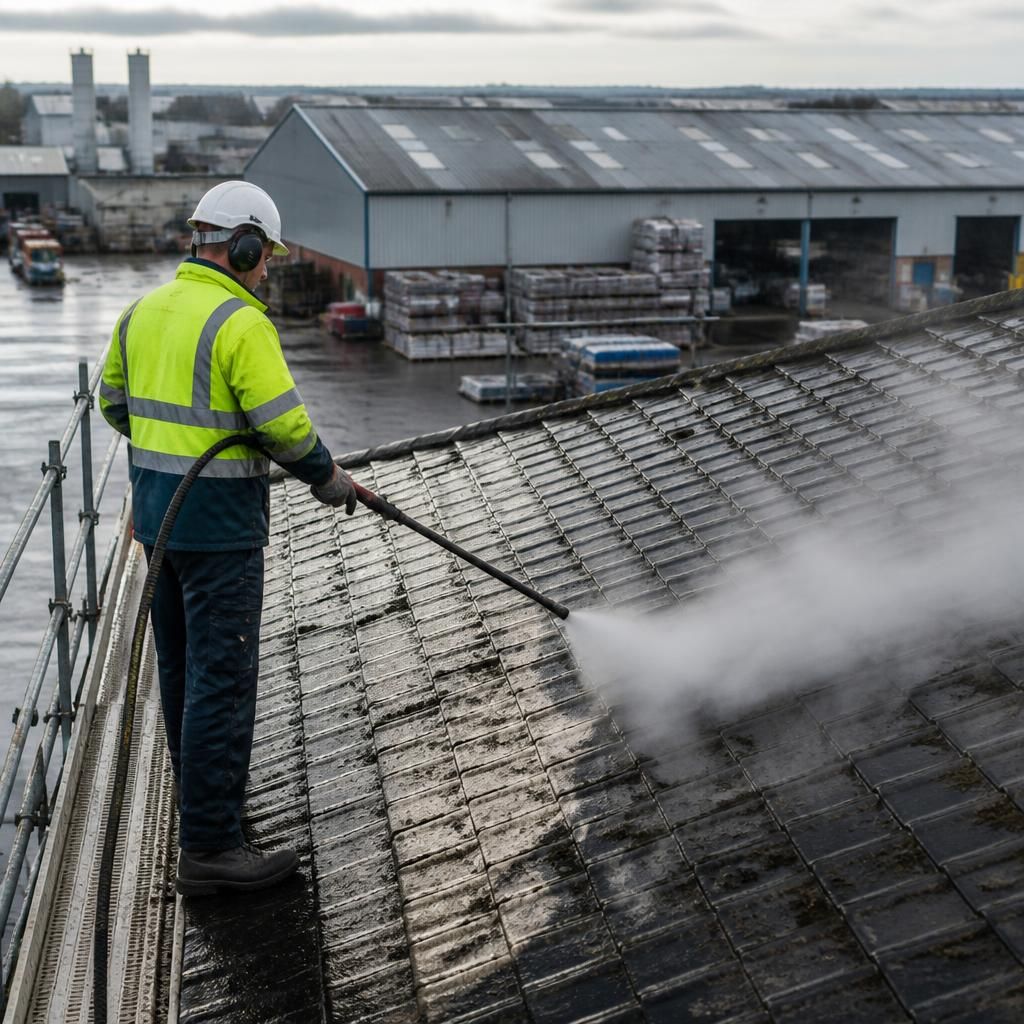
Steam cleaning roof tiles is most suitable in dry, calm weather, when the roof is free from frost or ice and there is enough time for the surface to dry afterwards. Rain, strong winds, thunderstorms and freezing temperatures can make access unsafe, reduce cleaning control and delay drying.
Weather conditions should be assessed at roof level, not only from the ground. Exposed elevations may experience stronger gusts, while shaded areas can remain damp or icy. Before work begins, the cleaning plan should also account for water movement around gutters, valleys, roof penetrations, entrances and electrical equipment. If conditions deteriorate or a safe drying period cannot be maintained, postponing the work is the responsible option.