
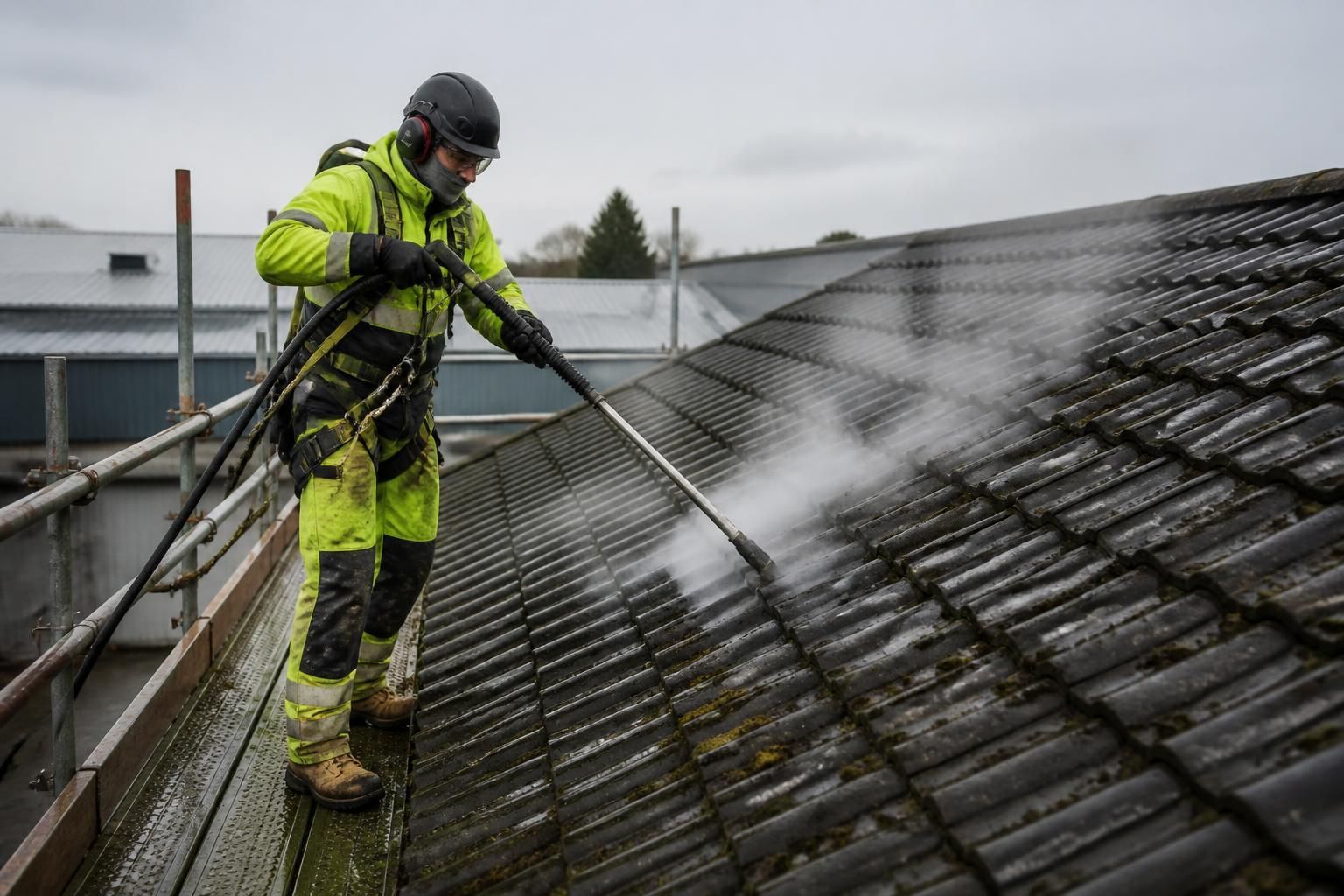
How does steam cleaning roof tiles protect their structural integrity?
Steam cleaning roof tiles uses controlled heat and low water pressure to remove moss, algae, dirt and stains without the force that can loosen tiles, erode surfaces or drive water beneath the roof covering. By reducing surface contamination while preserving the tile and pointing, it helps maintain the roof’s weather resistance and structural condition, although existing damage should be assessed and repaired separately.
Steam cleaning protects the structural integrity of roof tiles by using controlled heat and low water pressure to remove moss, algae, dirt and staining without the aggressive force associated with conventional pressure washing. This reduces the risk of tiles being loosened, surface coatings being eroded, pointing being damaged or water being driven beneath the roof covering.
Roof tiles form part of a complete weatherproofing system. Their condition, alignment, overlaps, fixings, underlay and ridge or verge details all contribute to keeping rain out of the building. Cleaning must therefore remove contamination without disturbing the components that maintain this protection. A carefully controlled steam-cleaning process is designed to clean the surface while applying substantially less mechanical force than high-pressure methods.
How steam cleaning reduces damage
High-pressure water can act on a roof in several ways that may affect its condition. It can dislodge older or poorly fixed tiles, force water through overlaps and joints, remove the surface finish from some manufactured tiles, and worsen existing cracks or flaking. It may also disturb mortar at ridges, verges and abutments. Steam cleaning relies primarily on heat and the cleaning action of a concentrated low-pressure flow, so the operator can work more selectively around vulnerable areas.
Heat helps soften organic growth and break down the bond between contaminants and the tile surface. Moss, algae, lichen residue, traffic film and accumulated dirt can then be removed with less abrasion. This is particularly useful where tiles are weathered, porous, decorative, coated or otherwise unsuitable for forceful cleaning. The correct temperature and pressure still depend on the tile material and its condition; steam is not automatically risk-free simply because it uses less pressure.
Removing moss helps preserve the roof covering
Moss can retain moisture against the tile surface and around laps, joints and fixings. Its growth may also lift at edges, obstruct drainage channels and encourage organic debris to collect. In freezing conditions, trapped moisture can expand and place additional stress on porous or already weakened materials. Removing this growth helps the roof shed water more effectively and makes defects easier to identify.
Cleaning does not reverse frost damage, cracking, delamination or long-term weathering. It protects the structure by reducing avoidable contamination and exposure, while allowing damaged areas to be recorded and dealt with separately. Any tile that is broken, loose or unstable should be repaired or replaced rather than relying on cleaning to restore its performance.
Protecting pointing, flashings and roof details
A suitable method also limits stress on the details around the tiles. Excessive pressure can erode mortar bedding and pointing, disturb lead or other flashings, and force water beneath junctions. During steam cleaning, the operator should reduce pressure and alter the cleaning technique around ridges, verges, valleys, chimneys, roof windows, penetrations and drainage outlets. These areas require close inspection because they often have different materials and different tolerances to heat or moisture.
Steam should not be directed indiscriminately beneath tiles, into open joints or towards damaged flashings. Water management is also important. Run-off containing moss, silt and cleaning residue must be controlled so that it does not block gutters, enter drainage systems or stain the building façade.
A condition-led cleaning process is essential
Structural protection depends on the method being matched to the roof rather than applying the same treatment to every property. Before work begins, a competent contractor should assess:
- the tile material, profile, age and surface finish;
- cracks, chips, frost damage, slipped tiles and areas of looseness;
- the condition of ridges, verges, valleys, pointing, flashings and fixings;
- access requirements, roof pitch and safe working positions;
- gutter capacity, drainage routes and the control of contaminated run-off; and
- weather conditions and any manufacturer or site-specific restrictions.
Where access equipment is needed, it should be selected to avoid unnecessary loading or contact with the roof. The cleaning team should use controlled passes, avoid concentrating heat on one location, and stop if the surface reacts unexpectedly. A small test area can help confirm that the chosen temperature, pressure and technique are appropriate before wider cleaning takes place.
Steam cleaning supports longer-term weather resistance
A clean, unobstructed tile surface is better able to shed rainfall, and removing organic growth reduces the moisture retained against the covering. This can help preserve the roof’s weather-resistant performance and delay avoidable deterioration. It also makes later inspections and maintenance more reliable because cracks, displaced tiles and failing mortar are less likely to be hidden by moss or staining.
However, steam cleaning is part of roof maintenance, not a substitute for inspection or repair. After cleaning, the roof should be checked for defects revealed by the removal of contamination. Tiles and associated components should be repaired where necessary, gutters kept clear, and any recommended treatment used only when it is compatible with the specific roof material. With a suitable assessment, controlled equipment and careful follow-up, steam cleaning removes damaging contamination while placing less stress on the roof structure than harsher cleaning methods.
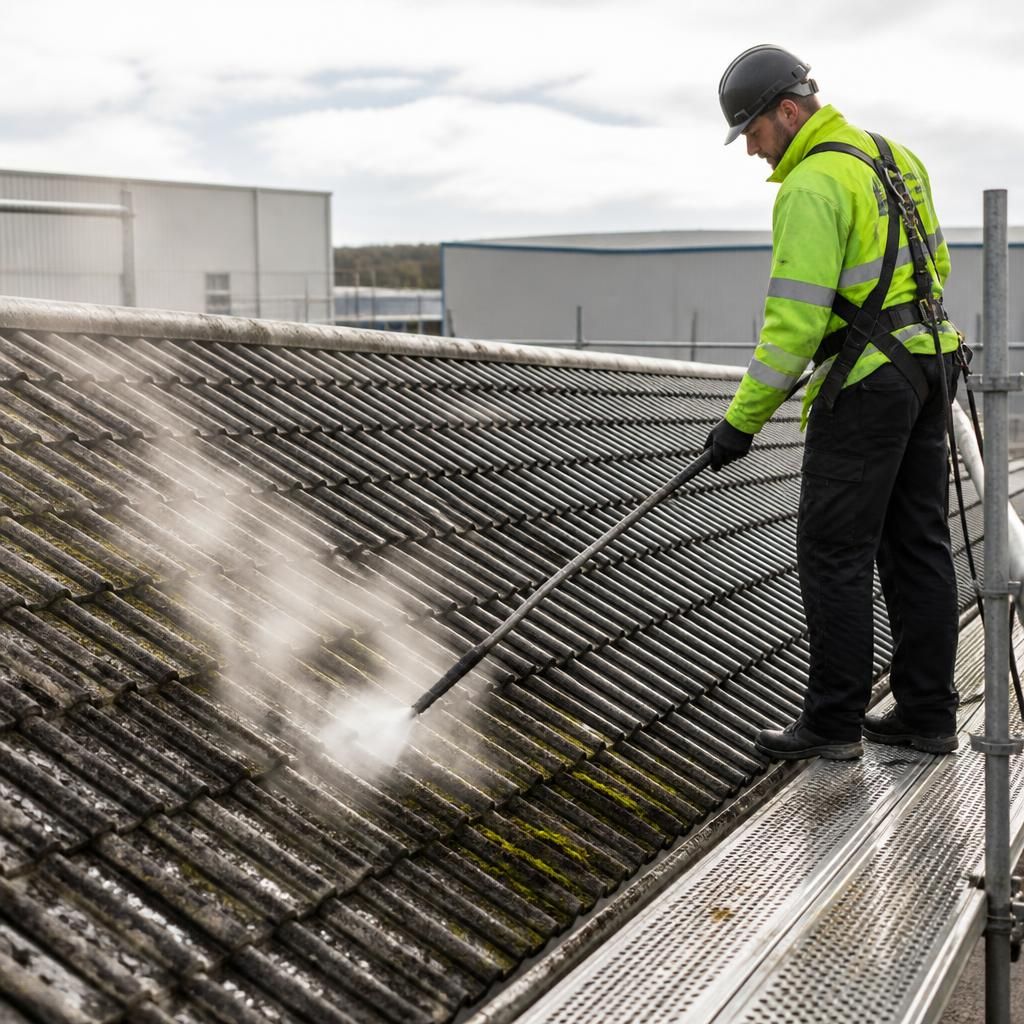
Steam cleaning helps protect roof tile integrity by removing moss, algae and embedded dirt with controlled heat and low water pressure, rather than force that may loosen tiles or damage their surface. This reduces the moisture retained against the roof covering and helps preserve the tile overlaps, drainage paths and weather-resistant finish.
Removing moss also makes defects easier to identify. Cracked, slipped or frost-damaged tiles, deteriorated pointing and blocked gutters can be addressed before they lead to more serious water ingress or structural problems. Steam cleaning will not repair existing damage, so a condition inspection and any necessary repairs should form part of the maintenance process.
Arrange a roof tile steam-cleaning assessment
Arrange a roof tile steam-cleaning assessment with Encanto Exterior Cleaning to check the roof’s condition and identify the safest cleaning method. We can also highlight any damaged tiles, pointing or drainage details requiring attention before work begins.