
How does steam cleaning compare to other roof tile cleaning methods in terms of effectiveness and sustainability?
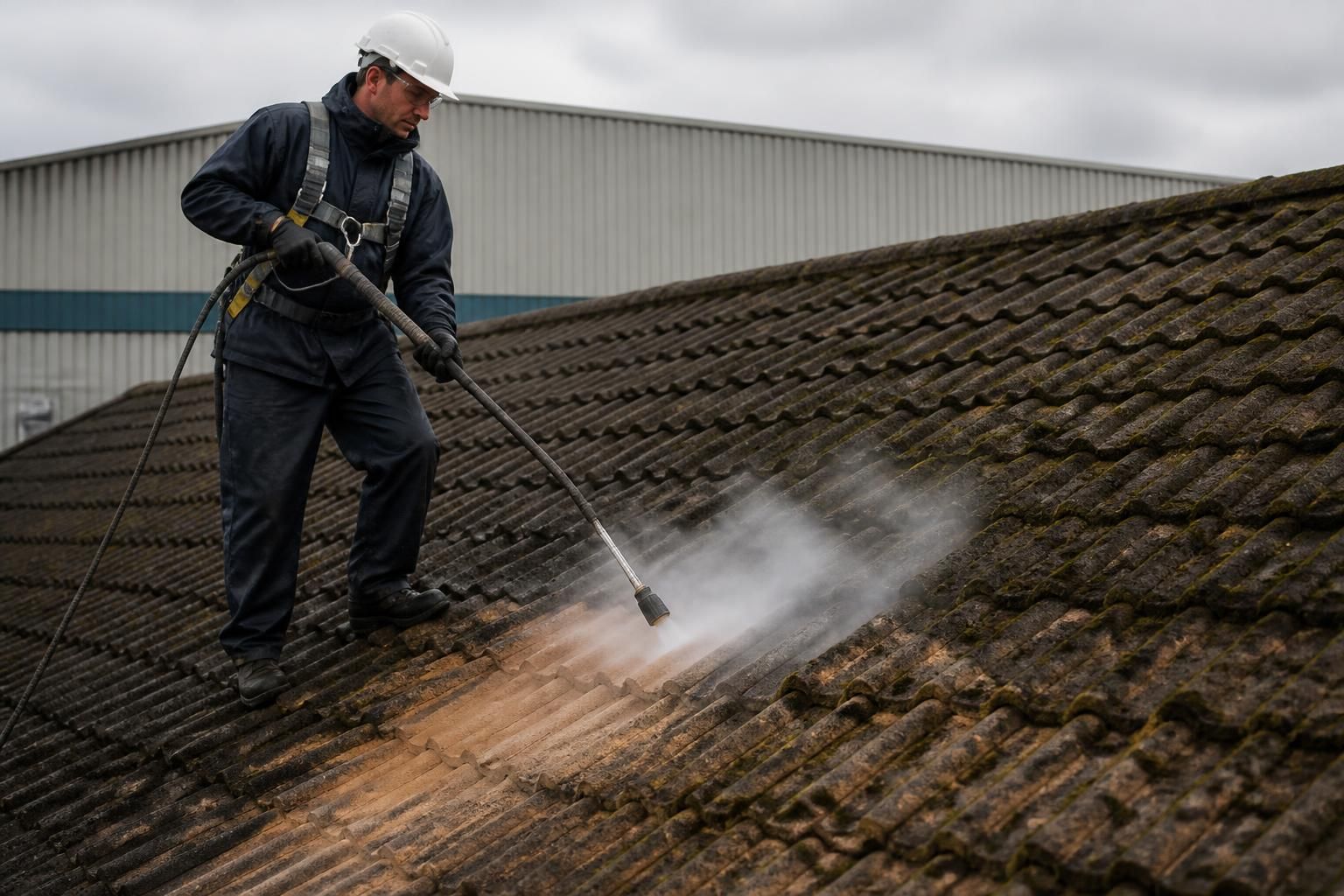
Steam cleaning is highly effective for removing moss, algae, lichen and surface dirt from suitable roof tiles while applying far less pressure than mechanical washing. It is generally more sustainable than pressure washing or chemical treatments because it uses less water, reduces the need for biocides and minimises the risk of damaging tiles, although the most appropriate method depends on the roof material and condition.
Steam cleaning is often the most balanced roof tile cleaning method for suitable, sound tiles because it removes moss, algae, lichen and ingrained surface dirt with high-temperature water delivered at relatively low pressure. Compared with pressure washing, it places less mechanical stress on the roof and generally uses less water. Compared with chemical treatments, it can reduce reliance on biocides and the risk of chemical-laden runoff. However, its effectiveness and sustainability still depend on the tile material, the condition of the roof, the extent of the growth and the way the work is carried out.
Steam cleaning works by softening and lifting organic growth and soiling rather than relying on force alone. Heat can help disrupt moss, algae and lichen, including growth attached to textured or weathered tile surfaces. The loosened material is then removed using suitable tools and controlled rinsing. A professional assessment remains important because steam is not a universal solution: fragile, delaminating, porous or otherwise defective tiles may require a different approach or may need repair before cleaning.
Comparison with pressure washing
Pressure washing can produce a fast, visible result, particularly where heavy dirt and loose moss are present. Its main advantage is mechanical cleaning power. However, the same force can drive water beneath tiles, disturb overlapping sections, remove surface coatings and worsen existing cracks or frost damage. It can also dislodge pointing, render or edge details around the roof. These risks are especially relevant on older roofs and on tiles that have already become brittle or porous.
Steam cleaning normally achieves a more controlled result with substantially less impact on the tile surface. It may take longer where growth is dense or firmly established, and heavily contaminated roofs may need careful preparation and additional removal work. In return, the lower-pressure process reduces the likelihood of avoidable damage and can help preserve the existing roof covering. From a sustainability perspective, using less water and avoiding the need to compensate for damage or premature replacement are significant advantages.
Comparison with soft washing and chemical treatments
Soft washing uses a cleaning solution, often including a biocide, to kill or loosen organic growth before it is rinsed away. This can be effective where moss, algae or lichen is widespread and difficult to remove mechanically. Chemical treatments may also provide residual control, although they do not remove every type of staining immediately and may require time to work.
Steam cleaning can reduce or eliminate the need for routine biocide use, which is beneficial where chemical discharge must be carefully controlled. It also avoids the potential for staining or damage to gutters, plants, painted surfaces and adjacent materials if a solution is misapplied. Chemical cleaning is not automatically unsustainable, however; the environmental impact depends on the product, dilution, containment, application method and disposal of contaminated runoff. Where a treatment is necessary, it should be selected for the roof material and applied in accordance with the product instructions and relevant environmental controls.
Comparison with manual scraping and brushing
Manual removal has a low water and chemical demand and can be appropriate for small areas, delicate sections or roofs where a targeted approach is needed. It gives the operative close control over the work and can remove thick moss before another cleaning method is used. Its limitations are that it is labour-intensive and may leave staining, lichen attachment points or fine organic residue behind. Aggressive scraping or wire brushing can also scratch tiles or remove protective surface material.
Steam is often used alongside careful manual removal rather than as a complete replacement. The operative can lift heavy growth manually, use steam to release remaining contamination and rinse the surface in a controlled way. This combined approach can be more effective and less damaging than relying on either forceful washing or abrasive tools alone.
Effectiveness in practical terms
- Organic growth: Steam is effective against many common roof contaminants, but established moss may still need physical removal and follow-up inspection.
- Staining: Heat and controlled cleaning can improve algae and lichen staining, although deep or longstanding discolouration may not disappear completely without risking the tile surface.
- Ingrained dirt: Steam can soften deposits so they can be removed with less pressure than conventional washing.
- Regrowth: No cleaning method permanently prevents moss or algae returning. Shade, overhanging vegetation, moisture retention and blocked gutters continue to influence regrowth.
- Roof condition: A method that is effective on sound concrete or clay tiles may be unsuitable for damaged, loose, coated or highly porous materials.
Cleaning should therefore be judged by more than the immediate appearance. A suitable method should remove contamination without compromising tile integrity, underlay, flashings, pointing, gutters or surrounding property. It should also leave the roof in a condition that can be inspected properly, with defects reported rather than concealed by aggressive cleaning.
Sustainability considerations
Steam cleaning can have a lower environmental burden than pressure washing because it uses a controlled volume of water and can reduce the need for repeated rinsing. Its reduced reliance on chemicals may also simplify runoff management. The equipment does consume energy to heat water, so sustainability is not determined by the cleaning method alone. Efficient equipment, sensible work planning, avoiding unnecessary passes and using the lowest effective operating settings all help reduce resource use.
Pressure washing may use more water and can create larger volumes of contaminated runoff, particularly where repeated rinsing is needed. Chemical treatments can use less water during application but require responsible storage, handling, containment and disposal. Manual cleaning has minimal energy and water requirements but may involve longer access time and more physical labour. The most sustainable choice is consequently the method that achieves the required standard with the least water, chemical use, energy, waste and risk of damage for that particular roof.
Runoff management is important whichever method is selected. Moss, silt, coatings and cleaning residues should not be allowed to enter surface-water drains or neighbouring land without appropriate controls. Gutters and downpipes may need protection or temporary isolation, and collected debris should be removed responsibly. Adjacent vehicles, façades, windows, landscaping and pedestrian areas should also be protected during the work.
For commercial and managed properties, the decision should consider the roof specification, previous treatments, access arrangements, drainage system, surrounding occupants and the required cleaning outcome. A professional survey can identify loose or defective tiles, fragile coatings, asbestos-containing materials elsewhere on the roof system and areas where cleaning would be inappropriate. It also allows the cleaning plan to specify pressure, temperature, water control, runoff protection and any necessary follow-up treatment.
Overall, steam cleaning generally offers a strong combination of cleaning performance, material protection and reduced chemical and water use. Pressure washing may be suitable for some robust surfaces but carries greater risk when used indiscriminately on roof coverings. Chemical treatments can be useful for biological control but require careful environmental management, while manual cleaning is valuable for delicate or localised work. The most effective and sustainable outcome comes from matching the method to the tile and roof condition, using controlled equipment and addressing the causes of regrowth as part of the maintenance plan.
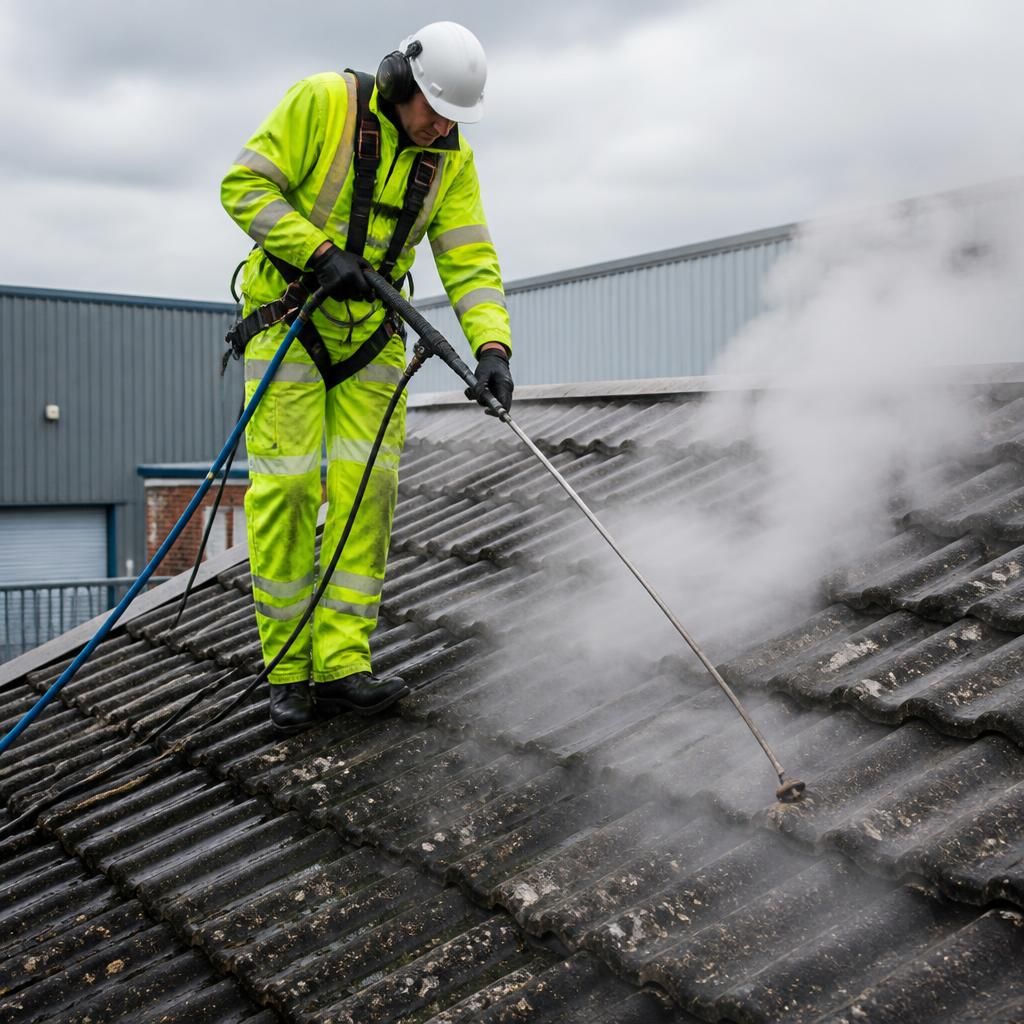
Steam cleaning is usually a more sustainable roof tile cleaning option than pressure washing because it combines effective removal of moss, algae and surface dirt with lower water use and less mechanical force. The heat softens organic growth, allowing it to be removed without relying on aggressive pressure or routine chemical treatment.
Its environmental advantage depends on how the work is planned. Steam equipment uses energy to heat water, so the operator should use the lowest effective settings, avoid unnecessary passes and control runoff. Collected moss, silt and cleaning residues should be kept out of surface-water drains, gutters, neighbouring land and planted areas. For each roof, the most sustainable method is the one that achieves the required result while minimising water, chemicals, energy use and the risk of damage or premature tile replacement.