
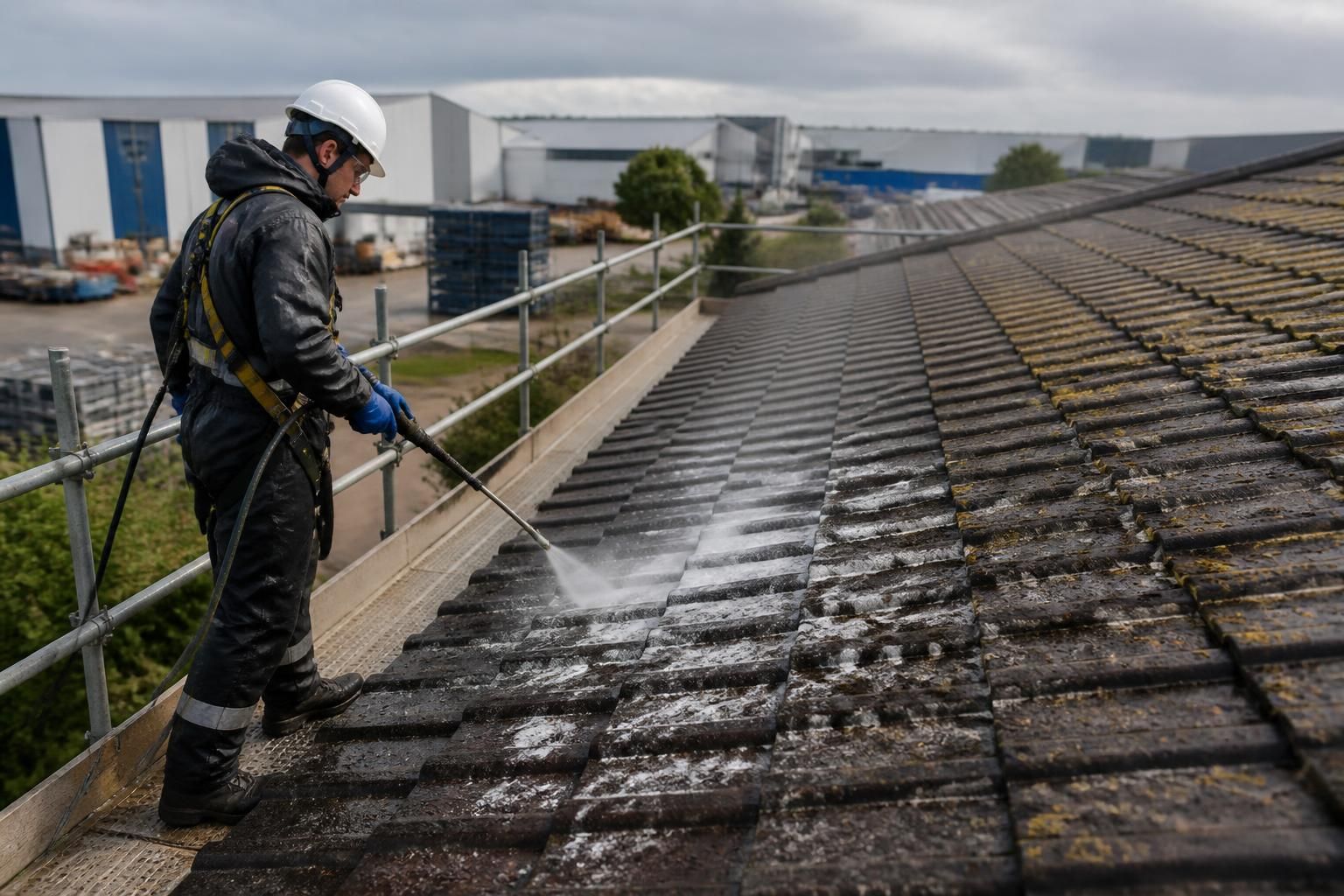
What specific cleaning solutions and techniques are used in the soft wash tile roof cleaning process?
Soft wash tile roof cleaning uses low-pressure application of specialist biocidal detergents—often a carefully controlled chlorine-based solution with surfactants—to break down moss, algae, lichen and organic staining without the force of pressure washing. The solution is applied evenly, allowed to dwell, then rinsed or left to weather away as appropriate, with gutters, plants and surrounding surfaces protected throughout.
Soft wash tile roof cleaning uses specialist biocidal cleaning solutions applied at low pressure, rather than high-pressure water, to remove and control moss, algae, lichen, mould and embedded organic staining. The solution is selected for the tile type and roof condition, applied evenly, given sufficient dwell time to break down contamination, and then rinsed or allowed to weather away where appropriate.
Biocidal cleaning solution
The primary cleaning agent is usually a carefully controlled chlorine-based biocide, commonly based on diluted sodium hypochlorite. This is not applied at an arbitrary strength. The working solution is adjusted according to the severity of the growth, the tile material, surface weathering and the surrounding site conditions. Its purpose is to destroy the organic organisms responsible for green growth and black staining, rather than simply move them from one part of the roof to another.
On some roofs, a different or supplementary algaecidal, fungicidal or moss-control product may be more appropriate. The choice depends on the contamination present and the manufacturer’s instructions for the tile. Clay, concrete, painted and coated tiles can respond differently to chemical treatment, so the roof is assessed before any solution is mixed or applied.
Surfactants and wetting agents
Surfactants may be added to help the solution spread across the tile surface and penetrate organic deposits. They reduce surface tension, allowing the treatment to reach porous areas, lichen growth and the edges of moss colonies instead of running immediately into the gutters. A suitable surfactant can also improve contact time, which helps the biocide work without relying on aggressive water pressure.
The finished mixture must remain compatible with the roof covering and any nearby surfaces. Stronger is not automatically better: excessive chemical strength or prolonged contact can discolour some materials, affect roof coatings and increase the risk to plants, painted surfaces and metals. For this reason, solutions are prepared and controlled by the technician carrying out the work.
Low-pressure application
The treatment is normally applied using a soft wash pump, low-pressure sprayer or similar equipment. This produces enough coverage to wet the tiles thoroughly without the force associated with pressure washing. The operator works methodically across the roof, taking account of overlaps, ridges, valleys, roof pitches and areas where contamination is heavier.
Low pressure is important because roof tiles can be brittle, weathered or already weakened. High-pressure water can drive moisture beneath laps, loosen protective finishes, damage mortar bedding and force fragments of tile or contamination into gutters and drainage points. Soft washing aims to remove the biological cause of the staining chemically, so the equipment does not need to scour the roof surface.
Dwell time and controlled removal
After application, the solution is left on the tiles for a controlled dwell period. This allows it to break down moss, algae, lichen and dirt. The required time varies with the product, temperature, weather, roof exposure and level of growth. The surface should remain suitably damp during treatment, but the solution must not be left uncontrolled to dry on sensitive materials or run onto unprotected areas.
Loose moss may be removed carefully before or after treatment, using hand tools or soft brushing where necessary. This is done without scraping, levering or walking directly on vulnerable tiles. Remaining staining and dead organic material may then be rinsed with low-pressure water. In other cases, especially where rinsing could create unnecessary runoff or risk, the treated residue is allowed to break down and weather naturally. Any final approach is agreed according to the roof’s condition and the cleaning product used.
Pre-cleaning inspection and testing
Before applying chemicals, the roof is inspected for cracked or slipped tiles, open joints, damaged flashing, fragile mortar, blocked gutters and areas of poor drainage. The inspection also considers roof access, nearby windows, painted surfaces, solar equipment, rainwater systems and vulnerable landscaping.
A small test area may be treated first to check how the tile responds and to confirm that the selected method is suitable. This can reveal differences in colour, porosity or coating condition that are not obvious from ground level. It also helps establish an appropriate application strength and dwell time without committing the entire roof to an unsuitable treatment.
Protection of the surrounding property
Soft wash cleaning includes more than applying a solution to the roof. Gutters, downpipes, walls, windows, doors, vents, external fixtures and other vulnerable surfaces are protected or managed during the work. Plants and soil beneath the roofline are shielded or pre-wetted where appropriate, and runoff is controlled so that concentrated cleaning solution does not collect around beds, lawns or drainage channels.
Technicians use suitable personal protective equipment and follow the product safety data and application instructions. Chemical mixing is carried out carefully, with incompatible products kept separate. Particular care is needed around metals, painted finishes, ponds, water features and areas used by pets or the public. Any accidental splashes or runoff are dealt with promptly using the appropriate rinsing and containment procedure.
Final treatment and aftercare
Some systems include a final biocidal treatment intended to slow the return of organic growth after visible dirt has been removed. This is not a permanent barrier, and roof exposure, shade, moisture and nearby vegetation all affect how quickly moss and algae can reappear. Keeping gutters clear and reporting slipped or damaged tiles promptly will also help maintain the roof after cleaning.
The precise solution and technique are therefore determined by the tile material, contamination, roof condition and surrounding property. A properly managed soft wash combines a compatible biocide, controlled surfactant use, low-pressure application, adequate dwell time, careful removal and effective runoff protection. This provides the cleaning action needed to treat organic growth while avoiding the unnecessary mechanical stress associated with traditional pressure washing.
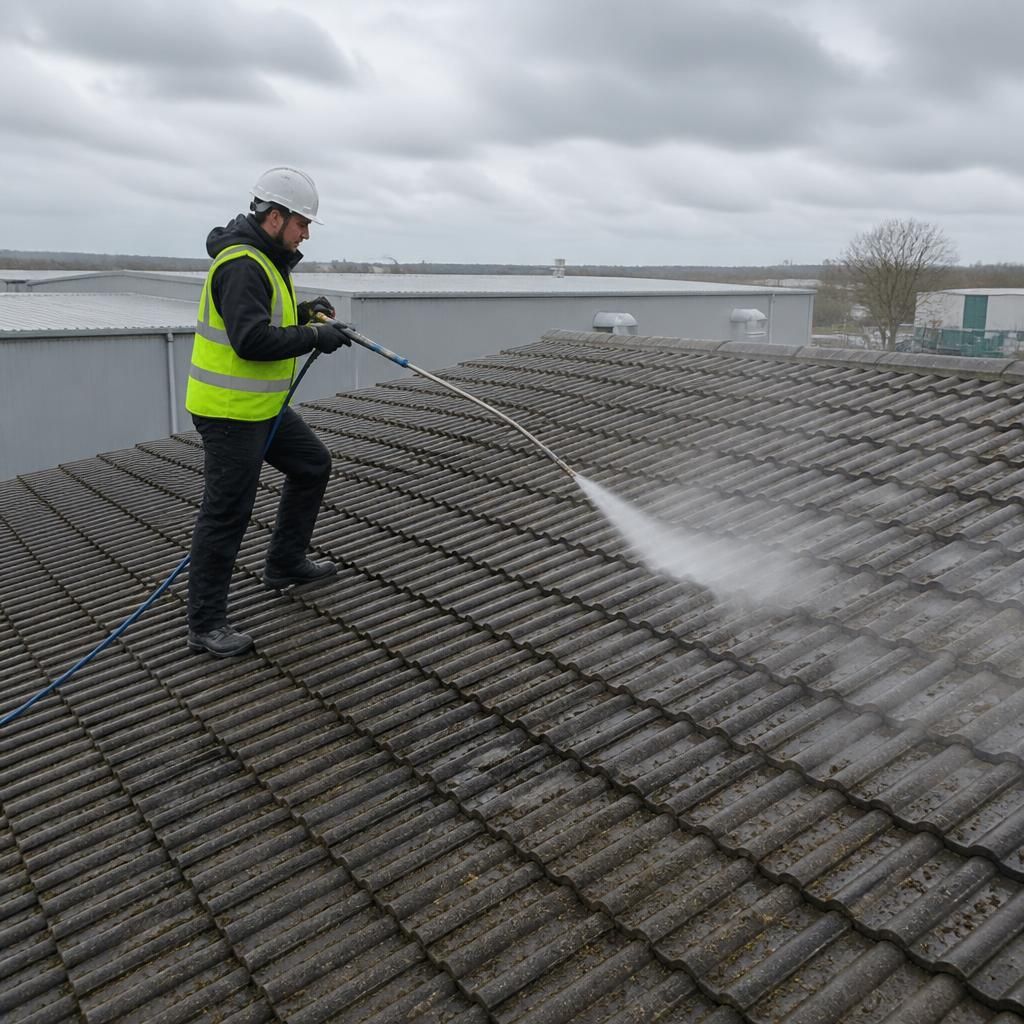
Low-pressure application and controlled dwell time are the central techniques in soft wash tile roof cleaning. A compatible biocidal solution is sprayed evenly over the tiles so it can break down moss, algae, lichen and organic staining without forcing water beneath overlaps or damaging weathered surfaces.
The treatment is allowed to work for the appropriate period for the tile type, contamination and weather conditions. Loose growth may then be removed carefully by hand or with soft brushing, while remaining residue is either rinsed with low-pressure water or left to weather away where suitable. This chemical action, rather than aggressive mechanical force, provides effective cleaning while reducing stress on the roof covering.