
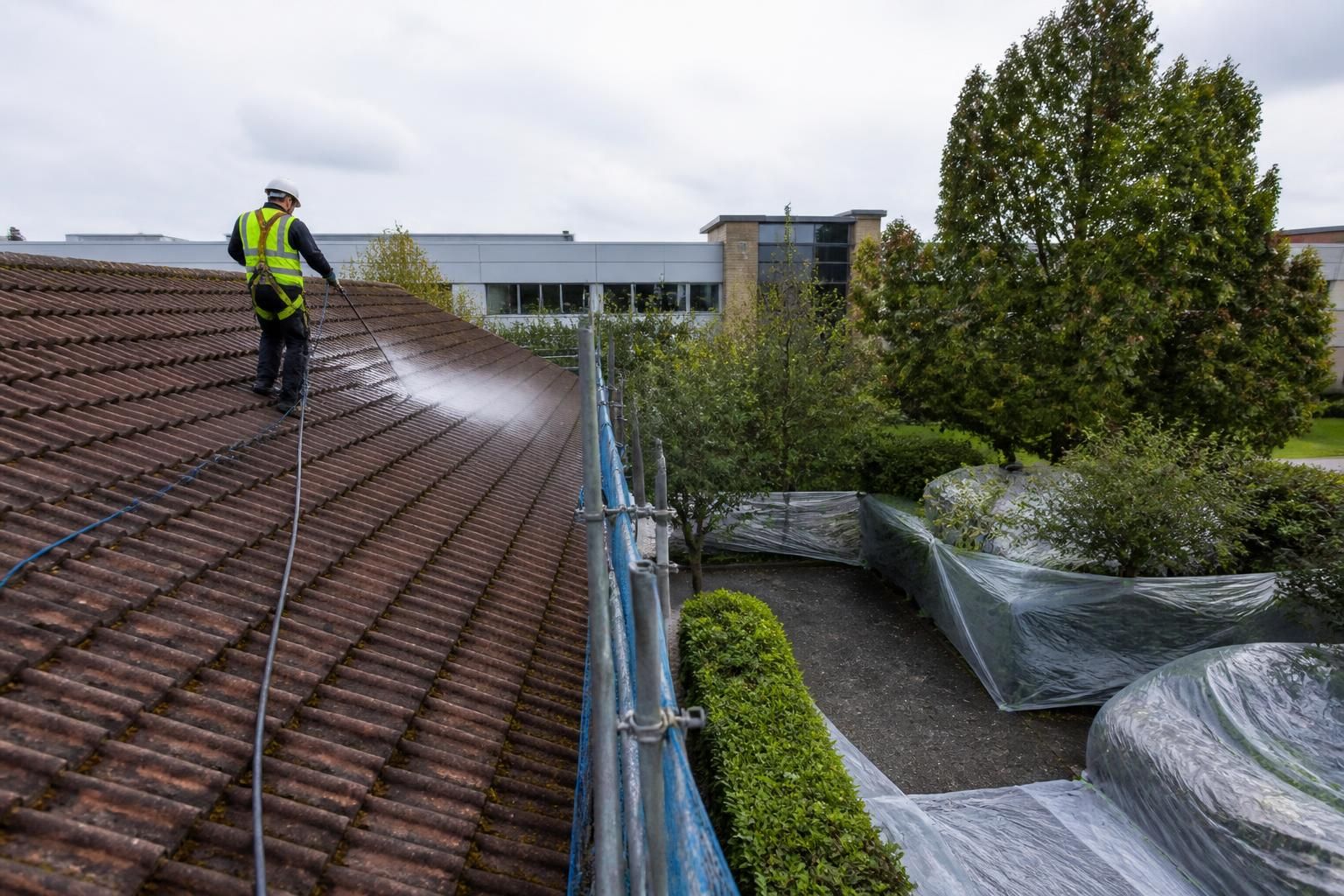
What precautions are taken during the soft wash tile roof cleaning to ensure no damage to the surrounding property or landscape?
During soft wash tile roof cleaning, the area is assessed and surrounding walls, windows, vehicles, plants and landscaping are protected before any treatment begins. Controlled low-pressure application, managed runoff, suitable access equipment and thorough rinsing help prevent chemical exposure, water ingress, tile damage and impact to the surrounding property.
Soft wash tile roof cleaning protects the surrounding property and landscape through careful planning, low-pressure application, controlled runoff and thorough post-cleaning checks. The process is designed to remove algae, moss, lichen and organic staining without the impact associated with aggressive pressure washing, but precautions are still essential because cleaning solutions, water and roof access can affect tiles, walls, windows, plants and drainage systems if they are not properly managed.
A pre-cleaning survey is completed before work begins. The roof, tiles, flashings, ridge and verge details are checked for existing cracks, slipped tiles, open joints, damaged pointing, weak guttering and areas that may not safely support access. The surrounding ground is also assessed to identify delicate planting, ponds, water features, permeable surfaces, external lighting, air-conditioning units, vehicles and nearby entrances. Any pre-existing defects are recorded and reported so that cleaning is not mistaken for the cause of an existing problem.
Weather conditions are considered before treatment starts. Strong winds can carry spray beyond the intended area, while heavy rain can dilute the solution and increase runoff. Work may therefore be postponed when conditions make application or containment unreliable. Particular care is also taken around frost, very hot surfaces and drying conditions that could affect how the treatment behaves.
Nearby surfaces and possessions are protected before the roof is treated. Depending on the property, this can include covering or shielding:
- windows, doors, rendered walls and painted surfaces;
- vehicles, outdoor furniture and stored materials;
- delicate plants, raised beds, lawns and ornamental landscaping;
- ponds, water features and other areas containing aquatic life;
- external electrical equipment, lighting and ventilation units; and
- guttering, downpipes, drains and surfaces that could collect concentrated runoff.
Protective coverings are used carefully so that they do not trap heat, damage plants, obstruct safe access or create trip hazards. Plants may be dampened with clean water before work and rinsed afterwards where appropriate. Covering alone is not treated as a substitute for controlling the cleaning solution.
A suitable cleaning solution is selected for the roof and the surrounding environment. The product is diluted and applied in accordance with its instructions, the relevant safety data and the condition of the tiles. A small test area may be treated first to check the effect on the tile surface, coatings and staining. Solutions are never mixed indiscriminately, and care is taken to prevent contact with incompatible materials or untreated surfaces. Where a roof has unusual coatings, historic tiles or sensitive adjacent materials, the treatment is reviewed before full application.
The cleaning solution is applied at low pressure using controlled equipment rather than a forceful jet. This reduces the risk of dislodging tiles, driving water beneath laps, damaging pointing or forcing moisture through vulnerable roof details. Operatives avoid directing spray into roof vents, open joints, flashing edges, broken areas, soffits or other points where water could enter the building. The aim is to wet and treat the contamination, not to scour the roof with pressure.
Safe access is planned to avoid unnecessary loading and physical impact. Operatives do not routinely walk across fragile, wet or heavily contaminated tiles. Access equipment, edge protection and suitable roof ladders may be used where necessary, selected according to the building, roof design and ground conditions. Ladders, scaffold or mobile access equipment are positioned to avoid gutters, planting and vulnerable paving, and equipment is secured so that it cannot strike walls, windows or roof fittings.
Runoff is managed throughout the application and rinsing stages. Guttering and downpipes are checked for blockages, and temporary measures may be used to prevent concentrated solution from flowing directly onto plants, façades or drainage points. Runoff is not allowed to accumulate against walls or enter watercourses. Where collection, diversion or controlled discharge is necessary, it is carried out in line with the site requirements and applicable environmental and wastewater controls.
Particular attention is given to drainage because loosened moss and other debris can obstruct gutters and downpipes. Debris is removed progressively rather than being allowed to wash into the drainage system. Gutters, outlets and visible downpipes are checked after cleaning, with any limitations explained where internal blockages cannot be confirmed without additional access or inspection.
Windows, doors and wall finishes are protected from both spray and dirty runoff. If any solution reaches an unintended surface, it is rinsed promptly with clean water, provided that doing so will not spread contamination into a more sensitive area. Vehicles and movable items are kept clear of the work zone wherever possible rather than relying solely on protective sheeting.
Plant and landscape protection is based on exposure control, not assumptions that every cleaning product is harmless. Vegetation is identified before work, sensitive areas are shielded or moved where practical, and overspray is minimised. Ponds, streams and drains require especially strict controls because even diluted cleaning products or contaminated roof debris can affect aquatic environments. The treatment method and runoff arrangements are adjusted if the roof is close to a water feature or environmentally sensitive area.
Operatives use appropriate personal protective equipment and follow the product’s handling, storage and emergency guidance. This protects the team as well as the property, and helps ensure that mixing, transfer and application are carried out in a controlled manner. Containers and equipment are kept away from planting, drains and public areas, and any spill is dealt with promptly using the appropriate procedure.
After treatment, the roof and surrounding property are inspected. The checks include visible tile condition, ridge and verge areas, flashings, gutters, downpipes, windows, walls, paving, planting and any locations where runoff may have collected. Protective coverings are removed carefully, surfaces are rinsed where required and displaced debris is cleared. Any remaining defect, limitation or recommended repair is reported rather than concealed by the cleaning result.
These precautions substantially reduce the risk of damage, but they cannot repair pre-existing roof defects or guarantee that every concealed weakness will be visible before cleaning. The safest approach is to disclose known problems, identify sensitive areas during the survey and agree any access, protection or runoff requirements before work begins. For occupied commercial premises, additional controls may also be needed to separate the work area from staff, visitors, deliveries and public access.
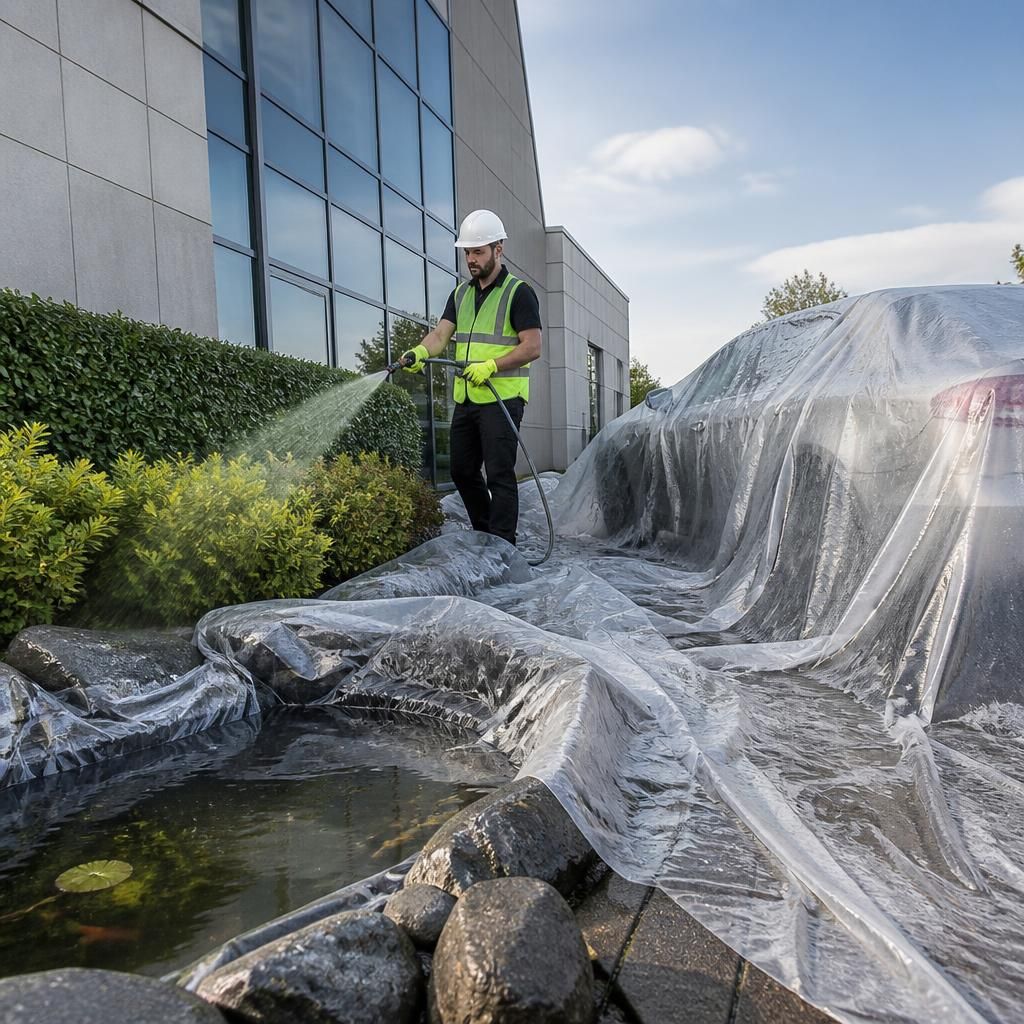
Landscape protection during soft wash tile roof cleaning relies on controlling overspray and runoff before the cleaning solution is applied. Plants, lawns, ponds, drains, vehicles and delicate surfaces are identified during the site assessment, then shielded, moved or isolated where practical.
Vegetation may be dampened with clean water and rinsed afterwards, while guttering and downpipes are checked to prevent concentrated runoff reaching planting or water features. Cleaning is postponed in unsuitable wind or rain, and any accidental contact with surrounding surfaces is rinsed promptly using clean water where appropriate.