
What cleaning solutions are used in soft wash tile roof cleaning and are they safe for the environment?
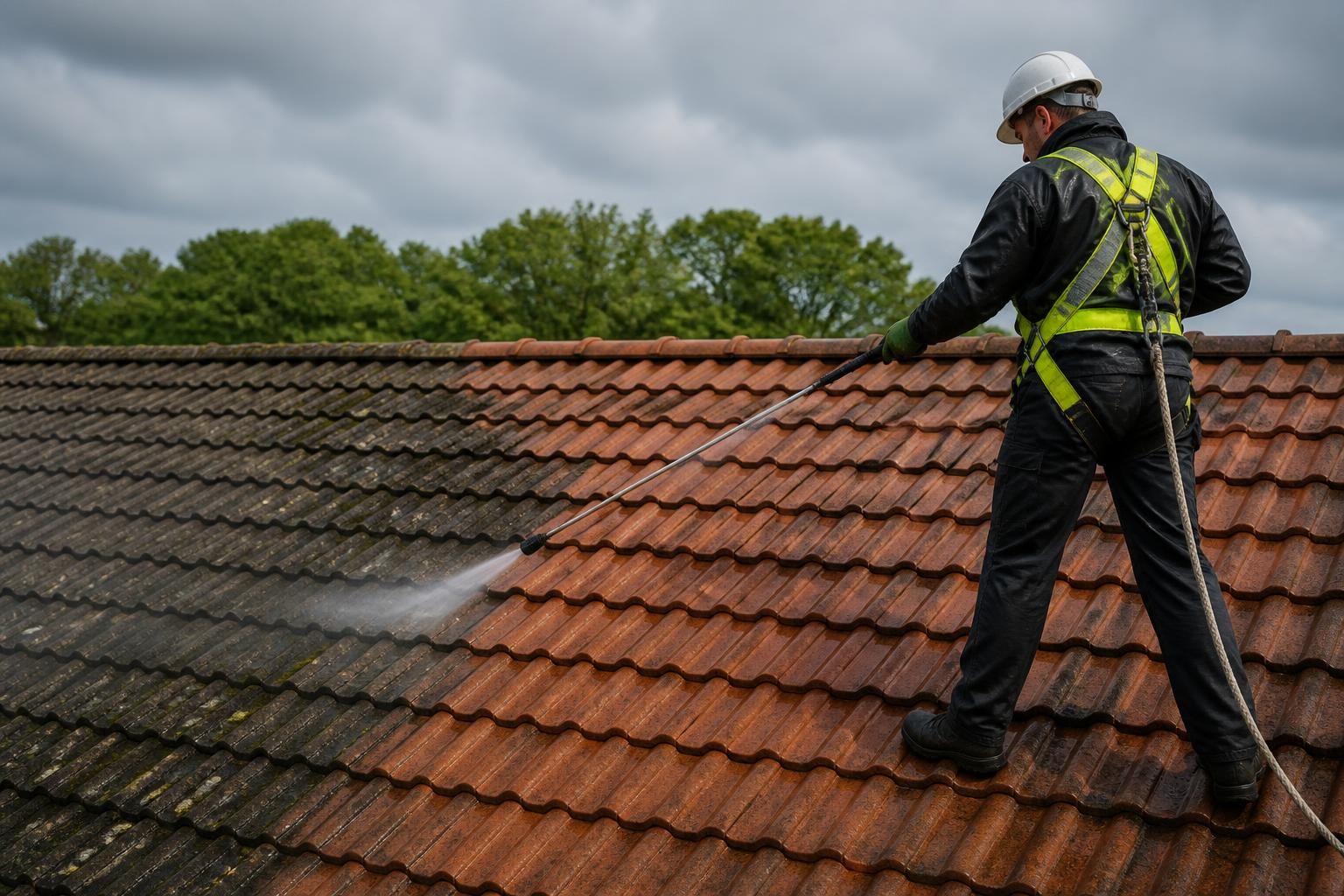
Soft wash tile roof cleaning typically uses a carefully diluted biocidal solution, often containing sodium hypochlorite, water and a surfactant to remove algae, moss, lichen and organic staining without high-pressure water. These solutions can be environmentally responsible when professionally selected, correctly diluted, contained and rinsed so they do not enter drains, soil, watercourses or surrounding vegetation.
Soft wash tile roof cleaning usually uses a professionally diluted biocidal solution, commonly based on sodium hypochlorite, water and a surfactant. The solution is applied at low pressure to kill and loosen algae, moss, lichen and organic staining rather than relying on force to remove them. When the product is selected for the roof, diluted according to the manufacturer’s instructions and properly contained during application and rinsing, this method can be used with a controlled environmental impact. However, no chemical treatment should be described as completely harmless: safe use depends on the product, dilution, weather conditions, application technique and management of the run-off.
Common ingredients in a soft wash roof treatment include:
- Sodium hypochlorite: A chlorine-based biocide that breaks down organic growth and staining. It is effective against the organisms that commonly discolour roof tiles, but it must be handled carefully because concentrated solutions can harm vegetation, irritate skin and eyes, and affect aquatic life.
- Water: Used to dilute the active ingredient to a level appropriate for the tile type, the severity of the growth and the application method. Correct dilution is essential; using a stronger mixture does not automatically produce a better or safer result.
- Surfactants: These help the treatment spread across the tile surface and remain in contact with the contamination instead of running off immediately. A suitable surfactant can improve coverage and reduce the need for repeated application.
- Additional detergents or specialist biocides: These may be used where appropriate for particular staining or growth. The chosen product must be compatible with the roof material and used in accordance with its safety data sheet and label instructions.
The purpose of the treatment is to destroy the biological growth at its source. Moss and lichen can retain moisture against tiles and may contribute to blocked gutters, surface discolouration and gradual deterioration of roof materials. A soft wash approach avoids the aggressive pressure that can dislodge tiles, damage protective finishes or force water beneath the tile edges. Once the treatment has taken effect, loosened contamination can be removed carefully, with low-pressure rinsing or manual methods used where suitable.
Environmental safety is primarily managed through control of the application and run-off. Before work begins, the surrounding area should be assessed for planted borders, lawns, ponds, water butts, drainage channels, vulnerable cladding and neighbouring property. Vegetation is protected or dampened with clean water where appropriate, and exposed items are covered or moved. Gutters and downpipes may need to be isolated, redirected or monitored so that contaminated liquid does not enter surface-water drains, soil or watercourses.
During cleaning, the operator should use the lowest practical application rate and avoid spraying in windy, very hot or wet conditions. Wind can carry droplets onto plants, vehicles and neighbouring surfaces, while rain can wash the solution away before it has worked and increase the risk of uncontrolled discharge. Run-off should be collected, diverted or diluted in a controlled manner where required by the site conditions and product instructions. It should never be allowed to flow into a pond, stream or other watercourse.
Rinsing is also an important part of responsible soft washing. Roof surfaces and nearby areas can be rinsed with clean water to remove residual product, but rinsing must be planned so that it does not simply transfer the chemical into an unprotected drain or garden bed. Any affected vegetation should be washed down promptly, and the work area should be checked after completion for overspray, residue and displaced organic matter.
Professional contractors should also consider the requirements of the Control of Substances Hazardous to Health Regulations, product safety data sheets, manufacturer instructions and the specific drainage arrangements at the property. Appropriate gloves, eye protection, protective clothing and suitable footwear are required when handling or applying chemical treatments. The operator should keep chemicals labelled and secured, use suitable equipment and ensure that anyone nearby is protected from spray and contact with treated surfaces.
Not every roof requires the same solution. Concrete, clay and some coated tiles can respond differently to chemical treatment, and older or weathered tiles may need a gentler approach. The roof condition, existing repairs, coatings, surrounding vegetation and type of biological growth should be assessed before choosing the product. Stronger chemicals, unsuitable detergents or excessive application can bleach surfaces, affect metals and coatings, damage plants or create unnecessary environmental risk.
Soft wash solutions are therefore environmentally preferable to uncontrolled chemical use, not automatically environmentally safe in every situation. Their main advantages are the low-pressure application, reduced mechanical damage and ability to deal with biological growth without abrasive cleaning. The environmental benefit is only achieved when the treatment is correctly specified, carefully applied and prevented from entering sensitive areas.
For a commercial or residential tile roof, the most responsible approach is to confirm the proposed treatment before work starts, including the active ingredient, intended use, protection for landscaping and the arrangements for managing run-off. A reputable cleaning contractor should be able to explain why the solution is suitable for the tiles, what precautions will be taken around the property and how the completed area will be left safe for occupants, plants and drainage systems.
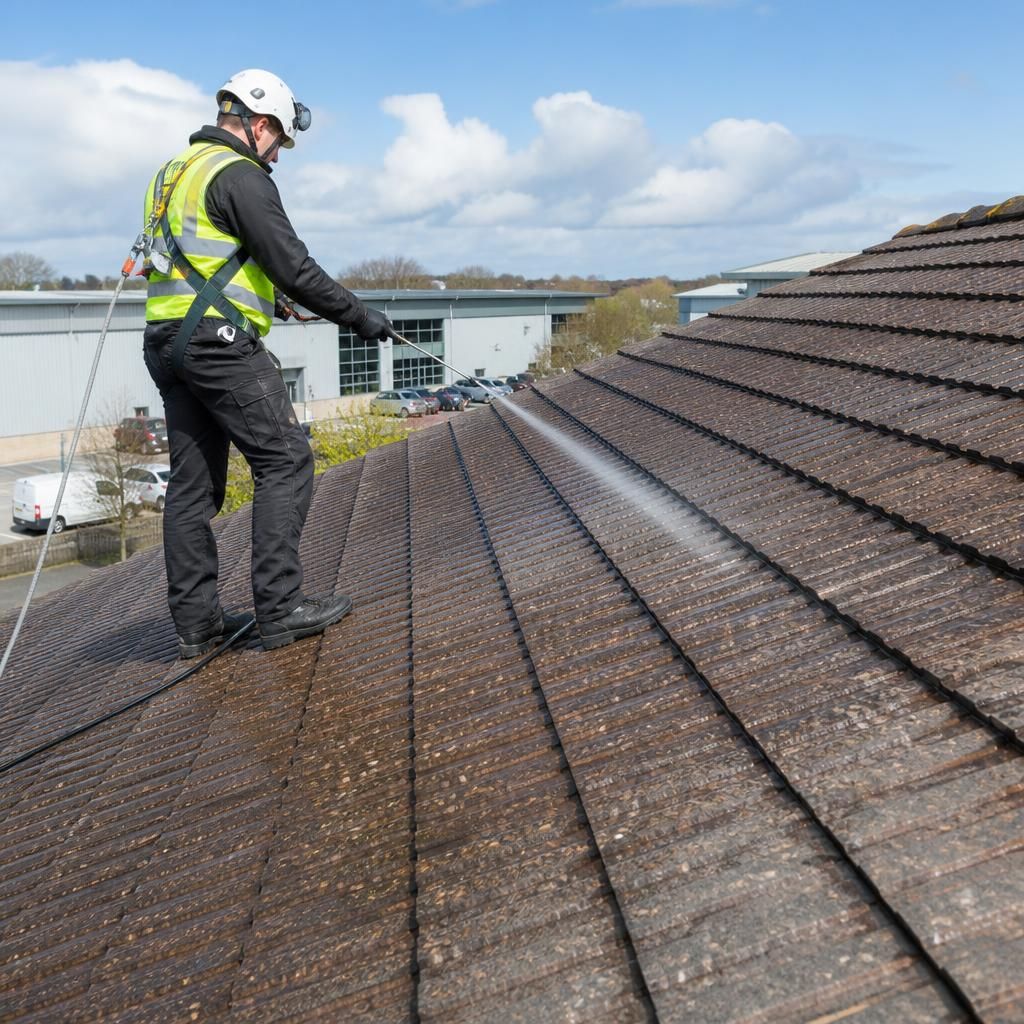
The environmental safety of soft wash tile roof cleaning depends mainly on how the cleaning solution and run-off are controlled. A diluted biocidal treatment can remove algae, moss and lichen without high-pressure damage, but it must not be allowed to enter ponds, watercourses, surface-water drains or unprotected planting.
Before application, the surrounding area should be assessed and vulnerable vegetation, gutters, downpipes, vehicles and drainage channels protected. The solution should be applied in suitable weather, using only the amount needed for the roof, with clean-water rinsing managed so that residue is contained or safely diverted. Any plants exposed to overspray should be rinsed promptly. These precautions, together with the product instructions and safety data sheet, help reduce the environmental impact while leaving the roof and surrounding property safe.