
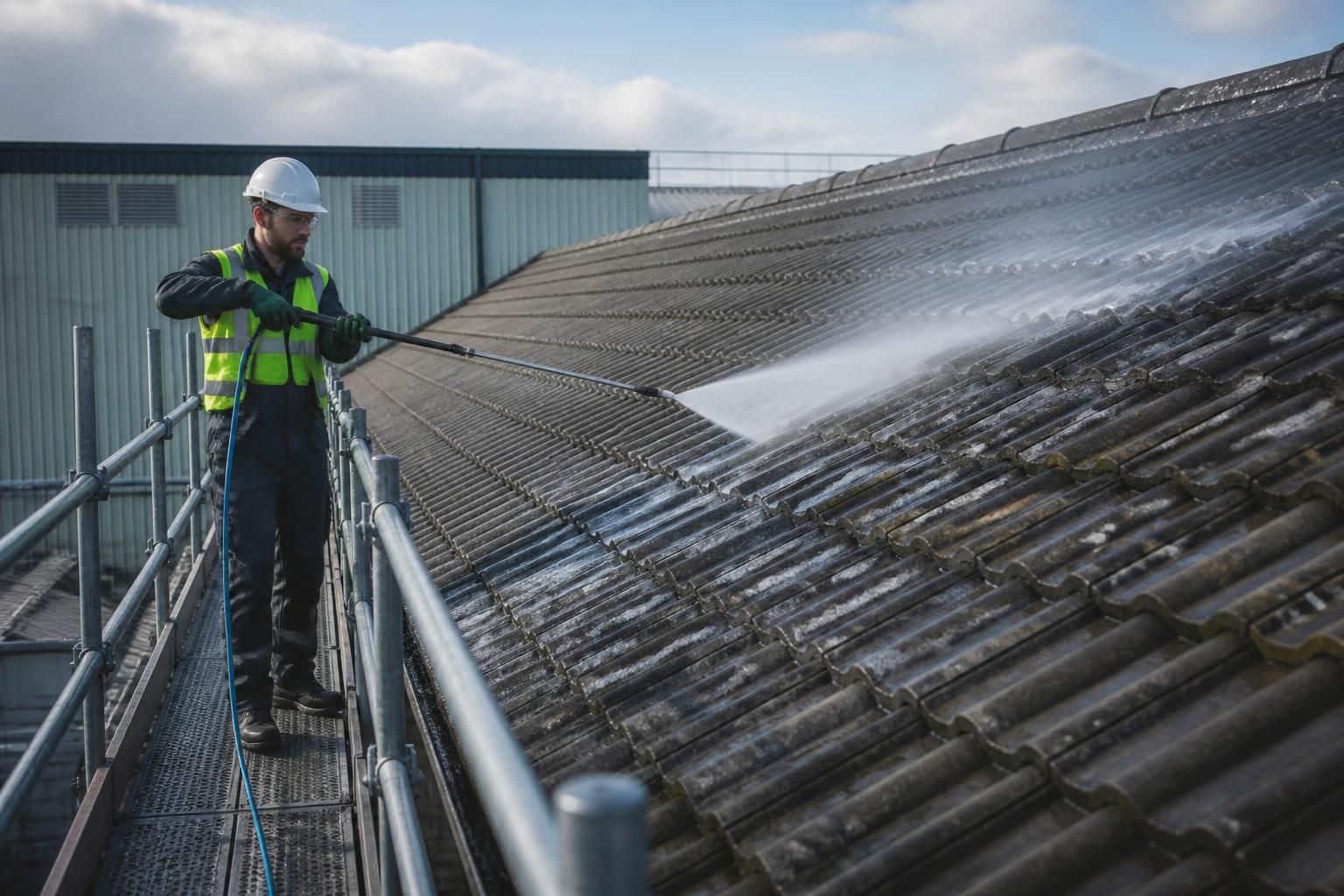
What are the benefits of soft wash tile roof cleaning over traditional pressure washing methods?
Soft wash tile roof cleaning uses low-pressure water and specialist solutions to remove moss, algae, lichen and staining without the force that can crack, dislodge or erode roof tiles. Compared with traditional pressure washing, it provides a gentler, more controlled clean that helps protect the tiles, their protective coatings and the surrounding property while extending the roof’s serviceable condition.
Soft wash tile roof cleaning offers a safer and more controlled alternative to traditional pressure washing because it uses low-pressure water with specialist cleaning solutions to remove organic growth and staining. This reduces the risk of cracked, displaced or surface-damaged tiles while treating the underlying moss, algae and lichen rather than relying on water force alone.
The main benefits over pressure washing include:
- Less risk of tile damage: High-pressure water can stress brittle, weathered or already weakened tiles. It may crack tiles, loosen them from their position, damage edges and force water beneath overlaps or flashing. Soft washing applies considerably less mechanical force, making it more suitable for careful cleaning of many concrete and clay tile roofs.
- Better control around vulnerable areas: Roof coverings include more than the visible tile surface. Mortar joints, ridge and verge details, flashings, roof vents, sealants and adjacent roof components can all be affected by aggressive pressure washing. A low-pressure application allows the operative to work more carefully around these details and identify areas requiring repair or further assessment.
- Removal of organic growth at its source: Pressure washing can strip away visible moss, algae and lichen, but it may leave spores or biological residue behind. Specialist soft wash solutions help break down and treat the growth, so the roof is not being cleaned by force alone. Remaining material can then be rinsed or removed using appropriate manual methods, depending on the roof condition and the extent of the contamination.
- Reduced surface erosion: Repeated high-pressure cleaning can wear the surface of some tiles and remove weathered coatings or protective finishes. This can leave the roof more exposed to moisture and future staining. Soft washing is designed to minimise this abrasion and preserve the existing tile surface wherever it remains sound.
- More even results on textured tiles: Tile profiles, overlaps and textured surfaces can make it difficult for a pressure-washing lance to clean consistently without increasing the pressure. Soft wash treatments can reach into surface irregularities and joints more effectively, helping to address staining and biological growth across the roof rather than only on exposed areas.
- Lower risk of forcing water into the roof construction: Excessive pressure can drive water under tiles, into laps or around roof penetrations. Low-pressure cleaning reduces this risk, although the roof must still be treated carefully and the weather conditions must be suitable. Soft washing is not a substitute for sound roofing practice or an inspection of existing defects.
- Less disruption to surrounding areas: Pressure washing can create considerable spray, overspray and dirty run-off. A controlled soft wash application can help reduce airborne spray and make it easier to protect walls, windows, gutters, vehicles, planted areas and pedestrian routes. Drainage points and run-off still need to be managed, particularly on commercial properties.
- Potentially longer-lasting cleanliness: Because soft washing treats organic contamination rather than simply blasting off its visible surface, the roof may remain cleaner for longer than one cleaned only with water pressure. The duration of the result depends on shade, moisture, nearby trees, roof orientation, tile condition and local environmental conditions.
Traditional pressure washing is not automatically unsuitable for every roof. In some situations, a carefully adjusted low-to-moderate pressure rinse may be appropriate after treatment, or for removing loose residue from a robust and well-maintained surface. The correct approach depends on the tile material, age, condition, roof pitch, previous repairs and the type of contamination. A competent contractor should inspect the roof before selecting equipment, pressure and cleaning products.
Soft wash cleaning also requires more than applying chemical solution and rinsing. The surrounding property should be protected, gutters and drainage routes considered, and run-off controlled. Cleaning products must be selected and diluted according to the surface and contamination, with sensible precautions for people, animals, plants and watercourses. Any loose tiles, defective mortar, damaged flashing or other faults should be recorded before cleaning, as cleaning cannot correct an underlying roofing defect.
For these reasons, soft wash tile roof cleaning is generally preferred where the objective is to improve appearance while preserving the existing roof covering. It provides a gentler cleaning process, limits avoidable mechanical damage and can help maintain the roof’s serviceable condition. The most suitable method should always be confirmed following a site assessment rather than chosen solely on the basis of the roof’s appearance.
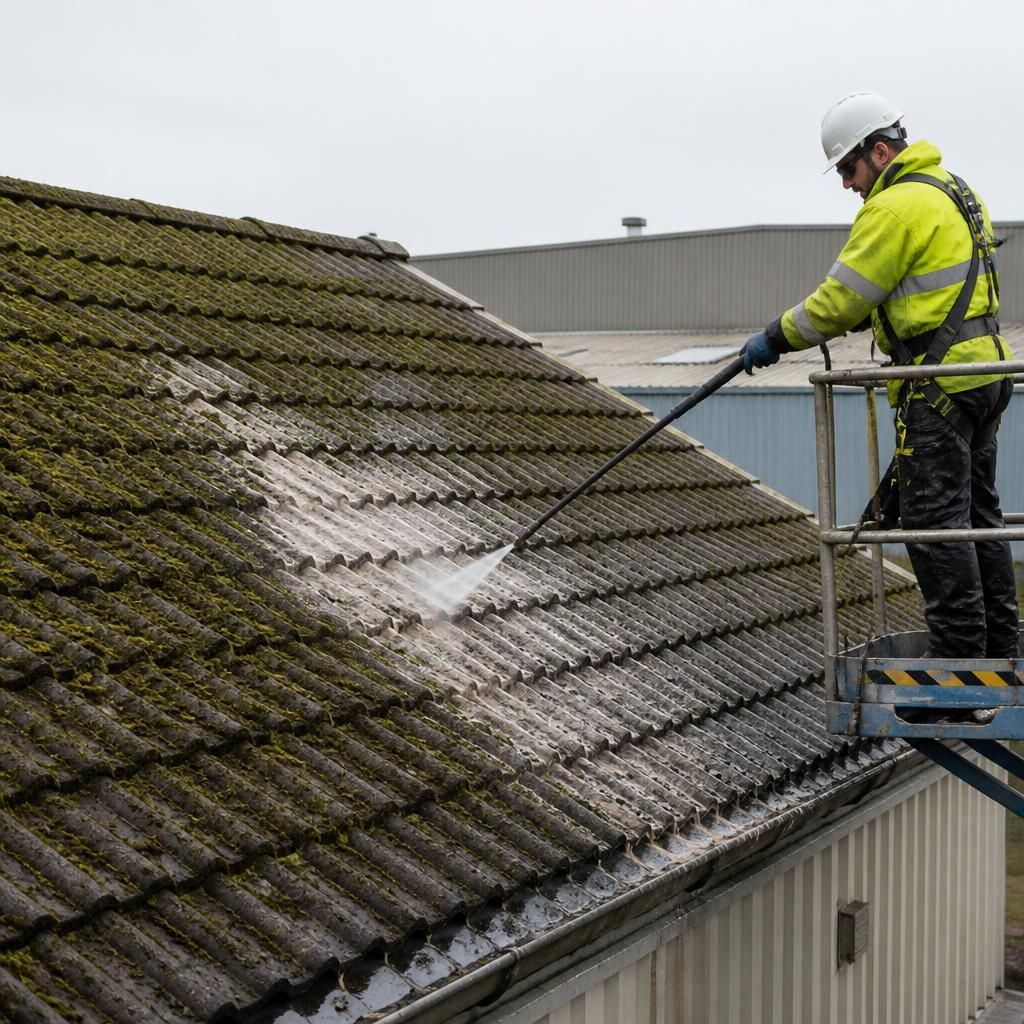
Soft wash tile roof cleaning uses low-pressure water and specialist treatment solutions to remove moss, algae, lichen and staining without the mechanical force of traditional pressure washing. This gentler method helps reduce the risk of cracked, displaced or eroded tiles, particularly where the roof covering is aged, weathered or already showing signs of weakness.
High-pressure cleaning can also disturb mortar joints, flashings, roof vents and tile overlaps, or force water beneath the roof covering. Soft washing allows these vulnerable areas to be treated more carefully while the cleaning solution works on the organic growth itself. The roof should still be inspected before work begins, as cleaning cannot repair loose tiles, defective mortar or damaged flashing.