
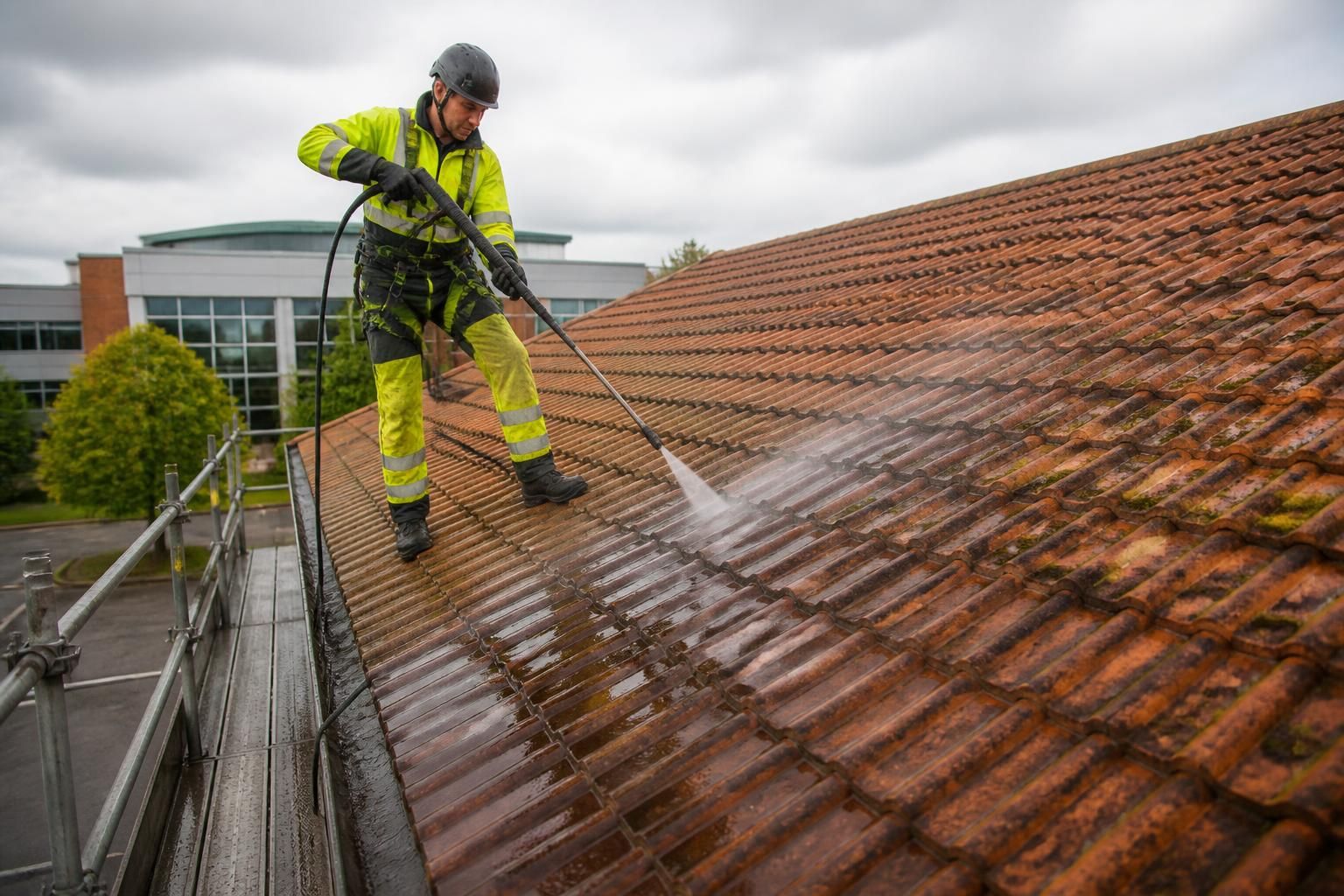
How can soft wash tile roof cleaning help in preventing tile roof damage?
Soft wash tile roof cleaning helps prevent damage by removing moss, algae, lichen and dirt that can retain moisture, encourage tile deterioration and obstruct drainage. Its low-pressure application reduces the risk of cracked, displaced or surface-damaged tiles while treating the organic growth at its source.
Soft wash tile roof cleaning helps prevent damage by removing moss, algae, lichen, dirt and other deposits that hold moisture against the tiles and interfere with drainage. Unlike high-pressure cleaning, the method uses controlled water pressure and an appropriate cleaning solution to treat organic growth without subjecting tiles, bedding or roof details to unnecessary mechanical force. This can help preserve the roof’s condition, reduce avoidable deterioration and support a longer service life.
Tile roofs are designed to shed water, but their performance can be affected when moss, algae and debris build up. Organic growth may develop around tile overlaps, in valleys and near outlets, where it can retain moisture and restrict the normal flow of rainwater. Persistent dampness can contribute to surface weathering, staining and the gradual breakdown of vulnerable components, particularly where the roof is already aged or has existing defects.
Soft washing helps address these risks in several ways:
- It removes moisture-retaining growth. Moss and lichen can hold water against the tile surface for longer than normal rainfall. Removing this growth allows the roof to dry more effectively between wet periods.
- It reduces blockage around drainage routes. Accumulated moss, leaves and dirt can obstruct tile channels, valleys, gutters and other drainage points. Clearing these areas helps rainwater move away from the roof as intended.
- It limits surface abrasion. High-pressure cleaning can be too aggressive for some tile types, especially older, weathered or already weakened tiles. Soft washing relies on chemical treatment and low-pressure rinsing rather than forceful blasting, reducing the likelihood of cracking, pitting or stripping the tile surface.
- It treats growth rather than only removing visible staining. A suitable biocidal or antimicrobial solution can help break down the organisms responsible for the discolouration. This is important because simply rinsing the surface may leave roots, spores or organic residue behind.
- It helps protect roof fixtures and surrounding details. Controlled application is less likely to disturb ridge tiles, pointing, flashing, seals and other adjoining components than unsuitable pressure washing. These areas still require inspection, as cleaning cannot repair defective or loose materials.
The low-pressure aspect is particularly important for tiled roofs. Roof tiles can appear robust while having hidden weaknesses caused by age, frost, previous impact, movement or failed fixings. Excessive pressure may force water beneath overlaps, dislodge tiles or damage the protective surface. It can also disturb mortar bedding and pointing around ridges and verges. Soft washing is not completely risk-free, but a properly assessed and controlled process substantially reduces these avoidable stresses.
A professional soft wash should begin with an inspection rather than immediate application. The roof should be checked for cracked, slipped or missing tiles, deteriorated mortar, exposed underlay, damaged flashings, blocked gutters and signs of water ingress. These issues need to be recorded and, where appropriate, repaired before or after cleaning. Applying a cleaning solution will not make a structurally defective roof watertight, and cleaning should not be used as a substitute for roof repairs.
The cleaning process is normally adapted to the tile material and the condition of the roof. The operative selects a suitable solution, protects vulnerable areas and applies it in a controlled manner. Loose debris may be removed carefully, followed by a low-pressure rinse that avoids forcing water beneath the tiles. Run-off should also be managed so that cleaning residues, loosened organic matter and contaminated water do not enter sensitive planting, watercourses or drainage systems without suitable precautions.
Preventing damage also depends on avoiding unnecessary foot traffic. Walking directly on roof tiles can cause cracking or displacement, particularly on older roofs. Access should therefore be planned using suitable equipment and safe working methods. Where access is difficult or the roof is fragile, cleaning may need to be carried out from appropriate access equipment rather than by walking over the tiled surface.
Soft wash cleaning is most effective when it forms part of a planned maintenance programme. Regular inspections can identify renewed moss growth, blocked drainage, damaged tiles and failing mortar before they develop into more costly problems. The appropriate interval depends on the roof’s exposure, surrounding trees, aspect, local weather, tile type and the amount of organic growth present. A roof in a shaded or damp location may need attention more often than one that receives good sunlight and has clear drainage.
It is important to distinguish between preventing avoidable cleaning-related damage and guaranteeing that a roof will never deteriorate. Tiles naturally age, and defects may result from storms, frost, building movement or general wear. Soft washing cannot reverse erosion, repair cracks or replace failed fixings. Its role is to remove damaging deposits using a gentler method and to make emerging defects easier to identify during maintenance.
For commercial and managed properties, a suitable service should include a condition assessment, a method appropriate to the tile type, protection for surrounding surfaces and vegetation, controlled run-off, safe access and a clear record of any defects found. These measures help ensure that the roof is cleaned without transferring risk to the building fabric, occupants, landscaping or drainage infrastructure.
In summary, soft wash tile roof cleaning helps prevent tile roof damage by controlling moss and other organic growth, reducing moisture retention, supporting drainage and avoiding the excessive pressure that can crack or displace tiles. When carried out after a proper inspection and combined with timely repairs and planned maintenance, it is a practical way to preserve the condition and appearance of a tiled roof.
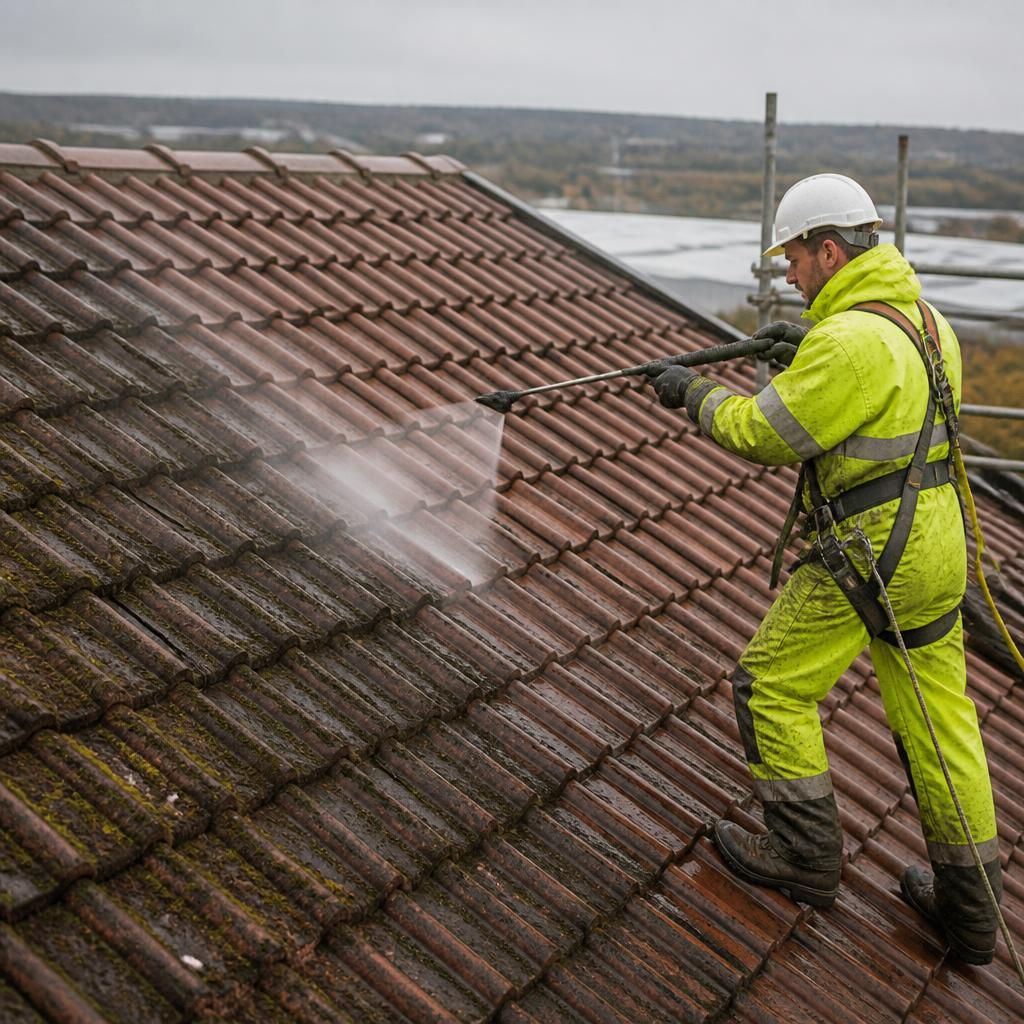
Soft wash tile roof cleaning helps prevent damage by treating moss, algae and lichen with a suitable cleaning solution, then rinsing with controlled low pressure. This removes growth that can retain moisture without the forceful blasting that may crack tiles, disturb pointing or drive water beneath overlapping tiles.
The method is especially useful where tiles are weathered, porous or already vulnerable. Before cleaning, the roof should be checked for loose, cracked or missing tiles, damaged flashing and deteriorated mortar. These defects require appropriate repair, as soft washing can reduce avoidable stress on the roof but cannot restore damaged materials or correct underlying water-ingress problems.
Request a Soft Wash Tile Roof Cleaning Assessment
Request a soft wash tile roof cleaning assessment to check for moss, moisture-retaining debris, damaged tiles and drainage issues before cleaning begins. Encanto Exterior Cleaning can recommend a suitable, low-pressure cleaning approach for your roof’s condition.