
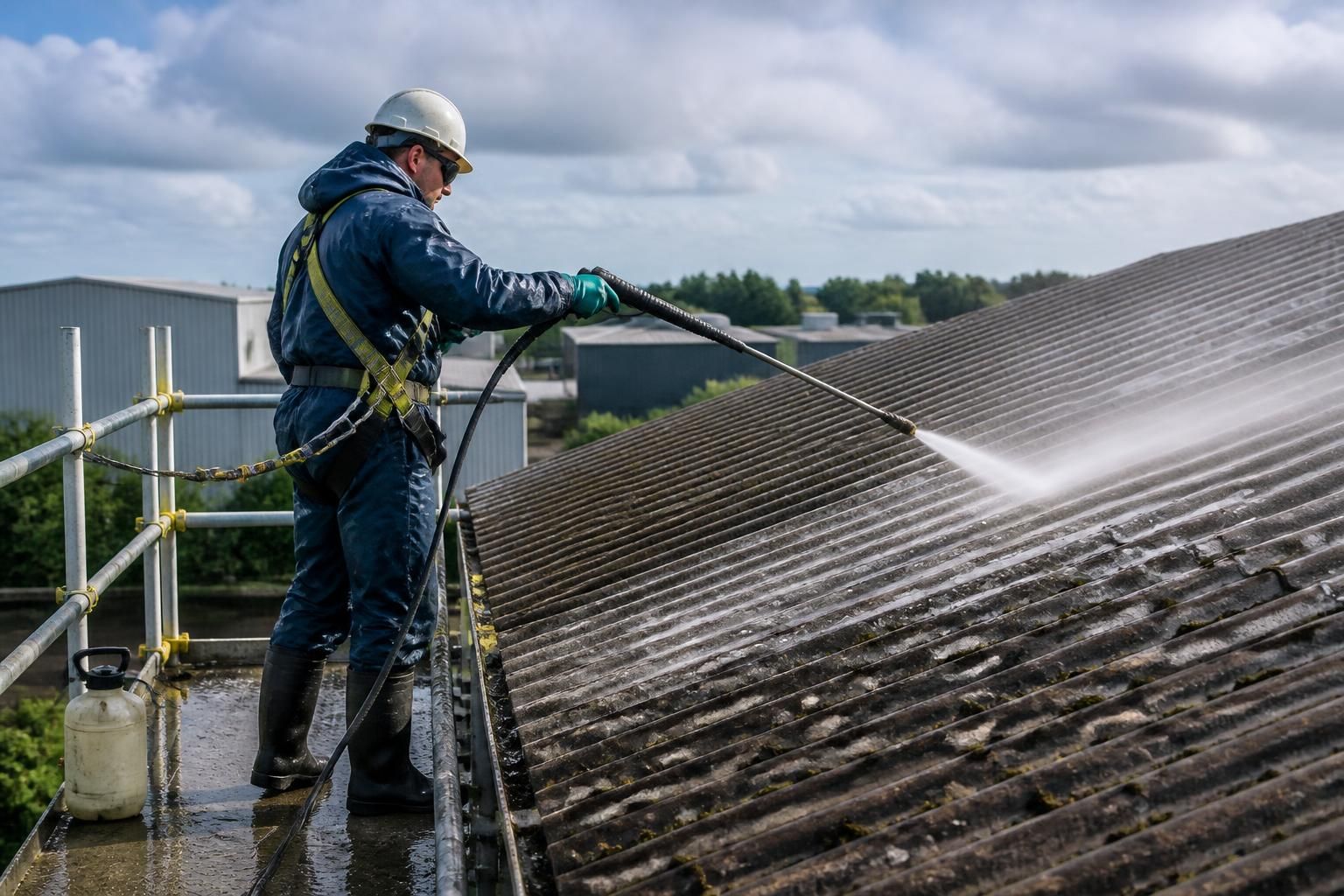
What types of cleaning solutions are used in roof soft washing, and are they environmentally safe?
Roof soft washing typically uses a low-pressure application of water-based treatments containing biocides or detergents to break down moss, algae, lichen and organic staining. These solutions can be environmentally safe when correctly selected, diluted, contained and rinsed away by trained professionals, but uncontrolled discharge into drains, soil or watercourses can harm vegetation and aquatic life.
Roof soft washing uses low-pressure water combined with a treatment solution designed to kill or loosen moss, algae, lichen, mould and other organic growth. The most common formulations contain a biocidal active ingredient, often supported by surfactants or detergents that help the solution spread across the roof and penetrate surface contamination. These products are not automatically environmentally safe: their impact depends on the active ingredients, concentration, application method, weather conditions and how wastewater is controlled.
Common types of soft washing solution
- Biocidal treatments: These target the organisms responsible for green and black staining, moss and lichen. Chlorine-based products, including formulations based on sodium hypochlorite, are used for some applications because they act quickly. Other products use different biocidal ingredients with a slower or more targeted action.
- Surfactants and detergents: These reduce surface tension, helping a treatment spread evenly over tiles, slates, cladding or other roof materials. They can also help release dirt and atmospheric deposits, reducing the need for aggressive rinsing.
- Fungicidal or algaecidal treatments: Some proprietary products are formulated specifically for fungal, algal or lichen growth. They may be used as a treatment rather than being relied on solely for immediate visual cleaning.
- Water-based cleaning agents: Less heavily contaminated surfaces may only require water and a compatible detergent, particularly where the purpose is to remove loose dirt rather than kill established biological growth.
The correct product is selected according to the roof covering, the type of growth, nearby vegetation, drainage arrangements and the required cleaning result. A solution suitable for concrete tiles may be unsuitable for aged slate, leadwork, coated metal or roofs with vulnerable sealants. Soft washing is low pressure, but the chemicals still need to be managed carefully.
Are these solutions environmentally safe? They can be used responsibly, but “environmentally safe” is not a blanket description for every soft washing chemical. A treatment that is effective against algae, moss or lichen is biologically active by design. If it reaches ponds, streams, surface-water drains, soil or sensitive planting at an uncontrolled concentration, it may damage aquatic organisms, vegetation and beneficial soil life. Chlorine-based products can also affect plants and may corrode nearby metals or discolour surfaces if they are misapplied.
Environmental risk is reduced when a professional uses an appropriate product, follows its safety data sheet and label instructions, applies the correct dilution, and avoids unnecessary chemical use. The work should be planned for suitable weather, with particular care taken during heavy rain or when wind could carry spray beyond the roof. Nearby plants, rainwater harvesting systems, vehicles, painted surfaces and vulnerable building materials should be protected before application.
Runoff control is as important as product selection. Before work starts, the contractor should identify where roof water will flow and distinguish foul-water drainage from surface-water drainage. Downpipes may need to be temporarily disconnected or contained where appropriate, and runoff should not be allowed to enter a watercourse or soak into planted areas without suitable control. Recovery, collection, filtration or other approved handling methods may be needed, depending on the site and the product used. Any contaminated water should be managed in accordance with the product instructions and applicable environmental requirements rather than simply washed into a drain.
Professionals should also review the product’s safety data sheet, carry out a site-specific assessment and use suitable personal protective equipment. Chemical storage, transport, mixing and disposal should be controlled under the relevant workplace and environmental procedures. Products should never be mixed unless the manufacturer specifically permits it, as incompatible chemicals can release dangerous gases or create an ineffective treatment.
There are also environmental benefits to a well-managed soft wash. Low-pressure application generally causes less mechanical wear than pressure cleaning, which can help avoid unnecessary loss of tile surface, protective coatings or pointing. A suitable treatment can remove organic growth without the repeated high-pressure rinsing that may disturb roof materials. However, low pressure does not remove the need for responsible chemical handling, and a chemical treatment is not automatically the greener option in every situation.
For a low-risk approach, ask the contractor to explain:
- which active ingredients and supporting detergents will be used;
- why the proposed treatment is compatible with the roof material and adjoining surfaces;
- how plants, rainwater systems, drains and watercourses will be protected;
- how overspray and contaminated runoff will be contained or disposed of;
- what will happen if weather conditions make safe application unsuitable; and
- whether the treatment is being used under the manufacturer’s instructions and relevant site-safety procedures.
In practice, the safest environmental outcome comes from using the least aggressive effective treatment, applying it precisely, preventing uncontrolled discharge and rinsing only when it is safe and necessary. A reputable roof cleaning contractor should be able to discuss the proposed solution and runoff controls before work begins, rather than describing every soft washing chemical as eco-friendly.
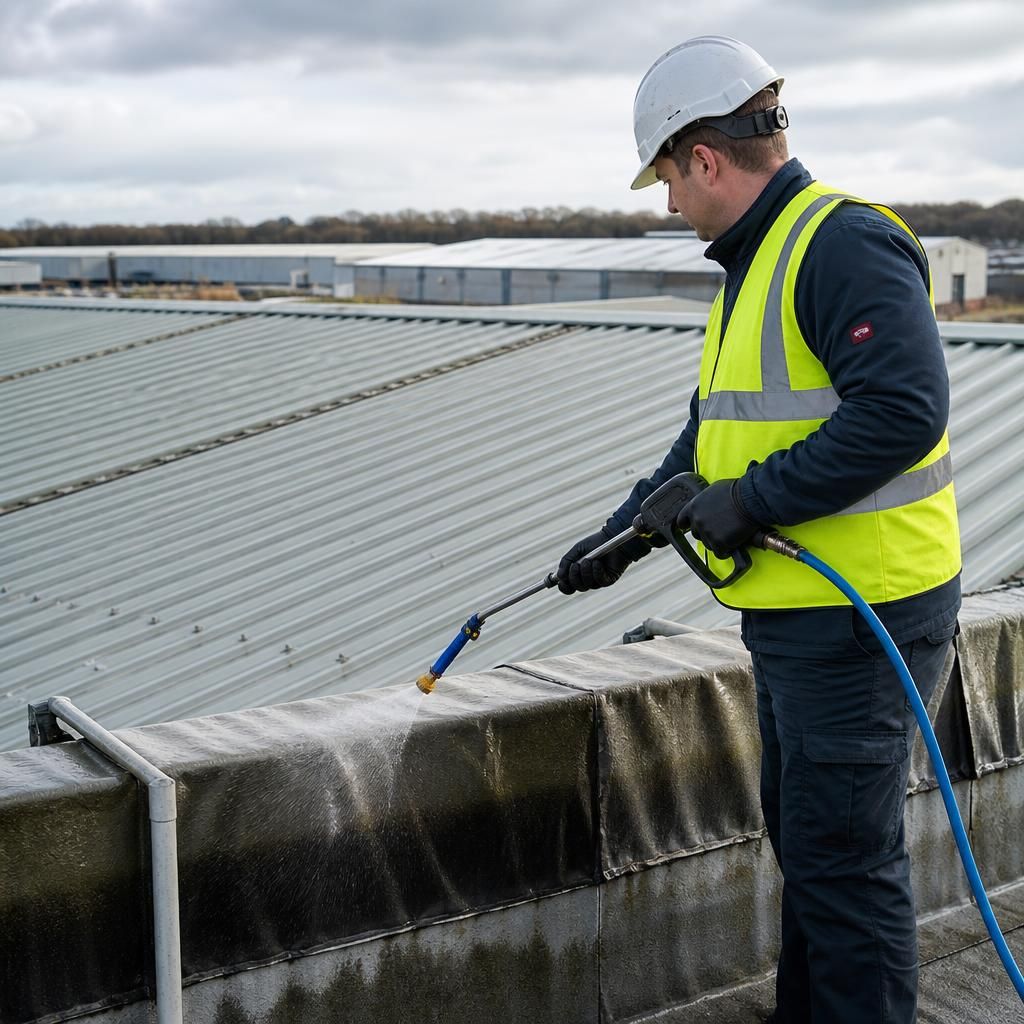
Roof soft washing solutions are environmentally safer when contaminated runoff and overspray are controlled, not simply because the application uses low pressure. Before treatment, the contractor should identify roof drainage routes, protect nearby planting and prevent solution from entering surface-water drains, ponds or watercourses.
Where necessary, downpipes should be temporarily contained or disconnected, and runoff collected or handled in line with the product manufacturer’s instructions. Work should also be postponed during heavy rain or strong winds, which can spread the treatment beyond the roof. These controls help ensure that the least aggressive effective solution is used without exposing surrounding vegetation, aquatic life or building materials to unnecessary chemical contact.
Discuss your roof soft washing requirements
Discuss your roof soft washing requirements with our team, including the roof material, organic growth and any nearby planting, drainage or watercourses that need protection. We can recommend a suitable treatment and explain how runoff and overspray will be controlled before work begins.