
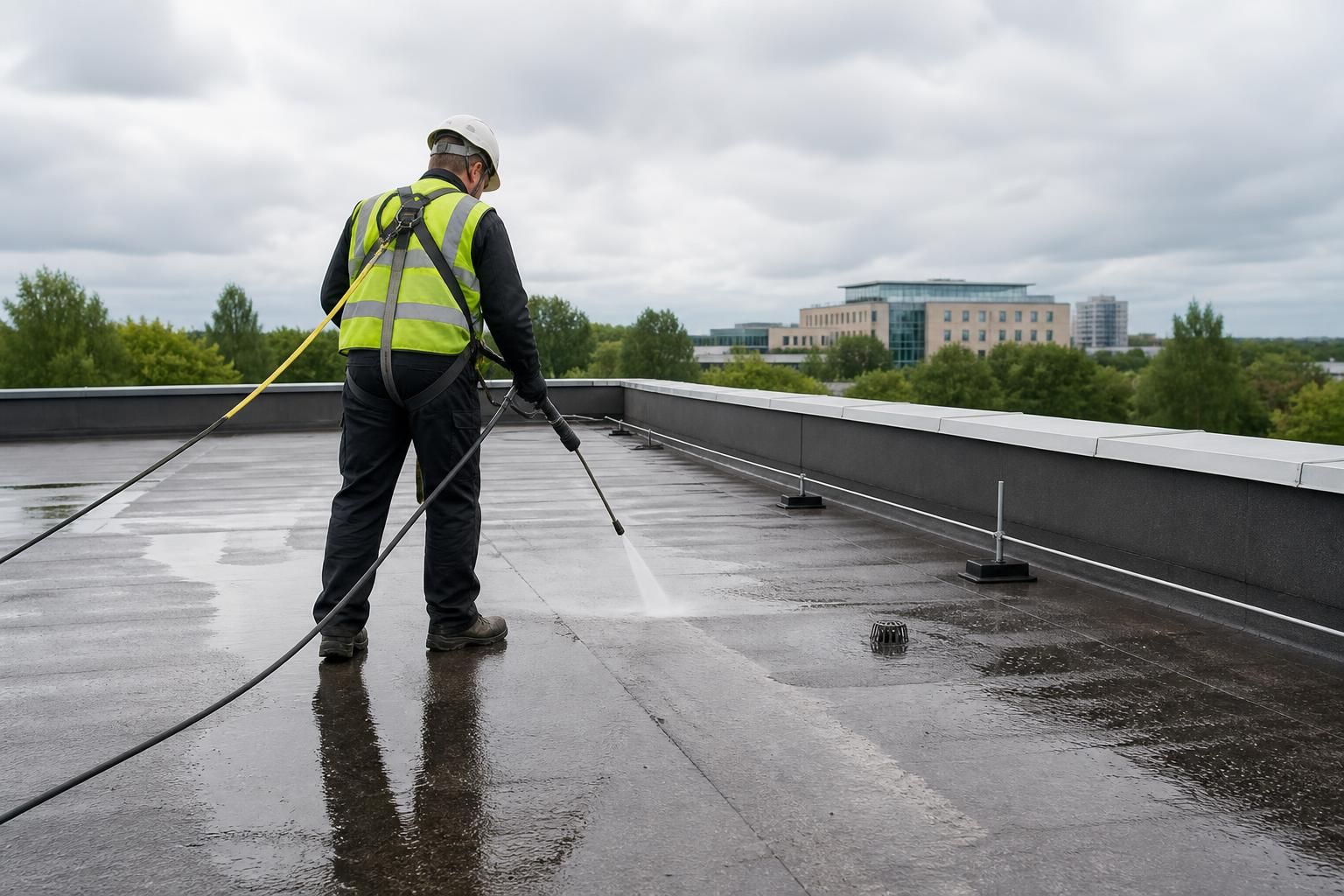
What environmental impacts should I consider when choosing between roof pressure cleaning and soft wash?
When choosing between roof pressure cleaning and soft wash, consider water consumption, cleaning chemicals, wastewater runoff and the risk of damage to roofing materials or surrounding habitats. Pressure cleaning generally uses more water and can dislodge contaminants, while soft washing uses less water but requires responsible chemical selection, containment and rinsing to prevent polluted runoff.
The main environmental trade-off is between water use and chemical use. Roof pressure cleaning usually consumes more water and can create heavily contaminated runoff by dislodging moss, dirt, coatings and other deposits. Soft washing generally uses less water and lower mechanical force, but relies on cleaning solutions that must be selected, contained and rinsed responsibly. The most environmentally appropriate method depends on the roof material, the type of contamination, the drainage arrangement and the contractor’s controls.
Water consumption
Pressure cleaning typically requires a substantial flow of water to remove surface contamination and rinse the roof. The environmental effect is greater where mains water is used, drainage is limited or repeated passes are needed. Water use can be reduced by accurate pressure control, suitable nozzles, targeted cleaning and avoiding unnecessary rinsing of unaffected areas.
Soft washing uses low-pressure application and a controlled rinse, so it may use less water than intensive pressure cleaning. However, “low water use” does not automatically make a soft wash environmentally preferable. The quantity and type of solution, the area being treated and the way wastewater is managed remain important considerations.
Cleaning chemicals and biocides
Soft-washing solutions may include detergents, alkaline cleaners, fungicidal or biocidal agents, depending on the roof covering and the organisms being treated. Some products are designed to break down after use, while others can harm aquatic life, plants or soil if they enter surface water or are applied in excessive concentrations. Product labels, safety data sheets and the intended use must therefore be checked before application.
A responsible contractor should use the least aggressive product that can achieve the required result, apply it at the correct dilution and prevent overspray. Chemical selection should also take account of nearby gutters, rainwater harvesting systems, planted areas, ponds, drainage channels and neighbouring property. Chemical solutions should never be allowed to enter watercourses or storm drains unless the discharge is demonstrably permitted and suitably treated.
Pressure cleaning may require fewer chemical products, particularly where contamination can be removed with water alone. It can nevertheless mobilise pollutants already present on the roof, including organic matter, bird fouling, atmospheric deposits, loose coatings and residues from previous treatments. The absence of added chemicals does not mean the resulting wastewater is harmless.
Runoff and wastewater control
Runoff is one of the most important environmental issues in either method. Roof cleaning wastewater can carry sediment, moss fragments, algae, detergents, biocides, metals and other contaminants into soil, surface water or drainage systems. Pressure cleaning can produce a high volume of fast-moving runoff, whereas soft washing can produce lower volumes containing a higher concentration of cleaning solution.
Before work starts, the drainage route should be assessed and gutters, downpipes and nearby ground should be protected where necessary. Suitable measures may include drain covers, collection points, temporary bunding, wet vacuums, controlled discharge and filtration. Collected wastewater should be handled in accordance with the product instructions and applicable drainage requirements. It should not simply be swept into a road drain or allowed to flow across planted areas.
Where a site has sensitive drainage, a rainwater harvesting system, a pond or a watercourse nearby, additional containment and discharge planning may be needed. Weather is also relevant: cleaning during heavy rain can spread chemicals and contaminants beyond the work area, while strong wind increases the risk of spray drift. Rescheduling work in unsuitable conditions is an environmental control as well as a quality and safety measure.
Effects on roof materials and building life
Environmental impact includes the consequences of damaging a roof. Excessive pressure can strip protective finishes, force water beneath tiles or sheets, disturb pointing and sealants, and shorten the service life of some coverings. Damage may lead to premature replacement, generating additional material waste, transport emissions and construction activity.
Soft washing reduces mechanical stress, but an unsuitable chemical can discolour, corrode or degrade a roof covering, membrane, coating, sealant or flashing. The method should therefore be chosen after identifying the material and its condition. A small test area can help confirm compatibility before wider application, although testing does not replace the manufacturer’s guidance or a proper site assessment.
Effects on vegetation, soil and wildlife
Overspray and runoff can scorch foliage, alter soil conditions and affect insects or aquatic organisms. Moss and algae removed from a roof can also spread across gardens, landscaped areas or adjoining properties if it is not contained. Before cleaning, vulnerable vegetation should be identified and protected, and any protective coverings should be removed promptly when conditions allow so that plants do not overheat.
Birds, bats and other animals may use roof spaces, eaves or surrounding structures. A pre-work inspection should identify signs of nesting or roosting, and cleaning should be planned around relevant wildlife protections. Strong chemicals, uncontrolled spray and high-pressure work can disturb or harm wildlife even when no visible nest is present.
Energy, equipment and repeat cleaning
Both approaches have indirect impacts from transport, pumps, access equipment, heating water where applicable, packaging and disposal of used materials. The environmental outcome is improved when equipment is properly maintained, access is planned efficiently and cleaning is limited to areas that need it.
Cleaning frequency also matters. Removing contamination before it becomes firmly established can reduce the need for aggressive treatment, but unnecessary scheduled cleaning creates avoidable water, chemical and transport use. A condition-based maintenance plan is usually more sustainable than treating a roof simply because a fixed date has been reached.
How to compare the options for a specific roof
- Identify the roof covering, coating, age and condition before selecting the method.
- Establish whether the main problem is loose dirt, embedded staining, moss, algae, lichen, bird fouling or a combination of contaminants.
- Compare the expected water demand with the chemical products and dilution required.
- Check where roof and surface-water drainage leads, and plan how runoff will be contained or discharged.
- Protect plants, soil, water features, vehicles and adjoining elevations from spray and contaminated water.
- Confirm that the proposed products are suitable for the roof and are accompanied by appropriate handling and environmental information.
- Agree how removed moss, sludge, packaging and collected wastewater will be managed.
For many delicate or coated roofs, a controlled soft wash can reduce mechanical damage and water use. For robust surfaces with loose contamination, carefully controlled pressure cleaning may avoid the need for chemical treatment. Neither method is environmentally responsible if it is carried out without runoff controls, material checks and protection for surrounding areas.
When reviewing a proposed roof-cleaning method, ask for the planned pressure or application approach, product details, protection measures, weather limitations and wastewater arrangements. The best choice is the method that removes the contamination effectively while using no more water, chemical or force than the roof requires and preventing polluted runoff from reaching drains, soil or watercourses.
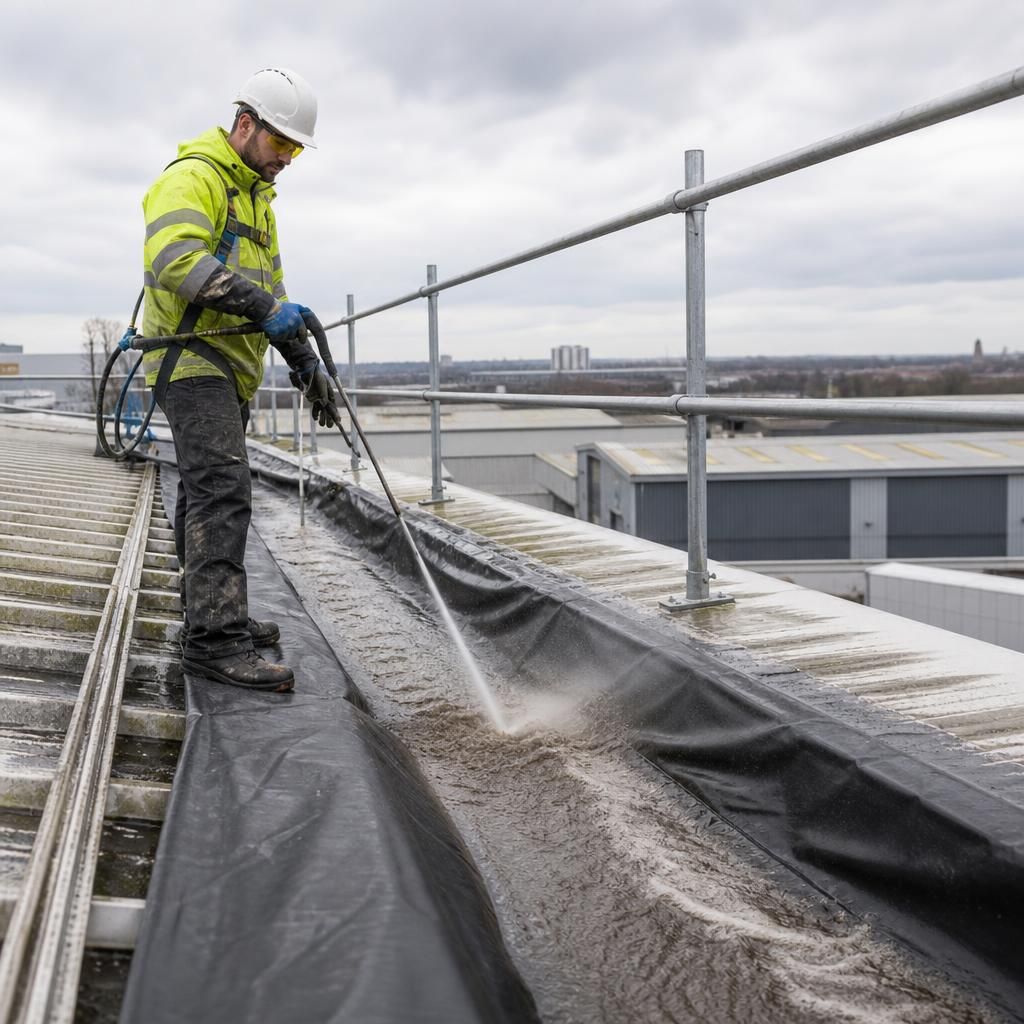
Runoff control is often the most important environmental consideration when comparing roof pressure cleaning with soft washing. Pressure cleaning can produce a larger volume of fast-moving wastewater, while soft washing may create less runoff but with a higher concentration of detergents or biocides.
Before work begins, the drainage route should be checked and gutters, downpipes, planted areas and surface-water drains protected where necessary. A responsible cleaning plan should prevent contaminated water, moss, sediment and cleaning solution from entering ponds, watercourses or storm drains. Collected wastewater and removed debris must be handled in accordance with the product instructions and applicable drainage requirements.
Discuss the Most Environmentally Suitable Roof Cleaning Method
Discuss your roof, drainage arrangements and surrounding environment with Encanto Exterior Cleaning to identify the most suitable cleaning method and runoff controls. We can assess the surface and recommend a practical approach based on its condition and contamination.