
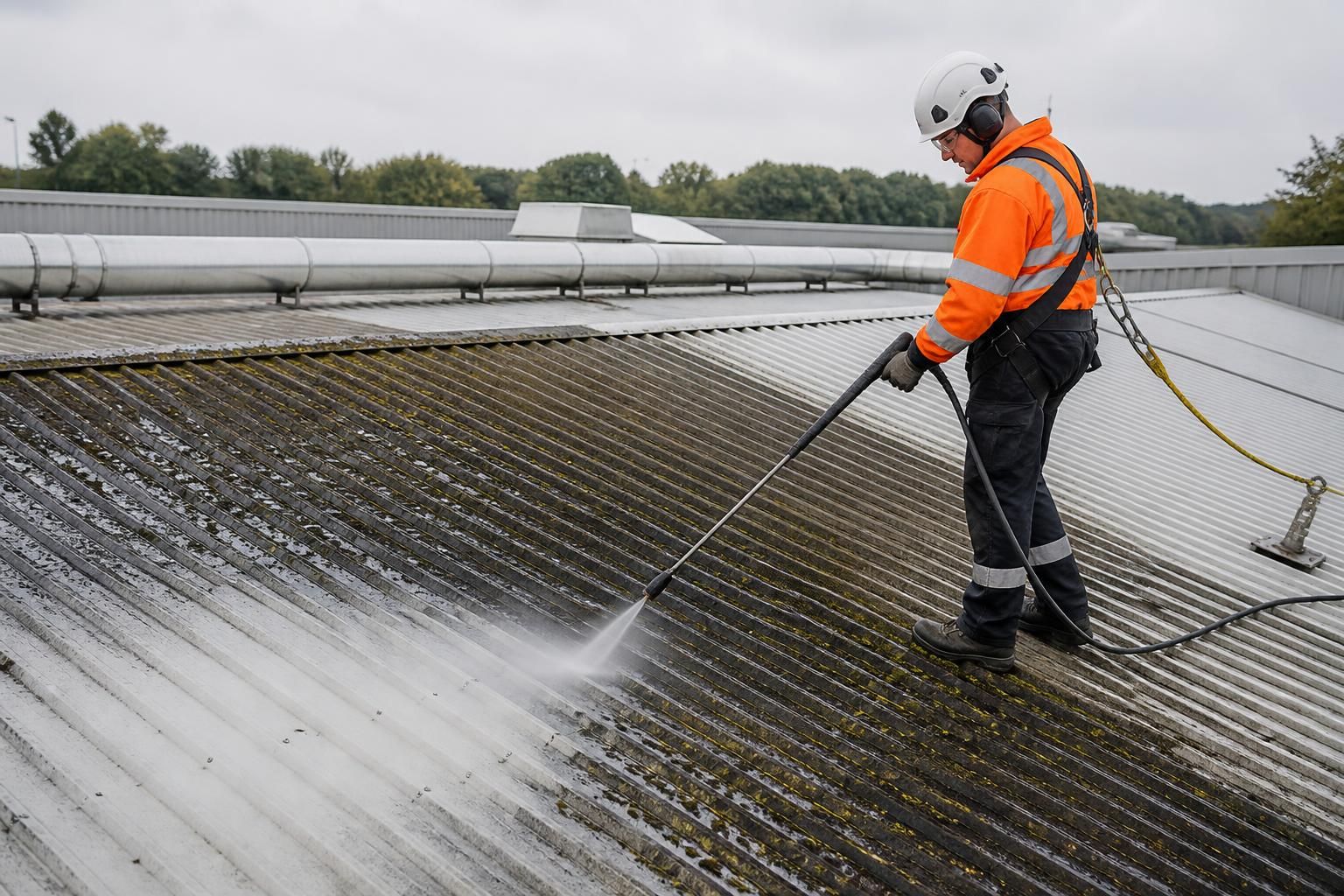
What are the potential risks and benefits of each method for my specific roof type?
The safest method depends on the roof material and condition: pressure cleaning can remove heavy, firmly bonded dirt from robust surfaces but may dislodge tiles, strip protective coatings or force water beneath coverings, while soft washing is gentler for slate, aged tiles and coated or membrane roofs but requires suitable chemicals and careful runoff control. A roof survey should confirm the covering, condition, drainage and contamination before selecting the method.
The potential risks and benefits of roof pressure cleaning or soft washing depend on the covering, its age, its condition, the roof pitch and the type of contamination present. Pressure cleaning is generally more effective at removing firmly bonded moss, dirt and surface deposits from robust, sound materials, but can cause mechanical damage. Soft washing applies a cleaning solution with little mechanical force, making it more suitable for vulnerable or coated coverings, although chemical compatibility, dwell time and runoff control must be managed carefully.
Concrete interlocking and plain tiles: Sound concrete tiles can often tolerate controlled pressure cleaning better than slate or aged clay tiles. The main benefits are rapid removal of heavy moss, lichen, dirt and bird fouling, together with a clear view of cracked or displaced tiles. The risks include surface erosion, damage to the tile finish, dislodged tiles and water being driven beneath laps, seals or flashing. Older concrete tiles may appear sound but have become porous or brittle, so a lower-pressure approach or soft wash is often safer. Soft washing can control organic growth without relying on force, but heavily rooted moss may still need gentle manual removal rather than chemical treatment alone.
Clay tiles: Clay is hard but can be brittle, particularly where tiles are old, weathered or already cracked. Pressure cleaning may break tiles, loosen fixings or remove the weathered surface and any protective treatment. It can be appropriate only where the tiles are in good condition and the pressure, nozzle and working direction are carefully controlled. Soft washing usually presents less impact risk and can be useful for algae, lichen and light moss. However, the solution must be compatible with the tile and surrounding materials, as some treatments can affect colour, mortar or metal fittings.
Natural slate: Slate roofs generally require a cautious approach. Pressure cleaning can fracture or delaminate slate, loosen nails or hooks, disturb overlaps and force water into the roof build-up. It may also remove surface characteristics that help the slate shed water. Soft washing, supported by careful manual removal of larger growth, is normally the lower-risk option for organic contamination. Even then, fragile, delaminating or loose slates should be repaired or replaced rather than cleaned aggressively. The fixings, battens and underlay should also be considered because cleaning cannot correct deterioration beneath the visible covering.
Fibre-cement or coated sheets: A gentle soft wash is commonly preferable for painted, coated or older fibre-cement sheets because pressure can strip the finish, expose the substrate and damage laps or fixings. A benefit of soft washing is that it can remove organic staining while preserving more of the existing coating. The cleaning solution must be selected for the coating and rinsed as specified. Where older sheets may contain asbestos, the material should be identified before any work begins. Abrasive cleaning, high-pressure water and uncontrolled disturbance can release hazardous fibres, so specialist assessment and an appropriate licensed or competent contractor may be required.
Metal roofing: Standing-seam, profiled and coated metal roofs can usually be cleaned using a controlled low-pressure rinse or a suitable soft-wash process, depending on the coating and contamination. These methods can remove atmospheric dirt, algae and bird deposits without unnecessarily abrading the finish. Pressure cleaning can damage paint or powder coatings, force water through joints, bend thin panels and disturb sealants. Soft-wash chemicals may cause staining or corrosion if they are unsuitable, left to dry or allowed to contact exposed metal, fasteners, gutters or plant. Any treatment should be tested in an inconspicuous area and thoroughly controlled during rinsing.
Bitumen felt and mineral-finished flat roofs: Pressure cleaning is usually a high-risk option for felt roofs. Water pressure can lift mineral granules, damage laps, open seams and shorten the remaining service life. It may also drive water into defects that are not visible from the surface. A soft wash may be suitable for light biological growth, but only with a compatible product and minimal disturbance. Heavy moss should not simply be blasted away, as its removal can expose weak or damaged areas. The roof’s drainage, outlets, edge details and membrane condition should be checked before cleaning.
Single-ply membranes and other synthetic flat-roof systems: These roofs are sensitive to puncture, abrasion, incompatible chemicals and damage around welded or bonded joints. Pressure cleaning can separate seams, lift edges or force water beneath the membrane. Soft washing may reduce mechanical risk, but not every cleaning chemical is suitable for PVC, TPO, EPDM or liquid-applied systems. Manufacturer guidance should take priority, particularly where the roof is under warranty. Cleaning should use controlled application, non-abrasive tools and careful rinsing, with special attention to outlets and perimeter details.
Green or planted roofs: Neither conventional pressure cleaning nor standard roof biocide treatment should be used across planted areas without a system-specific method statement. Pressure can remove growing medium and plants, while cleaning solutions may harm vegetation, insects and the drainage layer. Maintenance normally involves hand removal of unwanted growth and inspection of the waterproofing, edging and drainage system. Any adjacent roof surface should be cleaned in a way that prevents contaminated water entering the planted section.
Where pressure cleaning offers the greatest benefit:
- Removing thick, firmly bonded contamination from a sound, robust covering where the manufacturer permits controlled washing.
- Clearing loose surface deposits so defects, broken tiles and blocked drainage points can be inspected.
- Reducing reliance on strong chemicals where mechanical cleaning can achieve the required result safely.
Where soft washing offers the greatest benefit:
- Cleaning slate, aged tiles, coated sheets and membrane roofs where mechanical impact could cause damage.
- Treating algae, lichen and biological staining that may return if only the visible growth is removed.
- Cleaning areas close to delicate flashings, sealants, glazing, painted surfaces or building services, provided the solution is compatible and controlled.
Soft washing is not automatically risk-free. Incorrect concentration, prolonged dwell time or poor rinsing can discolour surfaces, corrode metals, harm nearby plants and contaminate drains or watercourses. Pressure cleaning is not automatically unsuitable either: the relevant factors are the equipment setting, nozzle, distance, spray direction, water volume and operator control, rather than the word “pressure” alone. In some cases, the safest method is a combination of manual removal, a mild treatment and a low-pressure rinse.
Before selecting a method, the roof should be surveyed for loose or missing coverings, cracks, delamination, failing coatings, exposed fixings, defective flashing, blocked outlets and signs of water ingress. The proposed process should account for safe access, fragile areas, weather conditions, overspray, runoff and the protection of walls, windows, vehicles, landscaping and drainage systems. A small test area can confirm how the covering and finish respond before wider cleaning begins.
For a specific roof, the practical decision should therefore be based on the covering and its condition rather than appearance alone. Pressure cleaning may be suitable for a strong, well-maintained tiled roof with firmly bonded contamination; soft washing is often the more conservative choice for slate, aged or coated materials, felt, membranes and roofs with vulnerable details. If the roof type, coating or previous repair history is uncertain, identification and condition assessment should come before any cleaning proposal.
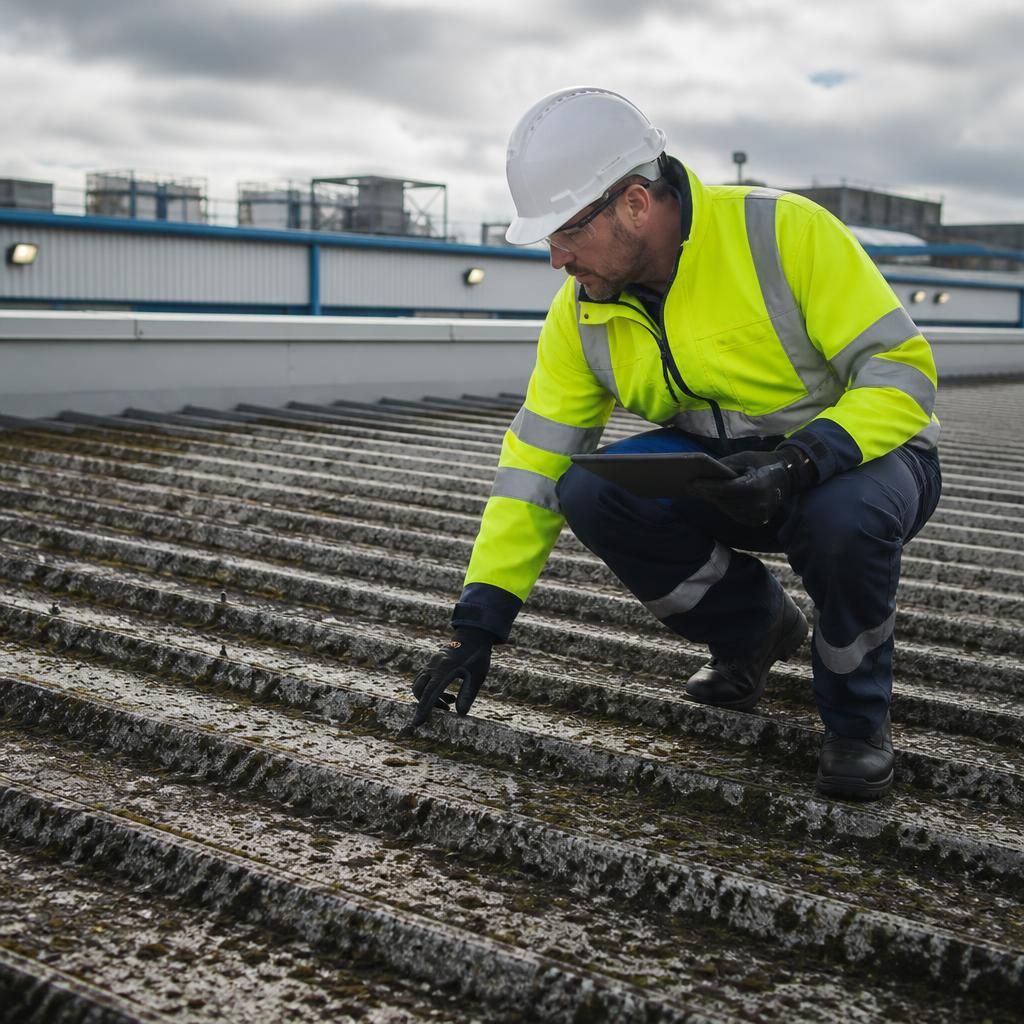
The safest roof-cleaning method is determined by the covering’s material and condition, not by the amount of visible dirt alone. Controlled pressure cleaning may suit sound concrete tiles with firmly bonded contamination, while soft washing is generally more appropriate for slate, aged tiles, coated sheets, felt and synthetic membranes where force could cause damage.
Before work begins, the roof should be checked for loose coverings, failing coatings, damaged flashing, blocked outlets and signs of water ingress. A small test area can confirm compatibility, while the proposed method should also protect gutters, walls, glazing, landscaping and drainage from chemical runoff or displaced debris.