
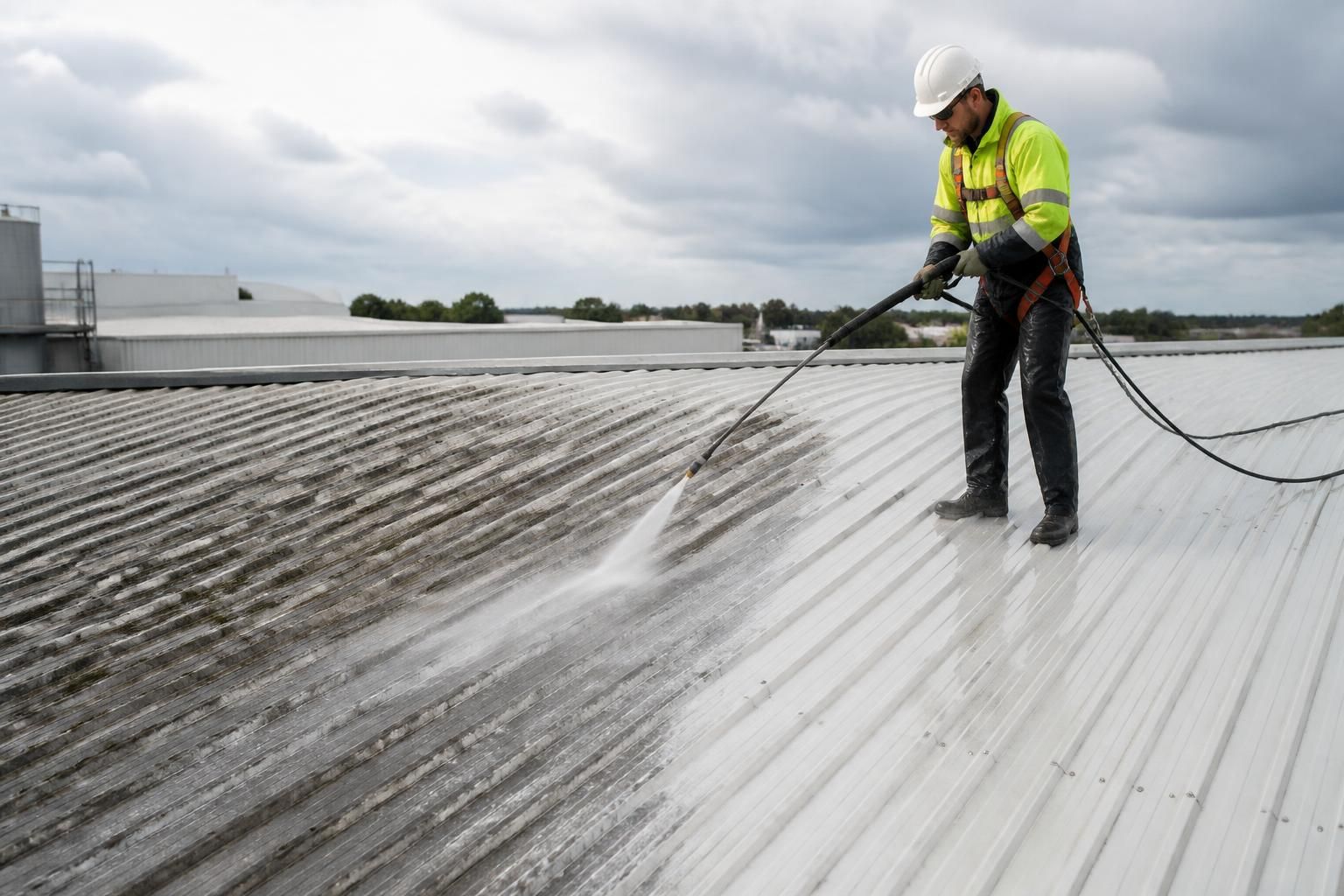
What are the benefits and drawbacks of roof pressure cleaning versus soft washing?
Roof pressure cleaning removes heavy dirt, moss and surface deposits quickly, but excessive pressure can damage tiles, coatings, pointing or membranes. Soft washing uses low-pressure application of specialist cleaning solutions, making it gentler on many roof surfaces and effective against organic growth, although it may require more dwell time, careful rinsing and repeat treatment.
Roof pressure cleaning and soft washing both remove dirt, staining and organic growth, but they do so in different ways. Pressure cleaning relies on mechanical force to lift deposits from the surface, while soft washing applies specialist cleaning solutions at low pressure to break down algae, moss, lichen and other contaminants. Pressure cleaning is generally quicker for robust, heavily soiled surfaces; soft washing is usually gentler and better suited to roofs where high pressure could damage tiles, coatings, pointing or waterproofing layers.
The correct method depends on the roof covering, its condition, the type of contamination, drainage arrangements and the required finish. Neither method is automatically suitable for every commercial or industrial roof. A competent contractor should inspect the roof before recommending a process and should consider whether cleaning is appropriate at all if the covering is fragile, defective or unsafe to access.
Benefits of roof pressure cleaning
- Fast removal of surface deposits: Controlled pressure can remove loose dirt, mud, bird fouling, moss, lichen, algae and some atmospheric staining efficiently, particularly across large, durable surfaces.
- Effective mechanical cleaning: Where deposits are firmly attached, water pressure can provide an immediate visible improvement without relying solely on chemical dwell time.
- Useful for suitable hard-wearing materials: Some sound concrete tiles, certain metal roof surfaces and robust commercial areas may tolerate carefully controlled pressure when the equipment, nozzle and working distance are selected correctly.
- Limited chemical use in some applications: Pressure cleaning may reduce the need for treatment chemicals where contamination is mainly loose surface dirt rather than established organic growth. This does not mean that chemical treatment is never required; the appropriate approach depends on the deposit and the roof material.
- Efficient preparation: Pressure cleaning can help prepare a sound roof for further inspection, repairs or compatible coating work, provided the surface is not damaged and is allowed to dry properly.
Drawbacks and risks of roof pressure cleaning
- Potential damage to roof coverings: Excessive pressure can crack or dislodge tiles, strip protective finishes, drive water beneath laps and flashings, or damage brittle and weathered materials. It can also disturb mortar bedding and pointing.
- Risk to membranes and coatings: Industrial roofs often incorporate waterproofing membranes, sealed joints or factory-applied coatings. High-pressure water can weaken, lift or puncture these systems if the pressure and technique are unsuitable.
- It may spread contamination: Moss, lichen and biological growth can be dislodged without fully killing the organisms or removing embedded staining. Spores and contaminated water can also be carried to adjoining surfaces, gutters and drainage routes.
- Water ingress is possible: Forceful water directed at joints, vents, skylights, roof edges and damaged areas may enter the building or conceal existing defects. This is particularly important on older roofs and roofs with known leaks.
- Run-off requires control: Dirty water may contain organic matter, silt, cleaning residues and pollutants. It must be prevented from entering unsuitable drains, watercourses or neighbouring areas. Commercial sites may require collection, filtration or an agreed disposal procedure.
- It does not always prevent regrowth: Removing visible moss or algae mechanically does not necessarily eliminate the underlying biological growth. Without an appropriate treatment and maintenance plan, the contamination may return.
Pressure cleaning should therefore be controlled rather than treated as a simple high-powered wash. The operator should select the lowest effective pressure, use suitable equipment, avoid vulnerable details and confirm that the roof covering can withstand the proposed method. A roof that looks robust from ground level may have concealed deterioration that makes pressure cleaning unsuitable.
Benefits of soft washing
- Lower mechanical stress: Soft washing uses low-pressure application, reducing the likelihood of cracking, dislodging or eroding roof materials when the system is correctly specified and applied.
- Effective against organic growth: Specialist solutions can break down algae, moss, lichen and biological staining rather than simply forcing it from the surface. This is valuable where growth has penetrated surface texture or is attached to delicate materials.
- Suitable for more vulnerable surfaces: Soft washing is often considered for older tiles, coated surfaces, certain membranes and roof areas where pressure could compromise the covering. Suitability still needs to be confirmed by inspection and, where necessary, a small test area.
- Less risk of forcing water into defects: Low-pressure application is less likely than aggressive pressure washing to drive water beneath laps, flashings and joints, although good detailing and weather awareness remain essential.
- Can support longer-term cleanliness: When the solution is appropriate for the contamination and roof material, treating the biological growth can reduce the likelihood of immediate regrowth compared with mechanical removal alone.
Drawbacks and limitations of soft washing
- More dependent on correct chemical selection: The solution must be compatible with the roof covering, adjacent materials, drainage arrangements and site requirements. Incorrect concentrations or unsuitable products can stain, corrode or damage surfaces and vegetation.
- Requires careful application and dwell time: The treatment may need time to work before rinsing. Results can depend on weather, surface temperature, contamination levels and the condition of the roof, so soft washing is not always an immediate one-pass process.
- Heavy deposits may still need mechanical assistance: Thick moss, compacted dirt and loose debris may require gentle brushing, scraping or a controlled rinse after treatment. Soft washing is not a substitute for safe physical removal where deposits are substantial.
- Run-off must still be managed: Low pressure does not remove the need to protect drains, landscaping, vehicles, façades and neighbouring property. Cleaning solutions and biological residues must be contained or managed in accordance with the site and environmental requirements.
- Repeat treatment may be needed: Established staining may not disappear immediately, and some roofs need follow-up cleaning or planned maintenance. A contractor should explain whether a change in colour represents active contamination, residual staining or normal weathering.
- Weather can affect the process: Wind, rain, strong sunlight and unsuitable temperatures can reduce control over application, alter dwell time or increase the risk of drift. Work may need to be postponed when conditions are not suitable.
Comparing the two methods by roof condition
A relatively sound roof with heavy loose dirt may benefit from carefully controlled pressure cleaning, particularly where speed and immediate removal are important. A roof with moss, algae or lichen on older, brittle or coated materials will often be a better candidate for soft washing or a combined low-impact approach. Roofs with damaged tiles, failed pointing, exposed insulation, defective membranes, open joints or active leaks require repair and risk assessment before cleaning.
Some projects use both methods in sequence. For example, a low-pressure treatment may first weaken organic growth, followed by gentle rinsing or manual removal of loosened deposits. On a robust surface, controlled pressure may remove the remaining dirt, while a compatible treatment can help reduce rapid regrowth. The combination should be designed around the roof rather than applied as a standard procedure.
Commercial and industrial considerations
For commercial premises, the choice is also affected by access, working-at-height controls, business operations and the consequences of water or chemical run-off. A method that is technically effective may be unsuitable if it creates unacceptable overspray, interrupts occupants, affects stock or machinery, or cannot be completed safely around plant, rooflights and service equipment.
Before work begins, the cleaning plan should identify fragile areas, drainage outlets, skylights, roof edges, access routes and nearby assets. It should also set out how debris and run-off will be controlled, how the area will be protected, and what inspection will take place after cleaning. On larger sites, phased work and planned maintenance can reduce disruption and allow defects to be recorded rather than concealed by the cleaning process.
How to choose between pressure cleaning and soft washing
- Identify the roof covering and any applied coating, membrane or waterproofing system.
- Assess the condition of the roof, including cracks, loose tiles, failed seals, corrosion, exposed layers and existing leaks.
- Determine whether the contamination is loose dirt, atmospheric staining, moss, lichen, algae, oil-related residue or a combination of deposits.
- Consider access, height, roof pitch, fragile areas, weather conditions and the presence of rooflights or services.
- Confirm how water, chemical residues and removed debris will be contained and disposed of.
- Agree the expected finish and whether the work is a one-off clean, preparation for repairs or part of an ongoing maintenance programme.
In practical terms, pressure cleaning offers speed and strong mechanical removal but carries greater risk if the roof is fragile or the equipment is misused. Soft washing offers gentler treatment and can be more effective against biological growth, but it requires careful chemical control, adequate dwell time and responsible run-off management. A documented roof inspection and method statement should determine the approach, rather than choosing solely on the basis of appearance or price.
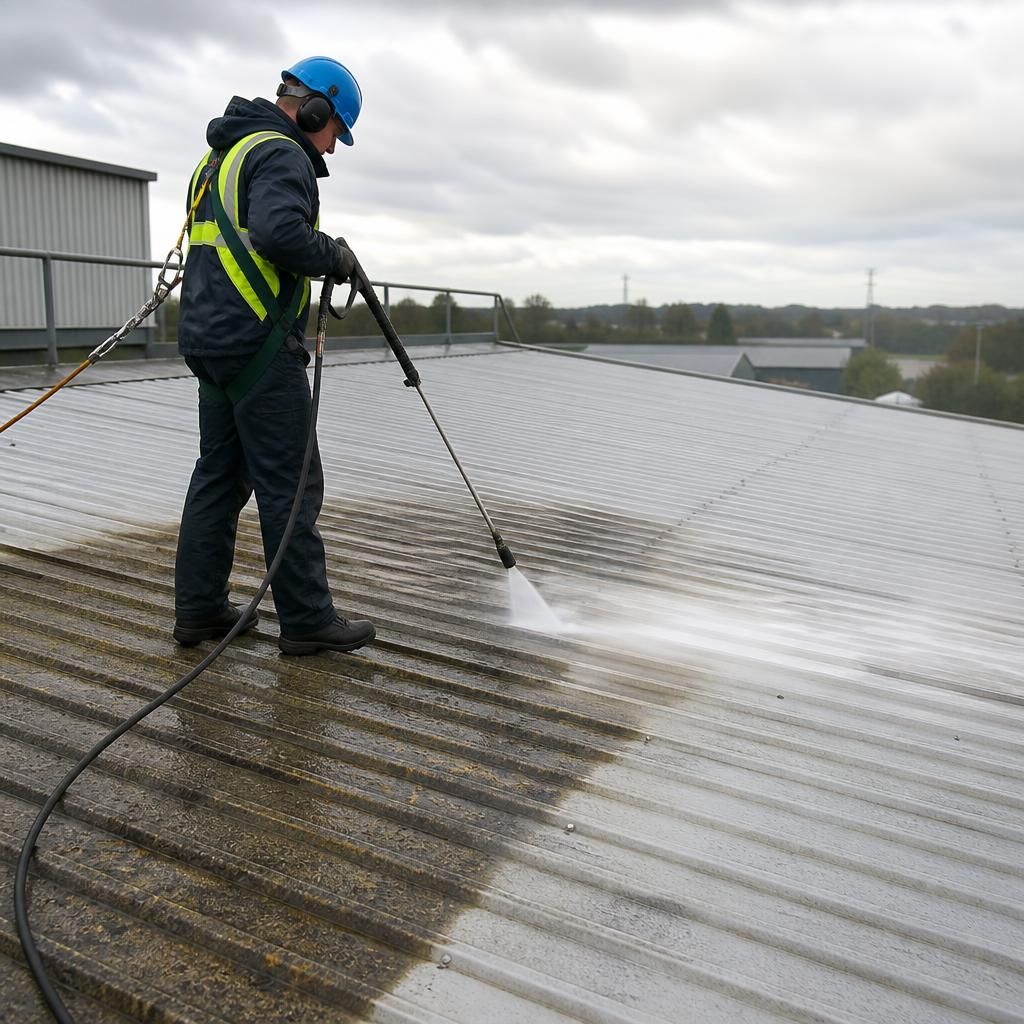
Roof pressure cleaning uses mechanical water force to remove deposits, while soft washing applies specialist cleaning solutions at low pressure to treat algae, moss, lichen and staining. Pressure cleaning can be effective on sound, durable roof surfaces, but excessive force may damage tiles, coatings, pointing, membranes or sealed joints.
Soft washing places less mechanical stress on the roof and can be preferable for older, coated or more vulnerable coverings. However, it requires compatible chemical selection, controlled application, suitable dwell time and responsible run-off management. The roof’s material, condition, contamination and drainage arrangements should be assessed before either method is selected.
Arrange a roof cleaning assessment
Arrange a roof cleaning assessment with Encanto Exterior Cleaning to identify the most suitable method for your roof’s covering, condition and contamination. We will review access, drainage, safety and run-off requirements before recommending pressure cleaning, soft washing or a combined approach.