
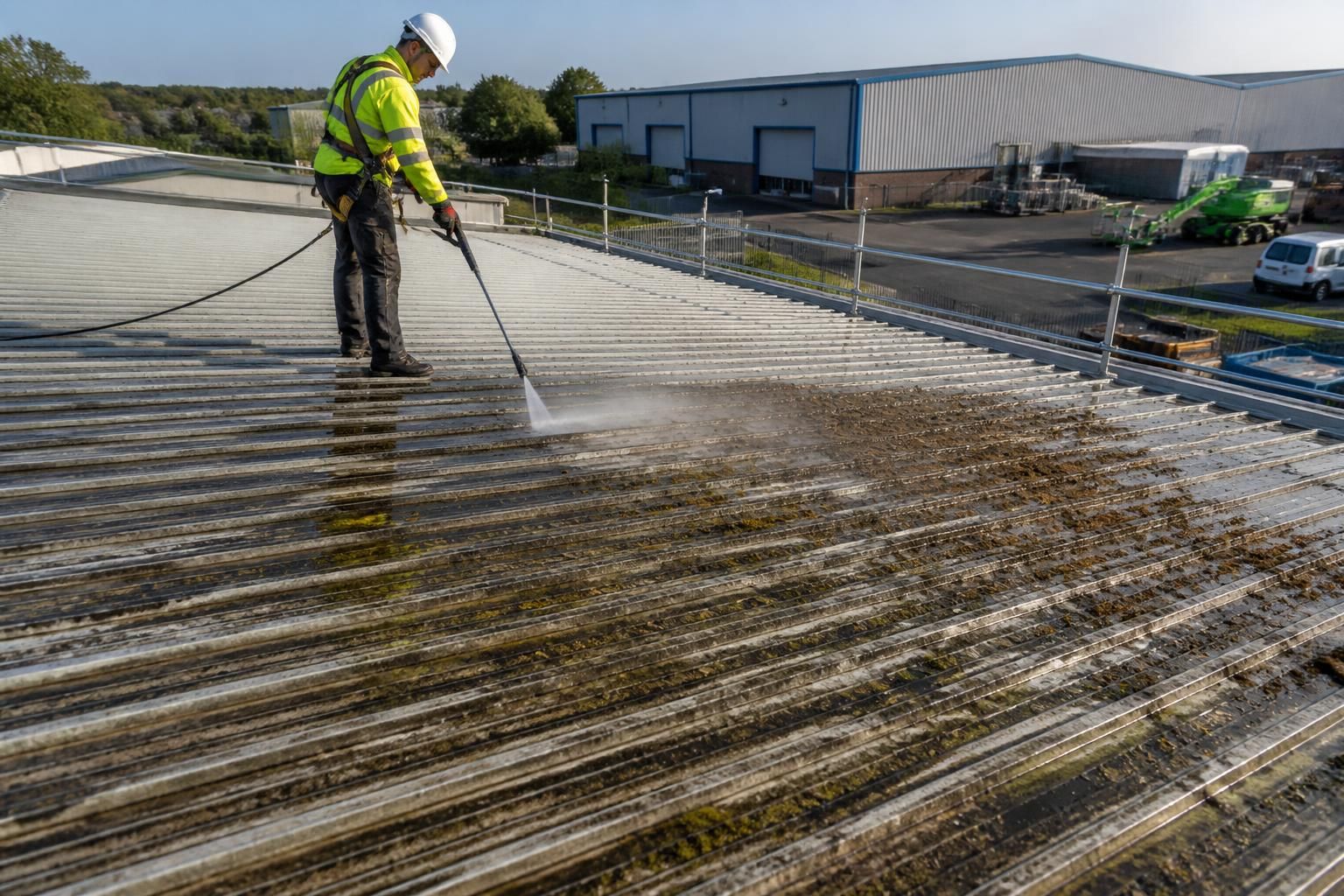
How often should I schedule roof cleaning to maintain optimal conditions and maximise lifespan?
Arrange a professional roof inspection at least annually and schedule cleaning when moss, algae, bird fouling, leaves or other debris begin to affect drainage or surface condition. Roofs in shaded, wooded, coastal or heavily polluted locations may need more frequent cleaning, while a condition assessment should determine whether pressure cleaning or soft washing is appropriate.
Arrange a professional roof inspection at least annually, but schedule cleaning according to the roof’s condition and surrounding environment rather than using a fixed timetable. A roof may only need periodic cleaning where it remains clear and well drained, while shaded, wooded, coastal, heavily polluted or bird-affected sites may require more frequent attention. Cleaning should be planned as soon as moss, algae, lichen, bird fouling, leaves or other debris begin to retain moisture, obstruct drainage or affect the roof surface.
Inspection and cleaning are related but separate maintenance tasks. An inspection checks the condition of the covering, flashings, sealants, outlets, gutters, rooflights, cladding interfaces and access arrangements. Cleaning removes contamination that can accelerate deterioration or conceal defects. Scheduling both as part of a planned maintenance programme makes it easier to identify minor issues before they develop into water ingress, blocked drainage or more extensive remedial work.
Factors that determine cleaning frequency
- Shade and moisture: Roofs beneath trees or beside tall buildings often remain damp for longer. These conditions encourage moss, algae and lichen, particularly on textured or porous surfaces.
- Nearby vegetation: Falling leaves, seeds, twigs and organic matter can collect around outlets, valleys and behind roof plant. Sites surrounded by trees usually need closer monitoring, especially after autumn leaf fall.
- Pollution and traffic: Industrial emissions, airborne dust and traffic film can settle on façades and roof surfaces. Deposits may be more noticeable on light-coloured roofs and can contribute to staining or blocked drainage.
- Coastal exposure: Salt deposits and windblown debris can affect external surfaces and fixings. Coastal roofs should be inspected for contamination and corrosion as part of routine maintenance.
- Bird activity: Bird fouling is acidic, unsightly and capable of blocking outlets when mixed with nesting material or other debris. It may require targeted cleaning and suitable control measures rather than simply waiting for the next general clean.
- Roof design and material: Flat roofs, roofs with complex plant areas, internal outlets or shallow falls can be more sensitive to debris than steep, freely draining roofs. Older, weathered or fragile coverings also require more careful assessment.
- Building use: Food, manufacturing, retail and public-sector premises may have stricter appearance, hygiene, access or safety requirements. The cleaning schedule should reflect the operational risk and the consequences of drainage failure.
When a roof needs attention
Visible moss, algae, lichen, black staining, accumulated leaves and bird fouling are clear indications that an assessment is appropriate. Other warning signs include water collecting around outlets, overflowing gutters, slow drainage, damp marks internally, a persistent musty smell, damaged roof coatings or vegetation growing from joints and drainage channels. Cleaning should not be used to conceal defects: leaks, loose coverings, failed sealants and damaged flashings should be recorded and addressed through the appropriate repair process.
It is also sensible to arrange an inspection after severe weather, construction work or nearby building activity. Wind can move debris and damage flashings, while dust from construction can settle on roof surfaces and enter drainage systems. A post-project clean may be appropriate where other trades have left mortar, paint, dust, packaging or general site debris on the roof.
Choosing the cleaning interval
A roof that is exposed, well drained and free from organic growth may only need cleaning when inspection identifies a build-up that could affect performance or appearance. A roof in a damp, shaded or tree-lined location may need a planned clean more regularly. The correct interval should be confirmed after considering the roof material, previous cleaning results, drainage performance and the rate at which contamination returns.
For commercial premises, the most reliable approach is to combine routine visual checks by the site team with documented professional inspections. Site staff can report blocked gullies, unusual staining or new growth, but professional contractors should assess roof condition and determine whether the surface can safely be cleaned. Keeping records of inspection findings, photographs, cleaning methods and any recommended repairs helps establish a practical maintenance history.
Pressure cleaning or soft washing
The cleaning method affects both the immediate result and the appropriate maintenance plan. Pressure cleaning can remove firmly bonded dirt, some surface growth and construction residues, but the pressure, nozzle selection and working distance must be controlled. Excessive pressure can dislodge protective coatings, force water beneath laps, damage pointing or worsen existing defects. It is not suitable for every roof covering.
Soft washing uses low-pressure application with a suitable cleaning solution and controlled rinsing. It is often more appropriate for delicate, coated or weathered surfaces and for biological growth that needs treatment rather than aggressive abrasion. The solution must be selected for the roof material, surrounding vegetation, drainage arrangements and environmental controls. Run-off should be contained or managed where required, and sensitive areas should be protected.
Some coverings, including fragile, degraded or asbestos-containing materials, require specialist assessment before any cleaning is considered. Pressure washing asbestos cement or other hazardous materials can release harmful fibres and is not an appropriate routine cleaning technique. Manufacturer guidance, warranty conditions and any previous repairs should also be checked before work begins.
How to maintain the roof between cleans
- Keep gutters, valleys, outlets and drainage channels clear through planned maintenance.
- Trim overhanging branches where this can be done safely and with the required permissions.
- Remove loose debris before it compacts or decomposes on the surface.
- Report leaks, damaged coatings, ponding water and loose materials promptly.
- Do not allow untrained staff or other contractors to walk on fragile roof areas.
- Review the cleaning schedule after each service rather than automatically repeating the same method.
The best schedule is therefore condition-based: inspect the roof annually or more often where site risks justify it, clean when contamination begins to affect drainage, appearance or the roof surface, and reassess the interval after each visit. A professional condition assessment can confirm whether pressure cleaning, soft washing, targeted manual removal or repair is the safest and most effective next step.
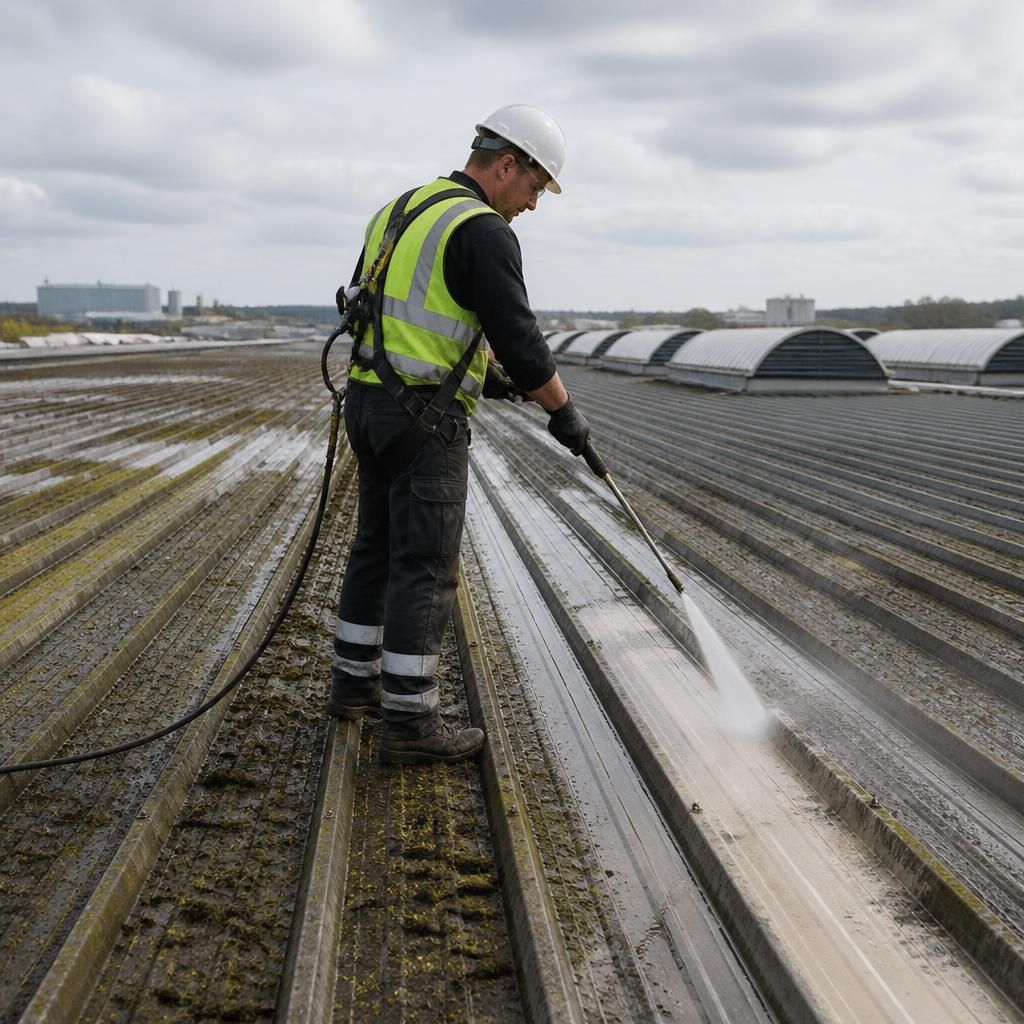
Roof cleaning should be scheduled according to the roof’s condition and surrounding environment, rather than repeated at a fixed interval. Arrange routine professional inspections and plan cleaning when moss, algae, bird fouling, leaves or other debris begin to affect drainage, appearance or the roof surface.
Shaded, wooded, coastal and heavily polluted sites usually need closer monitoring because contamination can return more quickly. Keep records of inspection findings and cleaning results, then adjust the maintenance plan to reflect how quickly debris or organic growth builds up. This condition-based approach helps avoid unnecessary cleaning while reducing the risk of blocked outlets, retained moisture and concealed roof defects.