
How often should I have my roof cleaned using pressure cleaning or soft wash?
Most roofs should be professionally inspected annually and cleaned when moss, algae, lichen, dirt or staining begins to build up, with the appropriate interval depending on the roof material, surrounding trees, local exposure and condition. Soft washing is generally preferred for delicate or weathered coverings, while pressure cleaning should only be used where the roof can safely withstand it and by a suitably trained professional.
Roof cleaning should usually be based on the roof’s condition rather than a fixed timetable. Arrange a professional inspection at least annually and schedule cleaning when moss, algae, lichen, dirt or staining starts to develop. Soft washing is generally the safer option for delicate, aged or weathered coverings, while pressure cleaning should only be used where the roof material and its condition can safely withstand controlled water pressure.
The right interval depends on several factors, including the roof covering, its age and condition, the surrounding environment, drainage, roof pitch and previous cleaning work. A roof beneath overhanging trees or close to woodland is likely to collect organic debris more quickly than an exposed roof with good sunlight and airflow. North-facing or shaded areas can also remain damp for longer, encouraging moss and algae growth.
Annual inspection does not mean annual cleaning. A routine inspection allows early signs of build-up, blocked gutters, damaged tiles, failed pointing, loose flashing and defective roof details to be identified before cleaning is considered. If the roof remains sound and relatively clean, cleaning may not be necessary at that visit. Conversely, a roof with heavy moss growth or persistent staining may require attention sooner.
Typical signs that cleaning is due include:
- Moss spreading across tiles, slates or other roof surfaces.
- Algae or lichen creating green, black or pale staining.
- Leaves, organic debris or silt accumulating around roof details and drainage points.
- Water run-off becoming restricted or gutters filling repeatedly with roof material.
- Roof surfaces remaining damp for prolonged periods.
- Staining becoming visible from ground level or affecting the appearance of the wider building.
Cleaning should not be delayed until growth is extensive. Thick moss can retain moisture, add weight to some coverings, obscure defects and become dislodged into gutters and drainage systems. It can also make access more difficult and increase the likelihood that a more intensive treatment will be required. However, visible growth is not automatically a reason to use high-pressure equipment. The cleaning method must be selected after assessing the roof covering and its condition.
Soft washing is often more suitable for recurring maintenance. It uses a controlled application of an appropriate cleaning solution, usually with low-pressure rinsing or minimal mechanical disturbance. This can be preferable for older or fragile tiles, coated surfaces and roofs where aggressive water pressure could remove surface finishes, drive water beneath laps or damage pointing and seals. The treatment may take time to work, particularly where organic growth is established, and suitable controls are needed to protect people, plants, drainage systems and surrounding surfaces.
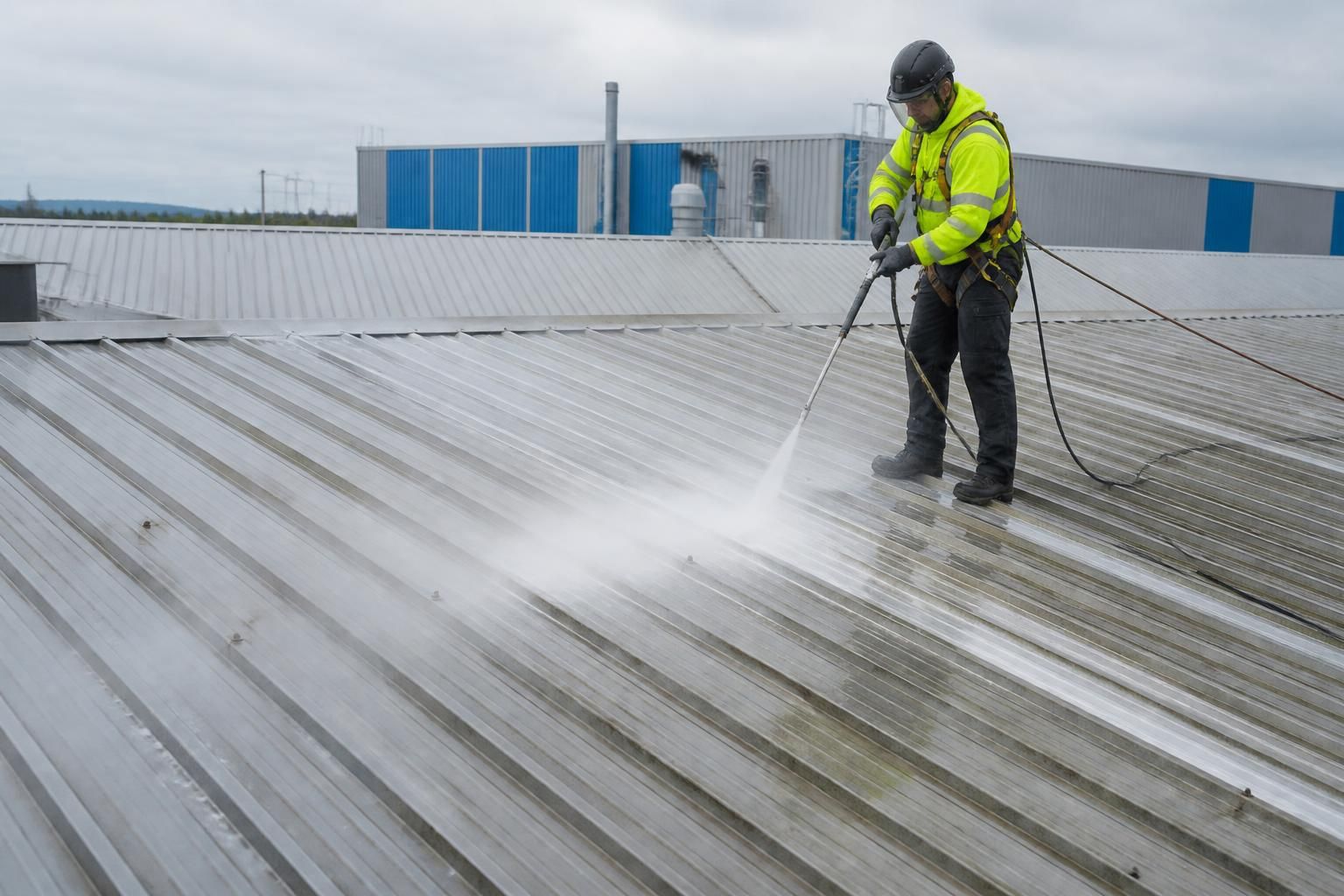
Pressure cleaning can be appropriate in limited circumstances. It may remove ingrained dirt and surface deposits effectively from robust, compatible materials when carried out by trained operatives using suitable equipment, pressure, distance and water control. It is not appropriate simply because it is quicker. Excessive or poorly directed pressure can mark surfaces, dislodge granules or coatings, damage older materials and force water into vulnerable areas. On some roofs, pressure cleaning can also leave the surface more susceptible to rapid recolonisation if the underlying cause of the build-up is not addressed.
The roof material is therefore central to the schedule and method. Concrete tiles, clay tiles, natural slate, fibre cement, metal cladding and coated roofing products each have different tolerances. Age, previous repairs, surface coatings, brittleness and existing defects can be more important than the material name alone. A method that is acceptable for one roof may be unsuitable for an apparently similar roof in poorer condition. Professional assessment should also confirm whether the roof is safe to walk on and whether access equipment is required.
Environmental exposure should be reviewed when setting a maintenance plan. Tree clearance, shade, poor ventilation, nearby construction dust, industrial deposits, coastal exposure and local weather conditions can all affect how quickly contamination returns. Improving rainwater flow, keeping gutters clear, reducing avoidable overhanging vegetation and correcting drainage problems may help extend the period between cleaning visits, although these measures will not remove established growth by themselves.
After cleaning, arrange a follow-up inspection if the roof has had significant moss removal, treatment or repairs. Check that gutters, outlets and downpipes are clear and that no dislodged material remains on adjoining areas. Where a suitable soft-wash treatment has been applied, allow the treatment to work as specified rather than repeatedly washing the surface at high pressure. Future inspections can then establish whether growth is returning and whether the maintenance interval needs to be shortened or extended.
For many commercial and industrial properties, a planned inspection and maintenance programme is more reliable than arranging reactive cleaning only when staining becomes severe. The programme should record the roof type, known defects, areas of recurring growth, previous treatments, access requirements and any restrictions around water, chemicals or drainage. This is particularly useful for large or multi-roof sites, where different elevations may need different methods and cleaning intervals.
In practical terms, inspect the roof regularly, clean it when contamination is affecting its condition, drainage or appearance, and reassess the method each time rather than automatically repeating pressure cleaning. If moss or staining is returning quickly, the cause should be investigated before another treatment is carried out. A professional roof assessment can determine whether soft washing, carefully controlled pressure cleaning, manual removal or a combination of methods is appropriate for the specific covering.
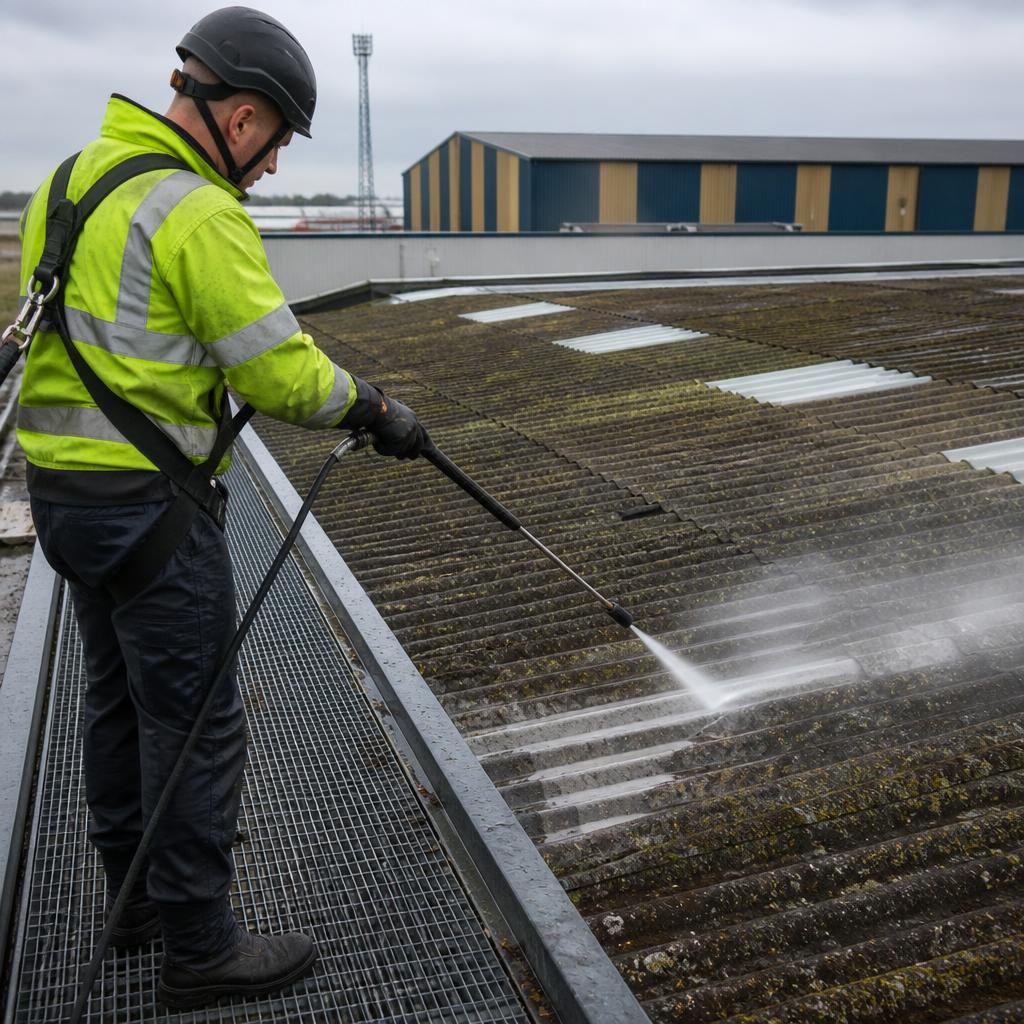
Roof cleaning should be scheduled according to the roof’s condition, not as an automatic annual task. An annual professional inspection is sensible, but cleaning may be needed sooner where moss, algae, lichen, staining or debris is returning quickly, particularly on shaded roofs or buildings beneath overhanging trees.
During an inspection, the roof covering, drainage, flashing, pointing and previous repair areas should be checked before selecting a cleaning method. A relatively sound roof with limited contamination may only need monitoring, while heavy growth or blocked gutters may require prompt treatment. Soft washing is often more suitable for older, coated or weathered coverings; controlled pressure cleaning should only be considered where the material and its condition can safely tolerate it.
After cleaning, record areas of recurring growth and review the roof again during routine maintenance. If contamination returns rapidly, investigate shade, poor drainage, trapped debris or nearby vegetation rather than repeatedly applying high pressure. This condition-led approach helps maintain the roof without subjecting it to unnecessary cleaning or avoidable damage.
Arrange a Professional Roof Cleaning Assessment
Arrange a professional roof cleaning assessment to review the covering, contamination, drainage and access requirements before choosing pressure cleaning or soft washing. We can recommend an appropriate maintenance interval based on your roof’s condition and surroundings.