
How does the cost of roof pressure cleaning compare to soft wash, and what factors influence the pricing?
Roof pressure cleaning and soft washing are priced according to the work required rather than the method alone; soft washing may cost less where it needs minimal equipment, while pressure cleaning can be more economical for heavily soiled, accessible surfaces. The final price is influenced by roof size, material and condition, access requirements, safety measures, location, water and waste management, and whether repairs or additional treatments are needed.
Roof pressure cleaning and soft washing are priced according to the work required, not simply the cleaning method selected. Soft washing can be less costly where the roof is accessible and requires a light chemical treatment, while pressure cleaning may offer better value on robust, heavily soiled surfaces that can be cleaned efficiently with controlled water pressure. The final price depends on the roof’s size, material, condition, access, location, safety requirements, water and waste controls, and any additional treatment or repair work.
How the two methods generally compare
Soft washing uses a low-pressure application of cleaning solutions, followed by a controlled rinse where appropriate. It can reduce the need for high-powered equipment and may be suitable for delicate or weathered roofing materials. However, the price still includes preparing the area, protecting surrounding surfaces, applying and managing the solution, allowing suitable dwell time, rinsing, and controlling run-off. Additional visits may be recommended where organic growth is extensive or a gradual treatment is more appropriate.
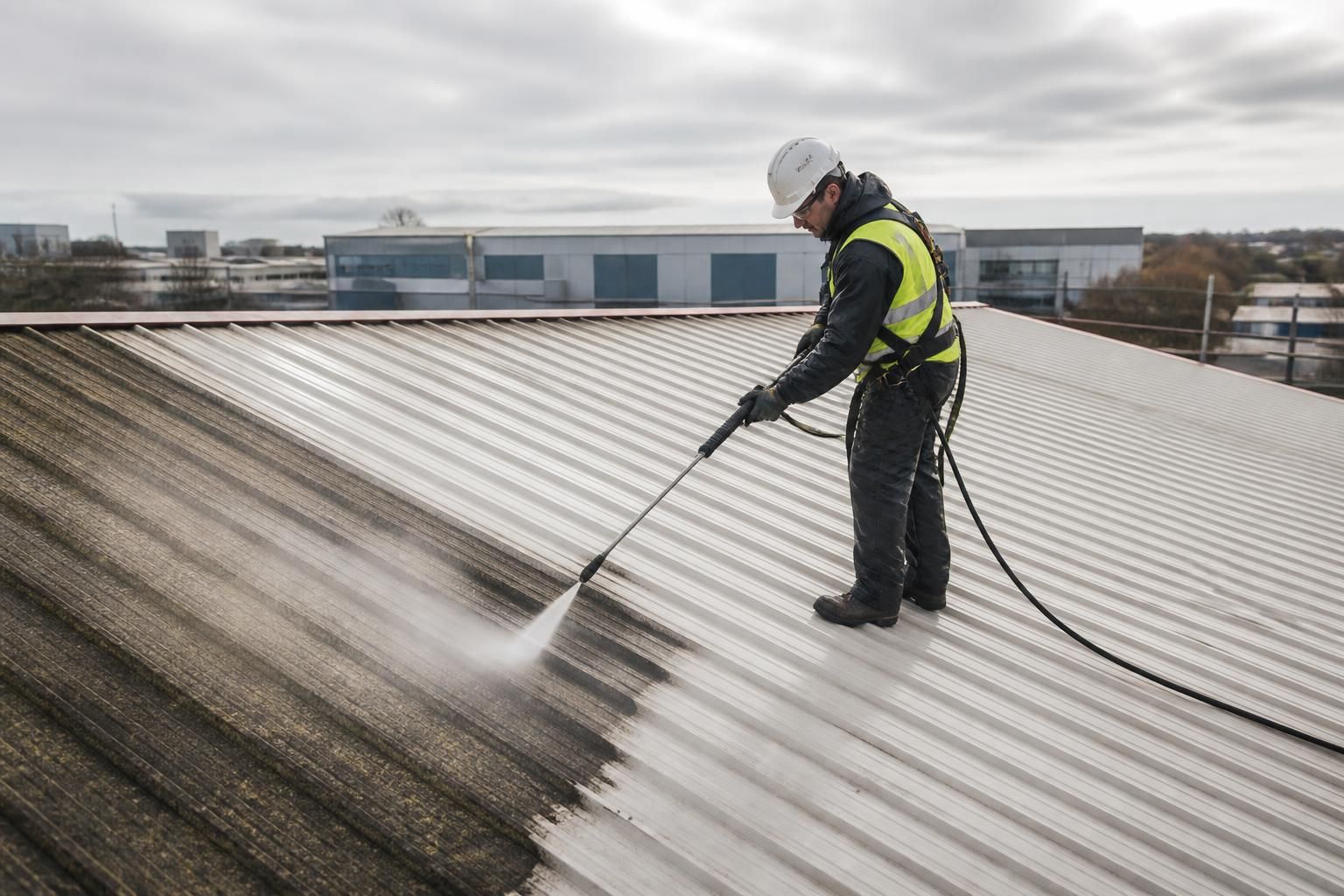
Pressure cleaning uses pressurised water to remove dirt, moss, algae, lichen and other deposits. It may be comparatively efficient on suitable concrete, clay or other robust surfaces, particularly where heavy contamination would require several stages of chemical treatment. The equipment does not make the work automatically cheaper: pressure must be selected and controlled carefully to avoid dislodging tiles, driving water beneath laps or damaging coatings and pointing. Where the roof is fragile, steep or difficult to reach, the extra controls required can increase the cost.
Roof size and layout
Larger roofs require more labour, water, cleaning solution and time. The measured area is not the only consideration. Multiple roof sections, dormers, valleys, hips, skylights, rooflights, plant, vents and parapets make preparation and cleaning slower than an open, uncomplicated roof. A commercial roof may also include adjoining elevations, canopies or areas that need to be protected from run-off, which can change the scope beyond the roof area itself.
Roof material and existing coatings
The substrate determines which method can be used safely and how quickly the work can be completed. Robust tiled or concrete surfaces may tolerate controlled pressure where their condition has been assessed. Slate, old tiles, coated metal, membranes, render and other delicate or vulnerable surfaces may require low-pressure cleaning, specialist products or a non-cleaning recommendation if disturbance could cause damage. A roof with a protective coating may need a compatible treatment rather than aggressive cleaning, and removing or reinstating a coating will affect the quotation.
Contamination and roof condition
Light surface dirt is normally less demanding than established moss, lichen, algae, bird fouling, atmospheric deposits or staining. Thick growth may need manual removal before washing, controlled collection to prevent blocked gutters and downpipes, and a follow-up biocidal treatment. If tiles are cracked, loose or porous, or if flashing, pointing, gutters or membranes are already failing, cleaning may need to be limited until the defects have been assessed. Cleaning does not repair a leaking or structurally defective roof, so recommended repairs or specialist inspections should be priced separately.
Access and working at height
Access is often one of the most significant pricing factors. A low, unobstructed roof may be reached with suitable access equipment, whereas a steep, high or restricted roof may require scaffold, a mobile elevated work platform, edge protection, roof ladders, fall-restraint systems or other controls. The choice depends on the building, surrounding ground, overhead obstructions, fragile areas and the equipment’s safe operating limits. Mobilising access equipment, setting it up and removing it can represent a substantial part of the total cost, particularly for smaller roofs.
Ground conditions and the surrounding site also matter. Narrow entrances, busy car parks, public footways, loading areas and neighbouring buildings may require segregation, traffic management or work outside normal operating hours. For commercial premises, the quotation should account for protecting staff, visitors, vehicles, stock and building entrances while the work is carried out.
Water, run-off and waste management
Pressure cleaning can produce substantial dirty water and dislodged material. Soft washing also requires responsible management of chemical solutions and rinse water. Gully protection, collection, filtration, temporary drainage controls and disposal arrangements may be necessary where run-off could enter surface-water systems, affect landscaping or leave the site. These controls are part of competent roof cleaning rather than optional extras, and they can affect the price according to the site’s drainage layout and environmental sensitivity.
Location and project logistics
Prices can vary between Birmingham, the wider West Midlands and other UK locations because of travel, parking, equipment transport, labour availability, disposal arrangements and local access restrictions. A straightforward roof within a managed commercial site may be more efficient to service than a similarly sized roof in a congested town centre or a location requiring additional permits and coordination. For larger projects, combining roof cleaning with façade, cladding, gutter or external-area cleaning may reduce repeated mobilisation, although each service should remain clearly defined in the scope.
What a professional quotation should include
- A description of the roof areas and surfaces included.
- The proposed cleaning method, pressure controls and cleaning products where relevant.
- Preparation, protection of adjacent areas and removal or collection of loosened debris.
- Access equipment, safety controls and any traffic or pedestrian management.
- Water supply, run-off control and waste disposal arrangements.
- Whether gutters, downpipes, rooflights, solar panels, plant or adjoining surfaces are included or excluded.
- Any treatment intended to slow the return of organic growth.
- Known limitations, likely additional work and the process for dealing with unforeseen defects.
A low initial price may not be comparable with a more detailed quotation if it excludes access equipment, debris collection, chemical treatment, protection or waste management. Conversely, a higher price is not automatically evidence that one method is safer or more effective. The useful comparison is between quotations with the same scope, safety standard and aftercare provisions.
For an accurate comparison, arrange an assessment of the roof rather than choosing solely on the advertised price of pressure cleaning or soft washing. The assessment should consider the material, age, condition, contamination, access and drainage arrangements. The appropriate method is the one that removes the relevant deposits without creating avoidable damage or environmental risk, while delivering the required finish within the site’s operational and safety constraints.
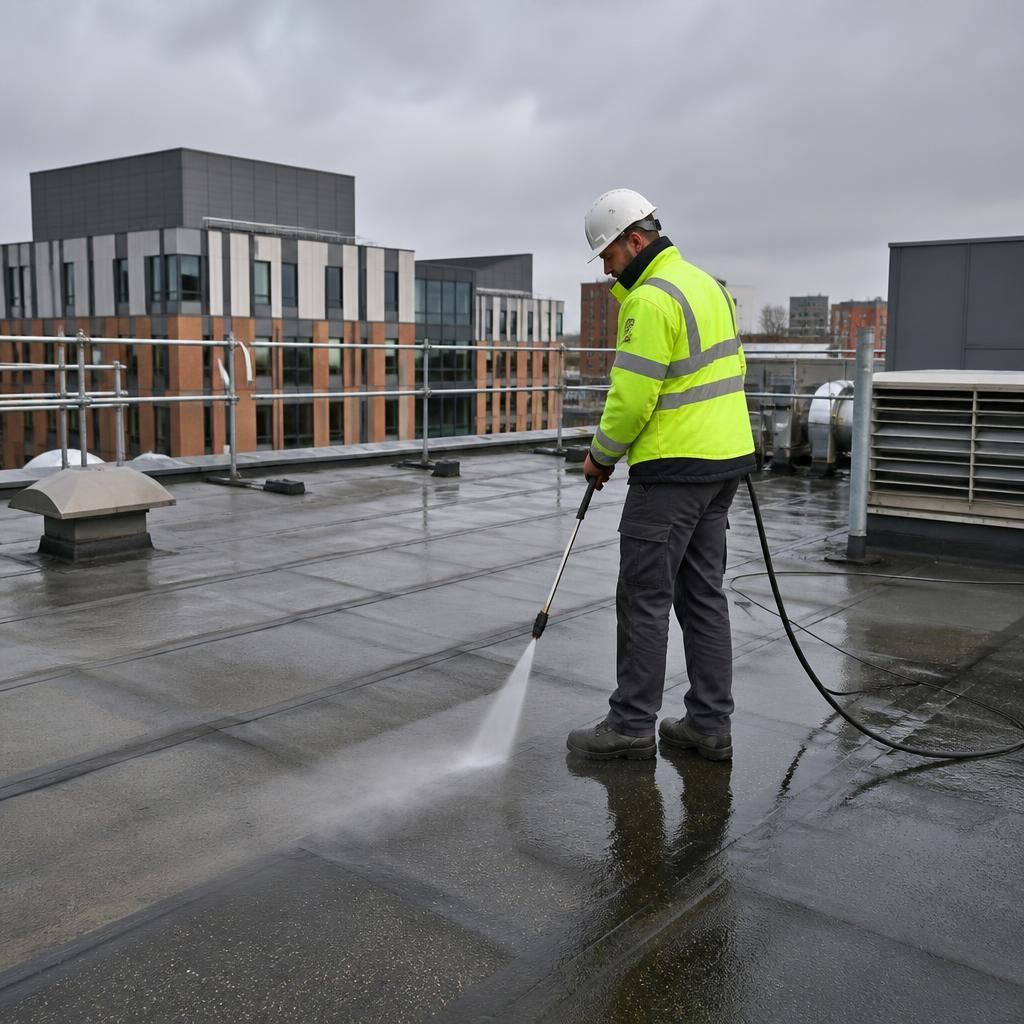
The main cost difference between roof pressure cleaning and soft washing is often determined by access, preparation and aftercare rather than the cleaning method alone. Soft washing may require specialist solution handling and run-off controls, while pressure cleaning may involve more water management, debris collection and careful protection of vulnerable surfaces.
When comparing quotations, check that both include the same roof areas, access equipment, surface protection, moss or debris removal, gutter safeguarding, waste management and any follow-up treatment. A lower price may exclude important safety or environmental controls, so the most meaningful comparison is between quotations covering the same scope of work.
Request a roof cleaning assessment and quotation
Arrange a roof cleaning assessment so we can compare pressure cleaning and soft washing for your roof’s material, condition, access and drainage requirements. Request a detailed quotation covering preparation, safety controls, run-off management and any follow-up treatment.