
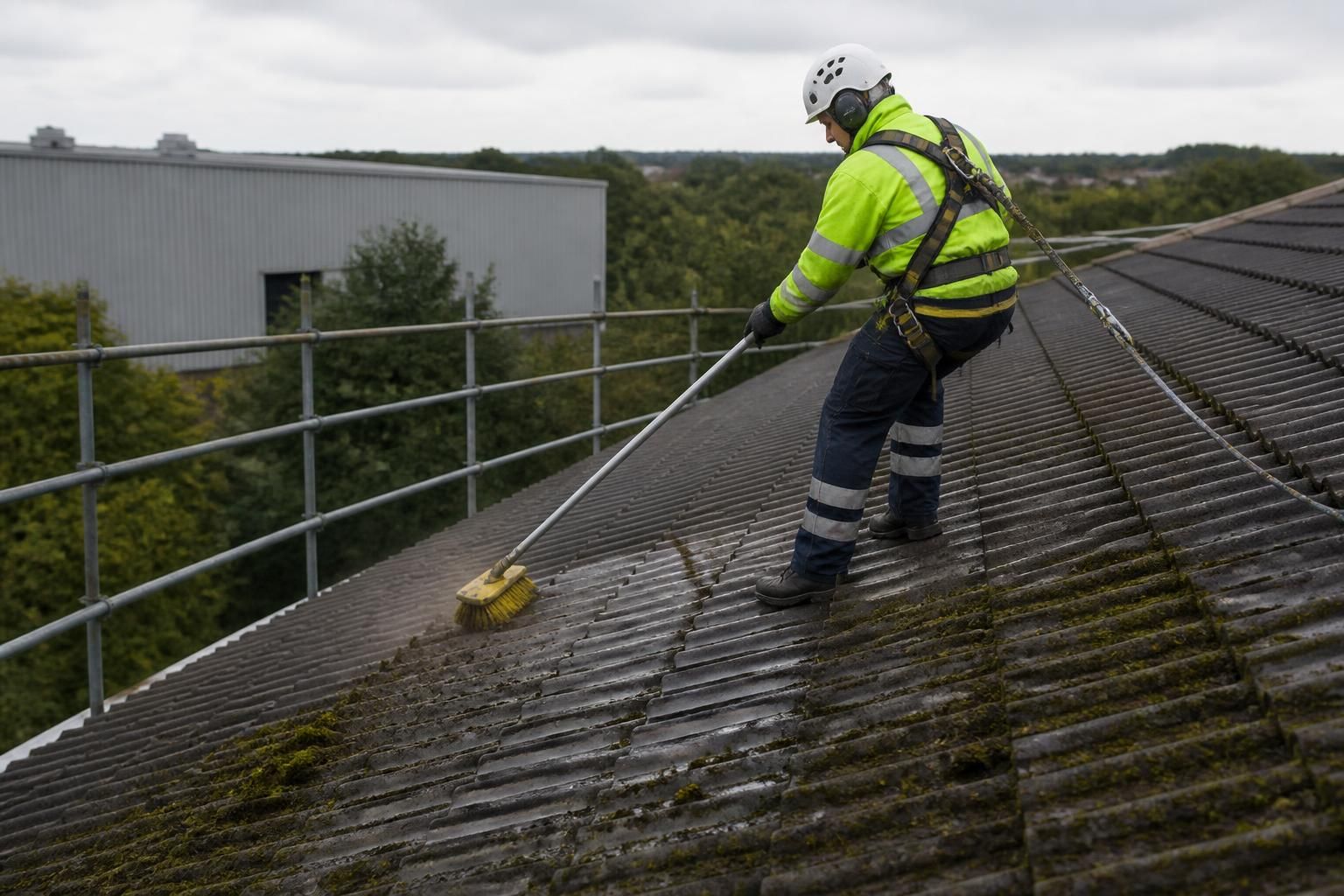
What specific methods and equipment do you use to ensure safe and effective removal of moss from roof tiles?
We remove roof-tile moss using controlled manual scraping, low-pressure soft washing and, where appropriate, steam cleaning, selecting the method according to the tile type, condition and level of growth. Trained operatives use suitable access equipment, roof ladders, fall-protection systems and protective measures to control water, prevent tile damage and safely remove debris.
Safe and effective moss removal from roof tiles is carried out using a controlled combination of manual scraping, low-pressure soft washing and, where suitable, steam cleaning. The method and equipment are selected after assessing the tile material, roof condition, access, pitch, moss growth and the risk of water entering the building. The aim is to remove moss without loosening tiles, damaging protective finishes or forcing water beneath the roof covering.
Initial roof assessment
Before cleaning begins, the roof is inspected from ground level and, where safe, from an appropriate access position. We check for cracked, slipped or delaminated tiles, open joints, damaged flashings, defective gutters, fragile areas and signs of previous repairs. Clay, concrete, slate and coated tiles do not all respond to the same treatment, so the cleaning method is adjusted to suit the roof. Areas that cannot safely support access equipment are not walked on, and any limitations are identified before work starts.
A small test area may be cleaned to confirm how the tiles and existing surface finish respond. This helps establish the most effective pressure, temperature and cleaning approach without applying an unsuitable treatment across the whole roof.
Controlled manual removal
Where moss has formed a thick layer, the first stage is usually manual removal. Specialist scrapers, brushes and hand tools are used to lift moss from the tile surface and clear growth from overlaps, valleys and other vulnerable details. This reduces the amount of organic material that needs to be washed away and allows the operative to work carefully around tiles and roof fittings.
Manual scraping is controlled rather than aggressive. Excessive force can scratch glazed or coated surfaces, disturb tile alignment or break brittle tiles. The tools are therefore selected and used according to the tile profile and condition. Loose moss is collected rather than allowed to enter gutters, downpipes or drainage systems.
Low-pressure soft washing
Soft washing is used to remove remaining organic residue and treat areas where moss, algae or lichen has attached to the surface. It uses a controlled flow at substantially lower pressure than conventional power washing, together with a suitable cleaning solution where appropriate. The solution is applied evenly and allowed suitable contact time before being rinsed or removed in a controlled manner.
Low pressure helps reduce the risk of driving water beneath tile laps, damaging pointing or stripping surface coatings. It is still important that the equipment is operated by a trained person: low-pressure water can cause problems if directed at vents, flashing, damaged mortar or roof edges. Spray direction, nozzle selection and water volume are controlled throughout the process.
Steam cleaning for sensitive or heavily marked surfaces
Steam cleaning may be appropriate where a heated, controlled treatment can remove moss staining and biological residue with limited water use. The equipment delivers heated water or steam through a suitable lance, allowing the operative to work progressively across the tiles. This can be useful on surfaces where aggressive pressure would be unsuitable, although it is not automatically appropriate for every roof.
Steam cleaning requires particular care around older, fragile or previously repaired tiles. Excessive heat, prolonged application or directing steam into gaps can cause damage. The temperature, flow and working distance are adjusted to the surface, and a test area is used where the roof’s response is uncertain.
Access and fall-protection equipment
Roof work is planned around safe access rather than relying on the tiles as a working platform. Depending on the building and roof design, suitable equipment may include scaffold, scaffold towers, roof ladders, edge protection, mobile elevating work platforms and fall-restraint or fall-arrest systems. Harnesses are only effective when used with suitable anchor points and a properly planned system.
Operatives use non-slip footwear and task-appropriate personal protective equipment, including gloves, eye protection and protection from cleaning products. Equipment is positioned to avoid placing unnecessary loads on fragile tiles, and tools, hoses and lances are managed so they do not snag on roof features or fall onto people and property below.
Protecting the building and surrounding area
Gutters, downpipes, roof vents, windows, wall surfaces, landscaping and nearby vehicles are protected before cleaning. Drainage outlets may be covered or managed temporarily to prevent moss and cleaning residue entering the system. Runoff is controlled and collected where necessary, particularly around entrances, pedestrian areas and sensitive planting.
After the moss has been removed, gutters and accessible drainage points are cleared and the area is checked for debris. Any cleaning treatment is used in accordance with its intended application and relevant safety guidance. A separate protective treatment may be recommended where it is suitable for the roof, but it does not replace sound tiles, effective drainage or routine inspection.
Final checks
On completion, the roof is checked for remaining loose moss, displaced tiles, exposed defects and blocked drainage. Cleaning is stopped or adapted if previously hidden damage becomes apparent. This combination of inspection, careful manual work, controlled washing, appropriate access equipment and responsible runoff management provides effective moss removal while reducing avoidable risk to the tiles, the building and the people carrying out the work.
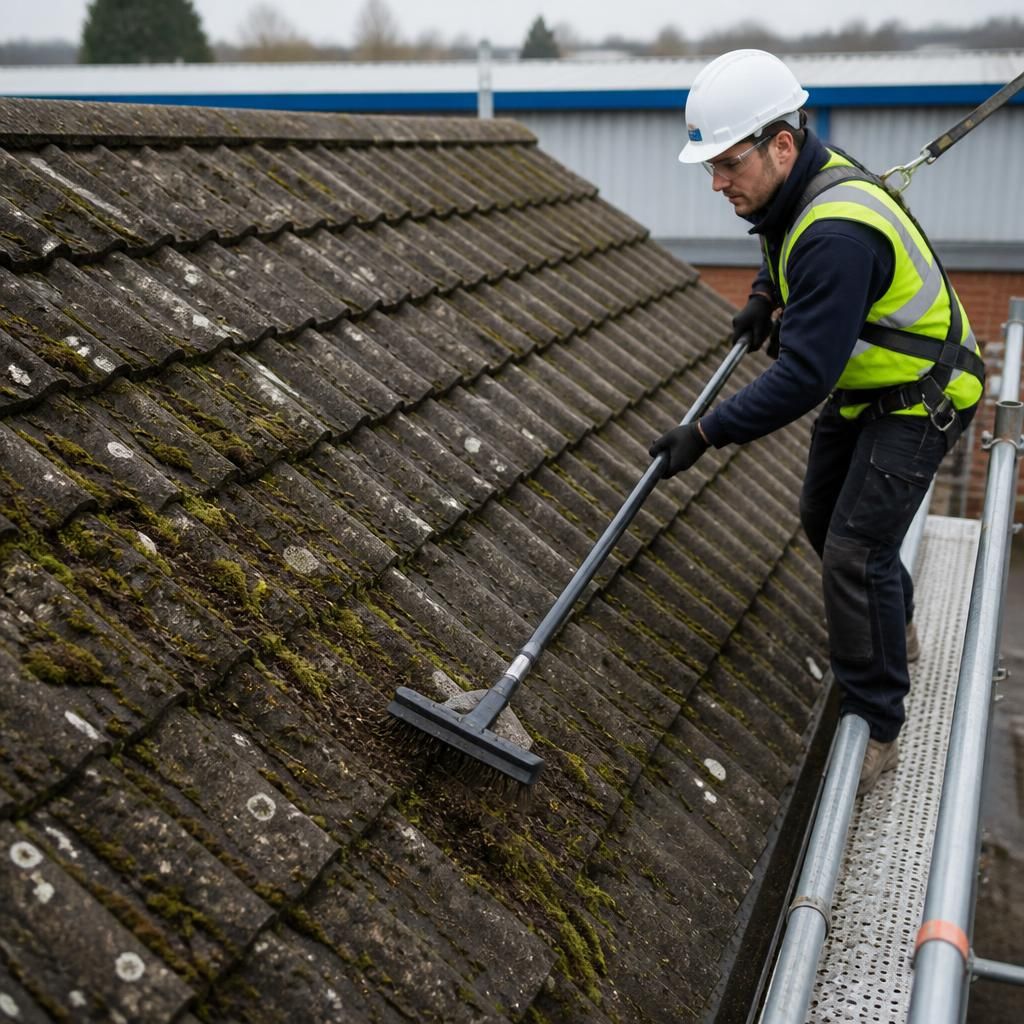
Safe moss removal from roof tiles relies on matching the cleaning method and equipment to the tile material, roof condition and access requirements. We normally combine controlled manual scraping with low-pressure soft washing, using steam cleaning only where the surface can tolerate heat and the treatment offers a clear advantage.
Specialist scrapers and soft brushes lift established moss without forcing it beneath tile overlaps. Low-pressure pumps, suitable nozzles and controlled water flow then remove residual organic matter while reducing the risk of disturbing tiles, pointing or protective coatings. A small test area is used where the roof’s response is uncertain, particularly on older, coated or previously repaired tiles.
Access equipment is selected to protect both operatives and the roof. Depending on the building, this may include scaffold, roof ladders, edge protection, a mobile elevating work platform or a properly planned fall-restraint system. Gutters, vents, walls, windows and surrounding surfaces are protected, while moss and runoff are controlled so debris does not enter drainage systems or affect people and property below.
Discuss the Safest Moss Removal Method for Your Roof
Contact us to discuss the safest moss removal method for your roof tiles, based on their material, condition, pitch and access requirements. We can assess the roof and recommend a controlled combination of manual removal, soft washing or steam cleaning where appropriate.