
What safety protocols are in place to protect both workers and property during the roof moss tile cleaning process?
Roof moss tile cleaning is carried out using documented risk assessments, suitable access equipment and trained operatives, with controls in place for work at height, falling debris, water run-off and fragile or damaged tiles. Property is protected through pre-cleaning inspections, gentle moss removal methods, controlled use of cleaning solutions and a final check for damage or remaining hazards.
Roof moss tile cleaning is controlled through a documented risk assessment, a suitable method statement, trained operatives and planned access arrangements. The controls address work at height, fragile or damaged tiles, falling moss and debris, water and chemical run-off, weather conditions, public safety and the protection of the building itself.
Pre-work inspection and planning: Before cleaning starts, the roof and surrounding area are inspected to identify the tile type, roof pitch, moss coverage, visible defects, fragile areas, roof lights, roof edges, overhead services, nearby access routes and drainage points. Existing damage is recorded where practicable so that pre-existing defects are not confused with damage caused during the work. The condition of gutters, flashings, ridge tiles, valleys and roof-mounted equipment is also considered when selecting the cleaning method.
The findings are used to prepare site-specific risk assessments and method statements. These documents set out the access system, sequence of work, required personal protective equipment, exclusion zones, debris controls, cleaning products, waste arrangements and emergency procedures. The approach is reviewed if the roof, weather, access conditions or scope of work changes.
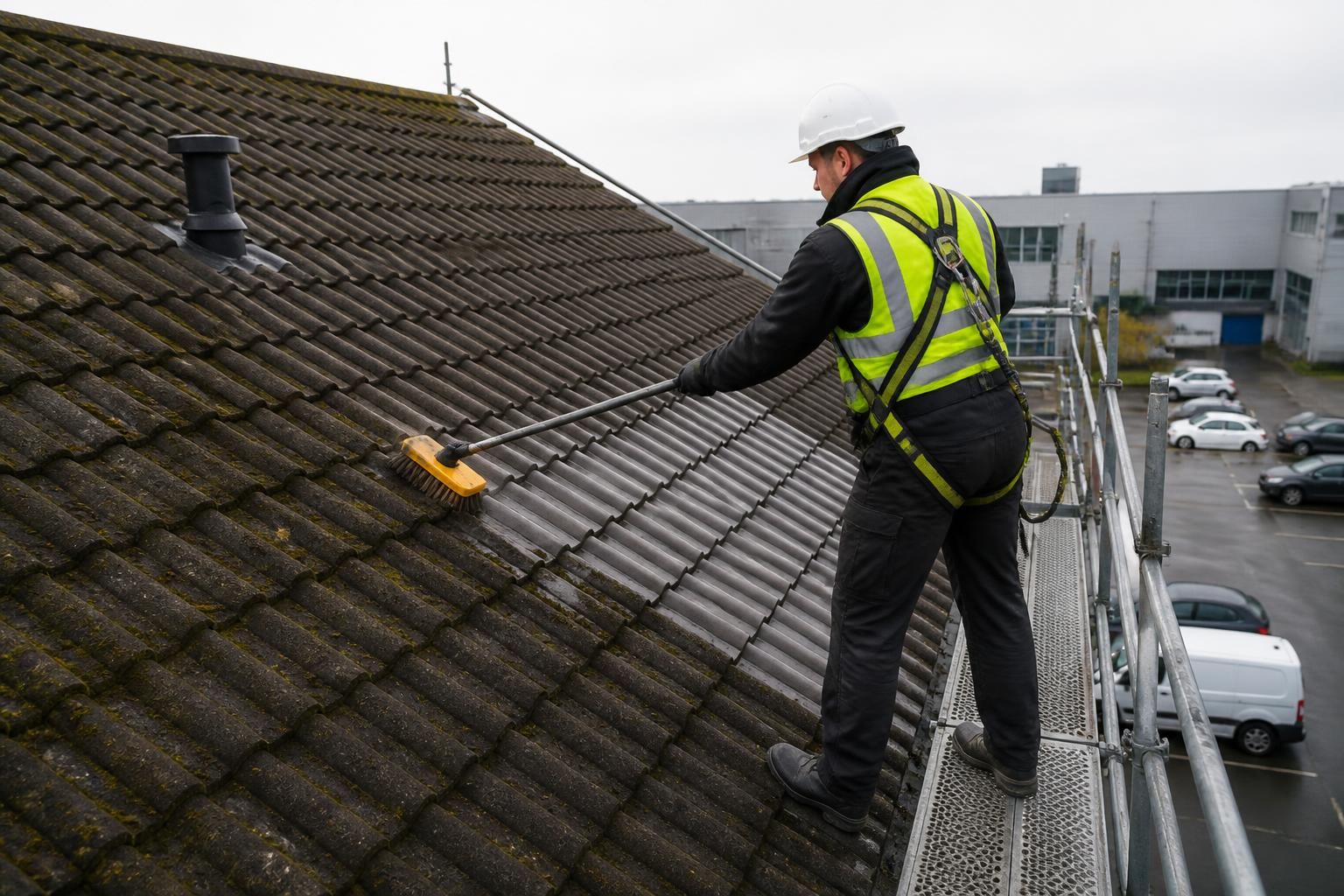
Work-at-height controls: Operatives do not rely on ordinary footwear or unplanned access to move around a roof. Depending on the building and roof configuration, suitable controls may include scaffolding, edge protection, roof ladders, access towers, temporary platforms or a mobile elevating work platform. The equipment is selected for the height, ground conditions, roof pitch and surrounding obstacles, and is checked before use. Harnesses and restraint systems are used where appropriate, with suitable attachment points and a rescue plan rather than as a substitute for properly planned access.
Where possible, the work is completed from a stable position that reduces the need to stand directly on roof tiles. If access onto the roof is necessary, operatives use designated access routes and take account of the roof structure and tile condition. Damaged, loose or particularly fragile areas are isolated or approached using an alternative method. Access equipment is not moved or adjusted by unauthorised people while work is under way.
Protection for workers and the public: Operatives use task-appropriate PPE, which may include safety footwear, gloves, eye protection, protective clothing, head protection and respiratory protection where the risk assessment or product instructions require it. A controlled work area is established below the roof to prevent people, vehicles and visitors entering areas where moss, tools or water could fall. Warning signs, barriers and a banksman or spotter may be used where access routes, public areas or vehicle movements need additional control.
Tools and materials are secured so they cannot slide or fall from the roof. Moss and loose debris are collected progressively rather than being allowed to accumulate at roof edges. Operatives maintain communication with people on the ground, and work is paused if visibility, access, equipment or site conditions become unsafe. Wind, rain, ice, storms and other adverse weather are considered before and during the task because they can make tiles, ladders, platforms and roof surfaces hazardous.
Tile-safe cleaning methods: The cleaning technique is matched to the roof material and its condition. Loose moss is normally removed in a controlled manner using suitable hand tools and low-impact techniques, avoiding aggressive scraping that could lift tiles, damage protective surfaces or disturb pointing. Soft washing or low-pressure application may be used where appropriate, but pressure, dwell time and rinsing are controlled carefully. High-pressure cleaning is not automatically suitable for every roof and is avoided where it could drive water beneath tiles, strip finishes or worsen existing defects.
Operatives work methodically rather than forcing moss from areas that appear unstable. Particular care is taken around ridge and verge tiles, valleys, flashings, roof lights, vents, solar equipment and areas of defective mortar. If cleaning reveals a defect that requires repair, the issue is reported rather than concealed or made worse by continuing with an unsuitable process.
Water, chemical and drainage controls: Any cleaning solution is selected for the roof material and used in accordance with its safety data sheet and manufacturer’s instructions. COSHH controls cover storage, handling, dilution, application, PPE and what to do in the event of a spill. Products are not mixed unless the instructions specifically permit this. Nearby windows, doors, vents, vehicles, signage, painted surfaces and sensitive landscaping are protected from splashes and overspray.
Run-off is managed so that contaminated water, moss fragments and cleaning products do not enter unsuitable drains, watercourses or neighbouring property. Gutters, downpipes and gullies are protected or monitored, and collected debris is removed responsibly. The site is rinsed or cleaned down as required by the selected method, with attention paid to paths, walls, entrances and other areas that could become slippery.
Protection of the building and surrounding property: Before work begins, vulnerable surfaces and items at ground level are identified and protected. This may include temporary sheeting, localised covers, splash protection and controlled hose management. Water is applied only where the roof construction and drainage arrangements can safely accommodate it. Windows and openings remain closed or are protected, and cables, external lighting, air-conditioning units and other building services are kept clear of the work area.
Cleaning is carried out in manageable sections, allowing the operative to check the tiles and surrounding surfaces as work progresses. This helps identify movement, leaks, blocked drainage or unexpected run-off before the issue spreads. Covers are removed carefully after use so that trapped moisture, displaced debris or scuffing does not create a secondary problem.
Checks after cleaning: On completion, the roof and accessible surrounding areas are inspected for remaining loose moss, displaced tiles, damaged fittings, blocked gutters, unsafe debris and signs of uncontrolled run-off. Access equipment and barriers remain in place until the area is safe to release. Any limitations caused by fragile materials, restricted access or pre-existing defects are recorded and explained, along with recommendations for repairs or further maintenance where needed.
These protocols are designed to prevent avoidable injury and property damage while allowing the cleaning method to be adjusted to the actual roof. A roof that cannot be accessed safely, is structurally unsound or is affected by unsuitable weather should not be cleaned until the relevant risk has been controlled.
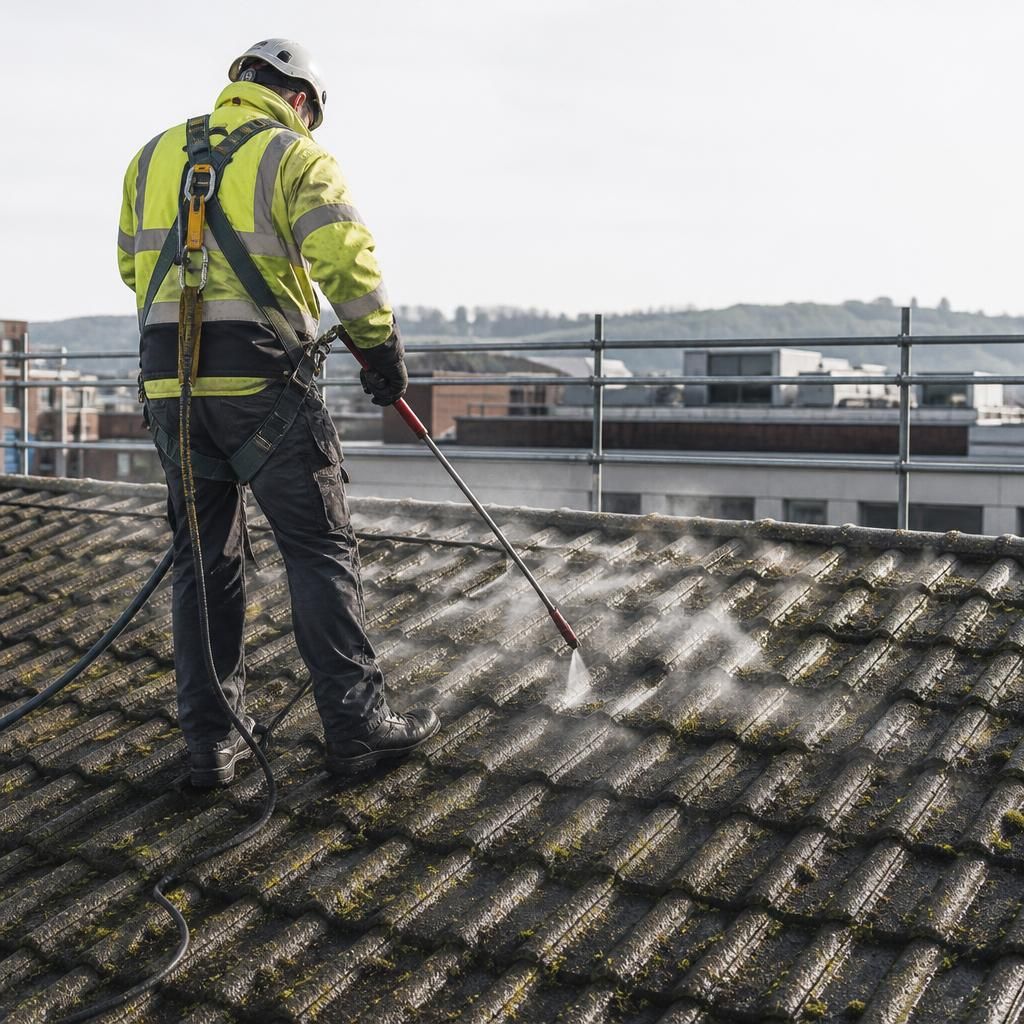
Work-at-height controls are central to safe roof moss tile cleaning. Before access is arranged, the roof pitch, tile condition, edges, roof lights, access points and surrounding ground conditions are assessed so the safest method can be selected.
Depending on the building, this may involve scaffolding, edge protection, roof ladders, temporary platforms or a mobile elevating work platform. Operatives use designated access routes and avoid standing directly on fragile, loose or damaged tiles wherever possible. Harnesses and restraint systems are used where appropriate, alongside a rescue plan, while barriers and warning signs help keep people, vehicles and visitors clear of falling moss, tools and water.