
What cleaning solutions and protective treatments are used during the roof moss tile cleaning process to enhance the roof's durability and appearance?
Roof moss tile cleaning typically uses a roof-safe biocidal treatment to break down moss, algae and lichen, followed by controlled low-pressure rinsing where appropriate. Once the tiles are clean and fully assessed, a breathable water-repellent protective treatment may be applied to reduce future moisture retention, improve appearance and help protect the roof from weathering.
Roof moss tile cleaning generally uses a roof-safe biocidal treatment to loosen and break down moss, algae and lichen, followed where appropriate by controlled low-pressure rinsing or manual removal. Once the tiles are clean, dry and confirmed to be suitable, a breathable water-repellent protective treatment may be applied. The products and application method are selected according to the tile material, roof condition, level of biological growth and surrounding environment.
Biocidal cleaning treatments
Moss is not removed effectively by water pressure alone. Its roots and organic residue can remain embedded in the surface of the tile, allowing regrowth. A professional roof cleaning treatment therefore commonly includes a specialist biocidal solution designed for external masonry and roofing materials. This helps to kill or suppress moss, algae, lichen and other organic growth before the remaining material is removed.
These treatments are applied in a controlled manner and left for the appropriate dwell time in accordance with the product instructions. The solution must not be allowed to dry on unsuitable surfaces or spread onto areas that could be damaged. Where necessary, it is agitated or rinsed using a method appropriate for the roof. The aim is to remove contamination without stripping the tile surface, dislodging protective finishes or forcing water beneath the tiles.
Cleaning solutions may include products with fungicidal, algicidal or moss-inhibiting properties. The precise formulation is not automatically the same for every roof. Concrete tiles, clay tiles, slate and coated or painted roofing materials can react differently to cleaning agents, so the roof is inspected and a small test area may be used before wider application. Strong household bleach, unsuitable acids and aggressive general-purpose detergents are avoided because they can damage roofing materials, affect gutters and downpipes, or create harmful run-off.
Controlled rinsing and manual removal
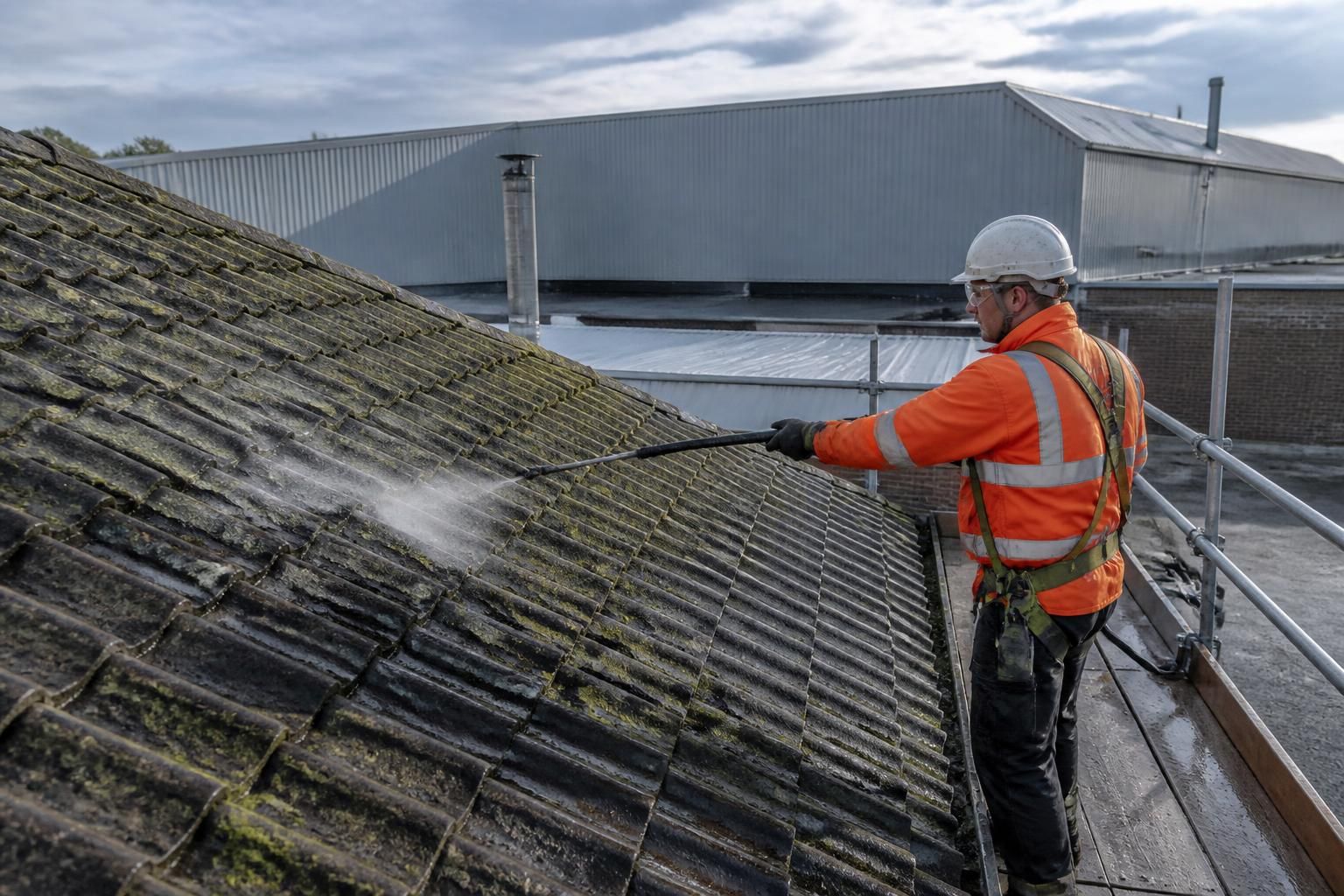
After the treatment has acted, loosened moss is removed using suitable hand tools and controlled rinsing where this is safe. Low-pressure methods are preferred for many tiled roofs because high pressure can erode the surface, drive water under laps and flashings, break fragile tiles or remove granules and coatings. Pressure is adjusted to the condition and type of tile rather than applying a fixed setting to every roof.
Manual removal is particularly important where moss is thick, tiles are aged or the roof contains vulnerable details. Valleys, abutments, ridge tiles, rooflights, flashings and areas around vents require careful attention. Gutters and outlets are also checked and cleared so that displaced moss does not obstruct drainage.
Breathable water-repellent treatments
Once the roof has been cleaned and allowed to dry sufficiently, a breathable water-repellent treatment may be considered. These treatments are often based on water-repellent compounds such as silane or siloxane formulations, although the suitable product depends on the substrate and the manufacturer’s guidance. They are designed to reduce the amount of liquid water absorbed into the tile while allowing water vapour to escape.
Reducing water absorption can help limit the conditions that support moss and lichen, reduce repeated wetting of porous tiles and improve resistance to weathering. It can also help the roof retain a cleaner, more even appearance for longer. However, a protective treatment is not a substitute for repairing defective tiles, failed pointing, damaged flashings or drainage problems. It cannot make an unsound roof watertight and should not be used to conceal defects.
The treatment is applied only after the surface has been assessed for cleanliness, dryness and porosity. Coverage must be even, with particular care taken around joints, edges and roof details. Some products are unsuitable for glazed, highly sealed or previously coated tiles because they may not bond correctly or could alter the appearance. A test application helps confirm compatibility, colour, finish and absorption before the full treatment is undertaken.
Appearance and finish
Roof-safe cleaning treatments normally aim to restore the existing appearance of the tiles rather than create an artificial finish. A water-repellent treatment may leave a natural-looking surface, while some specialist systems can provide a subtle colour enhancement where the roof material and product are compatible. Any change in colour or sheen should be agreed before application. Coatings that form an impermeable film are not automatically suitable for roofing, as trapped moisture can contribute to flaking, blistering or frost-related damage.
Protection of the surrounding property
Professional application includes precautions for gutters, walls, windows, external surfaces, plants and drainage systems. Downpipes may need to be isolated or protected during treatment, and run-off is managed so that concentrated cleaning solution does not enter watercourses or damage vegetation. Product labels, safety data and relevant regulations are followed, including requirements for handling, dilution, storage and disposal.
The final choice of cleaning solution and protective treatment is therefore based on the roof’s material, condition and surroundings, not on a standard package. A suitable biocidal treatment can remove and suppress organic growth, while a compatible breathable water repellent can reduce moisture absorption and help preserve the cleaned appearance. Where tiles are cracked, severely weathered or structurally unsound, repair or replacement advice takes priority over applying any protective finish.
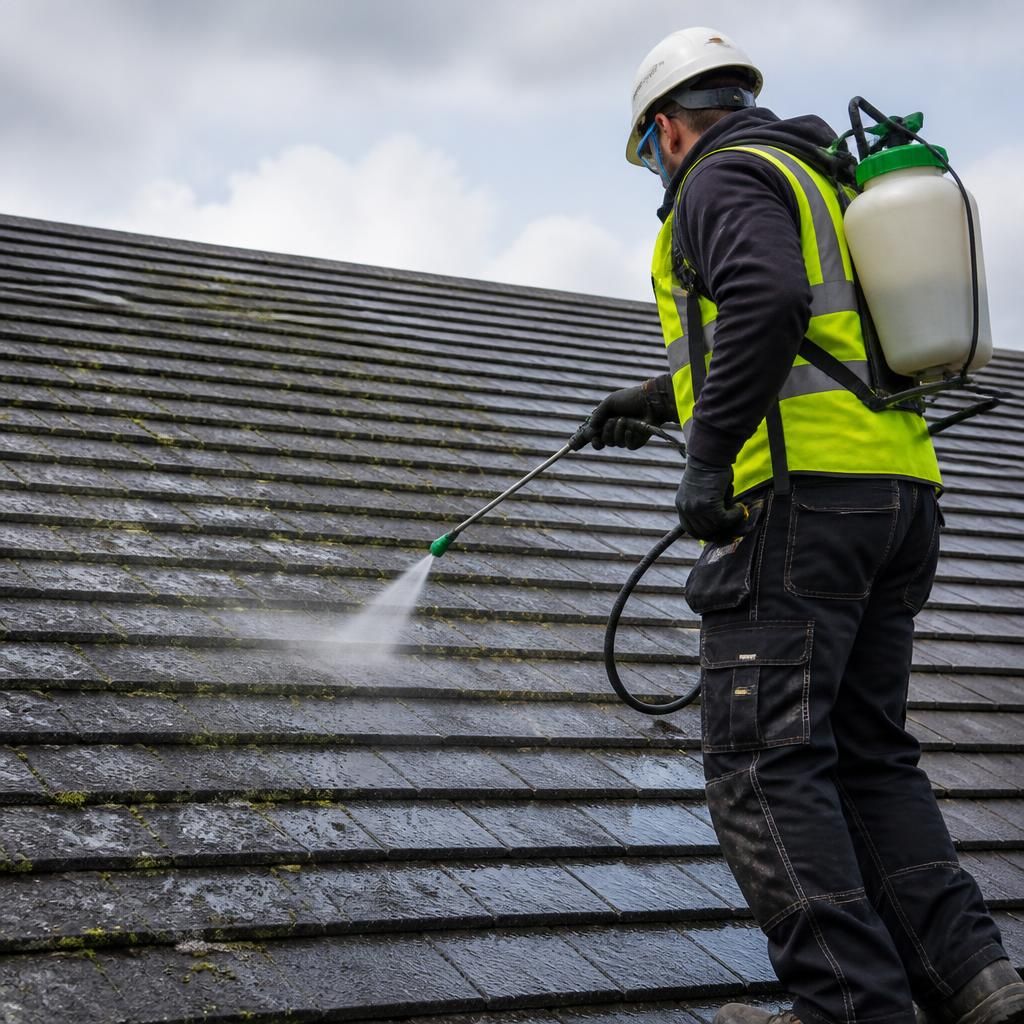
Breathable water-repellent treatments are applied after roof moss tile cleaning to reduce water absorption without trapping moisture within the roofing material. When the tiles are clean, dry and suitable for treatment, a compatible product can help limit repeated wetting, slow the return of moss and algae, and preserve a more even appearance.
The treatment is not suitable for every roof. Tile type, porosity, existing coatings and overall condition are checked first, with a small test area used where necessary to confirm adhesion, colour and finish. It will not repair cracked tiles, failed pointing or defective flashing, and impermeable coatings are avoided because trapped moisture can contribute to frost damage, blistering or flaking.