
What are the environmental impacts and considerations of roof moss tile cleaning?
Roof moss tile cleaning can affect watercourses, soil, plants and wildlife if moss, biocides or contaminated wash water are allowed to run into drains or surrounding ground. Environmentally responsible cleaning uses controlled methods, biodegradable or targeted treatments where appropriate, careful collection and disposal of debris, and measures that minimise water use and damage to the roof.
Roof moss tile cleaning can affect watercourses, soil, plants, wildlife and the roof itself, mainly through dislodged moss, treatment chemicals, contaminated runoff and unnecessary water use. An environmentally responsible approach removes moss with the least aggressive method that will achieve a sound result, controls where debris and wash water go, and uses cleaning products only when they are necessary and suitable for the roof and surrounding environment.
How roof moss cleaning can affect the environment
Moss, algae and lichen are natural organisms, but established growth on roof tiles can retain moisture, obstruct gutters and contribute to surface deterioration. Removing it is not inherently harmful; the environmental impact depends on the method used and how the waste is managed. Brushing, scraping or washing can release organic debris, spores and sediment. If this material enters surface-water drains, ponds, streams or neighbouring soil, it can affect water quality and leave excess organic matter in areas where it does not belong.
Chemical treatments require particular care. Some biocidal or fungicidal products can harm aquatic organisms, garden plants and beneficial soil life if they are misapplied or allowed to run off. Even a product described as biodegradable is not automatically safe to discharge into a drain or watercourse. Biodegradability, dilution, contact time and toxicity to aquatic life are separate considerations. Product instructions, safety data and any site-specific restrictions should always be checked before use.
Water use and runoff control
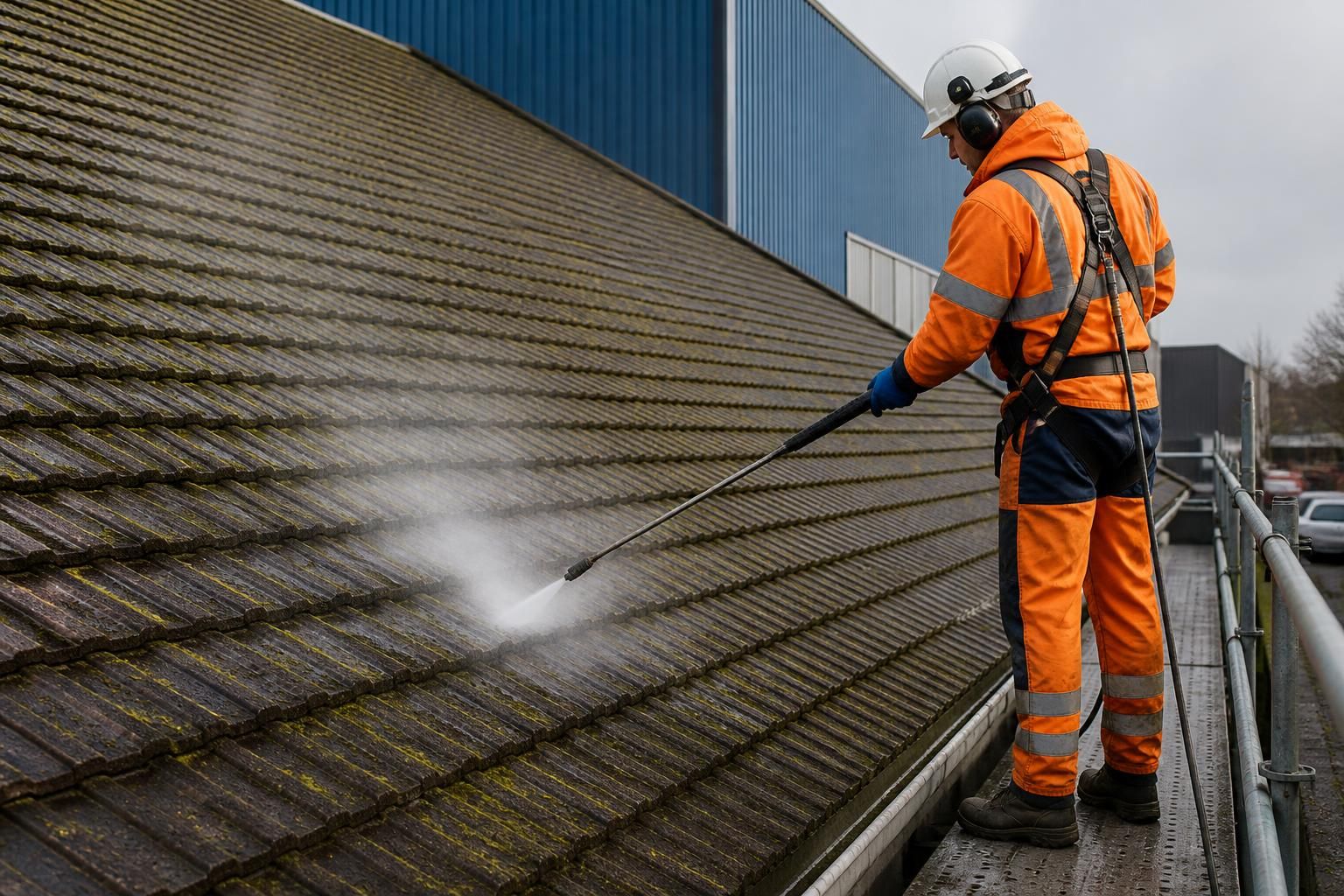
Pressure washing can use substantial volumes of water and may force moss, grit and roof deposits into gutters and drainage systems. High pressure can also damage tile surfaces, dislodge pointing or drive water beneath tiles. For most moss-covered roofs, controlled low-pressure washing, manual removal or steam cleaning is preferable to unnecessarily aggressive jetting.
Before work starts, the drainage layout should be considered. Downpipes may need to be temporarily disconnected, protected or directed to a controlled collection point, depending on the site and the treatment being used. The aim is to prevent dirty water and chemical residue from entering surface-water drains. Captured water and debris should be handled in accordance with the product instructions and applicable waste requirements rather than being released onto a road, garden or watercourse.
Choosing a lower-impact cleaning method
- Manual removal: Scrapers and brushes can remove heavy moss without introducing chemicals or using large quantities of water. The work must be carried out carefully to avoid breaking tiles or disturbing the roof covering.
- Soft washing: A low-pressure application can treat remaining organic growth while reducing the risk of tile damage and limiting water use compared with high-pressure cleaning. Any treatment should be targeted, correctly diluted and prevented from reaching sensitive areas.
- Steam cleaning: Controlled steam can reduce reliance on chemical treatments and may be suitable where the roof material and condition allow it. It still produces loosened debris and condensate, so runoff and gutter protection remain important.
- High-pressure cleaning: This is not automatically environmentally responsible simply because it may remove moss quickly. It can increase water consumption, spread contaminated material and damage older, weathered or porous tiles. It should only be considered where the roof construction, condition and surrounding drainage make it appropriate.
The most suitable method depends on the tile material, roof pitch, age, existing damage, moss density, access arrangements and proximity to drains, ponds, planted areas or neighbouring properties. A method that is suitable for sound concrete tiles may be inappropriate for fragile clay tiles, slate or an older roof with deteriorated pointing.
Protecting plants, wildlife and surrounding property
Nearby lawns, borders, shrubs and trees should be protected from overspray, falling debris and concentrated runoff. Treatments should not be applied in windy conditions or when spray could drift onto vegetation, parked vehicles, rainwater harvesting equipment or neighbouring land. Gutters, downpipes and collection points need to be checked after cleaning so that loosened moss does not remain in the drainage system and later wash into the environment.
Roof work can also disturb birds and other wildlife. The roof and nearby structures should be checked for active nests before cleaning begins. Where nesting activity is present, the work may need to be delayed or adjusted to comply with wildlife protection requirements. This is particularly important during the nesting season, although active nests can be present outside expected periods. Any suspected bats or other protected species should be treated as a specialist ecological matter rather than disturbed.
Responsible use of cleaning treatments
Where a treatment is needed, it should be selected for the specific roof surface and applied only to the affected areas. The operative should follow the manufacturer’s instructions for dilution, application, contact time, storage and disposal, while using the appropriate personal protective equipment and controls identified by the product safety information. More concentrated or more frequent application does not necessarily improve the result and can increase environmental risk.
Rain forecasts and site conditions should be considered before applying a treatment. Rain shortly after application can wash active product from the roof before it has worked, increasing runoff and reducing effectiveness. Work should be planned so that the product can remain within its required contact period and be managed safely afterwards.
Debris and waste management
Removed moss, tile fragments, silt and contaminated absorbent materials should be collected rather than swept into drains or left on hard surfaces where they can be washed away. Waste should be kept separate where necessary, stored securely and disposed of through an appropriate route. Containers, application equipment and protective materials should never be rinsed into surface-water drainage systems.
Where a roof is connected to a rainwater harvesting system, the system should be isolated before cleaning and flushed or inspected afterwards in line with the equipment manufacturer’s guidance. Water collected from the roof should not be assumed suitable for reuse if it contains treatment residue, moss deposits or other contaminants.
Practical environmental checks before and after cleaning
- Inspect the roof, tiles, gutters, downpipes and surrounding ground to identify fragile surfaces, drainage routes and sensitive vegetation.
- Check for active nests, protected wildlife concerns and access issues before setting up equipment.
- Select the least aggressive effective method and avoid chemical treatment where physical removal will provide a suitable result.
- Protect or control drains, collect loose debris and prevent overspray or runoff from reaching watercourses and planted areas.
- Use products according to their instructions and do not mix treatments unless the manufacturer specifically permits it.
- Inspect the roof and drainage system after cleaning, remove remaining debris and confirm that no contaminated residue has been left on surrounding surfaces.
For commercial, managed or industrial premises, the environmental controls should be recorded in the method statement and risk assessment. This may include the products proposed, runoff arrangements, waste route, weather conditions, protection for neighbouring land and procedures for dealing with an accidental spill. These controls help demonstrate that roof moss tile cleaning has been planned as a managed maintenance activity rather than treated as a simple wash-down operation.
The most environmentally responsible result is not necessarily the roof that looks cleanest immediately after the most intensive treatment. It is a roof cleaned effectively without avoidable tile damage, excessive water use, uncontrolled chemical discharge, blocked drainage or disturbance to wildlife. Appropriate preparation, targeted treatment, careful collection and a method suited to the roof will protect both the building and its surrounding environment.
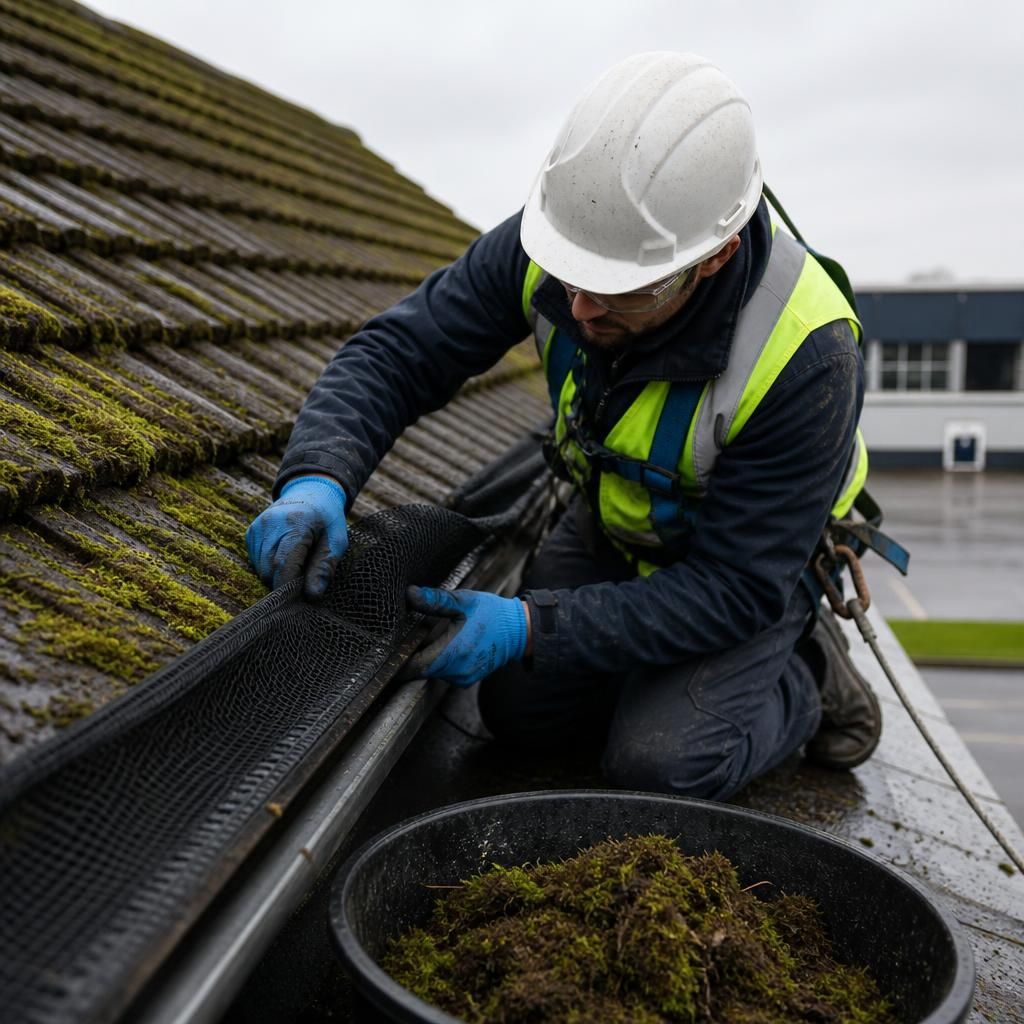
Runoff control is one of the most important environmental considerations during roof moss tile cleaning. Dislodged moss, silt and cleaning residues should not be allowed to enter surface-water drains, ponds, streams, planted areas or neighbouring land.
Before work begins, the drainage layout is checked and gutters, downpipes and nearby surfaces are protected or directed towards a controlled collection point where necessary. Loose moss and contaminated debris are collected rather than swept into drains, while any treatment is applied only at the required dilution and kept away from sensitive vegetation and wildlife. Rain forecasts and wind conditions are also considered to reduce the risk of uncontrolled wash-off or spray drift.
After cleaning, the roof, gutters and surrounding ground are inspected for remaining debris or residue. Where a rainwater harvesting system is connected, it should be isolated during the work and checked before being returned to service.