
What are the benefits of using soft wash methods for cleaning roof moss tiles?
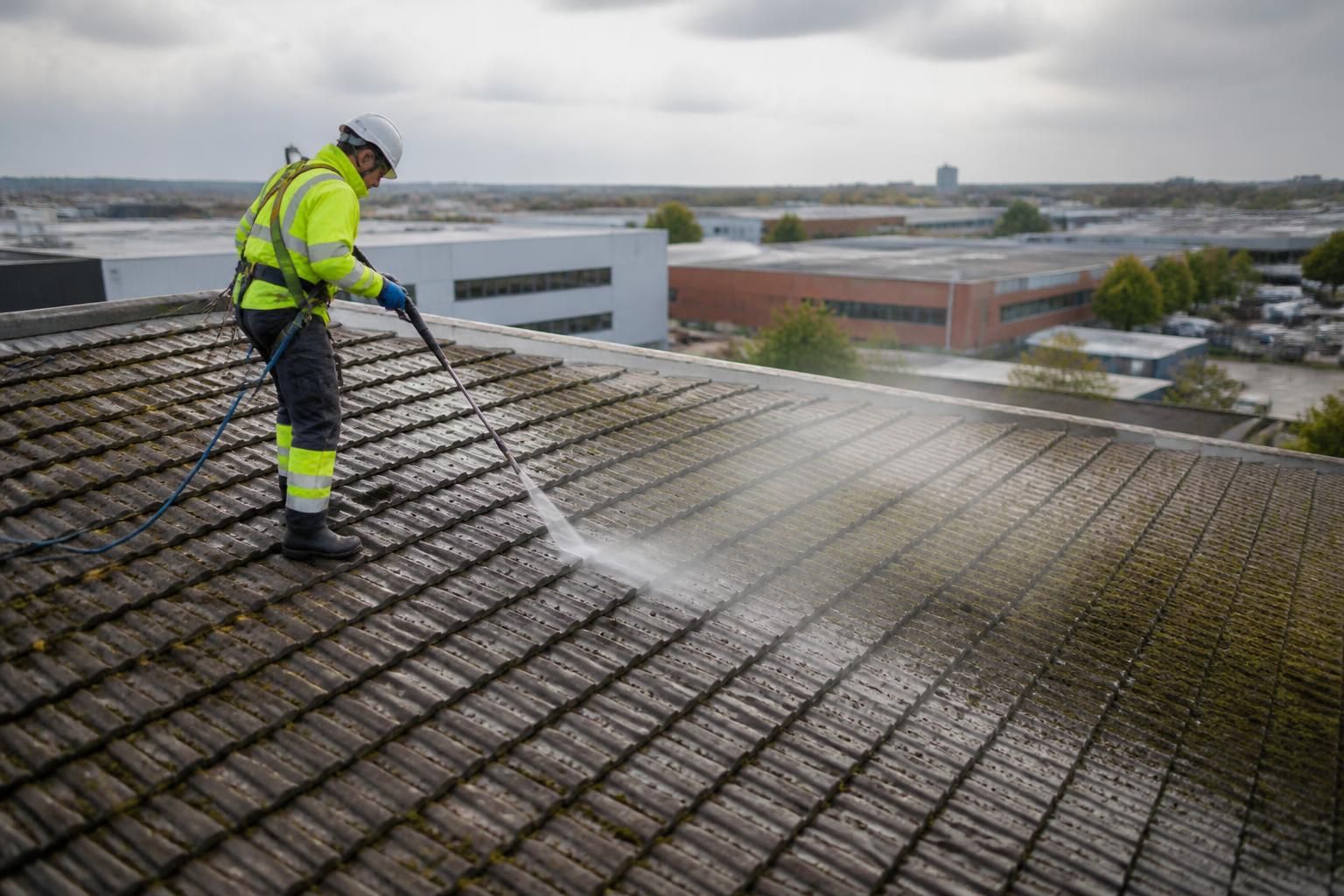
Soft wash roof cleaning uses low-pressure application of specialist solutions to loosen and remove moss from roof tiles without the abrasion and impact associated with high-pressure washing. It helps reduce the risk of tile, pointing and protective-coating damage while improving the roof’s appearance and supporting longer-lasting protection when followed by suitable aftercare.
Soft wash roof cleaning provides a controlled way to remove moss and other biological growth from roof tiles while minimising the risk of damage. It uses low-pressure application of a suitable cleaning solution rather than relying on force to strip growth from the surface. The solution breaks down moss, algae and lichen so they can be removed with gentle rinsing and, where appropriate, manual brushing or scraping.
It reduces the risk of tile and mortar damage. High-pressure washing can be unsuitable for older, weathered or fragile roof coverings because concentrated water pressure may dislodge tiles, erode the surface, damage pointing or force water beneath laps and joints. Soft washing applies considerably less mechanical force, making it a more appropriate method where the condition and construction of the roof require careful treatment. It does not remove all risk, however; damaged tiles, defective flashing and weak mortar still need to be identified before cleaning begins.
Soft washing treats the causes of surface discolouration as well as its appearance. Moss holds moisture against tiles and can encourage the build-up of additional organic matter. Algae and lichen can also create persistent staining. A correctly selected treatment helps break down this growth instead of simply moving it from one part of the roof to another. Residual growth may continue to weather and detach after the initial clean, so the roof may require monitoring and follow-up treatment rather than an unnecessarily aggressive wash.
The method is suitable for detailed and uneven roof surfaces. Moss commonly accumulates around tile overlaps, verges, valleys, ridges, roof penetrations and areas shaded by nearby trees or buildings. Low-pressure application can reach these areas more evenly than a narrow, high-pressure jet. It also allows the operator to work around fragile features, roof accessories, solar equipment and adjacent surfaces with greater control.
It can help preserve the serviceable condition and appearance of the roof. Removing moss reduces the weight and moisture retention associated with accumulated growth and restores more of the tile surface’s visible finish. Cleaning does not make old tiles new or correct underlying defects, but avoiding unnecessary abrasion helps preserve the existing surface. Where suitable, a compatible protective treatment may be applied after cleaning to slow the return of biological growth. Any treatment must be selected for the specific tile type and applied only when the roof is suitable for it.
Soft washing also supports safer water management during the work. A professional clean should include protection for gutters, downpipes, walls, windows, paving, planted areas and other surfaces below the roof. Moss and rinse water need to be controlled so that blocked drainage, staining or chemical run-off is avoided. Collected debris should be removed from gutters and the surrounding area rather than being allowed to enter the drainage system.
The process normally begins with an assessment of the roof covering, access requirements, moss density, drainage arrangements and nearby surfaces. The operator checks for cracked or slipped tiles, defective pointing, failed sealants and other issues that could affect the cleaning method. Loose moss is then removed in a controlled manner where practical, followed by application of a specialist soft wash solution at low pressure. After the treatment has had sufficient contact time, remaining debris and residue are rinsed or removed in a way that does not drive water beneath the tiles. The roof and surrounding property are then inspected and cleared.
Soft washing is not automatically suitable for every roof. The correct approach depends on the tile material, age, condition, pitch, previous coatings and the type of growth present. Some surfaces may require more manual removal, a gentler rinse, a different treatment or no chemical application at all. A competent contractor should also consider water run-off, weather conditions, access safety and the manufacturer’s guidance where it is available.
There are practical limits to what the method can achieve. It cannot repair broken tiles, replace missing mortar, correct drainage defects or resolve persistent damp caused by a failed roof detail. Moss may also return if the roof remains heavily shaded, surrounded by overhanging vegetation or exposed to conditions that retain moisture. Keeping gutters clear, trimming encroaching vegetation where appropriate and arranging periodic inspections can help maintain the result.
For commercial and managed properties, soft washing offers the additional benefit of a repeatable maintenance approach. The work can be planned around access requirements, tenant or visitor safety, sensitive landscaping and the protection of façades and other external finishes. The cleaning specification should record the areas treated, the condition of the roof, any defects found and any recommended follow-up work. This helps separate routine moss control from essential roof repairs and supports better long-term maintenance decisions.
Overall, the main benefits are reduced mechanical stress, controlled treatment of organic growth, improved appearance, better protection of surrounding property and a lower likelihood of avoidable tile or mortar damage compared with unsuitable high-pressure cleaning. The result depends on accurate assessment, appropriate solutions, careful application, safe access and effective aftercare rather than on the soft wash solution alone.
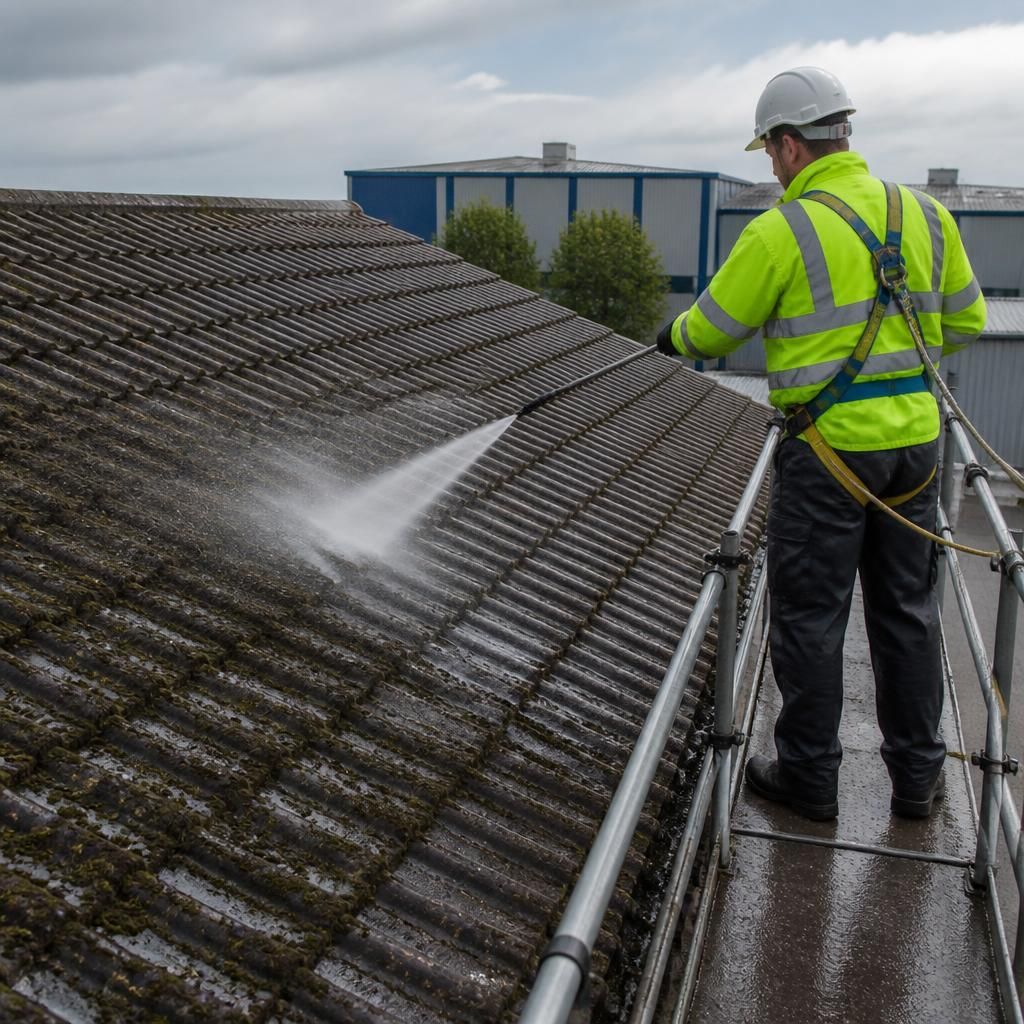
Soft wash roof cleaning uses a specialist treatment applied at low pressure to break down moss, algae and lichen on roof tiles. This reduces the mechanical force placed on the tiles compared with unsuitable high-pressure washing, helping to limit the risk of surface abrasion, disturbed pointing and water being driven beneath tile laps.
After suitable contact time, loosened growth can be removed through controlled rinsing and, where necessary, careful manual work. The method still requires a roof inspection first, as cracked tiles, defective flashing or weak mortar must be addressed before cleaning. The solution and application method should also be selected for the specific tile material and surrounding surfaces.