
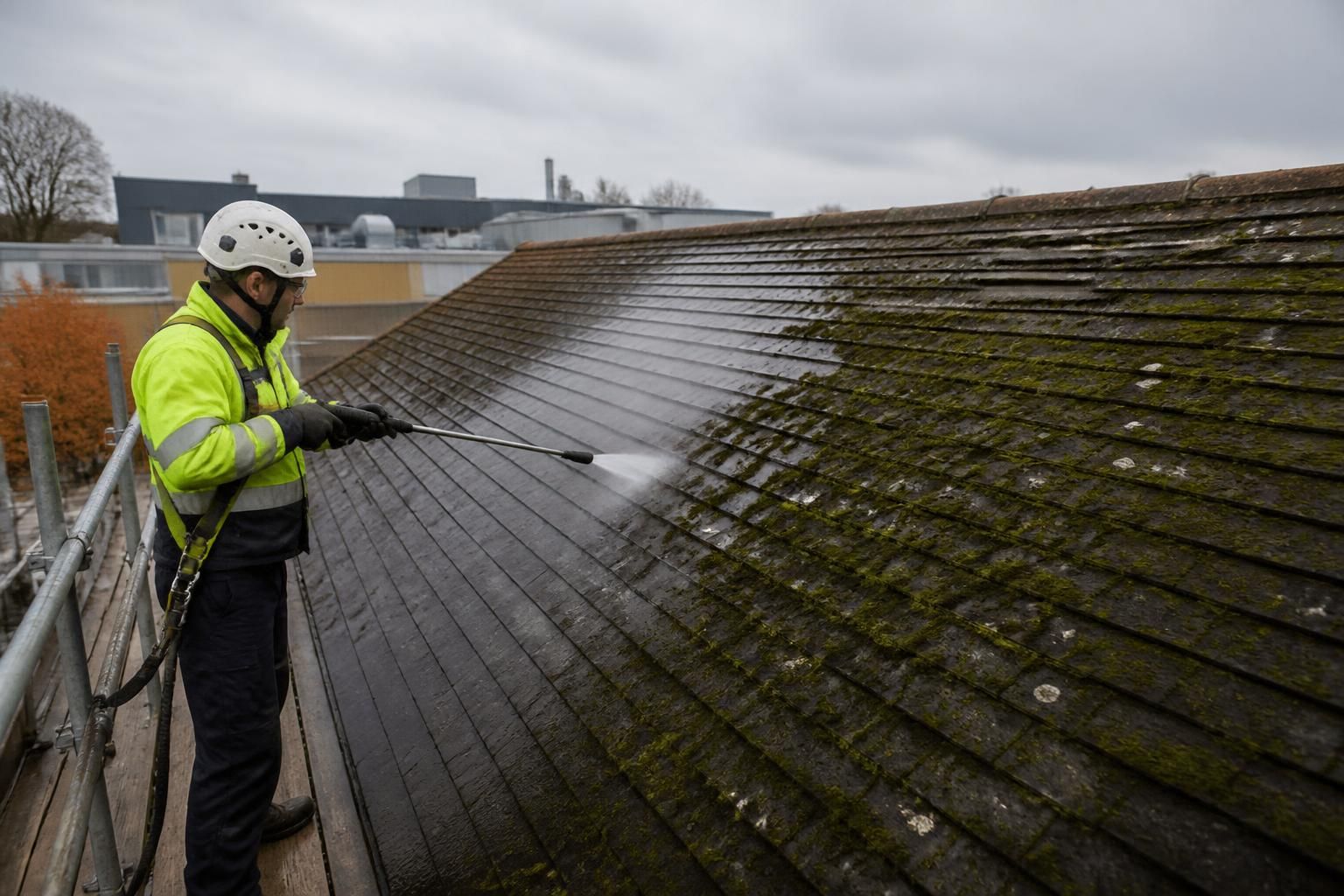
How often should roof moss tile cleaning be carried out?
Roof moss tile cleaning should be carried out when moss begins to establish and retain moisture, rather than to a fixed schedule. The right interval depends on roof pitch, shade, surrounding vegetation, weather exposure and the tile condition, so regular inspections help identify when cleaning is needed before moss causes damage.
Roof moss tile cleaning should be carried out when moss is becoming established or beginning to retain moisture, rather than according to a fixed timetable. For many properties, an annual roof inspection is a sensible starting point, while the interval between professional cleans may range from occasional treatment to more frequent maintenance depending on the roof’s exposure, construction and surrounding environment.
The main factors affecting cleaning frequency include:
- Shade: Roofs beneath trees or beside taller buildings dry more slowly, creating conditions in which moss and algae can spread.
- Overhanging vegetation: Leaves, twigs and organic debris retain moisture and can introduce moss spores to the roof surface.
- Roof pitch and drainage: Shallow-pitched areas and sections affected by blocked gutters may remain damp for longer.
- Weather exposure: Persistent rainfall and limited sunlight can encourage faster regrowth.
- Tile condition: Older, porous, cracked or weathered tiles may hold moisture and require closer monitoring.
- Previous cleaning and treatment: A suitable protective treatment may slow regrowth, but it does not remove the need for inspections.
A roof should be assessed before moss becomes a thick, continuous layer. Early signs include small green patches around tile overlaps, moss along ridge lines, growth near gutters and moss spreading across shaded elevations. Once moss is established, it can retain water against the tiles, obstruct drainage channels and contribute to frost-related damage. Thick growth may also loosen as it expands, allowing material to enter gutters and downpipes.
For most buildings, checking the roof as part of planned external maintenance is more reliable than waiting until the moss is clearly visible from ground level. An annual inspection can identify early growth, slipped or damaged tiles, blocked rainwater goods and areas where vegetation is affecting the roof. Buildings in heavily shaded locations or beneath mature trees may need inspections more often, particularly after periods of wet weather.
Cleaning is generally appropriate when inspection confirms that moss is established, spreading or affecting drainage and tile condition. It may not be necessary to clean a roof simply because a small amount of surface staining is present. Moss, algae and lichen require different approaches, and unnecessary mechanical disturbance can cause avoidable wear to tiles, joints and protective finishes.
Professional roof moss tile cleaning should therefore be planned around the condition of the roof rather than an automatic recurring interval. The process normally includes a condition assessment, identification of vulnerable areas, controlled removal of moss, clearing of gutters and surrounding surfaces, and an appropriate follow-up treatment where suitable. The method should reflect the tile material and its age; high-pressure cleaning is not appropriate for every roof.
After cleaning, the roof should be monitored for regrowth and any underlying defects that become visible. Keeping gutters clear, trimming vegetation away from the roof and improving persistent drainage or shading problems can help extend the period before further cleaning is required. New moss growth should be dealt with promptly, as small patches are usually easier to manage than a heavy covering.
There is no universal answer that applies to every roof. A site-specific inspection is the best way to establish whether cleaning is currently required and to set a practical maintenance interval that protects the tiles without subjecting them to unnecessary cleaning.
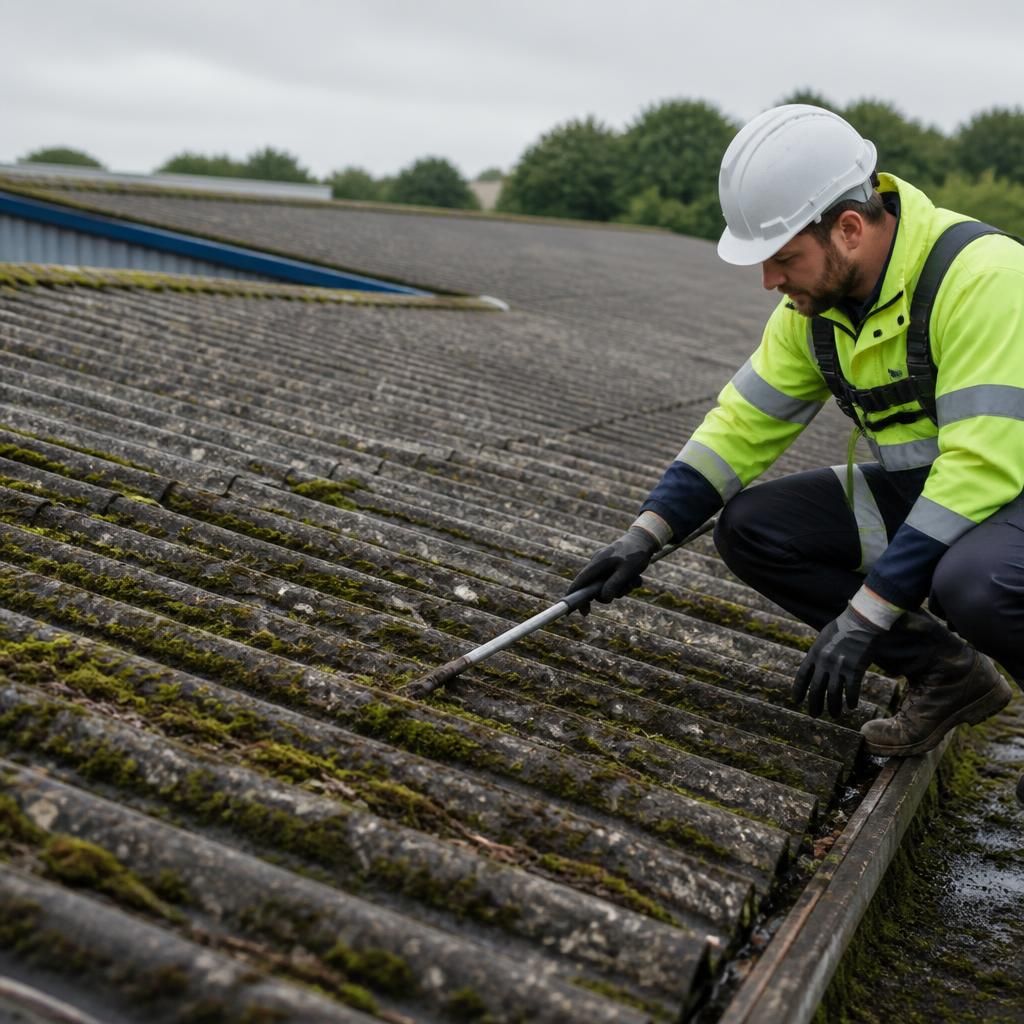
Roof moss tile cleaning should be scheduled according to the roof’s condition and exposure, not a fixed cleaning interval. An annual inspection is a practical starting point, but shaded roofs, roofs beneath overhanging trees and areas with poor drainage may need more frequent checks for regrowth, blocked channels and moisture retention.
Cleaning is usually appropriate when moss is spreading, holding water against the tiles or affecting drainage. Small isolated growth may be managed during planned maintenance, while thick or established moss should be addressed promptly to reduce the risk of displaced tiles, blocked gutters and frost-related damage. After cleaning, keeping gutters clear and controlling nearby vegetation can help extend the period before further treatment is needed.