
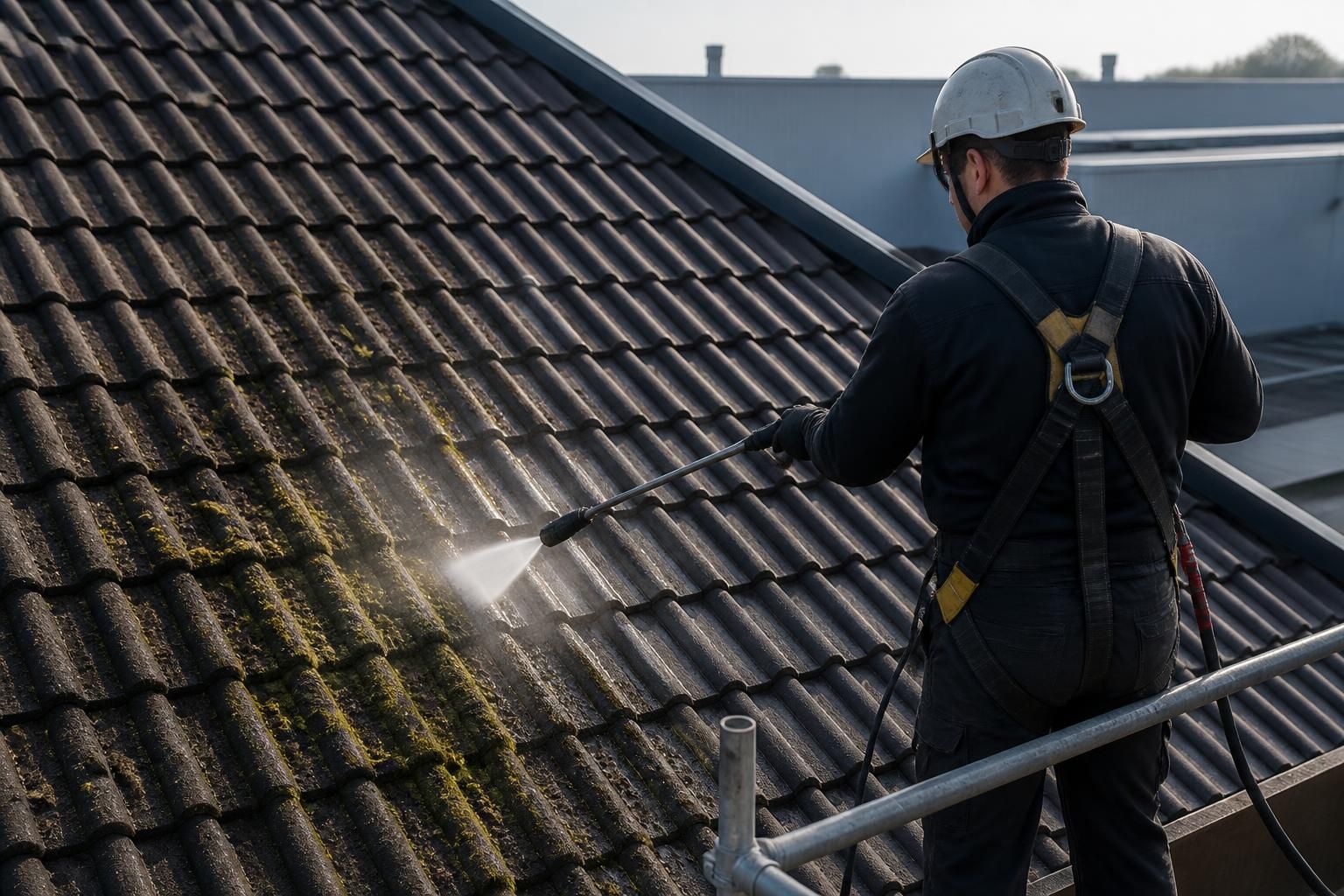
How is roof moss tile cleaning different from regular roof cleaning?
Roof moss tile cleaning specifically targets moss and other biological growth on tiled roofs, using controlled removal and suitable treatments to protect the tiles and reduce regrowth. Regular roof cleaning is a broader service for removing general dirt, stains, leaves and debris, and may use different methods depending on the roof material and condition.
Roof moss tile cleaning is a targeted treatment for moss and related biological growth on tiled roofs, whereas regular roof cleaning is a broader service for removing general dirt, dust, leaves, surface staining and loose debris. The difference affects the inspection, removal method, cleaning solution, pressure level and aftercare required. Moss has roots or holdfasts that can grip the tile surface and retain moisture, so it cannot always be treated effectively as ordinary dirt.
The main difference is the type of contamination being removed. Regular roof cleaning may involve clearing leaves and organic debris, washing away atmospheric soiling or treating light staining. Roof moss tile cleaning must address established moss, algae and lichen, together with the material trapped beneath or around the growth. Moss can form dense patches along tile overlaps, in roof valleys and near shaded areas. It may also conceal damaged, loose or displaced tiles, which is why a more detailed assessment is needed before work starts.
Roof moss tile cleaning usually requires a more controlled removal process. Loose moss is commonly removed carefully by hand or with suitable non-abrasive tools before the roof is washed. This reduces the risk of forcing moss, water or debris beneath the tiles. Depending on the roof material, condition and access, a low-pressure soft wash or controlled steam-cleaning process may then be used to remove remaining biological residue. The chosen method must be strong enough to clean the surface but gentle enough to avoid damaging the tile finish, mortar joints, underlay or associated roof components.
Regular roof cleaning can sometimes involve a more straightforward wash-down where the contamination is loose and the roof surface is robust. It is not, however, appropriate to assume that high pressure is suitable simply because the roof looks dirty. Excessive pressure can erode the surface of concrete tiles, remove protective coatings, disturb pointing and drive water into vulnerable areas. Moss removal therefore prioritises control over speed and is adapted to the roof rather than treated as a standard pressure-washing task.
The inspection is also different. Before moss tile cleaning, the roof should be checked for cracked or brittle tiles, loose ridge and verge components, damaged flashing, deteriorated mortar, blocked gutters and areas where water may collect. The density and location of the moss are relevant, as are the roof pitch, tile profile, age, previous coatings and ease of access. These factors determine whether the work can be carried out safely and whether any repairs should be arranged before or after cleaning.
Regular cleaning may focus mainly on the visible surface and accessible debris. Moss tile cleaning requires closer attention to the causes of regrowth. Persistent shade, overhanging vegetation, poor drainage and moisture retention can all encourage moss to return. Cleaning does not correct these underlying conditions, but identifying them allows practical recommendations such as clearing gutters, managing nearby vegetation or improving routine roof maintenance.
Treatment and aftercare are important distinctions. Once moss has been removed, a suitable biocidal or fungicidal treatment may be applied where appropriate for the roof material and surrounding environment. This is intended to deal with remaining microscopic biological contamination and slow regrowth; it is not an instant substitute for physical removal. Treatments must be applied according to the product instructions, with care taken around rainwater systems, plants, ponds, neighbouring surfaces and drainage routes. A protective coating may be considered only where it is compatible with the tiles and genuinely suitable for the roof’s condition.
Regular roof cleaning does not always need a biological treatment. If the issue is simply loose leaves or atmospheric dirt, debris clearance and a suitable surface clean may be sufficient. Applying unnecessary chemicals can create avoidable environmental and material risks, so the treatment should match the contamination rather than being included automatically.
There are different risks if the two services are confused. Treating heavy moss as ordinary dirt can leave growth beneath tile edges and in joints, allowing it to return quickly. Using aggressive pressure to remove firmly attached moss can damage the roof surface or dislodge tiles. Conversely, treating a lightly soiled roof as though it has severe moss contamination may involve unnecessary disturbance, chemical use or access work. A roof should therefore be assessed on its material, condition and contamination before the cleaning method is selected.
Safe moss tile cleaning also includes protecting the property below. Gutters and downpipes may need to be cleared or temporarily managed so that loosened moss does not cause blockages. Windows, walls, paving, vehicles, plants and drainage points should be protected from run-off and falling debris. Operatives must use suitable access equipment and fall-protection measures, particularly where the pitch, height or roof condition makes direct access unsafe. Roof work should not proceed during unsuitable weather or where the surface cannot be approached securely.
In practical terms, regular roof cleaning is a general maintenance clean, while roof moss tile cleaning is a specialist process for removing biological growth from a tiled roof and reducing the conditions that support its return. Both services require a method appropriate to the surface, but moss tile cleaning normally involves more detailed inspection, gentler physical removal, targeted treatment and more extensive precautions. Choosing the correct service helps preserve the tiles, avoid unnecessary damage and achieve a cleaner, more maintainable roof.
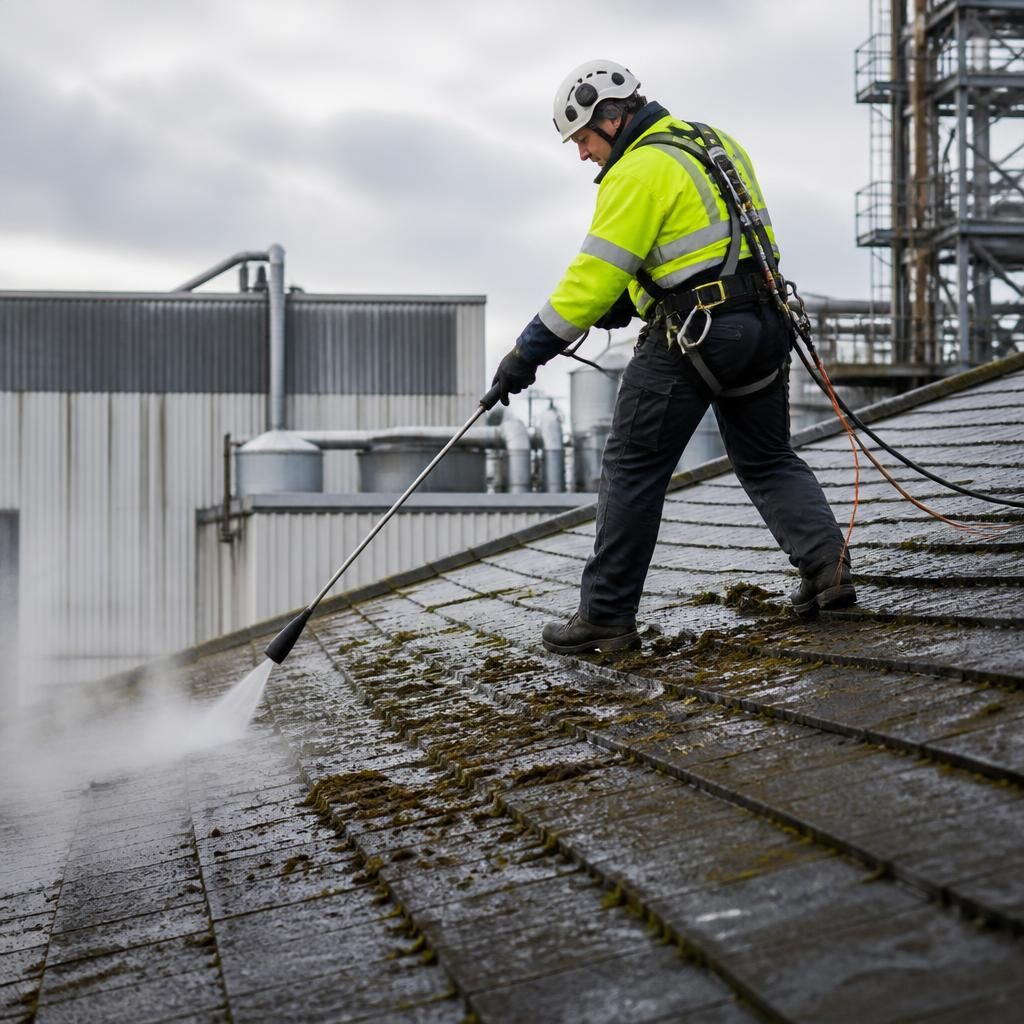
Roof moss tile cleaning differs from regular roof cleaning because it requires the controlled removal of established biological growth, not just the washing away of loose dirt or debris. Moss can grip tile surfaces, collect moisture and extend beneath overlaps, so aggressive pressure washing may damage the tile finish, mortar joints or roof components.
For this reason, moss is typically loosened and removed carefully before a suitable low-pressure or steam-cleaning method is selected for the roof material and condition. A targeted treatment may then be applied to help control remaining biological residue and slow regrowth. This specialist approach protects the tiled surface while addressing the cause and location of the contamination rather than treating moss as ordinary surface dirt.