What steps should be taken to assess whether a metal roof is suitable for a soft wash cleaning method?
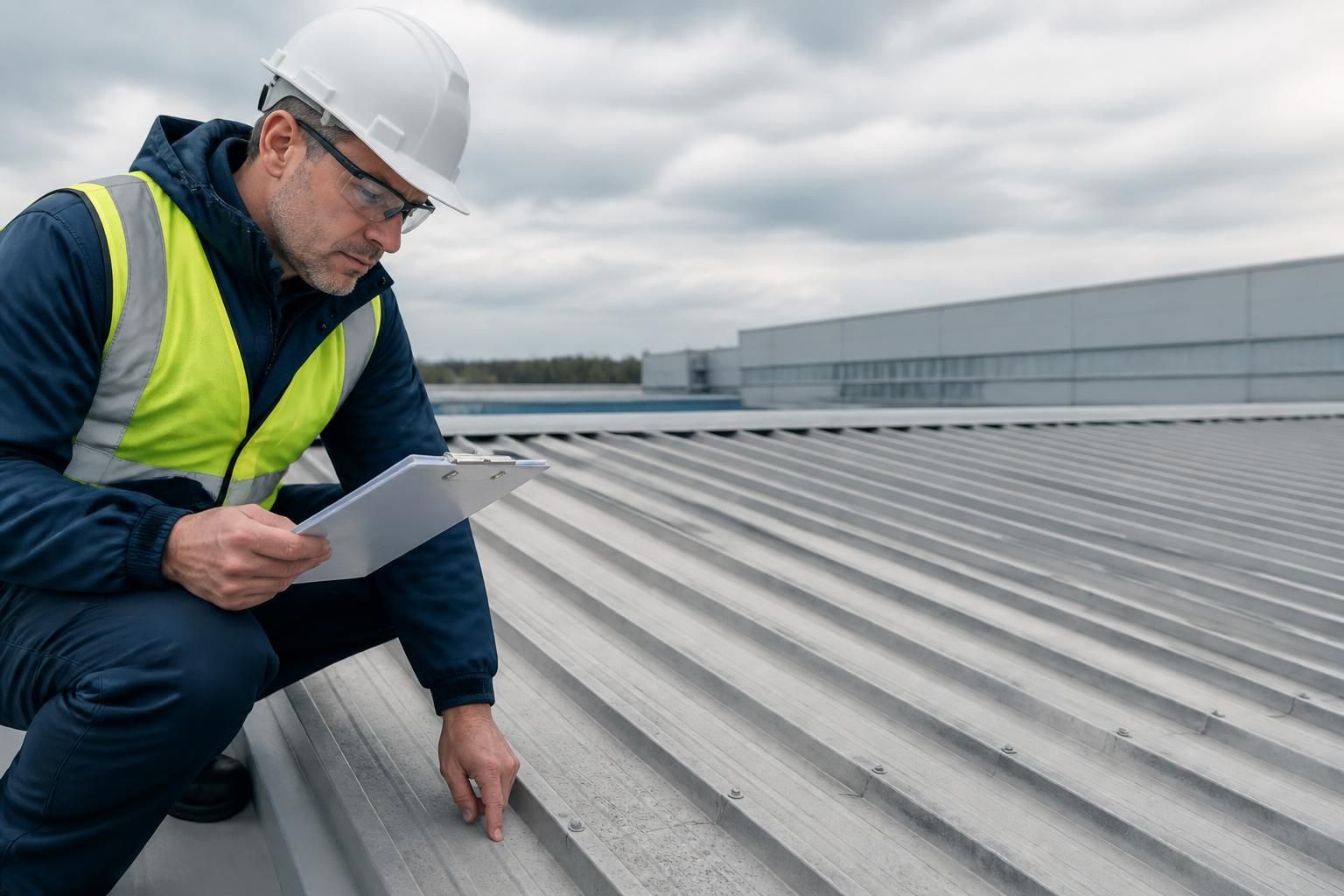
Assess the roof’s metal type, coating, corrosion, paint condition, drainage and surrounding areas, then confirm that low-pressure application will remove the soiling without disturbing the finish. A competent contractor should carry out a close visual inspection and small test patch before agreeing the soft wash method.
A metal roof is generally suitable for soft wash cleaning when its metal type, protective coating, paint system and structural condition can tolerate a water-based cleaning solution applied at low pressure. Suitability should be confirmed through a close inspection, identification of existing risks, review of the proposed detergent and a controlled test patch before the full roof is treated.
Soft washing is not a substitute for repairing a failing roof. The assessment should establish whether cleaning can be completed without worsening corrosion, lifting a coating, forcing water beneath laps or damaging vulnerable details. A competent contractor should record the findings and explain any limitations before work begins.
- Identify the roof material and finish. Establish whether the roof is made from galvanised steel, aluminium, zinc, coated steel, painted metal or another metal roofing system. The type of protective finish is equally important. Metal roofs may have factory-applied coatings, older paint systems, plastisol or other surface treatments, and each can react differently to detergents and moisture. Where the roof specification, maintenance records or previous coating information is available, it should be reviewed before selecting a cleaning solution.
- Inspect the roof from a safe position. Begin with a ground-level assessment and use suitable access equipment for closer inspection. Examine the panels, seams, laps, fixings, ridges, valleys, penetrations, rooflights, gutters and edge details. Look for heavy soiling, moss, algae, bird fouling, industrial deposits, oxidation and areas where water may collect. A visual inspection should also identify fragile or deteriorated sections that may not safely support access.
- Assess corrosion and oxidation. Surface staining is not necessarily structural corrosion, but bubbling paint, flaking coatings, exposed substrate, red rust, white corrosion products on certain metals, perforation or corrosion around fixings requires particular care. Soft washing may remove deposits that were concealing deterioration, but it will not restore corroded metal. If corrosion is advanced, the roof may need repair, replacement or specialist treatment before cleaning is considered. The proposed method should not dislodge loose material or drive solution into compromised joints.
- Check the condition and adhesion of the coating. A sound coating should be firmly attached and free from widespread chalking, blistering, peeling and delamination. Cleaning a failing paint system can reveal the extent of the defect and may cause loose flakes to detach. The contractor should assess whether the coating can tolerate gentle rinsing and chemical contact. If the finish is already unstable, cleaning may need to be postponed until repairs or recoating have been carried out.
- Review previous treatments and contamination. Find out whether the roof has previously been pressure washed, chemically cleaned, painted, sealed or treated with a biocide. Residues from earlier products can affect the behaviour of a new detergent. Industrial pollution, oil, cement dust, bitumen, metal filings and other site-specific deposits may also require a different approach from ordinary organic growth. The cleaning plan should be based on the actual contamination rather than assuming that one solution is suitable for every roof.
- Evaluate the drainage system and water paths. Confirm that gutters, outlets and downpipes are open enough to receive rinse water and that discharge will not enter sensitive areas. Soft wash solution and loosened debris must be controlled so they do not accumulate in gutters, overflow onto façades or reach watercourses, planted areas and neighbouring property. Where drainage is restricted, it should be cleared or protected before cleaning starts.
- Inspect vulnerable roof features. Rooflights, translucent panels, sealants, rubber components, solar equipment, ventilation units, painted flashings and ageing gaskets may respond differently to the proposed solution. The contractor should identify these materials and decide whether they need masking, separate cleaning, additional rinsing or exclusion from the treatment. Particular attention is required around laps and penetrations, where excessive water or careless application can contribute to leaks.
- Assess access, loading and working conditions. Soft wash uses low application pressure, but personnel, hoses and access equipment still need to be managed safely. The roof must be approached in accordance with its construction and condition, using edge protection, suitable platforms, roof ladders or other controls where required. A roof that cannot be accessed safely should not be treated simply because the cleaning method is gentle. Weather, wind, overspray risk and the position of nearby occupants or vehicles should also be considered.
- Select a compatible cleaning solution. The detergent or biocidal solution should be chosen for the roof material, coating and type of soiling. It should be used in accordance with the product instructions and relevant safety data, with appropriate controls for handling, dilution, contact time and rinsing. Stronger is not automatically better: an unnecessarily aggressive product can stain metal, affect coatings, damage adjacent materials or create avoidable environmental risks. The contractor should explain the proposed solution and how run-off will be contained.
- Carry out a discreet test patch. A small, representative area should be cleaned using the intended solution, dwell time, agitation if required and low-pressure rinse. The test should include the actual coating and type of soiling, rather than being carried out only on an unaffected section. After cleaning and drying, check for colour change, staining, gloss variation, coating disturbance, exposed corrosion and any reaction around seams or fixings. The test patch should be reviewed before the full method is approved.
- Confirm that the result can be achieved without damaging the roof. The test should establish whether soft washing will remove or substantially reduce the contamination at low pressure. Some deposits, such as bonded cement, heavy oxidation or failed coatings, may not be safely removable by soft washing alone. In those circumstances, the appropriate outcome may be limited cleaning, a revised specialist method or repair and recoating rather than more aggressive pressure or stronger chemicals.
- Document the decision and agree precautions. The assessment should record the roof construction where known, visible defects, areas to exclude, test-patch results, selected solution, application method, rinse arrangements and any necessary repairs. The client should be told about existing defects so that pre-existing corrosion, coating failure or leaks are not confused with damage caused by cleaning. If the roof is unsuitable, partially unsuitable or dependent on repairs, this should be stated clearly rather than treating it as a standard cleaning project.
In practice, a metal roof is most suitable when the panels and coating are stable, corrosion is limited, drainage is controlled, access can be managed safely and the test patch shows that the selected solution works without affecting the finish. Soft washing should be postponed or adapted where the roof has widespread corrosion, loose coatings, fragile materials, blocked drainage or contamination requiring a specialist process.
A post-cleaning inspection is also worthwhile. It should check that gutters and outlets are clear, no loose coating or debris remains, sensitive areas have been rinsed appropriately and no visible reaction has occurred. Where the assessment identifies repair or coating issues, cleaning should be followed by a planned maintenance programme rather than relying on repeated washing to deal with underlying deterioration.
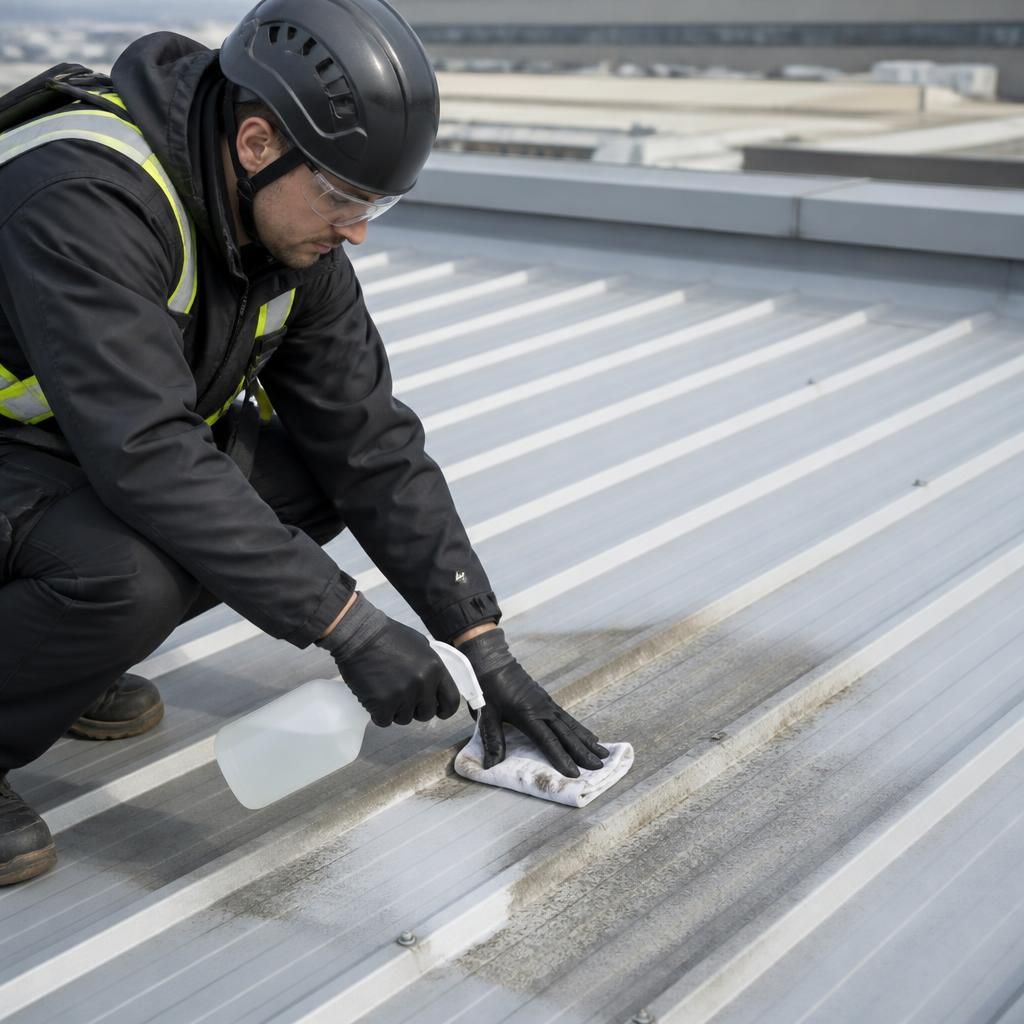
A discreet test patch is a key step in deciding whether a metal roof is suitable for soft washing. It shows how the proposed cleaning solution, dwell time and low-pressure rinse affect the actual roof coating and soiling before the full area is treated.
The test should be carried out on a representative section, including the same metal finish and contamination found elsewhere on the roof. Once the area has dried, check for colour change, staining, gloss variation, coating disturbance, exposed corrosion and reactions around seams or fixings. If the result is unsatisfactory, the method should be revised or cleaning postponed until repairs are completed.
Arrange a Metal Roof Soft Wash Suitability Assessment
Arrange a metal roof soft wash suitability assessment with Encanto Exterior Cleaning to review the roof condition, coating, access, drainage and proposed test patch before cleaning begins.
For a free quote & consultation
Contact usAccreditations