What specific types of detergents and cleaning solutions are safe and effective for use in soft washing metal roofs?
Safe and effective soft-wash solutions for metal roofs typically include manufacturer-approved, low-alkaline or pH-neutral detergents, biodegradable surfactants and, where required, a carefully controlled biocidal treatment for algae, moss and organic growth. Sodium hypochlorite-based solutions may be suitable for some coated metal roofing, but only at an appropriate dilution, following the roof manufacturer’s guidance and with thorough rinsing to protect the coating and surrounding surfaces.
The safest and most effective detergents for soft washing a metal roof are usually manufacturer-approved, low-alkaline or pH-neutral cleaning solutions containing biodegradable surfactants. These can be supplemented with a controlled biocidal treatment where algae, moss, lichen or other organic growth is present. Sodium hypochlorite-based solutions may also be appropriate for some coated steel roofs, but they must be correctly diluted, tested and thoroughly rinsed. No chemical should be treated as universally safe for every metal, coating or roof condition.
Metal roofing is protected by a coating or finish that can be damaged by unsuitable chemicals, prolonged dwell time, aggressive agitation or poor rinsing. Before selecting a solution, the roof should be identified as accurately as possible, including its substrate and finish. Common systems include plastisol-coated steel, painted steel, powder-coated metal, aluminium, galvanised steel and zinc. The manufacturer’s cleaning instructions and the product’s safety data sheet should take priority over a standard cleaning formula.
Suitable soft-wash detergents and treatments may include:
- pH-neutral detergents: These are appropriate for routine removal of surface dust, traffic film, light grime and general soiling. They are less likely to interfere with a roof coating when used according to the supplier’s instructions.
- Mild, low-alkaline cleaners: These can help break down heavier organic and atmospheric deposits without relying on high pressure or abrasive scrubbing. The alkalinity must remain compatible with the coating and any exposed metal.
- Biodegradable surfactants: Surfactants help a solution spread across the roof, loosen contamination and remain in contact with the surface rather than running away immediately. A suitable biodegradable product can improve cleaning while reducing the need for mechanical agitation.
- Specialist biocidal treatments: These are used where moss, algae, lichen or fungal staining is present. They should be approved for the relevant roofing material, applied in a controlled manner and managed carefully to prevent contaminated runoff entering drains, watercourses or planted areas.
- Controlled sodium hypochlorite solutions: Dilute chlorine-based solutions can remove organic staining from some coated metal roofs. However, they may discolour or corrode certain metals and can affect coatings, seals, fixings, painted surfaces and nearby materials. They should only be used when compatible with the roof and surrounding construction, with appropriate dilution, limited contact time and thorough rinsing.
Detergents are not selected solely by how quickly they remove staining. A product that produces an immediate visual change may still be unsuitable if it attacks the coating or leaves residues. The cleaning objective should be considered first: a neutral detergent may be sufficient for loose dirt, while a targeted biocide may be more appropriate for established organic growth. Using the least aggressive solution capable of achieving the required result generally offers better protection for the roof finish.
Some products should generally be avoided unless the roof manufacturer specifically permits them. These include strong acids, highly caustic degreasers, solvent-based cleaners, abrasive powders, undiluted chlorine products and chemicals containing aggressive builders. Acidic products can attack galvanised coatings, zinc and certain metals. Solvents may soften or stain painted finishes, while harsh alkaline products can dull coatings and affect sealants. Abrasive cleaners can create fine scratches that increase the risk of future corrosion.
Aluminium, zinc and galvanised surfaces require particular care. They can react adversely to products that may be acceptable on some painted steel systems. Stainless steel fixings, rubber seals, rooflights, membranes, wall cladding and painted trims may also have different chemical tolerances from the main roof. A solution that is suitable for the roof panel is not automatically suitable for every adjacent material.
Before full application, the cleaning contractor should inspect the roof and carry out a small test area in an inconspicuous location. The test should check for colour change, coating softening, streaking, residue, corrosion or a reaction with sealants and fixings. The solution should then be rinsed and the test area reviewed once dry. If the coating is already chalking, peeling, blistered or corroded, chemical cleaning may expose defects that are not caused by the detergent itself, so the condition should be recorded before work begins.
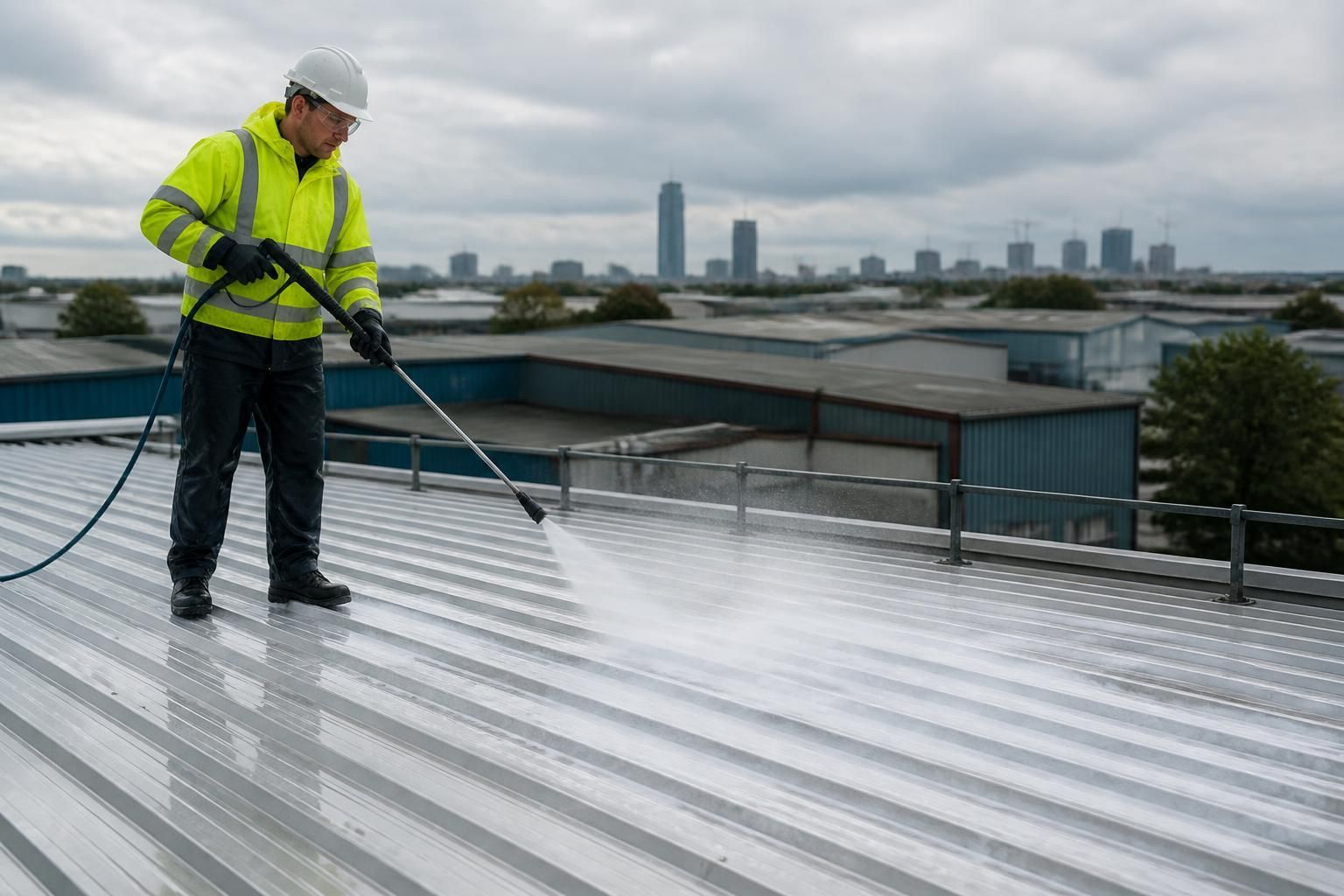
Application method is equally important. The solution should be applied at low pressure, allowed only the recommended dwell time and prevented from drying on the roof. It should not be left to concentrate around laps, gutters, penetrations or fixings. Thorough rinsing with clean water is essential where the product instructions require it, particularly after using a chlorine-based or alkaline solution. Runoff should be controlled, collected or diverted as necessary, and vegetation, glazing, vehicles and sensitive building materials should be protected from overspray.
Product labels, technical data sheets and safety data sheets should be checked for application rates, surface compatibility, personal protective equipment, storage, first aid and disposal requirements. On commercial and industrial premises, the method should also account for drainage, rainwater harvesting systems, occupied areas, neighbouring property and environmental controls. A professional assessment is particularly important where the roof has mixed materials, delicate coatings, visible corrosion or a history of previous chemical treatment.
In practical terms, a neutral or mildly alkaline biodegradable detergent is normally the starting point for routine metal-roof cleaning. A compatible biocidal treatment can be added for organic growth, while sodium hypochlorite should be regarded as a specialist option rather than a default solution. The safest choice is the product that is confirmed as compatible with the specific roof, applied at the lowest effective strength and followed by suitable rinse and runoff controls.
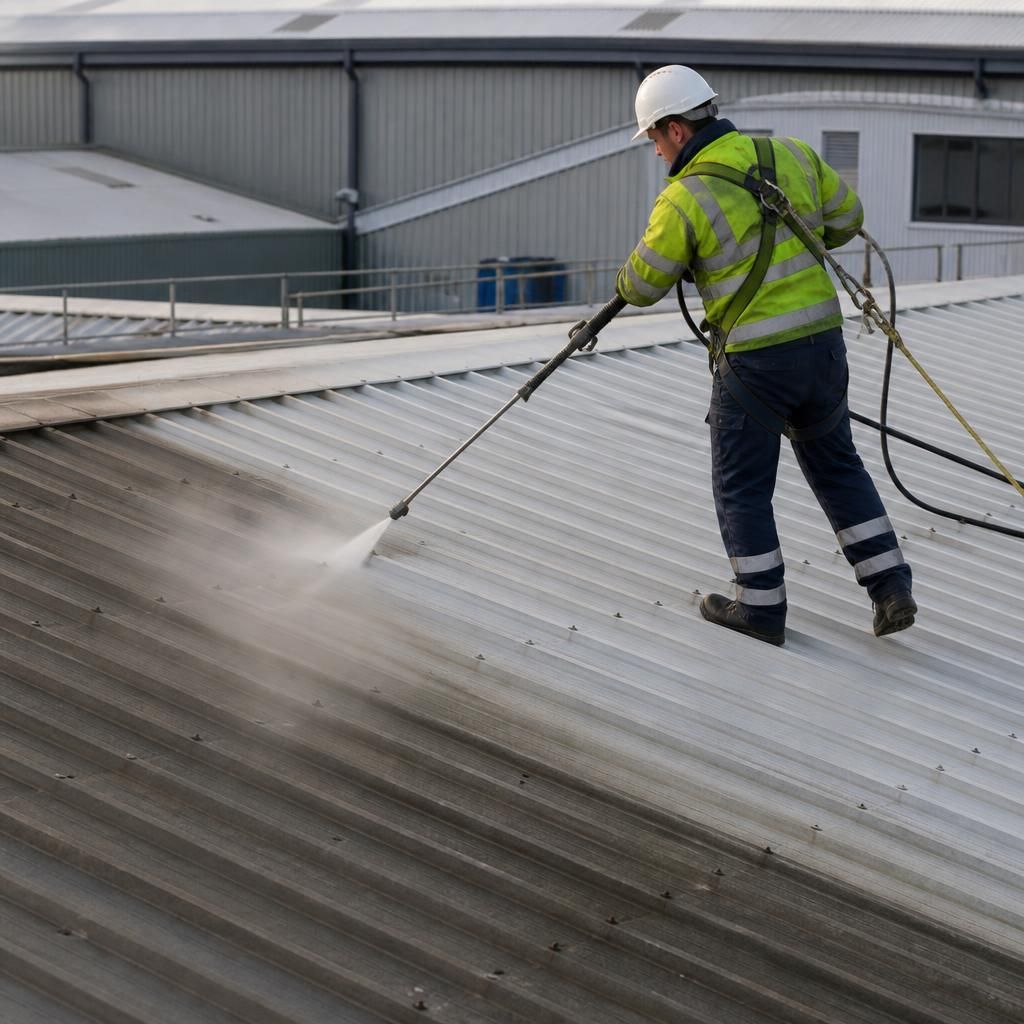
The safest starting point for soft washing a metal roof is a manufacturer-approved, pH-neutral or mildly alkaline biodegradable detergent, selected for the specific metal and coating. It should loosen dirt and atmospheric deposits without attacking the finish, sealants or exposed fixings.
Before wider application, the solution should be tested on an inconspicuous area, then rinsed and inspected once dry. The test can reveal coating discolouration, streaking, softening, residue or corrosion. Where moss, algae or lichen is established, a compatible biocidal treatment may be added, but sodium hypochlorite and stronger chemicals should only be used when the roof manufacturer confirms compatibility and runoff can be properly controlled.
Discuss the Right Soft-Wash Solution for Your Metal Roof
Contact Encanto Exterior Cleaning to discuss the correct detergent for your metal roof, taking account of its coating, condition and surrounding materials. We can assess compatibility, recommend a controlled soft-wash approach and confirm suitable runoff precautions.
For a free quote & consultation
Contact usAccreditations