
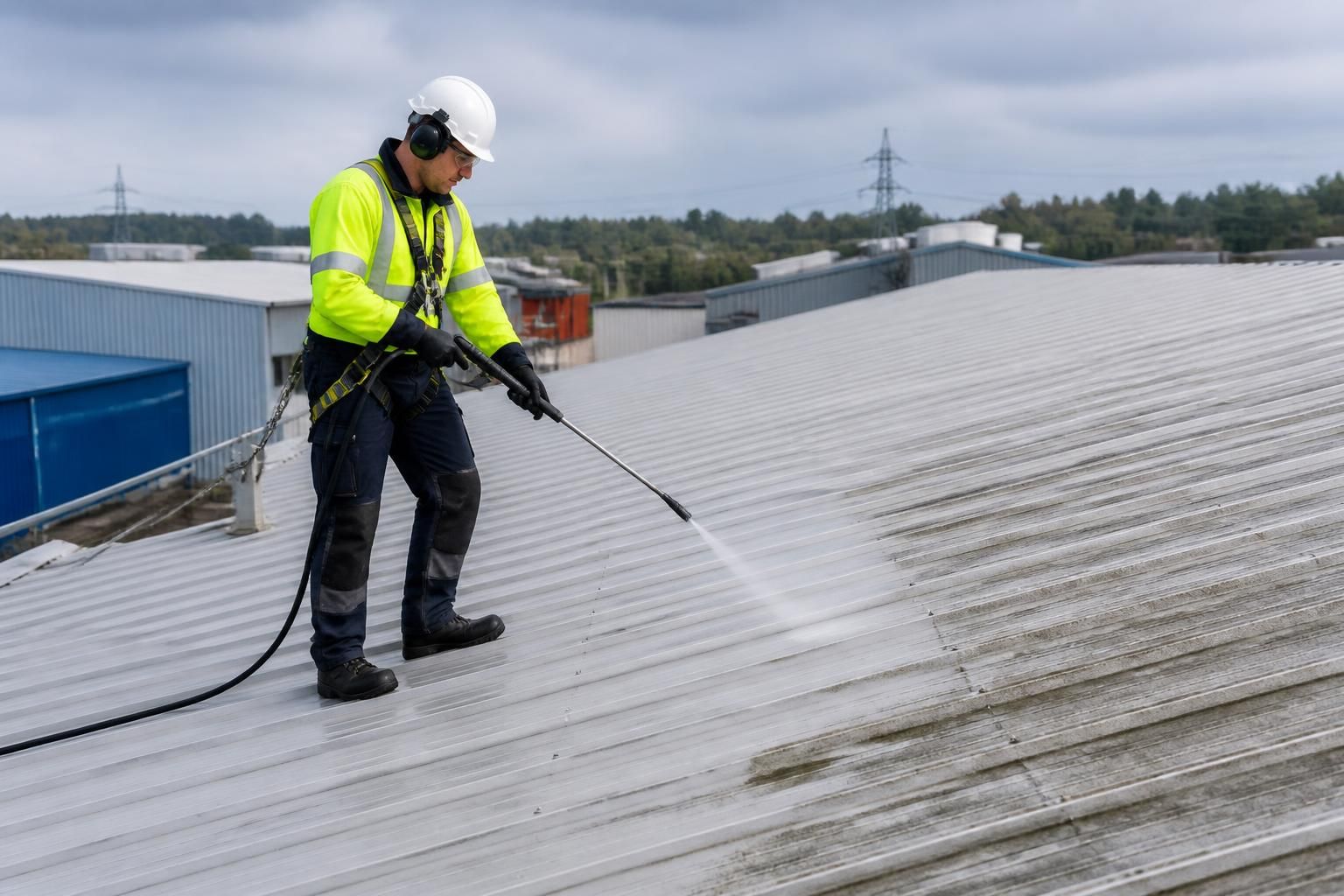
What measures should be taken to ensure the safety of personnel and surroundings during the soft washing of metal roofs?
Safe soft washing of a metal roof requires a documented risk assessment, trained personnel, suitable fall-protection equipment and appropriate PPE, alongside checks for roof condition, weather, access and nearby electrical services. Protect surrounding surfaces and plants, control overspray and chemical run-off, use the least aggressive effective solution, and follow the detergent manufacturer’s handling and dilution instructions throughout the work.
Safe soft washing of a metal roof depends on controlling three risks at the same time: falls and other injuries to personnel, damage to the roof and surrounding property, and exposure to cleaning chemicals or contaminated run-off. Before work starts, the contractor should complete a site-specific risk assessment and method statement, confirm that the roof is suitable for the proposed treatment, and plan access, fall protection, chemical handling, overspray control and emergency arrangements.
Plan the work and assess the roof
- Inspect the roof, access points, roof lights, skylights, fragile sheets, corroded areas, loose fixings, open edges, gutters and drainage routes before anyone works at height.
- Do not assume that a metal roof will support personnel simply because it appears sound. A survey should identify areas that are unsuitable for foot traffic and determine whether work can be completed from a MEWP, scaffold, roof ladder or another safer position.
- Prepare a written risk assessment and method statement covering work at height, access equipment, weather, electrical hazards, chemical exposure, overspray, run-off, public protection and emergency procedures.
- Use trained, competent personnel who understand the particular risks of roof cleaning and the equipment being used. Work should be supervised appropriately, especially where access equipment or fall-arrest systems are required.
- Check the manufacturer’s instructions for the roof coating, cladding system and cleaning products. Where the roof is under warranty, confirm that the proposed method will not invalidate its terms.
Control work-at-height risks
- Use collective protection, such as suitable edge protection or scaffold, where practicable. Personal fall-restraint or fall-arrest equipment should be used only with suitable, inspected anchor points and a documented rescue plan.
- Use access equipment that is appropriate for the surface, reach and ground conditions. MEWPs must be operated by trained users, positioned on stable ground and kept clear of overhead and electrical hazards.
- Use roof ladders, crawling boards or designated walkways where required, and keep personnel off fragile sheets, roof lights and visibly deteriorated sections.
- Inspect harnesses, lanyards, anchors, ladders, scaffold, MEWPs, hoses and spray equipment before use. Defective equipment should be removed from service.
- Prevent tools, hoses and equipment from creating trip hazards or falling-object risks. Establish a controlled area beneath the workface and keep unauthorised people away.
- Plan for a prompt rescue following a fall. A harness suspension incident must not be treated as an acceptable substitute for proper prevention and rescue arrangements.
Check weather and electrical conditions
- Postpone the work during high winds, lightning, freezing conditions, heavy rain or other weather that could make access, spraying or fall protection unsafe.
- Allow for the effect of wind on spray drift, ladders, MEWPs, sheeting and other temporary controls. The operative should stop if conditions change beyond the limits set in the risk assessment or equipment instructions.
- Identify overhead cables, roof-mounted electrical equipment, solar panels, lightning protection and other services before setting up. Maintain the required separation distances and use isolation by a competent person where necessary.
- Protect or avoid electrical components, vents, plant, control panels and roof penetrations. Water and cleaning solution should not be directed into equipment or openings.
Use chemicals in a controlled manner
- Select the least aggressive cleaning solution that will effectively remove the biological growth, dirt or staining present on the roof. The product must be compatible with the metal, coating, sealants, fasteners and adjacent materials.
- Follow the product label, safety data sheet and manufacturer’s instructions for dilution, application, contact time, storage, transport and disposal. Never mix products unless the manufacturer specifically permits it.
- Carry out a small, inconspicuous test area to check cleaning performance, coating compatibility, colour change, run-off and the effect on nearby materials before treating the full roof.
- Wear task-appropriate PPE, which may include chemical-resistant gloves, protective clothing, eye or face protection, safety footwear and respiratory protection where the assessment and product information require it. PPE does not replace safe handling and ventilation.
- Keep products in labelled, secure containers and provide access to clean water and suitable first-aid arrangements. Staff should know what to do following skin or eye contact and when to seek medical advice.
Prevent overspray and protect surrounding areas
- Establish an exclusion zone around the building and assess the effect of wind, spray pressure and nozzle selection before application. Use controlled, low-pressure application rather than a wide or forceful spray pattern.
- Cover or shield vehicles, glazing, doors, painted surfaces, signs, air-conditioning units, loading areas, outdoor furniture and other vulnerable items. Move portable items away from the work area where possible.
- Wet and protect plants, grass and soil near the building as appropriate, and use temporary sheeting, collection methods or other controls where the product could harm vegetation.
- Keep doors, windows and air intakes closed during application. Inform occupants and coordinate the work with building users, neighbouring premises and site traffic arrangements.
- Work from the least exposed position and monitor spray drift continuously. Stop application if the wind changes or the control measures no longer contain the spray.
Control run-off and protect drainage systems
- Identify where rinse water and detergent solution will travel before starting. Do not allow contaminated run-off to enter surface-water drains, watercourses, ponds or unprotected ground.
- Use drain covers, bunding, temporary collection points, wet vacuums or other suitable controls where necessary, while ensuring that drainage controls do not create additional trip or flood risks.
- Use the minimum quantity of solution needed and prevent unnecessary flooding of the roof, gutters and surrounding surfaces. Collect, contain and dispose of waste in accordance with the product requirements and local environmental controls.
- Check gutters, downpipes and outlets before and after cleaning. Remove residues safely and confirm that water is flowing correctly without carrying excessive product into an uncontrolled drainage route.
Apply the soft wash safely
- Use equipment set to the lowest effective pressure and keep the spray directed at the roof surface rather than forcing water beneath laps, flashings, seals or cladding joints.
- Maintain stable footing and avoid overreaching. Hoses should be routed and managed so that they do not pull personnel towards an edge or damage roof components.
- Observe the roof throughout the work for movement, leaks, coating failure, unexpected corrosion or changes in surface condition. Stop and reassess if the roof behaves differently from the pre-work inspection.
- Rinse only where the roof system and surrounding environment allow it, using a controlled flow. Do not use high pressure to compensate for inadequate preparation or an unsuitable chemical choice.
- Keep the work area orderly and communicate clearly between operatives, ground staff and the person controlling access or traffic.
Complete checks before leaving site
- Inspect the roof and adjacent elevations for missed residues, damaged coatings, displaced components, blocked outlets and unwanted chemical deposits.
- Remove temporary protection, waste and equipment safely, keeping exclusion zones in place until surfaces, access routes and ground conditions are safe for normal use.
- Record the products used, areas treated, weather conditions, test results, any defects identified and the controls applied to run-off and waste. Report defects such as corrosion, damaged sealants or loose panels rather than concealing them through cleaning.
- Provide the customer with relevant aftercare information, including any areas that should not be accessed and recommendations for repairs or future inspections.
A competent contractor should be prepared to stop the job if the roof is too fragile, weather conditions deteriorate, electrical services cannot be controlled, chemical run-off cannot be contained or the required rescue arrangements are unavailable. These controls protect personnel and the building while allowing soft washing to deliver a clean metal roof without substituting unnecessary pressure or uncontrolled chemical use for proper preparation.
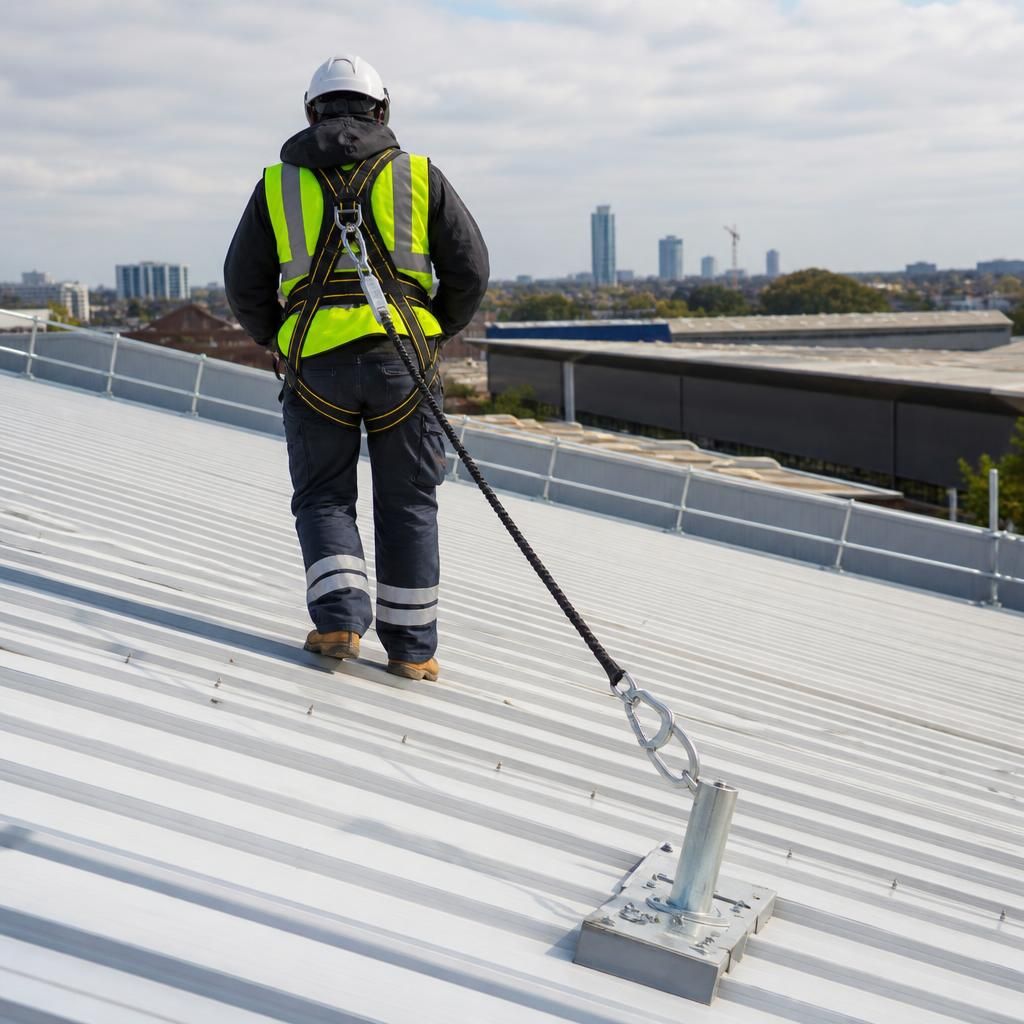
Fall protection is the primary safety control when soft washing a metal roof. Before work begins, inspect the roof for fragile sheets, roof lights, corrosion, loose fixings and unsafe edges, then select suitable access equipment and protection based on the actual roof condition.
Use edge protection, scaffold or another collective safeguard where practicable. If harnesses and lanyards are required, they must connect to suitable inspected anchor points and be supported by a documented rescue plan. Operatives should use designated walkways, roof ladders or crawling boards where necessary, avoid overreaching, and never walk on areas identified as unsuitable. Keep people below the work area clear of falling tools, hoses and cleaning solution.
Arrange a Safe Metal Roof Soft Washing Assessment
Arrange a professional assessment of your metal roof before soft washing begins, so access, roof condition, fall protection, chemical use and run-off controls can be planned safely. Contact Encanto Exterior Cleaning to discuss the requirements for your site.