
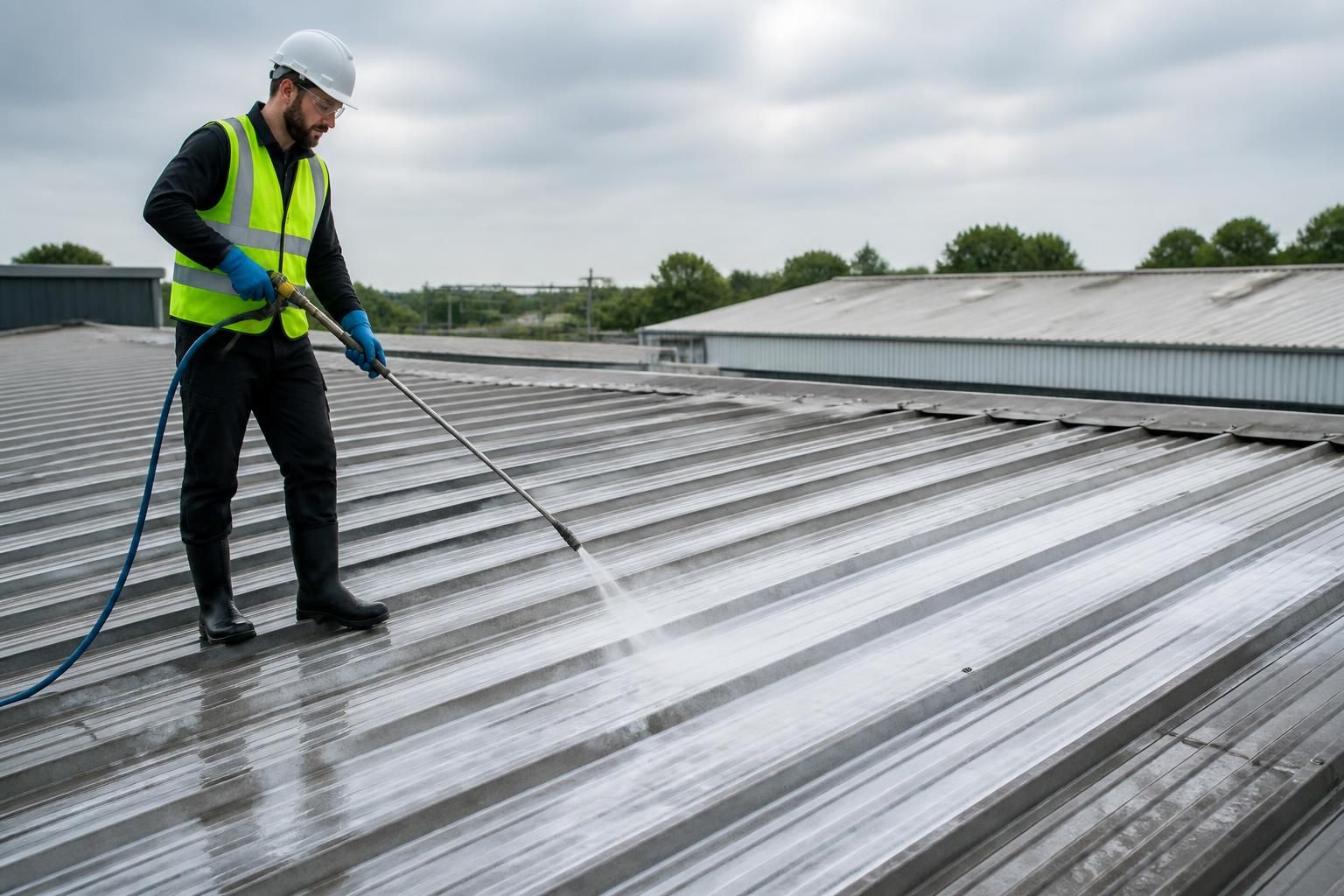
What detergents are used in soft wash metal roof cleaning and are they safe?
Soft wash metal roof cleaning typically uses a diluted biocidal detergent, often sodium hypochlorite combined with a compatible surfactant, to remove algae, moss, lichen and organic staining without high pressure. These solutions can be safe for coated metal roofing when correctly selected, diluted and rinsed, but they may damage coatings, plants, people or drainage systems if applied incorrectly, so professional handling and runoff control are essential.
Soft wash metal roof cleaning generally uses a diluted biocidal detergent, often based on sodium hypochlorite, together with a compatible surfactant. The detergent is applied at low pressure to kill and loosen algae, moss, lichen, mould and other organic staining, rather than relying on force to remove it. When the solution is selected for the roof finish, correctly diluted, carefully applied and thoroughly rinsed, it is usually suitable for many coated metal roofs. It is not automatically safe, however: the wrong chemical, excessive strength, prolonged dwell time or uncontrolled runoff can damage coatings, plants, drainage systems and people.
Common detergent types
- Biocidal solutions: Diluted sodium hypochlorite is commonly used where the roof has biological growth or heavy organic staining. It breaks down algae, moss, lichen and mould so that contamination can be rinsed away with minimal pressure. The concentration must be chosen for the roof finish and level of contamination, rather than using a strong solution as a substitute for correct technique.
- Surfactants: A compatible surfactant helps the solution spread across the metal and remain in contact with the contamination instead of running off immediately. This can improve coverage and reduce the temptation to increase chemical strength or pressure. Surfactants must be compatible with the biocide, coating and planned rinsing method.
- Mild specialist roof detergents: Some roofs are better suited to a milder, manufacturer-approved detergent, particularly where the coating is aged, chalking, faded or otherwise vulnerable. These products may loosen surface dirt and atmospheric deposits without being as aggressive as a strong biocidal treatment.
- Alkaline cleaners: Mild alkaline products may be used for certain oily deposits, traffic film or industrial soiling, but they are not appropriate for every metal coating. Their use should be based on the roof manufacturer’s guidance and a site assessment.
Acidic cleaners, strong solvents, abrasive powders and unapproved caustic products are generally avoided on coated metal roofing. They can dull or strip the protective finish, attack exposed metal, affect sealants and accelerate corrosion. Mixing chemicals is also unsafe unless the product manufacturer expressly confirms that the combination is suitable. In particular, hypochlorite must not be mixed with acids, ammonia or other incompatible chemicals because hazardous gases or reactions can result.
Are these detergents safe for the roof?
Safety depends on the metal, its coating and its present condition. Plastisol, PVDF, polyester and other factory-applied finishes can respond differently to cleaning chemicals. A coating that is intact may tolerate a properly controlled soft wash, while an aged, powdery, blistered or damaged coating may be marked or weakened by the same solution. Galvanised or bare metal also requires particular care, as any chemical that remains on the surface can contribute to corrosion.
Before cleaning, the roof should be inspected for corrosion, failed fasteners, open laps, damaged coating, deteriorated sealants and areas where water could enter the building. A small test area is useful for checking colour change, coating response and the effectiveness of the proposed detergent. Where the roof manufacturer has specified a cleaning product or method, that guidance should take priority. If the condition or coating cannot be confirmed, a conservative cleaning approach is preferable to an aggressive treatment.
Safety for people, plants and surrounding property
Roof-cleaning detergents can irritate or burn skin and eyes, damage clothing and harm vegetation. Hypochlorite-based products can also corrode some metals, affect painted surfaces and discolour materials if overspray is not controlled. Professional application therefore involves suitable personal protective equipment, controlled spray patterns, exclusion zones and protection for nearby windows, vehicles, air-conditioning equipment, signage and other sensitive surfaces.
Plants should be pre-wetted and protected where appropriate, and any accidental contact should be rinsed promptly with clean water. Particular care is needed around ponds, watercourses, rainwater harvesting systems and areas where runoff could enter surface-water drains. The cleaning team should identify drainage routes before starting, divert or collect contaminated runoff where necessary, and follow the product safety data sheet and applicable COSHH controls. Detergent should never be allowed to discharge uncontrolled into a watercourse.
How the detergent is normally applied
- The roof and surrounding area are assessed, including the coating type, condition, access arrangements, weather and drainage.
- A suitable detergent is selected and prepared in accordance with the product instructions, roof requirements and site risk assessment.
- Nearby surfaces, vegetation, drainage points and building openings are protected, with runoff controls put in place.
- The solution is applied at low pressure in manageable sections. It is kept wet for the required dwell time, without allowing it to dry on the roof or adjoining surfaces.
- Loosened contamination is rinsed away using controlled low pressure. Stubborn areas may need a further approved treatment rather than higher pressure.
- The roof, gutters and surrounding surfaces are inspected and rinsed as required. Any remaining contamination or coating damage is recorded for follow-up.
Weather conditions affect both safety and results. Strong wind increases the risk of overspray, while intense heat or direct sun can cause a solution to dry before it has worked. Rain can dilute the detergent and carry runoff beyond the controlled area. Cleaning should therefore be postponed when conditions make application, dwell time or runoff management unreliable.
A professional soft wash does not mean applying the strongest available chemical. The safer and more effective approach is to use the least aggressive product that will deal with the contamination, at a controlled dilution and with sufficient contact time. Correct rinsing and runoff management are as important as the detergent itself. If a metal roof has severe corrosion, failed coating or extensive structural damage, cleaning may need to wait until repairs or a coating specialist’s assessment has been completed.
For a particular roof, the detergent choice should be confirmed after inspecting the metal type, coating, contamination and surrounding environment. This avoids treating an unknown or vulnerable finish with a product that may be chemically unsuitable, while still providing the biological control needed to keep the roof clean.
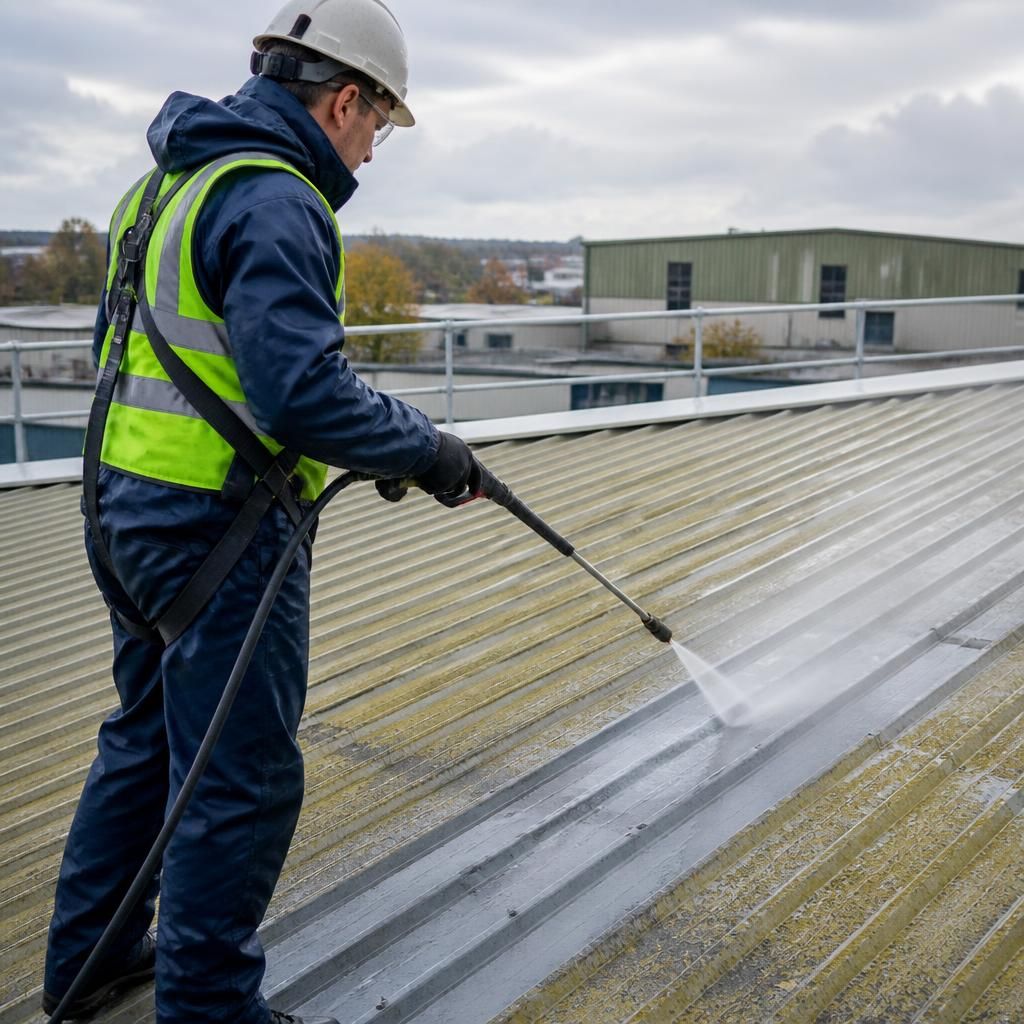
Soft wash detergents can be safe for a metal roof when the product is compatible with its coating, correctly diluted and applied for the required contact time. A professional will normally test a discreet area first, particularly where the finish is aged, chalking, blistered or damaged.
Safety also depends on controlling overspray and runoff. Nearby plants, vehicles, windows, drainage points and water-harvesting systems should be protected, while the roof and surrounding surfaces are rinsed thoroughly after treatment. Stronger chemicals are not automatically more effective; the preferred approach is the least aggressive approved solution that removes the contamination without compromising the roof finish.
Arrange a professional soft wash assessment for your metal roof
Arrange a professional soft wash assessment for your metal roof so the coating, contamination and surrounding drainage can be checked before any detergent is selected. Encanto Exterior Cleaning can recommend a suitable cleaning approach and confirm the controls needed to protect the roof and nearby surfaces.