
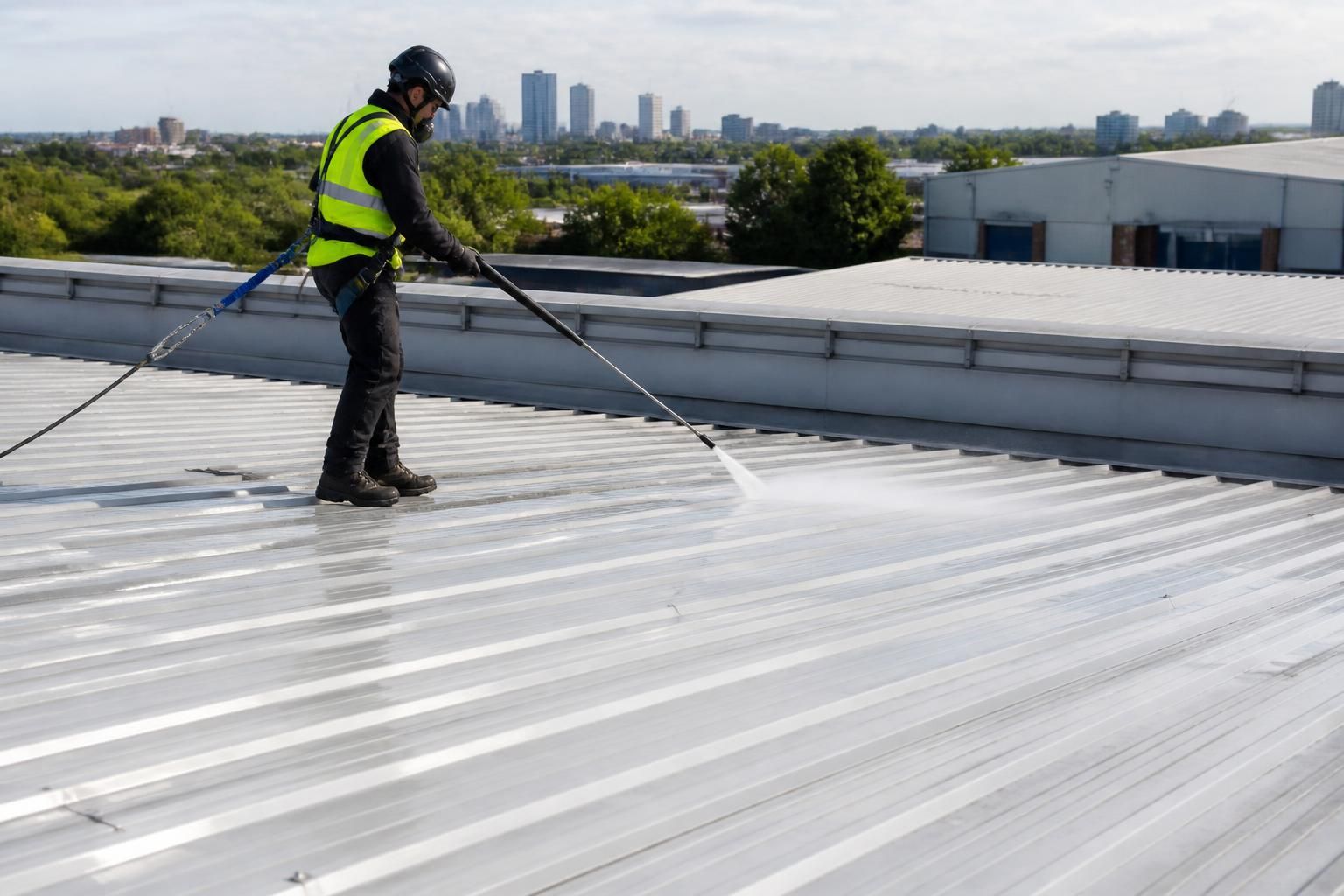
What are the environmental benefits of opting for a soft wash cleaning method on metal roofs?
Soft washing metal roofs can reduce environmental impact by using less water than high-pressure cleaning and limiting the risk of damaging coatings, which may otherwise require more frequent repairs or replacement. When appropriate, biodegradable cleaning solutions are carefully applied and contained to help control runoff while removing organic growth effectively.
Soft washing a metal roof can reduce its environmental impact by using low water volumes, applying treatment only where it is needed and helping preserve the existing roof rather than exposing it to avoidable damage. The method uses a low-pressure application of a suitable cleaning solution to loosen moss, algae, lichen, dirt and other organic contamination, followed by controlled rinsing where required.
Reduced water consumption
Unlike high-pressure cleaning, soft washing does not rely on a powerful water jet to remove every deposit from the roof surface. The cleaning solution does much of the work by breaking down organic growth, so less water is generally needed for agitation and rinsing. This can be particularly beneficial on large commercial or industrial roofs, where the volume of water required for pressure cleaning can be substantial.
Lower water use also means less water has to be collected, managed and transported away from the site. However, the actual saving depends on the roof’s size, level of contamination, surface profile and the rinsing process used by the contractor.
Less risk of coating and material damage
Metal roofs often rely on protective finishes, including paint systems, coatings or galvanised surfaces, to resist corrosion. Excessive pressure can strip or abrade these finishes, force water beneath laps and flashings, and damage seals or vulnerable details. Soft washing is gentler when correctly specified and applied, reducing the likelihood of premature coating failure.
Preserving the existing roof can have an environmental benefit because it may delay repainting, extensive repairs or replacement. Keeping the roof in service for longer reduces demand for new metal, coatings, packaging, transport and the energy associated with manufacturing and installing replacement materials. Soft washing cannot correct corrosion, failed coatings or structural defects, so an inspection is still necessary before cleaning.
More controlled use of cleaning solutions
Soft washing allows a suitable detergent or biocidal treatment to be applied at a controlled rate rather than relying on force alone. The solution should be selected for the roof’s metal and coating, used at the lowest effective concentration, and applied only to areas requiring treatment. This helps avoid unnecessary chemical use.
Products described as biodegradable are not automatically harmless in every situation. Their environmental suitability depends on the formulation, dilution, contact time and what happens to the solution after it leaves the roof. A responsible cleaning plan considers nearby drains, soil, watercourses, planting, wildlife, vehicles and building occupants before any treatment is applied.
Better control of contaminated runoff
Roof cleaning can release organic matter, staining, detergent residues, loose coating particles and corrosion-related debris. A low-pressure process can make this material easier to manage than aggressive jetting, which may disperse contaminated water over a wider area. Good practice includes identifying drainage routes, protecting sensitive surroundings, using collection or diversion measures where appropriate, and preventing untreated runoff from entering surface-water drains or natural watercourses.
Runoff controls must be proportionate to the site and the cleaning method. On a large commercial roof, this may require drain protection, temporary containment, controlled discharge arrangements and inspection of the surrounding ground after cleaning. Wastewater should be handled in accordance with the site’s requirements and applicable environmental regulations.
Lower energy and resource demand over the roof’s service life
Soft washing equipment generally operates at lower pressure than pressure-washing machinery, which can reduce the energy required for water pumping. The wider environmental benefit is often linked to maintenance: regular, correctly planned cleaning can help prevent organic growth and accumulated contamination from contributing to blocked drainage, trapped moisture or accelerated deterioration.
This does not mean soft washing eliminates maintenance or guarantees a longer roof life. The result depends on the roof’s condition, drainage, exposure, coating system and the quality of follow-up inspections. Cleaning should form part of a planned maintenance programme rather than replace repairs or coating renewal when those works are needed.
Why the method must be professionally managed
Soft washing is environmentally preferable only when the whole process is controlled. Applying too much solution, choosing an unsuitable chemical, allowing runoff to escape or cleaning a damaged roof can create environmental and building risks. Personnel should assess the roof and its surroundings, confirm the condition of coatings and seals, protect drainage systems, follow product instructions and use appropriate access and personal protective equipment.
For metal roofs, the most responsible approach is to combine the lowest effective water pressure with a compatible cleaning solution, accurate application, sensible runoff management and remedial work where defects are found. This provides the practical environmental advantages of soft washing while protecting the roof, the site and the surrounding environment.
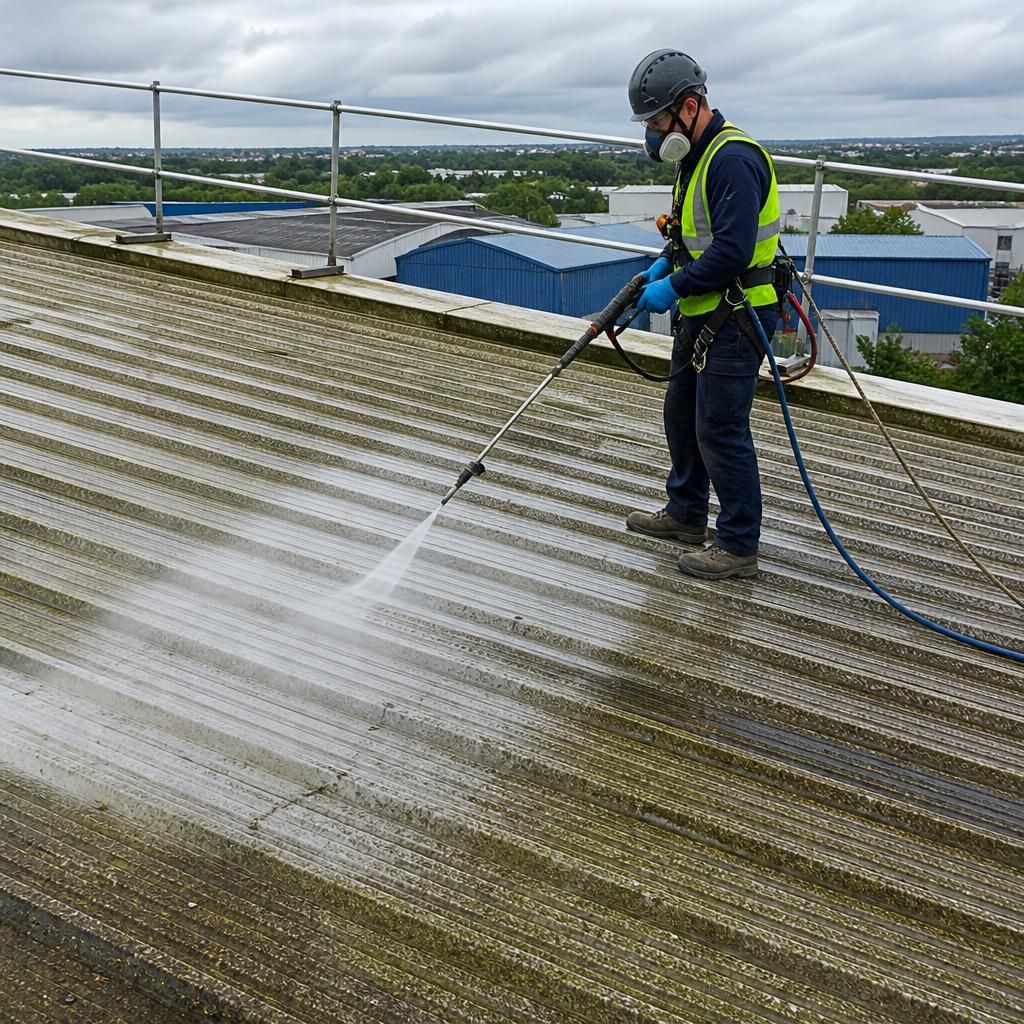
Soft washing can reduce the environmental impact of metal roof cleaning by using a low-pressure application to treat organic growth, rather than relying on a powerful water jet to remove it. This usually reduces water use and helps limit the spread of contaminated runoff, provided the cleaning solution and rinsing process are properly controlled.
Before work begins, the roof, drainage routes and surrounding areas should be assessed. Suitable solutions should be applied at the lowest effective concentration, with drains, planting, vehicles and watercourses protected where necessary. Controlled runoff management also helps prevent detergent residues, organic matter and loose coating particles from entering surface-water drainage systems.