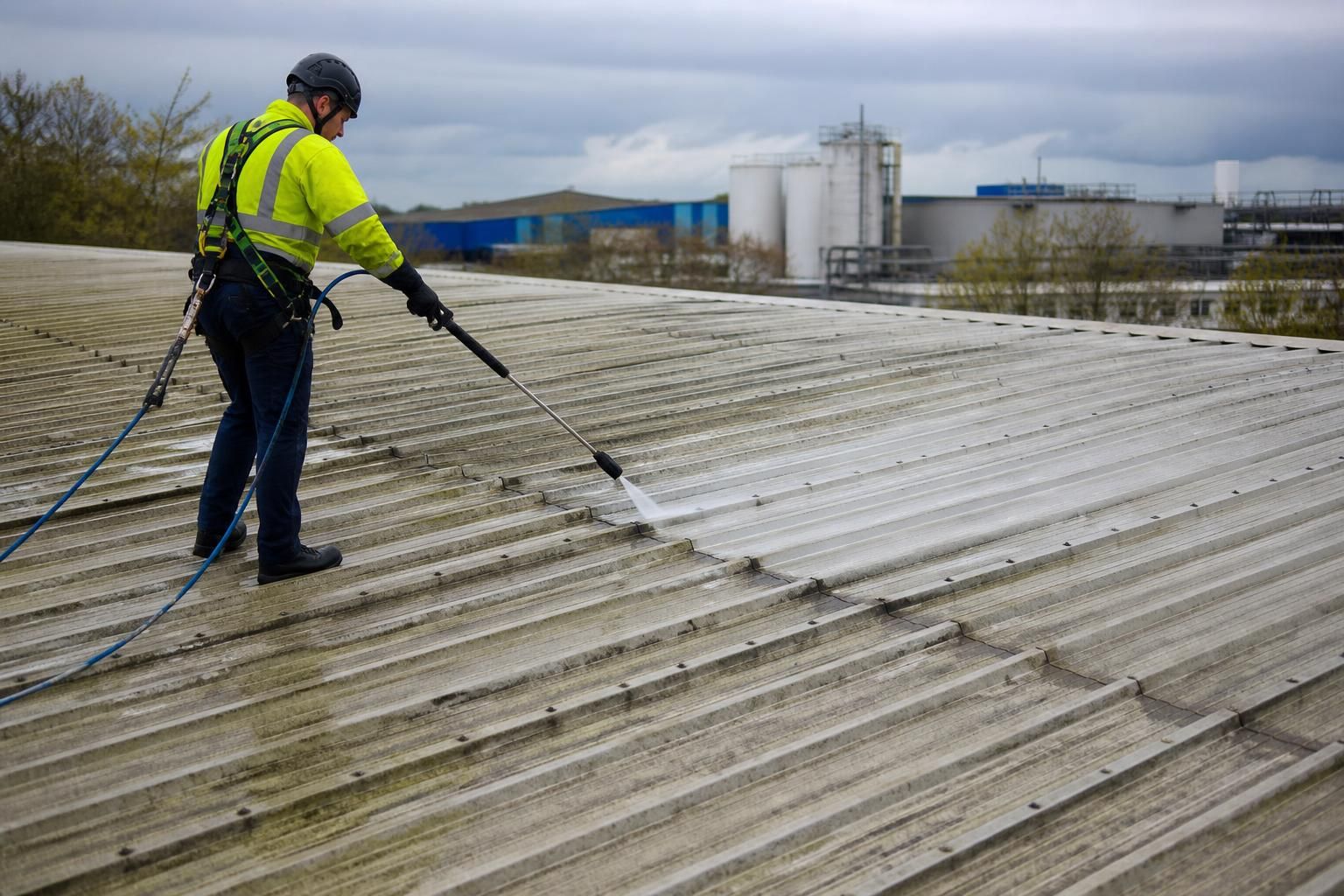
What are the benefits of using soft wash over high-pressure cleaning for metal roofs?
Soft washing uses low water pressure and specialist cleaning solutions to remove algae, moss, dirt and atmospheric staining from metal roofs without the surface force associated with high-pressure cleaning. It helps protect protective coatings, paint finishes, seals and vulnerable joints, while reducing the risk of dents, lifted coatings and water being driven beneath roof panels.
Soft washing is generally the safer and more suitable method for cleaning a metal roof because it uses low water pressure alongside specialist detergents, rather than relying on force to remove contamination. This reduces the risk of damaging paint finishes, protective coatings, seals, fasteners and roof joints while still treating algae, moss, lichen, dirt and atmospheric staining at their source.
Better protection for coatings and finishes
Many metal roofs rely on a factory-applied paint system or protective coating to resist corrosion and weathering. High-pressure water can erode or mark this finish, particularly where the coating is already aged, chalking, blistered or poorly bonded. Repeated pressure cleaning may also expose the underlying metal, allowing moisture and pollutants to accelerate corrosion.
Soft washing places far less mechanical stress on the surface. The cleaning solution loosens and breaks down organic growth and ingrained staining, allowing the residue to be rinsed away with controlled pressure. This is particularly important for coated steel, aluminium panels and roofs with delicate or weathered finishes.
Lower risk of dents and physical damage
Metal roofing can be more vulnerable to physical damage than its appearance suggests. Panels may dent under concentrated pressure, especially where the metal is thin, unsupported or weakened by corrosion. High-pressure spray can also damage ridge caps, flashings, trims, roof vents and other details if the operator works too close or uses an unsuitable nozzle.
Soft washing avoids using the water jet as the primary cleaning force. When the roof has been assessed properly, the controlled application and low-pressure rinse help reduce the likelihood of denting, surface marking and damage to associated components.
Less chance of forcing water beneath the roof system
High-pressure water can be driven beneath laps, flashings, seals and panel joints. It may reach insulation, roof voids or internal areas, particularly around damaged detailing and penetrations. Water forced into these locations can cause hidden damp problems or reveal weaknesses that were not apparent during normal rainfall.
A soft wash uses a gentler rinse, reducing the risk of water being forced into the construction. It does not repair failed seals or defective detailing, so any suspected faults should still be reported and assessed before cleaning begins.
More effective treatment of organic growth
Pressure washing can remove the visible layer of moss, algae or lichen, but it may leave biological residue or spores on the surface. Regrowth can then occur, particularly in shaded or persistently damp areas. Soft-wash detergents are selected to treat organic contamination rather than simply strip it from the roof. This can produce a more complete clean when the solution is applied correctly and given sufficient contact time.
The method is also useful for atmospheric grime and staining that has bonded to the coating. The appropriate solution and dwell time depend on the roof material, the type of contamination and the condition of the existing finish. Cleaning products should never be chosen solely for their strength.
Reduced wear on roof components
A metal roof is a system rather than just a sheet of metal. It may include sealants, rubber or polymer washers, gutters, membranes, solar equipment, cable routes and painted trims. High-pressure cleaning can loosen or degrade these components, remove sealant from vulnerable joints or spread contaminated water into areas that are difficult to inspect.
Soft washing allows the operator to work more carefully around these features. Application and rinsing can be controlled to limit unnecessary contact, although delicate or defective components may still require protection, temporary isolation or separate attention.
More controlled cleaning around the building
Soft washing can help reduce overspray and uncontrolled splashback when suitable equipment and techniques are used. This is valuable on commercial and industrial premises where vehicles, stock, machinery, pedestrian routes, neighbouring properties and drainage systems may be close to the roof.
Any cleaning method can produce contaminated runoff. A responsible approach includes assessing drainage, protecting sensitive surfaces, controlling the discharge where necessary and using detergents in accordance with their safety and environmental requirements. Soft washing is not automatically environmentally safe simply because it uses less pressure; chemical selection, dilution, containment and rinsing remain important.
Less aggressive cleaning can support the roof’s service life
Protecting the coating and avoiding avoidable mechanical damage helps preserve the roof’s resistance to moisture and corrosion. Removing moss, lichen, algae and accumulated grime also prevents contamination from remaining in contact with the surface and retaining moisture. These benefits can support the existing roof system, but soft washing should not be presented as a repair or a guarantee of a particular lifespan. Corrosion, failed fixings, coating breakdown and defective joints need separate remedial work.
Why high-pressure cleaning is often unsuitable
High pressure can appear efficient because it removes dirt quickly, but speed at the point of cleaning does not necessarily mean a better result. The force may:
- strip or dull the protective coating;
- damage paint, sealants, trims and roof accessories;
- dent panels or mark the surface;
- drive water beneath laps and flashings;
- spread debris and contaminated runoff across the site; and
- remove visible growth without treating the underlying organic contamination.
There are situations where controlled pressure may be appropriate for limited rinsing or for particular roof surfaces, but the pressure, nozzle, distance and method must be selected following an inspection. A general-purpose high-pressure wash is not a suitable substitute for a planned metal roof cleaning process.
Important limitations and precautions
Soft washing is not suitable without assessment. The roof’s material, coating, age, condition, previous treatments, drainage arrangements and surrounding environment should be considered first. Severely corroded panels, failing coatings, exposed insulation, damaged seals or unstable access areas may require repairs or a different cleaning strategy before any detergent is applied.
Cleaning solutions should be tested in an inconspicuous area where appropriate, kept away from incompatible materials and applied by trained personnel using suitable access and fall-protection measures. Overspray must be controlled, and the solution should not be allowed to dry on sensitive glazing, painted surfaces, vegetation or equipment. These precautions are essential to obtaining the benefits of soft washing without creating new damage.
For most sound, coated metal roofs, the main advantage of soft washing is that it cleans through controlled chemical action rather than excessive water force. It provides a better balance between removing contamination and preserving the roof finish, detailing and surrounding property, provided the method is matched to the roof’s condition and carried out with appropriate safety and runoff controls.
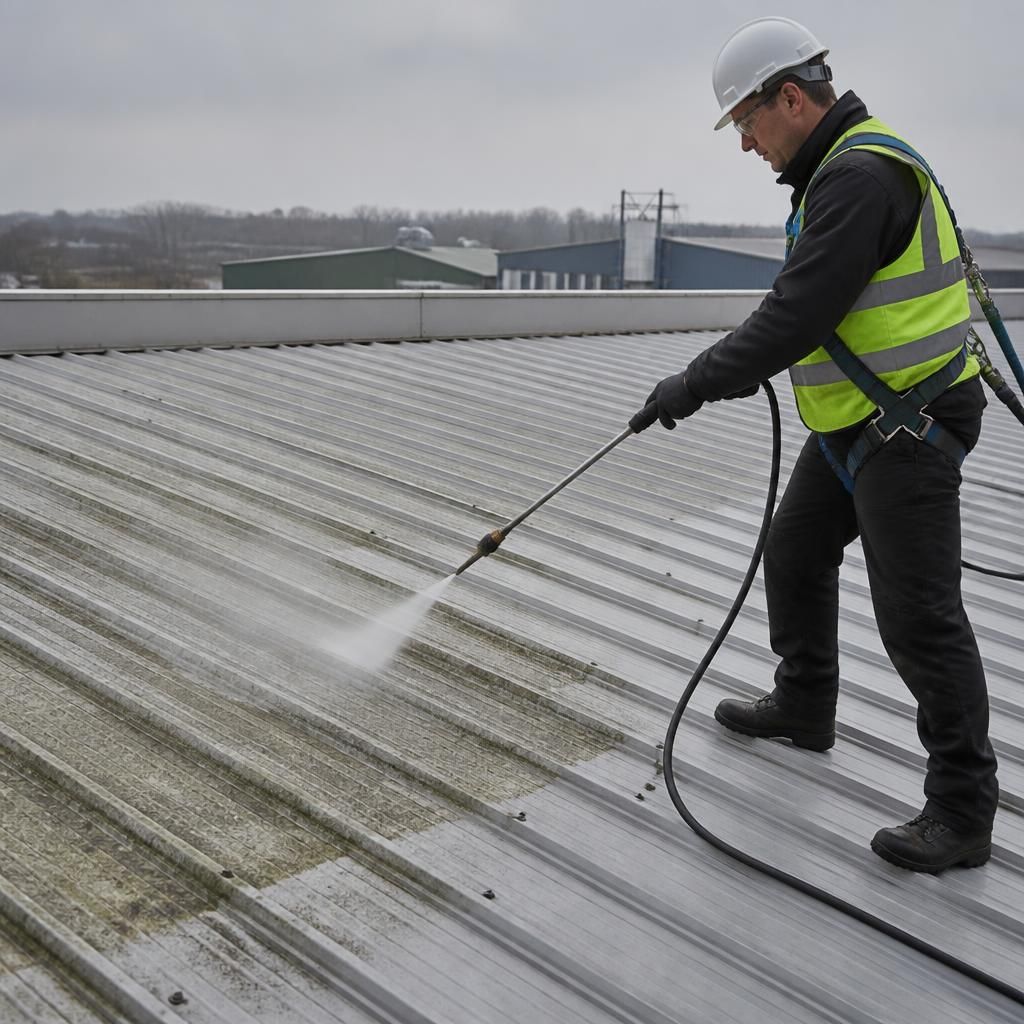
Soft washing cleans a metal roof with low water pressure and specialist detergents, rather than relying on force to remove contamination. This reduces mechanical stress on painted finishes, protective coatings, seals, flashings and roof panels.
The cleaning solution helps break down algae, moss, lichen and atmospheric grime so loosened residue can be rinsed away in a controlled manner. Compared with high-pressure cleaning, this lowers the risk of coating erosion, dents and water being driven beneath laps or roof joints. The roof should still be inspected first, as corrosion, failing coatings or defective seals may require repair before cleaning.
Book a Metal Roof Cleaning Assessment
Book a metal roof cleaning assessment so we can inspect the roof’s condition, coating and drainage before recommending soft washing. We’ll identify any areas requiring repair or protection and confirm the safest cleaning approach for your premises.
For a free quote & consultation
Contact usAccreditations