Is soft wash cleaning suitable for all types of metal roofing materials?
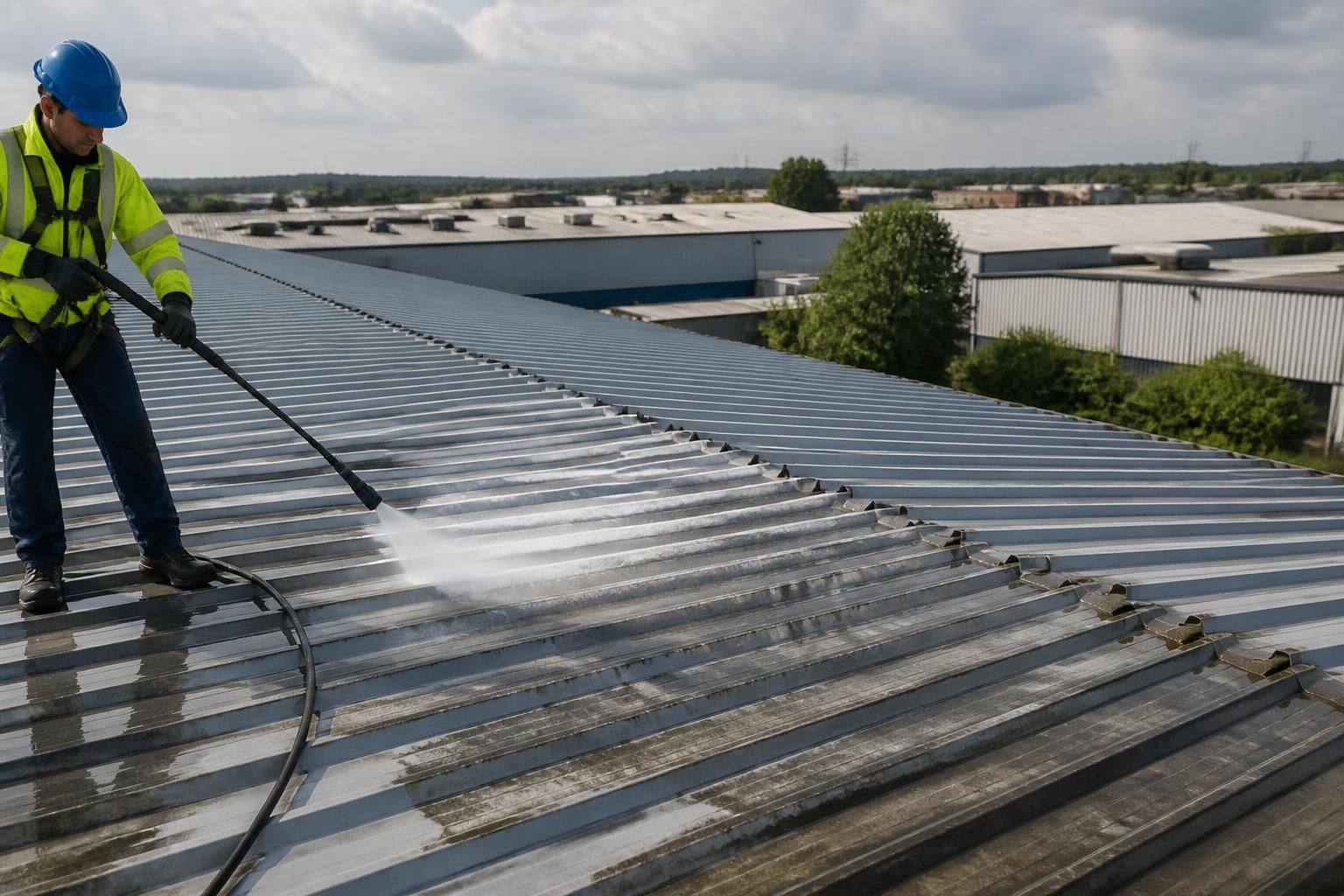
Soft wash cleaning is suitable for many metal roofing materials, including coated steel, aluminium and zinc, provided the coating, fixings and underlying metal are in sound condition. It is not automatically suitable for every roof: heavily corroded, damaged or untreated metal may require specialist assessment, compatible detergents and adjusted application methods before cleaning.
Soft wash cleaning is suitable for many metal roofing materials, including coated steel, aluminium, zinc and some stainless steel systems, provided the roof, protective finish and fixings are in sound condition. It is not automatically suitable for every metal roof. The correct method depends on the metal, its coating, its age, the type of contamination and the condition of joints, fasteners and drainage details.
Soft washing uses a low-pressure application of a suitable cleaning solution rather than relying on high pressure to remove dirt. This can be appropriate for metal roofs because it reduces the risk of forcing water beneath laps, damaging coatings or deforming thin panels. The solution must still be selected carefully: a chemical that is suitable for one metal or coating may stain, dull or corrode another.
Common metal roofing materials and their suitability
- Painted or coated steel: Usually suitable when the coating is intact. The solution should be compatible with the paint system and rinsed thoroughly so that residues do not remain on the surface or around fixings.
- Aluminium: Often suitable for soft washing, but aluminium can discolour or develop a dull appearance if exposed to an excessively strong or unsuitable chemical. Particular care is needed around uncoated areas, cut edges and dissimilar-metal fixings.
- Zinc: May be cleaned using a carefully controlled, metal-compatible method. Aggressive products can affect the natural surface patina, so the desired finish and the manufacturer’s guidance should be considered before work begins.
- Stainless steel: Generally resistant to corrosion, but it is not immune to staining or contamination. Chloride-containing products, trapped residues and contact with unsuitable metals can cause surface problems, particularly around welds, fixings and drainage points.
- Copper: Requires specialist consideration because cleaning can alter its natural patina and appearance. A soft wash may be inappropriate if preserving the existing colour and surface development is important.
- Uncoated or previously damaged metal: Requires assessment before cleaning. Exposed steel, failed paint, deep rust and deteriorated protective treatments can make chemical cleaning unsafe or ineffective without remedial work.
The condition of the roof is as important as the material itself. Soft washing should be reconsidered where there is active corrosion, flaking or blistered coating, open seams, loose panels, failed sealant, damaged flashings or exposed substrate. Low-pressure application will not repair these defects, and cleaning may reveal deterioration that was previously hidden beneath moss, algae, bird fouling or accumulated grime.
Protective coatings also need to be assessed. Metal roofs can have factory-applied paint, plastisol, powder coating, galvanising, anodising or other specialist finishes. The age and remaining integrity of the coating affect how it will respond to detergents, dwell time and rinsing. A small, inconspicuous test area should be used to check for colour change, whitening, gloss loss, streaking or other adverse reactions before full application.
Detergent choice is a key safety consideration. The cleaning product should be selected for the specific metal and coating, used at the appropriate dilution and applied only for the required contact time. Strong acids, highly caustic products, abrasive powders and unapproved solvents can attack protective finishes or accelerate corrosion. Solutions should not be allowed to dry on the roof, collect in laps or remain around bolts, seams and gutters. Where the roof manufacturer provides cleaning instructions, those instructions should take priority.
Fixings and adjacent materials can create additional risks. Metal roofs may include galvanised or plated screws, aluminium trims, leadwork, sealants, rooflights, membranes and painted structural components. Run-off from one material can react with another, while concentrated solution around fixings can cause localised corrosion. A competent assessment should therefore include the roof edges, penetrations, gutters, outlets, wall interfaces and any areas where different metals meet.
Soft washing is also not suitable simply because the cleaning pressure is low. The roof must be accessed without damaging panels or coatings, and operatives must be protected from falls and from exposure to cleaning chemicals. Fragile rooflights, aged sheets and areas with limited load-bearing capacity require particular caution. Where safe access cannot be established, the cleaning method or access arrangement should be revised before work starts.
Before recommending soft washing, the roof should be assessed for its material, coating, age, visible defects, contamination, drainage arrangements and nearby sensitive surfaces. The assessment should identify whether the contamination can be treated chemically, whether a gentler mechanical approach is needed and how rinse water will be controlled. Surrounding cladding, vehicles, planting, glazing, ventilation openings and watercourses should be protected from overspray and run-off.
In practice, a soft wash is often a good option for sound, coated metal roofs affected by organic growth, atmospheric dirt or bird deposits. It is less appropriate as a standard treatment for severely corroded, peeling, untreated or chemically sensitive roofing. Where the material or finish is uncertain, professional testing and a controlled trial are preferable to applying a general-purpose cleaning chemical across the whole roof.
After cleaning, the roof should be inspected again for exposed metal, coating failure, blocked outlets and areas requiring repair or re-coating. Cleaning should not be used to conceal defects or replace planned maintenance. A method statement should record the selected solution, precautions, test results, access arrangements and rinse-water controls, particularly on large commercial and industrial buildings.
For these reasons, the safest answer is that soft washing can be suitable for a wide range of metal roofing materials, but suitability must be confirmed on the individual roof. Material identification, coating compatibility, condition assessment, test cleaning and controlled application are essential before proceeding.
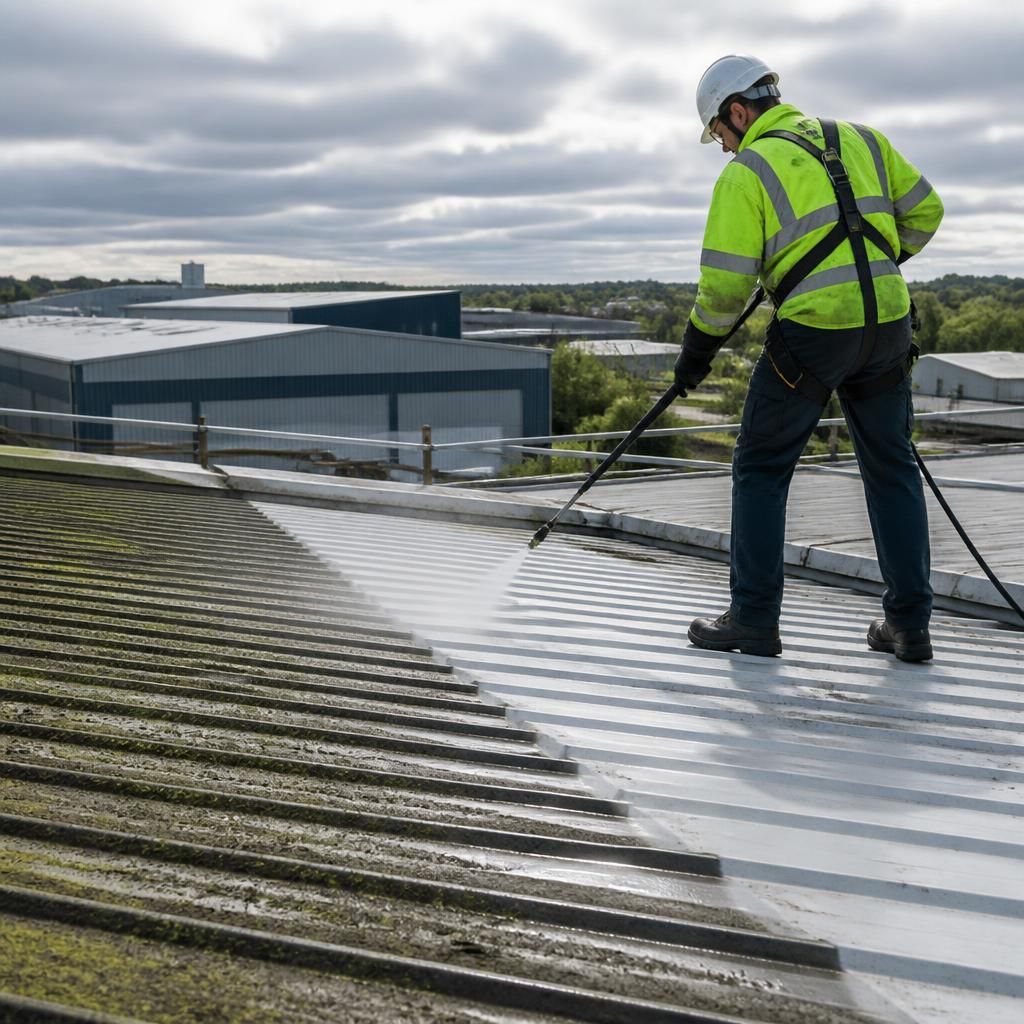
Soft wash cleaning is suitable for many sound, coated metal roofs, but the detergent must be compatible with the specific metal and protective finish. Painted steel, aluminium and zinc can react differently to cleaning solutions, so a product that is safe for one roof may dull, stain or damage another.
Before full application, the cleaning solution should be tested on an inconspicuous area and the surface checked for colour change, gloss loss, streaking or coating damage. The roof’s condition, fixings, seams and drainage details should also be assessed. Where there is active corrosion, peeling coating or exposed metal, cleaning should be adjusted or postponed until the necessary repairs have been considered.
Arrange a Metal Roof Soft Wash Assessment
Arrange a metal roof soft wash assessment so we can confirm the roofing material, coating condition, compatible cleaning solution and safe access requirements before work begins.
For a free quote & consultation
Contact usAccreditations