
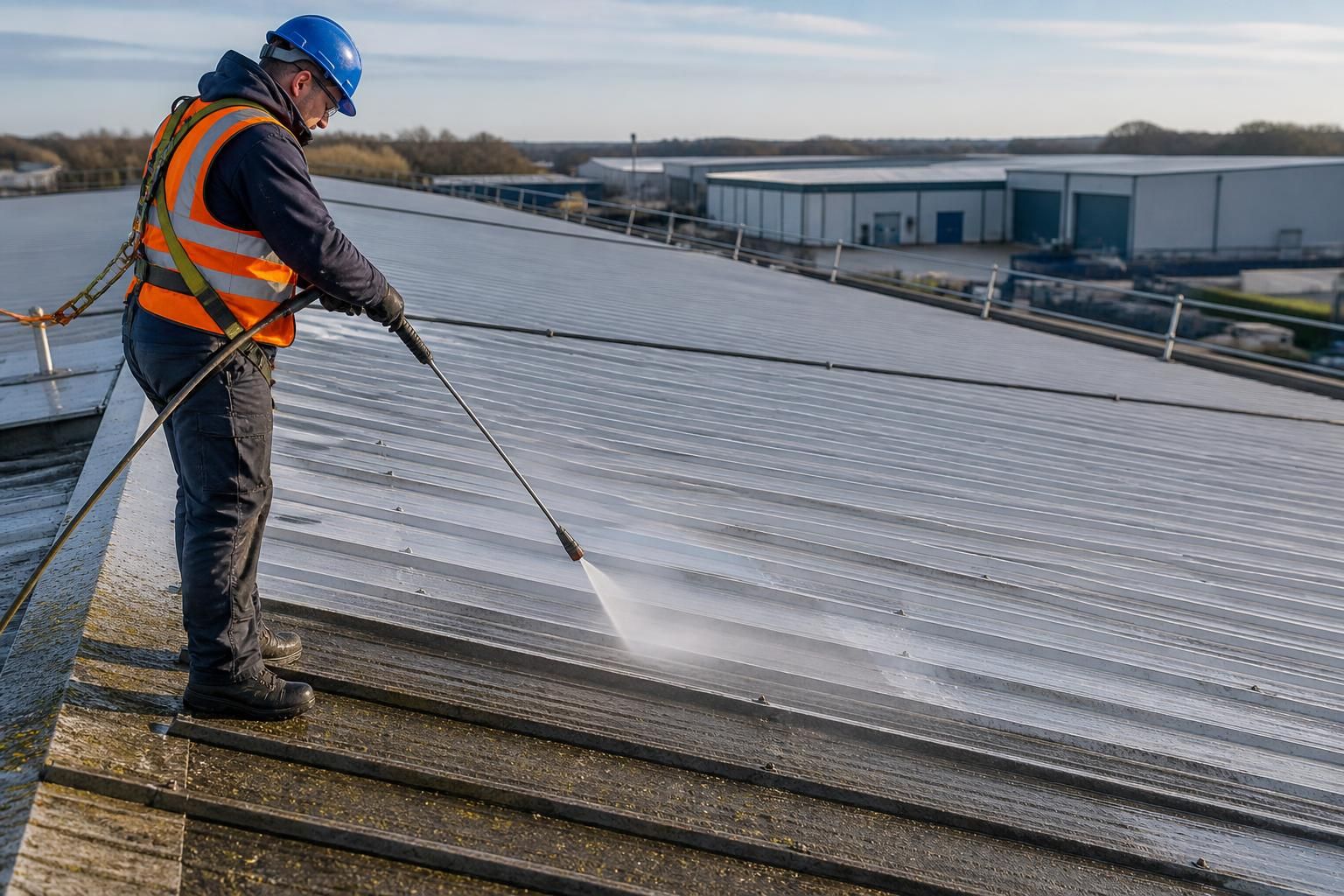
How often should a metal roof be soft washed to maintain its condition?
There is no fixed soft-washing interval for a metal roof: arrange an inspection at least annually and clean it when algae, moss, grime or atmospheric deposits begin to build up, before they affect the coating or promote corrosion. Roofs exposed to heavy industrial pollution, coastal air, overhanging trees or persistent moisture may need soft washing more frequently than roofs in sheltered, cleaner environments.
A metal roof should usually be inspected at least annually and soft washed when deposits begin to accumulate, rather than cleaned to a rigid timetable. For many commercial roofs, a planned soft wash every few years is appropriate, but the correct interval depends on the roof’s coating, exposure, condition and surrounding environment. Cleaning before biological growth, industrial grime or salt deposits become established helps protect the finish and reduces the risk of corrosion beneath damaged areas.
Some metal roofs remain in good condition for several years after a professional clean, while others require more frequent attention. A roof located near heavy industry, busy roads, the coast or dense woodland may need soft washing more often because airborne pollution, salt, tree debris and persistent moisture can remain on the surface. Shaded roof sections and areas beneath overhanging trees are particularly likely to develop algae, moss, lichen and organic residue.
As a practical maintenance approach, arrange a professional inspection each year and review the cleaning requirement during that inspection. Soft washing may be suitable when the surface shows:
- Algae, moss, lichen or other biological growth;
- Dark staining or streaking caused by persistent moisture;
- Industrial soot, traffic film, bird fouling or atmospheric deposits;
- Accumulated leaves, pollen or other organic debris; or
- Surface grime that is beginning to conceal defects or prevent effective inspection.
Do not wait for heavy growth to cover the roof. Established moss and lichen can retain moisture against the coating, while contaminated deposits may make defects, failed fixings and early corrosion harder to identify. Soft washing removes these contaminants with low-pressure application and an appropriate cleaning solution, avoiding the unnecessary mechanical force associated with high-pressure cleaning.
The condition of the roof should be assessed before every treatment. Loose or flaking coatings, exposed metal, failed sealants, damaged panels, corroded fixings and areas of standing water may require repair or specialist attention before cleaning. Soft washing is a cleaning method, not a substitute for remedial roof work. Treating a damaged surface without addressing the underlying problem can allow water ingress or corrosion to continue.
After cleaning, the roof should be checked periodically rather than left until the next scheduled visit. A maintenance record can note areas of recurring growth, changes in coating condition, blocked drainage routes and any repairs required. This makes it easier to adjust the interval to the building’s actual needs. For example, a sheltered roof with a sound coating may only need occasional cleaning, whereas a shaded industrial roof exposed to pollution may benefit from a more closely managed programme.
Cleaning may also be appropriate after particular events, including nearby construction work, prolonged periods of damp weather, significant airborne pollution or exposure to salt-laden air. Following severe weather, an inspection can identify displaced panels, damaged coatings and blocked gutters before a cleaning team attends. Access, weather conditions, drainage and run-off controls should be considered as part of the same assessment.
Regular inspection and condition-led soft washing are preferable to cleaning too frequently or using aggressive methods. Excessive cleaning can place unnecessary demands on coatings and fixings, while delaying cleaning can allow deposits to become more difficult to remove. The most suitable schedule is therefore the one that keeps the roof clean enough for its condition to be monitored, without treating it unnecessarily.
For a commercial or industrial property, include the metal roof within the site’s planned external maintenance programme. An inspection can establish the current condition, identify environmental factors affecting the roof and recommend an appropriate cleaning interval. The schedule should then be reviewed whenever the roof is repaired, its surroundings change or deposits return more quickly than expected.
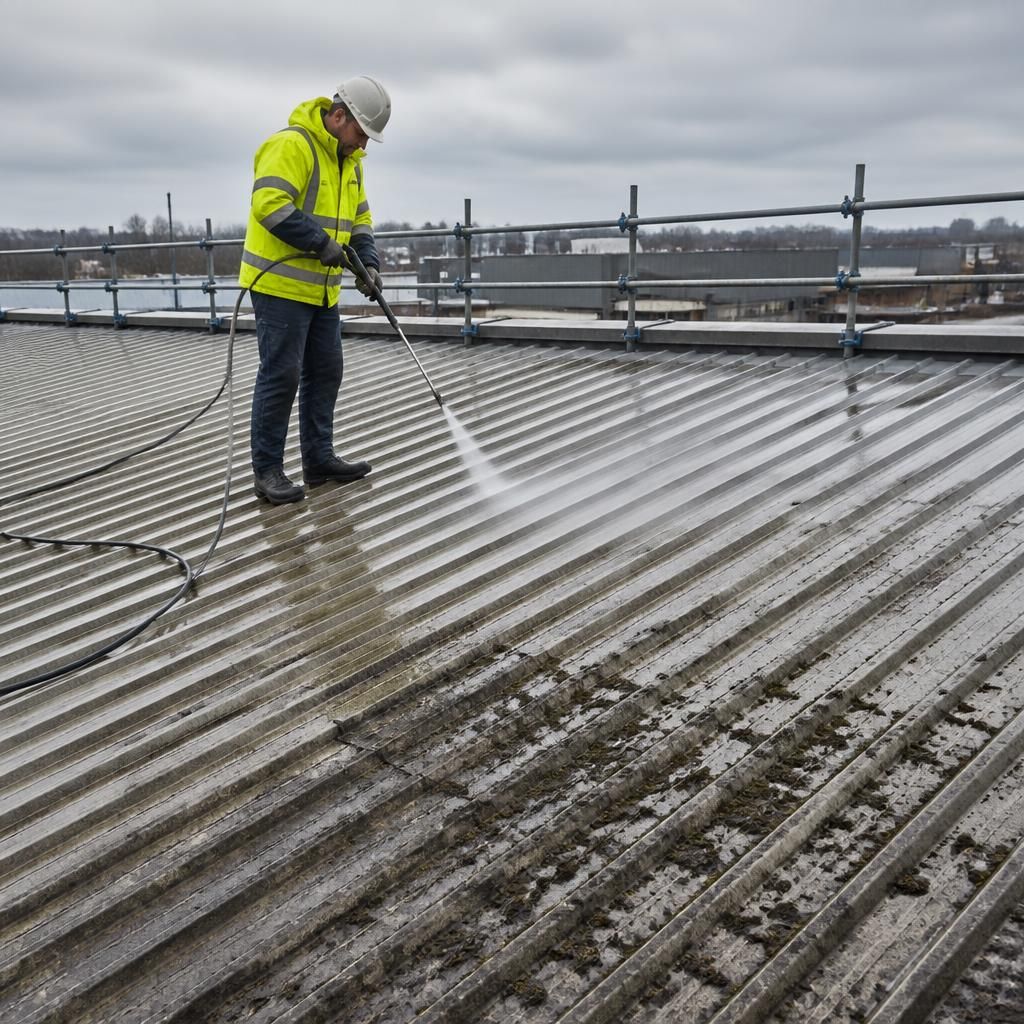
Metal roofs should be soft washed according to their condition and exposure, not a fixed timetable. Arrange at least an annual inspection, then clean the roof when algae, moss, industrial grime, salt deposits or other contamination begin to build up.
Roofs near heavy industry, busy roads, coastal air, overhanging trees or persistent shade may need more frequent attention. A condition-led schedule removes deposits before they retain moisture, conceal defects or contribute to coating deterioration and corrosion. Before each treatment, check for damaged panels, exposed metal, loose coatings and failed sealants, as these issues may need repair before soft washing.