
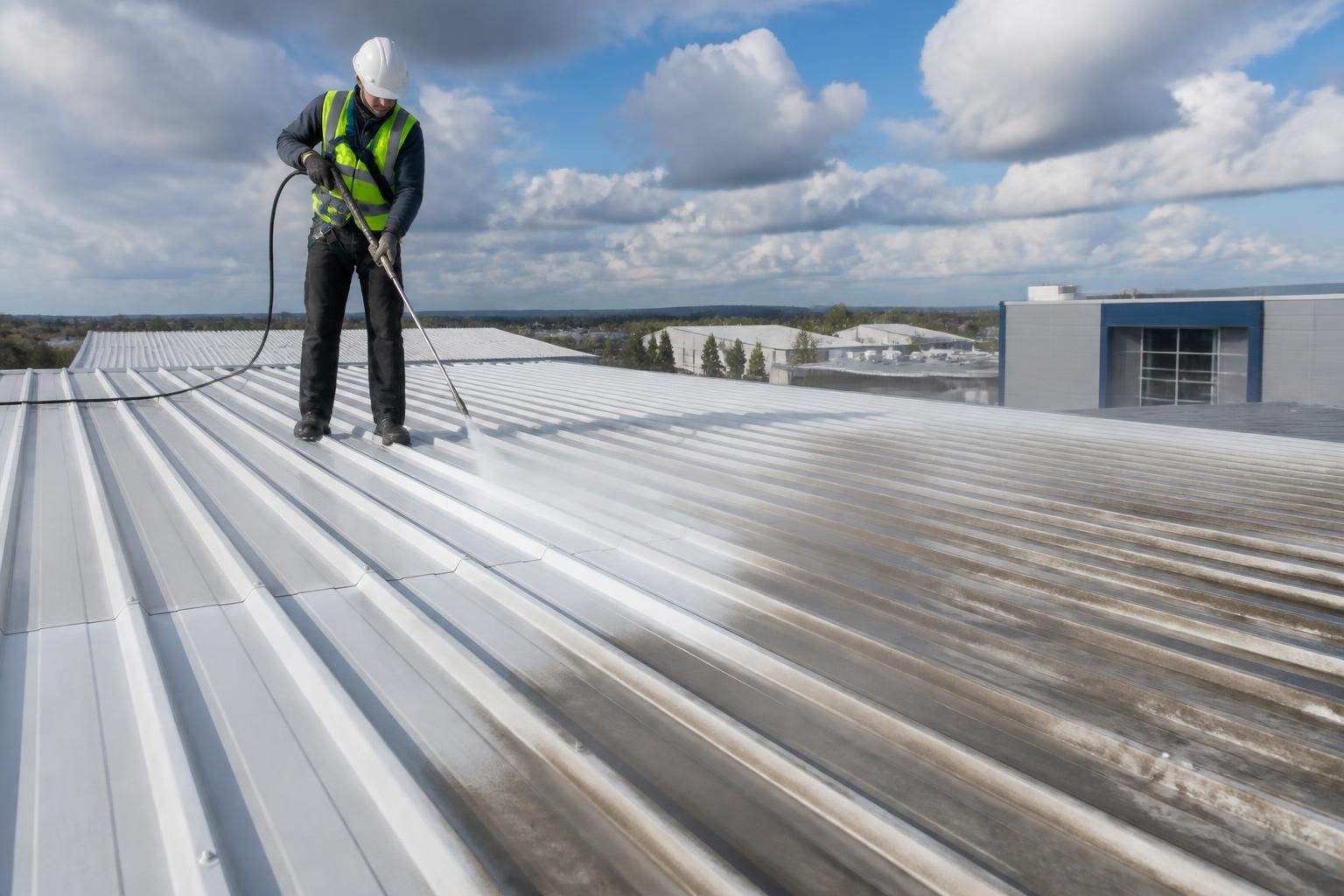
How does soft wash cleaning affect the lifespan of a metal roof?
Soft wash cleaning can extend a metal roof’s service life by removing algae, moss, dirt, salts and other contaminants that retain moisture and promote corrosion, without the surface damage associated with high-pressure washing. Its effectiveness depends on the roof’s material, coating, existing condition and the use of suitable detergents and controlled application methods.
Soft wash cleaning can extend the service life of a metal roof by removing contaminants that hold moisture against the surface, encourage corrosion and accelerate coating deterioration. Because the method uses controlled water pressure and suitable cleaning solutions rather than force to strip contamination away, it is generally less likely to damage protective finishes, seals, laps and flashings than high-pressure washing. The result depends on the roof material, coating system, existing condition and the quality of the cleaning process.
How contamination affects a metal roof
Metal roofing is commonly protected by factory-applied coatings, galvanisation, paint systems or other corrosion-resistant finishes. These protective layers separate the metal substrate from water, oxygen and pollutants. Over time, roofs can accumulate algae, moss, lichen, bird fouling, airborne dirt, industrial deposits, leaf matter and salts. These contaminants can:
- retain moisture against the coating and metal surface;
- obscure early signs of rust, coating failure or damaged fixings;
- promote biological growth around laps, gutters, seams and drainage points;
- trap acidic or corrosive deposits against the roof; and
- restrict drainage, allowing standing water to remain in vulnerable areas.
On commercial and industrial premises, contamination may also come from nearby roads, manufacturing activity, construction work, heating and ventilation systems or coastal air. If these deposits are left in place, they can contribute to premature breakdown of the coating and localised corrosion. Cleaning does not make an old roof new again, but it removes conditions that can continue to worsen its condition.
Why the low-pressure method matters
High-pressure cleaning can force water beneath overlapping panels, flashings, seals and trim. It may also lift fragile coatings, expose bare metal, damage aged sealants or distort components. Damage of this type can create pathways for water ingress and shorten the remaining life of the roof, even when the roof initially appears cleaner.
Soft washing relies on an appropriate cleaning solution, sufficient dwell time and a controlled low-pressure rinse. The solution loosens and treats organic growth, while the rinse removes the contamination without relying on excessive mechanical force. This is particularly useful where the roof has an intact but weathered coating, delicate detailing or areas that cannot safely withstand aggressive cleaning.
Using less pressure does not remove the need for technical control. The cleaning solution must be compatible with the roof finish, and it must not be allowed to dry on the surface, enter sensitive equipment or discharge uncontrolled into drainage systems. Rinsing should be thorough but measured, with attention given to gutters, outlets, wall finishes, vehicles, landscaping and neighbouring areas.
Protecting the coating and corrosion resistance
A clean roof is easier to inspect and maintain. Once contamination has been removed, areas of chalking, blistering, flaking, exposed metal, failed fasteners and damaged sealant can be identified more clearly. This allows repairs or coating maintenance to be planned before a small defect develops into widespread corrosion or water ingress.
Soft washing can also help preserve the appearance and performance of the existing finish. Removing biological growth and pollutants reduces the time that moisture and corrosive material remain in contact with the coating. However, a cleaning treatment cannot restore lost galvanisation, replace a failed paint system or stop corrosion that has already penetrated the metal. Where the coating is peeling or the substrate is heavily rusted, cleaning should form part of a wider repair and protective-coating plan.
The condition of the roof determines the outcome
The likely benefit and safety of soft washing should be assessed before work begins. A sound, well-bonded coating is normally better suited to cleaning than a roof with widespread delamination, exposed rust or loose panels. Particular care is needed where there are:
- corroded or loose fixings;
- open laps, failed joints or damaged flashings;
- cracked sealants and brittle rooflights;
- flaking, powdering or poorly adhered coatings;
- standing water caused by blocked or inadequate drainage; or
- previous repairs using materials that may react to cleaning solutions.
A roof inspection should establish the metal type, coating condition, access requirements, drainage arrangements and any areas that need isolation or protection. A small test area can help confirm that the proposed solution and rinsing method clean effectively without adversely affecting the finish. If the roof is structurally unsound or unsafe to access, cleaning should not proceed until the relevant repairs and access controls are in place.
Soft washing is part of preventative maintenance
Cleaning is most effective when it is included in a planned maintenance programme rather than delayed until heavy growth or staining is established. The appropriate interval depends on the roof’s location, exposure, pitch, surrounding vegetation, pollution levels, drainage and the condition of its coating. Roofs near trees, busy roads, industrial processes or coastal environments may require closer inspection than less exposed roofs.
After cleaning, the roof should be checked periodically for recurring growth, blocked outlets, damaged coating, rust staining and failed sealants. Keeping gutters and drainage channels clear is especially important because a clean roof can still deteriorate if water remains trapped around its edges or fittings. Cleaning records and inspection findings also provide useful evidence when planning future maintenance or assessing the remaining serviceability of the roof.
What soft washing cannot do
Soft wash cleaning is not a substitute for roof repairs, corrosion treatment, recoating or replacement. It will not correct structural movement, leaking joints, damaged sheets, defective insulation or inadequate drainage. Applying a cleaning solution to a severely degraded roof without addressing these issues may expose defects without resolving them.
For this reason, the cleaning method should be selected alongside an assessment of the roof’s condition. Where the metal and protective finish remain fundamentally sound, controlled soft washing can reduce contaminant-related deterioration and help preserve the roof’s existing service life. Where deterioration is advanced, the cleaning process should be adapted to avoid further damage and coordinated with repair or refurbishment work.
In practical terms, soft washing extends a metal roof’s lifespan by supporting the protective coating, reducing moisture-retaining contamination and making defects visible early. Its value is greatest when compatible solutions, controlled application, careful rinsing, safe access and follow-up maintenance are all applied as part of a planned commercial roof-care programme.
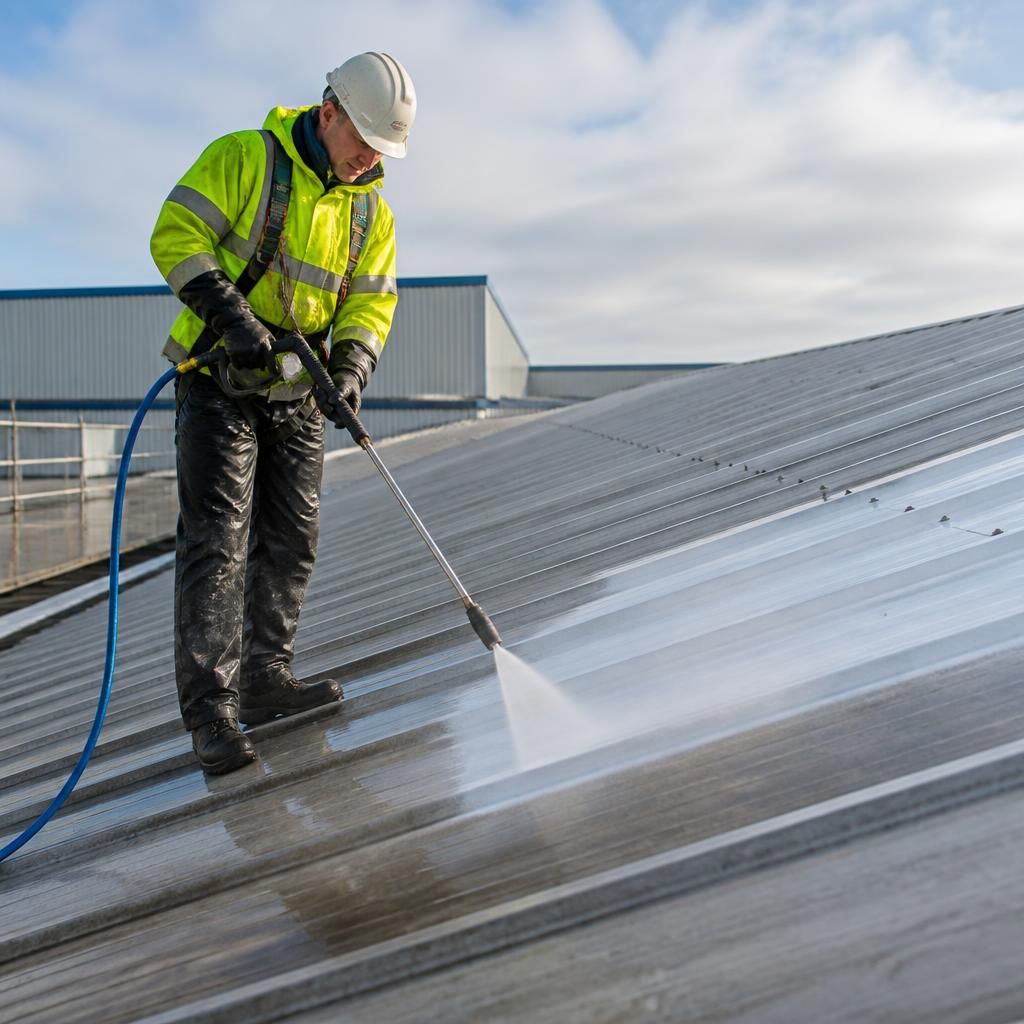
Soft wash cleaning can help extend a metal roof’s service life by removing algae, moss, dirt, salts and other deposits that hold moisture against its protective coating. Using a compatible cleaning solution and controlled low-pressure rinsing reduces the risk of lifting coatings, damaging sealants or forcing water beneath roof laps and flashings.
Once the contamination is removed, early signs of rust, coating failure, damaged fixings and blocked drainage are easier to identify and address. Soft washing cannot repair corrosion or restore a failed coating, but as part of planned maintenance it helps protect the existing finish and prevent avoidable deterioration.