
How does soft wash roof cleaning help in prolonging the life of different roofing materials?
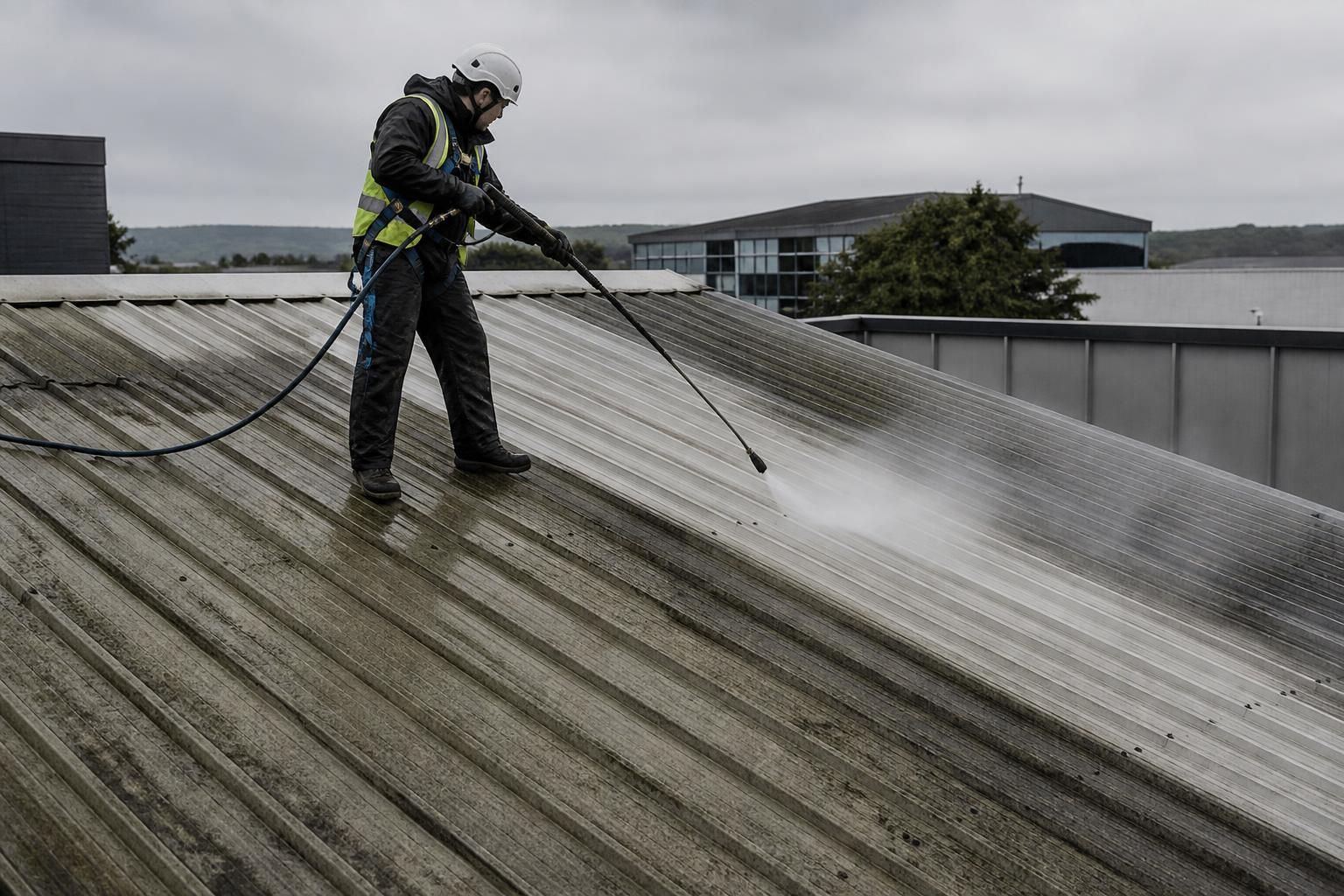
Soft wash roof cleaning uses a low-pressure application of biodegradable cleaning solutions to remove moss, algae, lichen and organic staining without the abrasive force that can damage roofing surfaces. By reducing moisture retention, blocked drainage and surface deterioration, it can help prolong the service life of tiles, slate, metal roofing and suitable membrane systems when the treatment is matched to the material and its condition.
Soft wash roof cleaning can prolong the service life of suitable roofing materials by removing moss, algae, lichen and organic staining with minimal mechanical disturbance. Unlike high-pressure cleaning, the method relies on a controlled application of a material-appropriate cleaning solution, followed by gentle rinsing or natural weathering where appropriate. This helps reduce the conditions that contribute to moisture retention, blocked drainage, surface erosion, corrosion and premature deterioration.
Organic growth is more than a cosmetic issue. Moss can hold moisture against the roof surface, spread across laps and edges, and obstruct gutters, valleys and rainwater outlets. Algae and lichen can also leave persistent staining and, in the case of lichen, attach firmly to porous surfaces. Removing this growth helps the roof shed water as intended and makes defects such as cracked tiles, failed pointing, damaged flashings or displaced coverings easier to identify.
The life-extending benefit depends on using the correct solution, pressure and technique for the roofing material. Soft washing is not a single treatment that can be applied identically to every roof. A competent contractor should assess the covering, its age, condition, previous coatings, drainage arrangements and surrounding environment before cleaning begins.
Clay and concrete tiles can benefit from soft washing because it removes biological growth without the repeated abrasive impact that can occur with aggressive pressure washing. Excessive pressure may erode the surface of concrete tiles, strip protective finishes, force water beneath laps or loosen older tiles. Clay tiles may be porous, weathered or brittle, so a low-pressure approach helps reduce the risk of surface damage and breakage.
On tiled roofs, the treatment can also help preserve the interlocking or overlapping areas where moss commonly accumulates. It does not, however, repair cracked tiles, failed bedding, defective mortar or damaged underlay. These issues should be recorded during the inspection and addressed separately, since cleaning a roof cannot restore structural or waterproofing components that have already failed.
Slate roofing requires particular care. Natural slate varies in hardness, porosity and condition, and older slates may be more vulnerable to delamination, edge damage and breakage. Soft washing can be appropriate where the slate is sound and the cleaning method is carefully controlled, but scraping, walking unnecessarily on the roof or directing force beneath slate courses can cause damage. Fixings, flashings and the condition of the supporting structure should also be checked before treatment.
Metal roofing can benefit from the removal of algae, bird deposits, moss and other contaminants that retain moisture or trap corrosive material against the surface. A suitable low-pressure solution helps avoid unnecessary abrasion to paint, powder coatings and protective finishes. The cleaning method must be selected according to the metal and its coating, as unsuitable chemicals can discolour finishes, accelerate corrosion or affect sealants.
Particular attention is needed around cut edges, fasteners, joints, gutters and areas where dissimilar metals meet. These points can be more susceptible to corrosion. After cleaning, the roof should be rinsed or treated in a way that prevents residues from remaining on the surface, while runoff is controlled so that cleaning solution does not damage adjacent materials or enter drains improperly.
Roofing membranes and coated systems may also be suitable for soft washing, but only when the membrane or coating manufacturer permits the proposed treatment. Single-ply membranes, liquid-applied systems, felt, fibre-cement products and other synthetic coverings can react differently to cleaning agents. Low pressure alone does not make an unsuitable chemical safe. The solution, dwell time and rinsing method must be compatible with the membrane, seams, adhesive details and protective finish.
For these roofs, the main benefit is usually the removal of organic contamination without scuffing, puncturing or lifting the surface. The contractor should avoid dragging equipment across the membrane and should take care around outlets, joints, penetrations, edge trims and areas of standing water. Any blistering, splitting, exposed reinforcement or failed coating should be assessed before cleaning.
Soft washing helps prolong roof life in several ways:
- It removes moss and lichen that can retain moisture against the covering.
- It helps keep valleys, channels and drainage routes clearer, reducing the risk of water backing up.
- It reduces the abrasive effect of manual scraping and high-pressure water on weathered surfaces.
- It removes algae and organic staining that can conceal developing defects during routine inspections.
- It can reduce the need for frequent mechanical cleaning where growth is treated before it becomes dense and established.
- It helps maintain the appearance and surface condition of compatible coatings and finishes when the correct solution is used.
The cleaning solution is normally applied at low pressure and allowed to act on the biological growth. Depending on the material and condition, loosened contamination may be removed with a controlled rinse, while some treatment residue and weakened growth may weather away over time. The process should be managed carefully around windows, walls, landscaping, vehicles, rainwater systems and neighbouring properties. Appropriate protection and collection or dilution of runoff are part of responsible roof cleaning.
Soft washing is generally safer for roofing materials than traditional pressure washing, but it is not risk-free. A solution that is too strong, left in place too long or allowed to dry on an unsuitable finish can cause discolouration or deterioration. Similarly, even low-pressure water can enter defective laps or openings if the roof is already damaged. Pre-cleaning checks, test areas and adherence to product and material guidance are therefore important.
Cleaning should be followed by a visual inspection of the roof covering, flashings, mortar, fixings, gutters and nearby surfaces. Where appropriate, moss prevention or a compatible protective treatment may help slow regrowth, but no treatment eliminates the need for periodic inspection. Trees, shade, poor ventilation, nearby vegetation and persistent dampness can all affect how quickly organic growth returns.
Soft wash cleaning extends the useful life of a roof by maintaining the conditions around the covering; it does not make an old or defective roof new again. It should not be used to conceal leaks or postpone essential repairs. If tiles are fractured, slate is loose, metal is corroded through, coatings are failing or a membrane is compromised, those defects need a suitable roofing assessment before or alongside cleaning.
For the best result, the method should be matched to the roof rather than selected solely because it is low pressure. A material-specific assessment, biodegradable and compatible cleaning products, controlled application, sensible access arrangements and proper post-cleaning checks provide the best protection for tiles, slate, metal and suitable membrane systems.
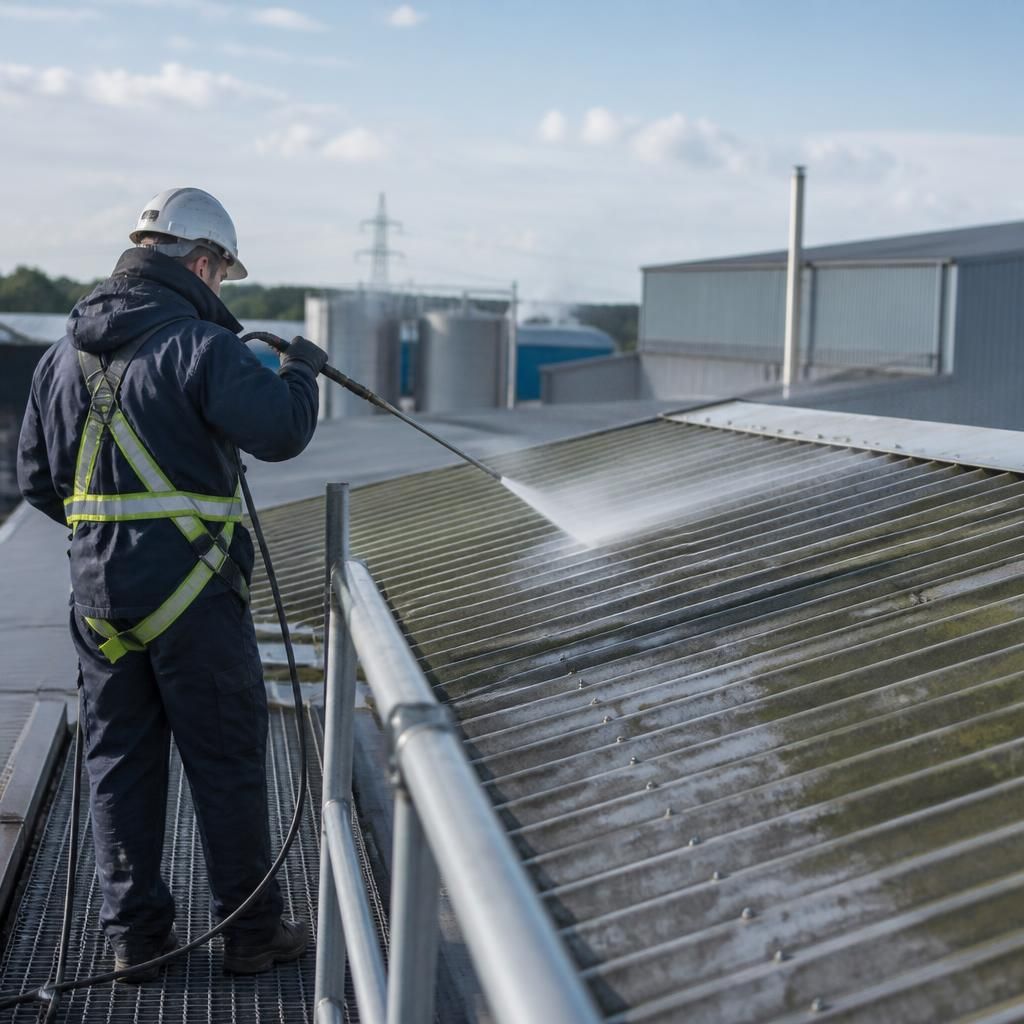
Soft wash roof cleaning helps prolong roof life by removing moss, algae, lichen and organic staining with low-pressure application rather than abrasive force. This reduces moisture retention and blocked drainage while lowering the risk of eroding tiles, damaging slate, scuffing coatings or disturbing roofing details.
The treatment must be matched to the material. Clay and concrete tiles, sound slate, coated metal and compatible membranes each require suitable solutions, dwell times and rinsing methods. A pre-clean inspection is important because soft washing will not repair cracked tiles, failed pointing, corrosion, damaged flashings or compromised membranes.
After cleaning, checking gutters, valleys, fixings, joints and roof coverings helps identify defects while access is available. Controlling runoff and protecting adjacent surfaces are also essential. Correctly applied soft washing supports the roof’s existing condition; it does not make an old or defective roof structurally sound.
Arrange Your Roof Assessment and Soft Wash Cleaning
Arrange a roof assessment with Encanto Exterior Cleaning to confirm whether soft washing is suitable for your roofing material and condition. We can then recommend an appropriate cleaning approach and carry out the work with suitable access, runoff control and post-cleaning checks.