
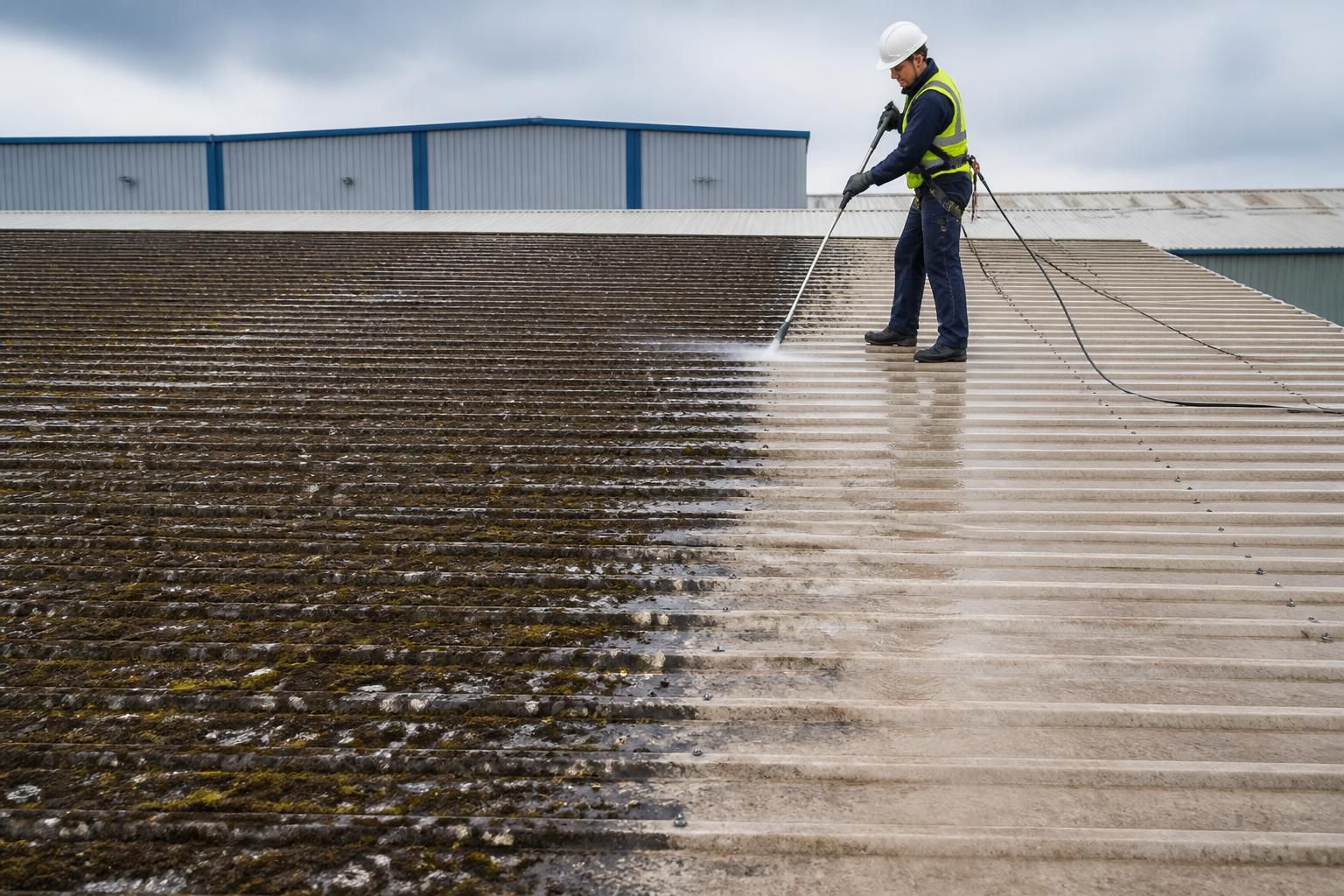
How does soft wash roof cleaning differ from traditional pressure washing?
Soft wash roof cleaning uses low-pressure water with a suitable cleaning solution to break down moss, algae, lichen and organic staining, whereas traditional pressure washing relies mainly on high-pressure water to remove contamination mechanically. This gentler approach reduces the risk of damaging tiles, pointing, coatings and roof membranes while treating the underlying growth for more durable results.
Soft wash roof cleaning differs from traditional pressure washing mainly in how contamination is removed. Soft washing uses a specialist cleaning solution and low-pressure rinsing to loosen and treat moss, algae, lichen, dirt and organic staining. Traditional pressure washing relies primarily on a concentrated, high-pressure water jet to remove contamination by force. Soft washing is therefore generally better suited to roofs where the surface, joints, coatings or underlying membrane could be damaged by aggressive mechanical cleaning.
How the two methods work
During a soft wash treatment, the roof is assessed first to identify its material, condition, drainage arrangements and areas of biological growth. A suitable solution is then applied at low pressure so it can work on the contamination rather than scouring the roof surface. The loosened material may be rinsed away carefully, removed by hand where appropriate, or left to weather naturally if rinsing could place unnecessary stress on the roof.
Traditional pressure washing uses water delivered at considerably greater force. This can remove surface dirt quickly, but it is mainly a mechanical process. It may dislodge moss and staining without fully treating the biological growth, particularly where contamination has entered overlaps, joints or textured surfaces. Regrowth can therefore occur if the underlying cause is not addressed.
Difference in risk to roofing materials
Roof coverings are not designed to withstand unlimited pressure. A high-pressure jet can erode the surface of some tiles, remove protective finishes, force water beneath laps, disturb pointing and damage fragile areas. It can also strip granules from certain coated or mineral-finished materials and worsen existing defects that are not obvious from ground level.
Soft washing reduces these risks because the water is applied at a much lower pressure. The method is particularly useful where tiles are weathered, porous, brittle or already showing signs of surface deterioration. It can also be more appropriate for roofs with delicate coatings, sealed joints or areas where water penetration is a concern. Low pressure does not remove the need for care, however. A roof should still be inspected before cleaning, and the solution, application method and rinsing approach must be compatible with the specific material.
Cleaning effectiveness
Pressure washing can produce an immediate visual change by blasting away dirt and loose growth. That result does not necessarily mean the contamination has been treated at its source. Moss, algae and lichen can remain in small recesses or on shaded sections, while spores and organic residue may support further growth.
Soft wash solutions are selected to break down organic contamination and reach areas that a water jet may not clean consistently. This makes the process more suitable for treating widespread biological staining across tiles, roof edges, ridges and other detailed surfaces. The final appearance may develop over time as treated growth dies back and weathering removes remaining residue, rather than relying solely on instant removal.
Neither method can correct damaged tiles, failed flashing, defective pointing or structural problems. Cleaning should not be used to conceal a maintenance issue, and any defects identified during the inspection should be recorded and addressed separately.
Effect on the roof’s service life
Removing moss, lichen and other organic growth can help prevent moisture being held against the roof surface. Established growth may also lift tile edges, obstruct drainage channels and contribute to damp conditions around joints. A controlled soft wash treatment helps remove these sources of stress without subjecting the roof to the same level of mechanical force associated with pressure washing.
Pressure washing may shorten the service life of some roofs if it removes surface protection, exposes the material or drives water into vulnerable construction details. The risk depends on the pressure used, the equipment, the operator’s technique and the roof’s condition. A carefully controlled pressure wash may be appropriate for some robust surfaces, but it should not be treated as the default method for every roof.
Water, chemical and access considerations
Soft washing normally uses less pressure and can reduce the need for repeated aggressive passes over the same area. The cleaning solution must nevertheless be handled responsibly. Gutters, downpipes, planted areas, ponds, drainage systems, vehicles and neighbouring surfaces should be protected where necessary. Run-off should be controlled in accordance with the site conditions and applicable environmental requirements.
Pressure washing can create substantial spray and run-off, particularly when used on heavily contaminated roofs. It may spread loosened debris onto façades, paths, glazing or adjacent properties. Both methods require suitable access equipment, exclusion zones and precautions for workers and the public. Low pressure does not make roof cleaning risk-free: working at height, wet surfaces, fragile coverings and electrical equipment all require proper controls.
Which method is appropriate?
The right approach depends on the roofing material, age, condition, coating, level of contamination and the construction beneath it. Soft washing is commonly considered for tiles, coated surfaces and roofs where preserving the existing finish is important. A more controlled process may also be needed for older or weathered coverings.
Pressure washing may have a limited role on suitable, structurally sound surfaces when the pressure can be accurately controlled and the manufacturer’s requirements permit it. It is less suitable where tiles are loose, cracked, porous or fragile, or where there are signs that water could be forced below the roof covering. The cleaning contractor should never select a method based on speed alone.
What to expect from a professional soft wash treatment
- An inspection to identify roof material, defects, access requirements and sensitive surrounding areas.
- Protection or management of gutters, drainage points, vegetation, walls, windows and other nearby surfaces.
- Selection of a cleaning solution appropriate to the roof and the type of contamination present.
- Low-pressure application and controlled rinsing or removal of loosened growth.
- Checks after cleaning for remaining contamination, damaged areas and blocked drainage routes.
- Practical maintenance advice, including the need to monitor shaded areas and clear gutters where appropriate.
In summary, traditional pressure washing removes contamination mainly through force, while soft wash roof cleaning combines a suitable treatment solution with low-pressure application. Soft washing is often the more controlled option for protecting roof surfaces and treating organic growth, but the result depends on correct material assessment, chemical selection, access arrangements and run-off management. Where a roof is damaged or unsuitable for cleaning, the responsible course is to identify those limitations before any treatment begins.
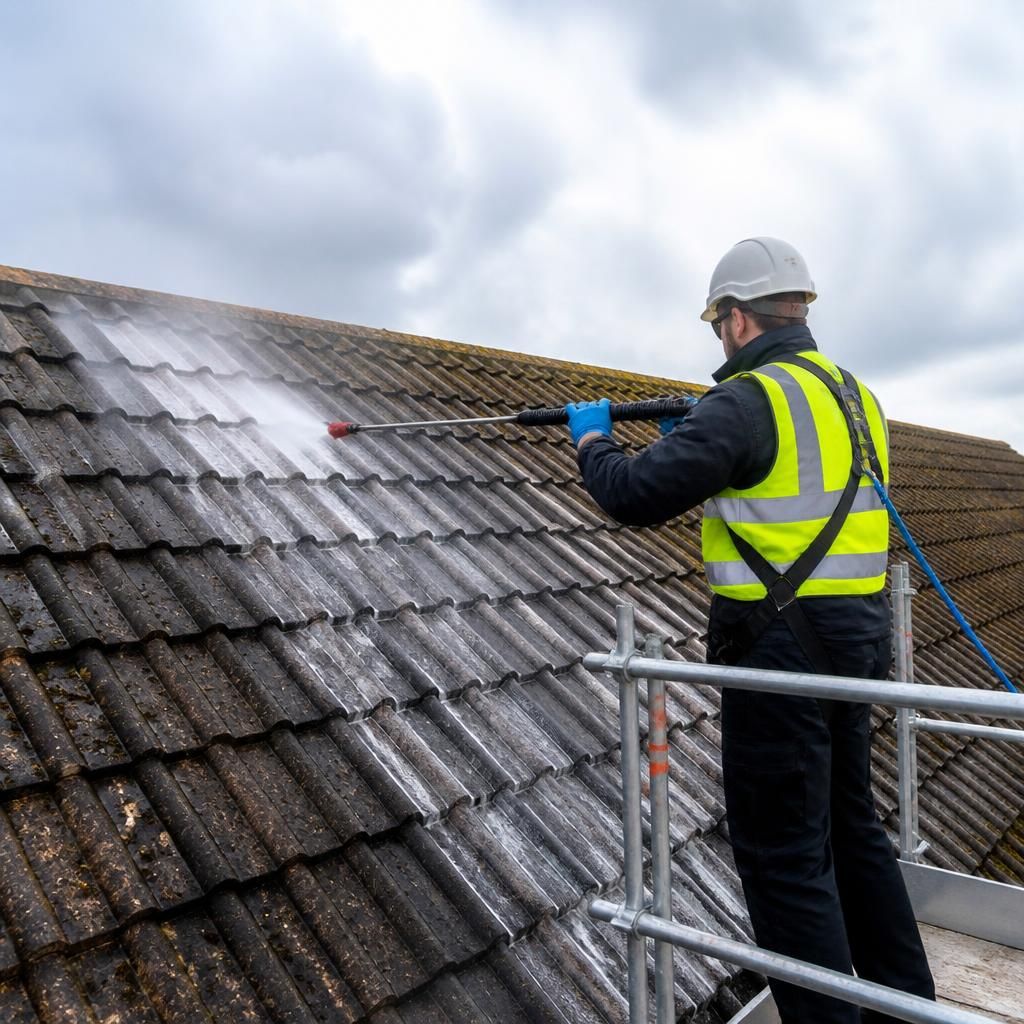
Soft wash roof cleaning treats moss, algae, lichen and organic staining with a suitable cleaning solution applied at low pressure. Traditional pressure washing relies mainly on force to remove contamination, which can disturb pointing, strip protective finishes, erode weathered tiles or drive water beneath overlaps.
Because soft washing places less mechanical stress on the roof, it is often the more controlled option for porous, coated or fragile coverings. The roof material and condition must still be assessed first, as correct solution selection, run-off control and careful rinsing remain essential to safe and effective cleaning.