
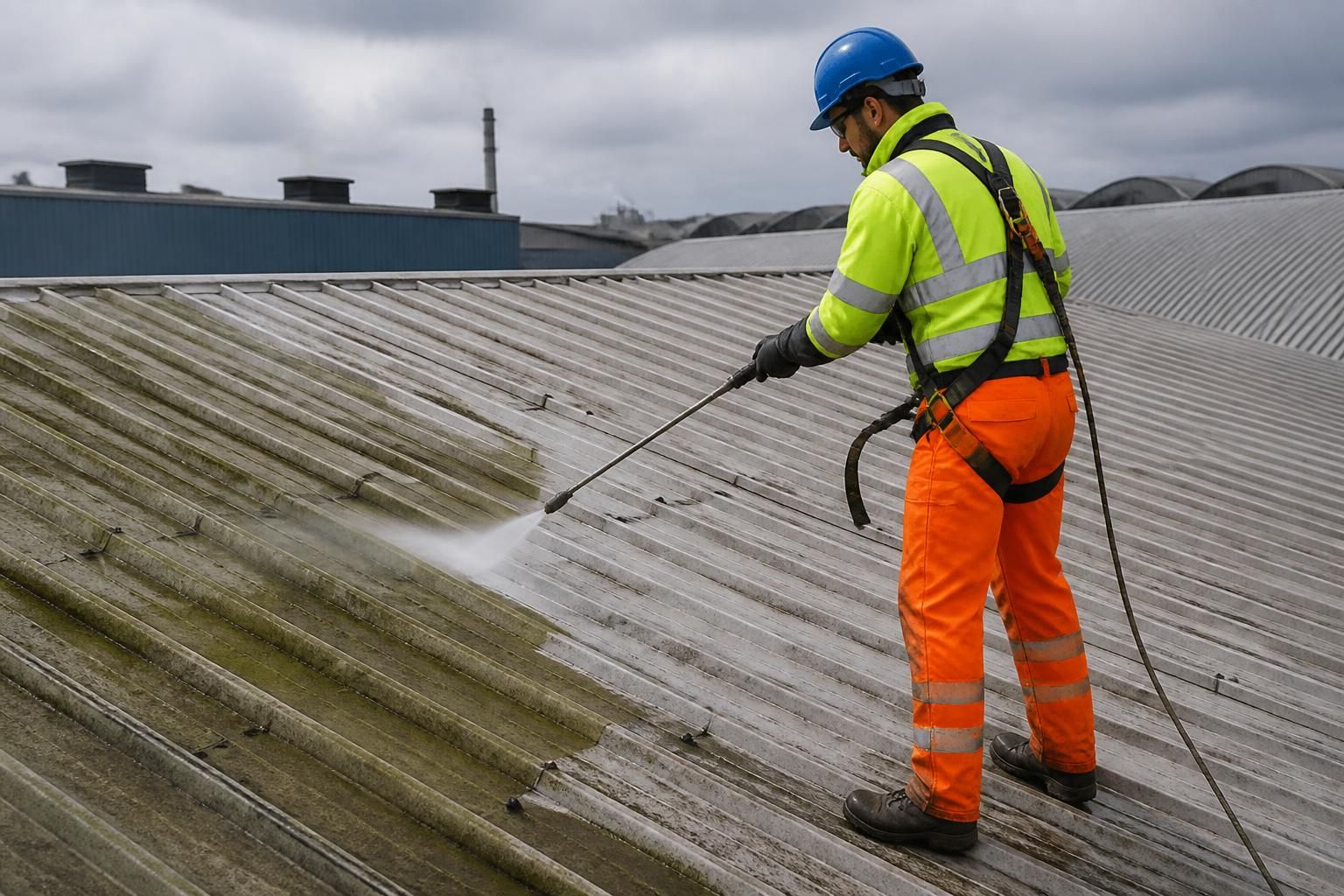
How does soft wash roof cleaning compare to traditional pressure washing in terms of safety and effectiveness?
Soft wash roof cleaning is generally safer and more effective for most roofs than traditional pressure washing because it uses low pressure and a suitable cleaning solution to remove organic growth without forcing water beneath tiles or damaging protective surfaces. Pressure washing can provide fast visible results, but may cause erosion, loosen tiles, strip finishes or spread moss, making soft washing the preferred method where the roof material and condition are suitable.
Soft wash roof cleaning is generally safer and more effective for most suitable roofing materials than traditional pressure washing. It uses controlled, low-pressure application of an appropriate cleaning solution, followed by a careful rinse, to treat moss, algae, lichen and other organic soiling without relying on force to remove it. Pressure washing can produce an immediate visual improvement, but the water force may damage roof surfaces, disturb tiles or drive water beneath the covering.
Safety is the main difference. A roof is not simply a surface that can be cleaned at the same pressure as paving or a car park. Tiles, slates, coatings, pointing, flashing and roof membranes can all be affected by excessive water pressure. Strong jets may:
- erode the surface of concrete or clay tiles;
- remove protective finishes or surface granules;
- chip, crack or dislodge aged tiles and slates;
- force water beneath laps, joints and flashing;
- damage mortar bedding, ridge tiles or vulnerable details; and
- spread loosened moss and contaminated water across other roof areas.
Soft washing reduces these risks because the cleaning solution does most of the treatment work. The operator can apply it at low pressure, allow suitable dwell time, and rinse without directing an aggressive jet into joints or beneath overlapping materials. This is particularly important on older roofs, roofs with fragile finishes and buildings where water ingress could damage insulation, ceilings or internal fixtures.
Soft washing is also usually more effective against organic growth. Pressure washing can remove the visible layer of moss, algae or lichen, but it may not adequately treat the remaining organisms, staining or embedded growth. It can also scatter spores and fragments over the roof. A correctly selected soft wash solution penetrates the organic contamination and helps loosen it so that it can be removed with minimal mechanical force. Some staining may fade progressively after treatment rather than disappearing immediately, especially where growth has been established for a long period.
That does not mean pressure washing is never appropriate. Certain robust, uncoated surfaces may tolerate carefully controlled pressure, but the method must be matched to the material, age, condition and construction of the roof. A setting suitable for a modern hard surface may be unsuitable for weathered tiles, slate, coated metal or a roof with vulnerable seals. Pressure washing should not be selected simply because it is faster or gives a sharper immediate contrast between cleaned and uncleaned areas.
The result depends on the roof assessment. Before cleaning, the roof should be checked for cracked or loose tiles, failing mortar, damaged flashing, open joints, blocked gutters, fragile coatings and signs of existing water ingress. Soft washing does not repair these defects, and applying any cleaning method to a structurally unsound roof can worsen the problem. Where tiles are already loose or porous, the safest approach may involve repairs, limited treatment or a different maintenance plan rather than full cleaning.
The cleaning process should also account for the specific roofing material. Clay and concrete tiles commonly respond well to a suitable soft wash approach when they are sound. Slate requires particular care because it can be brittle and may be secured with ageing fixings. Metal roofing needs a compatible solution and controlled rinsing to avoid affecting coatings, seals or areas of corrosion. Coated, painted or specialist roofing systems should be treated in accordance with the manufacturer’s guidance. Materials containing asbestos require separate specialist assessment and should not be treated as an ordinary roof-cleaning project.
Soft washing still requires careful chemical and access control. Low pressure does not remove the need for competent work. The operator should protect windows, doors, vents, plants and sensitive surfaces, control overspray, manage runoff and use the correct personal protective equipment. Cleaning solutions must be selected and diluted for the surface and contamination involved. They should not be allowed to enter watercourses, drainage systems or neighbouring areas without suitable controls. Weather conditions, wind and the position of the building also affect how safely the treatment can be applied.
Access is another safety consideration. Walking directly on roof coverings can cause damage and expose the operative to unnecessary risk. Suitable access equipment, edge protection and safe working procedures should be used, with the method adjusted to the roof pitch, height and surrounding layout. In many cases, the safest cleaning arrangement involves applying and rinsing from suitable access equipment rather than standing on vulnerable tiles.
In practical terms, the comparison is:
- Soft washing: low-pressure application, targeted treatment of organic growth, less likelihood of surface erosion and reduced risk of forcing water beneath roof coverings when carried out correctly.
- Traditional pressure washing: rapid mechanical removal and an immediate visible result, but greater potential for damage, water penetration, coating loss and disturbance of tiles or mortar.
Soft washing is therefore normally the preferred option where the objective is to treat biological growth while preserving the roof covering. The most effective approach may still include gentle manual removal of heavy moss, collection of loosened debris and gutter clearance. No cleaning method can compensate for defective tiles, failing fixings or poor drainage, so these issues should be recorded and addressed separately.
After treatment, keeping gutters, valleys and drainage routes clear helps prevent retained moisture and reduces the conditions in which organic growth develops. Regular visual inspections can identify returning growth or damaged roof components before they become more serious. The appropriate interval between treatments varies according to shade, nearby trees, moisture, roof orientation, material and the severity of the original contamination.
Overall, soft wash roof cleaning offers the better balance of safety and effectiveness for many domestic, commercial and industrial roofs, provided the solution, pressure, access method and runoff controls are appropriate. Traditional pressure washing may be suitable for selected robust surfaces, but it should not be treated as a universal roof-cleaning method. A material-specific inspection is essential before either process is used.
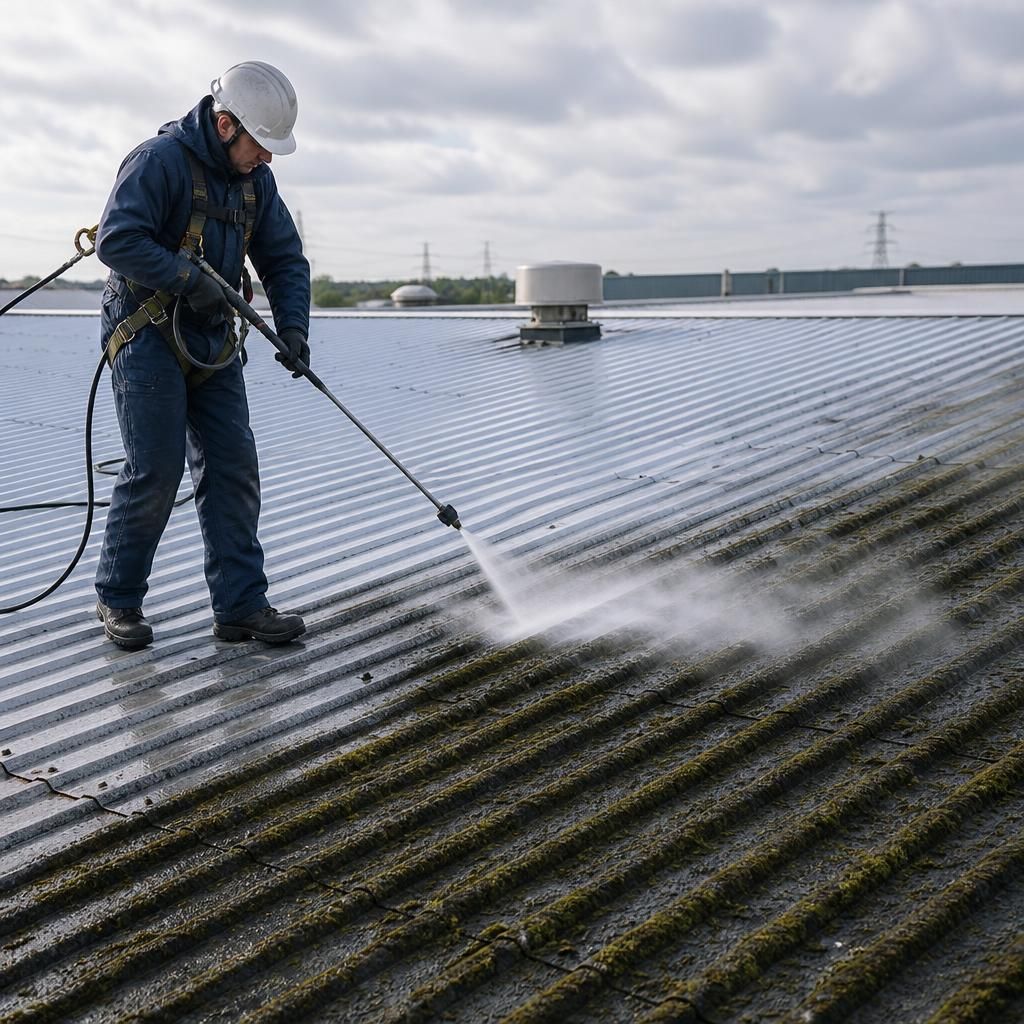
Soft wash roof cleaning is generally safer than traditional pressure washing because it treats moss, algae and lichen with a suitable cleaning solution rather than relying on high water force. Low-pressure application reduces the risk of eroding tile surfaces, loosening slates, damaging coatings or driving water beneath overlapping roof coverings.
This does not make every roof suitable for cleaning without inspection. The roof material, condition, access requirements and existing defects should be assessed first. A competent approach also includes protecting surrounding surfaces, controlling runoff and avoiding unnecessary foot traffic on fragile tiles. Pressure washing may be appropriate for selected robust surfaces, but it should not be used as a universal method for roof cleaning.