
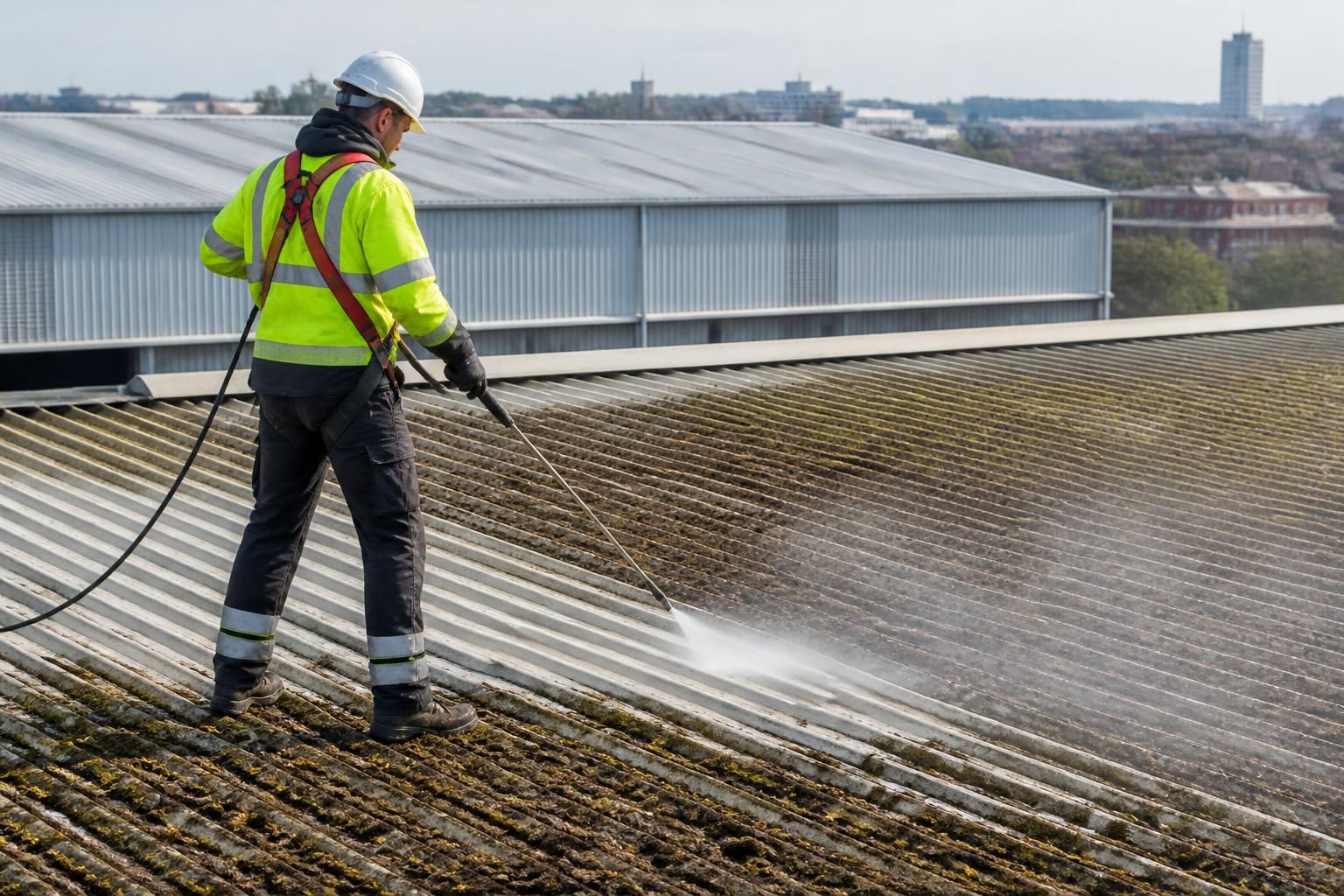
Can soft wash roof cleaning help in pest prevention?
Yes. Soft wash roof cleaning removes moss, algae and other organic build-up that can provide food, shelter or nesting material for pests, helping reduce pest-attracting conditions; however, it does not replace repairs or proofing of gaps, damaged tiles, vents and roofline access points.
Soft wash roof cleaning can support pest prevention by removing moss, algae, lichen and other organic build-up that may provide food, shelter or nesting material. This can make a commercial roof less attractive to some insects, birds and small animals. However, soft washing is not a pest-control treatment and cannot prevent infestation where pests are entering through damaged roofing, open vents, defective roofline details or gaps in the building fabric.
Organic growth creates damp, sheltered conditions across roof surfaces. Moss can retain moisture and collect soil, leaves and other debris, while heavy growth around tiles, roof edges and drainage channels may provide cover for insects and nesting birds. In some situations, this build-up can also contribute to blocked gutters and downpipes, allowing standing water and damp areas to develop around the property. Removing the growth helps reduce these pest-attracting conditions and makes the roof easier to inspect and maintain.
A soft wash treatment applies an appropriate cleaning solution at low pressure, allowing the solution to break down biological contamination without the force associated with conventional pressure washing. Once the growth has been treated and removed, the roof surface is less likely to hold loose organic material. This is particularly useful on commercial premises where roof cleanliness, drainage and safe access need to be managed as part of wider property maintenance.
Potential pest-related benefits include:
- Less nesting material: Removing moss, leaves and accumulated debris can reduce the materials available to birds and other animals.
- Fewer sheltered areas: A clear roof offers fewer concealed spaces for insects and small pests to remain undisturbed.
- Improved drainage: Clearing organic growth from roof surfaces and drainage routes can reduce damp areas that may attract insects.
- Easier inspections: Clean tiles, slates, cladding and roof edges make it easier to identify damaged coverings, failed joints, open penetrations and other potential access points.
- Reduced deterioration: Moss and persistent damp can contribute to the degradation of some roofing materials and joints. Addressing the build-up supports planned maintenance before defects become more significant.
Soft washing is most effective as one part of a pest-prevention plan. After cleaning, the roof should be checked for cracked or displaced tiles, damaged flashing, defective fascias and soffits, open service penetrations, poorly sealed vents and gaps around rooflights. Gutters and downpipes should also be inspected, as blocked or overflowing drainage can create damp conditions around walls, entrances and service areas.
Where rodents or birds are a concern, roof cleaning alone will not resolve the problem. Rodents may enter through small gaps around ducts, pipework, loading-bay structures or damaged roof edges. Birds may use ledges, plant areas, roof voids and open ventilation points. These issues require appropriate proofing, repairs or specialist pest-control advice. Any existing nests, occupied bird spaces or protected species must be dealt with in accordance with relevant wildlife and environmental requirements rather than being disturbed during routine cleaning.
The cleaning method also needs to reflect the roof material and its condition. A professional assessment should consider the covering, age, existing damage, drainage layout, nearby planting, roof access and the location of air intakes or water collection points. Solutions should be selected and applied responsibly, with suitable controls to protect occupants, surrounding surfaces and the local drainage system. Low-pressure application does not remove the need for safe access equipment, exclusion zones and careful management of run-off.
For ongoing prevention, commercial property managers should combine periodic roof inspections with gutter maintenance, prompt repair of defects and attention to roofline gaps. Cleaning intervals depend on the roof material, surrounding trees, exposure, moisture levels and the amount of contamination present. A soft wash may remove the conditions that encourage pest activity, but regular monitoring is needed to identify regrowth, debris accumulation or new access points.
In summary, soft wash roof cleaning can reduce the environmental conditions that attract or shelter pests, particularly where moss, algae and debris have accumulated. Its role is preventative rather than curative: it complements roof repairs, drainage maintenance, proofing and specialist pest control, but does not replace them.
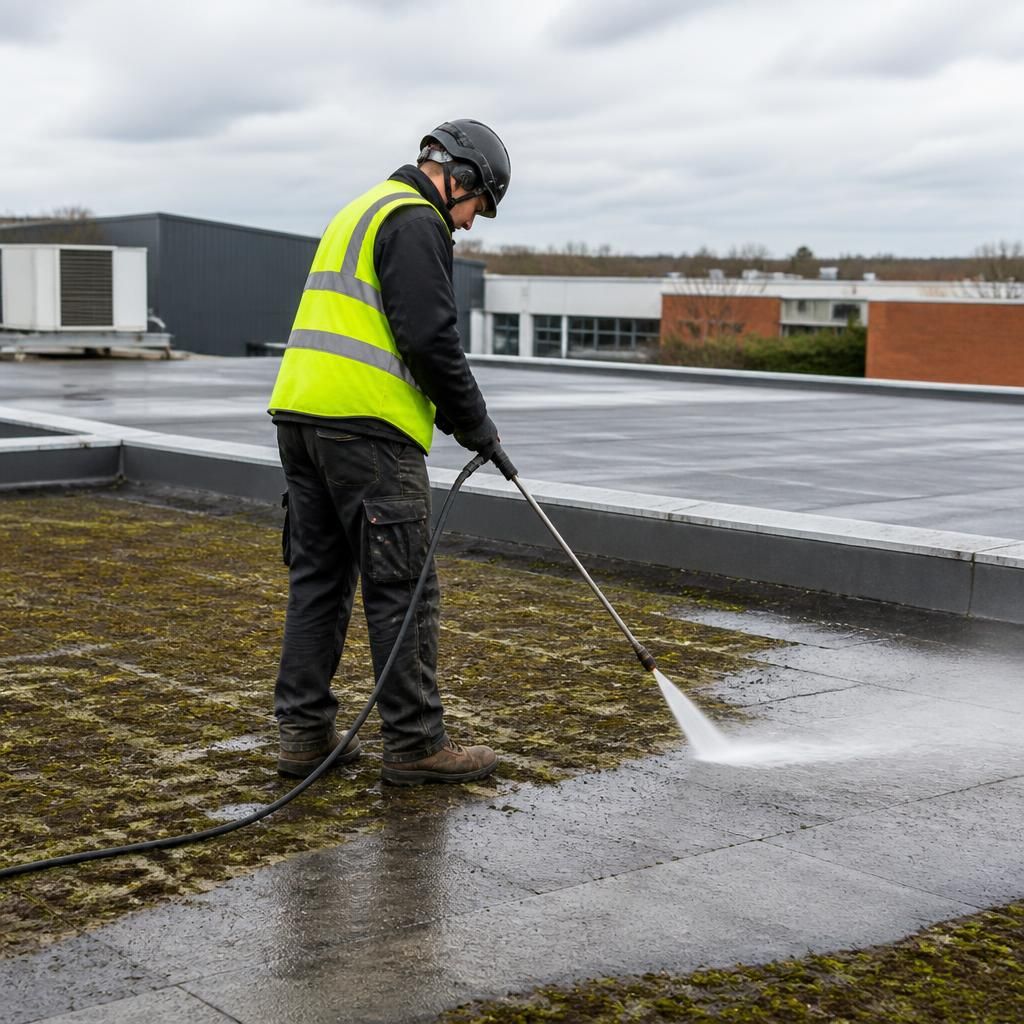
Soft wash roof cleaning can help with pest prevention by removing moss, algae, lichen, leaves and other organic debris that provide shelter, moisture and nesting material. Clearing this build-up makes the roof less attractive to insects, birds and small animals, while also reducing the damp conditions associated with blocked gutters and drainage channels.
Cleaning should be followed by a roof and roofline inspection. Cracked tiles, open vents, damaged fascias, poorly sealed service penetrations and gaps at roof edges can still allow pests into the building. Soft washing reduces pest-attracting conditions, but repairs, proofing and specialist pest control are needed where an active infestation or clear access point is present.