
What techniques are used to ensure eco-friendly roof tile and gutter cleaning?
Eco-friendly roof tile and gutter cleaning uses the least aggressive effective method, such as soft washing, controlled low-pressure water or steam, with biodegradable treatments where appropriate. Debris and contaminated run-off are contained and disposed of responsibly, preventing blockages and pollutants from entering surface-water drainage systems.
Eco-friendly roof tile and gutter cleaning uses the least aggressive effective method for the surface, limits water and chemical use, and prevents contaminated debris or run-off from entering the surrounding environment. In practice, this usually involves a site assessment, manual removal of loose material, controlled low-pressure washing or steam cleaning, carefully selected biodegradable treatments, and responsible collection and disposal of waste.
Starting with a site assessment
The cleaning method should be selected only after assessing the roof covering, gutter material, access arrangements, drainage layout and type of contamination present. Concrete tiles, clay tiles, slate, coated metal and modern composite materials can respond differently to pressure, heat and cleaning products. A method that is suitable for one roof may damage another or use more treatment than necessary.
The assessment also identifies vulnerable areas such as cracked tiles, deteriorated pointing, exposed underlay, loose ridge components and defective gutter joints. Existing defects are recorded so that cleaning does not conceal a maintenance issue or cause avoidable damage. Where appropriate, a small test area is cleaned first to confirm that the chosen pressure, temperature and treatment are suitable.
Removing debris before washing
Leaves, moss, silt, nesting material and loose lichen are removed manually or with suitable tools before water is applied. This reduces the volume of material that could be washed into gutters and drains, and it avoids using water to move debris that can be collected directly.
Gutter debris is bagged or placed into suitable containers rather than being flushed through downpipes. Downpipes can be checked for blockages and cleared in a controlled manner. Collected organic matter may be suitable for ordinary green-waste handling, but material contaminated with chemicals, heavy sediment or other pollutants should be managed according to its condition and the applicable disposal requirements.
Using low-pressure or soft-washing techniques
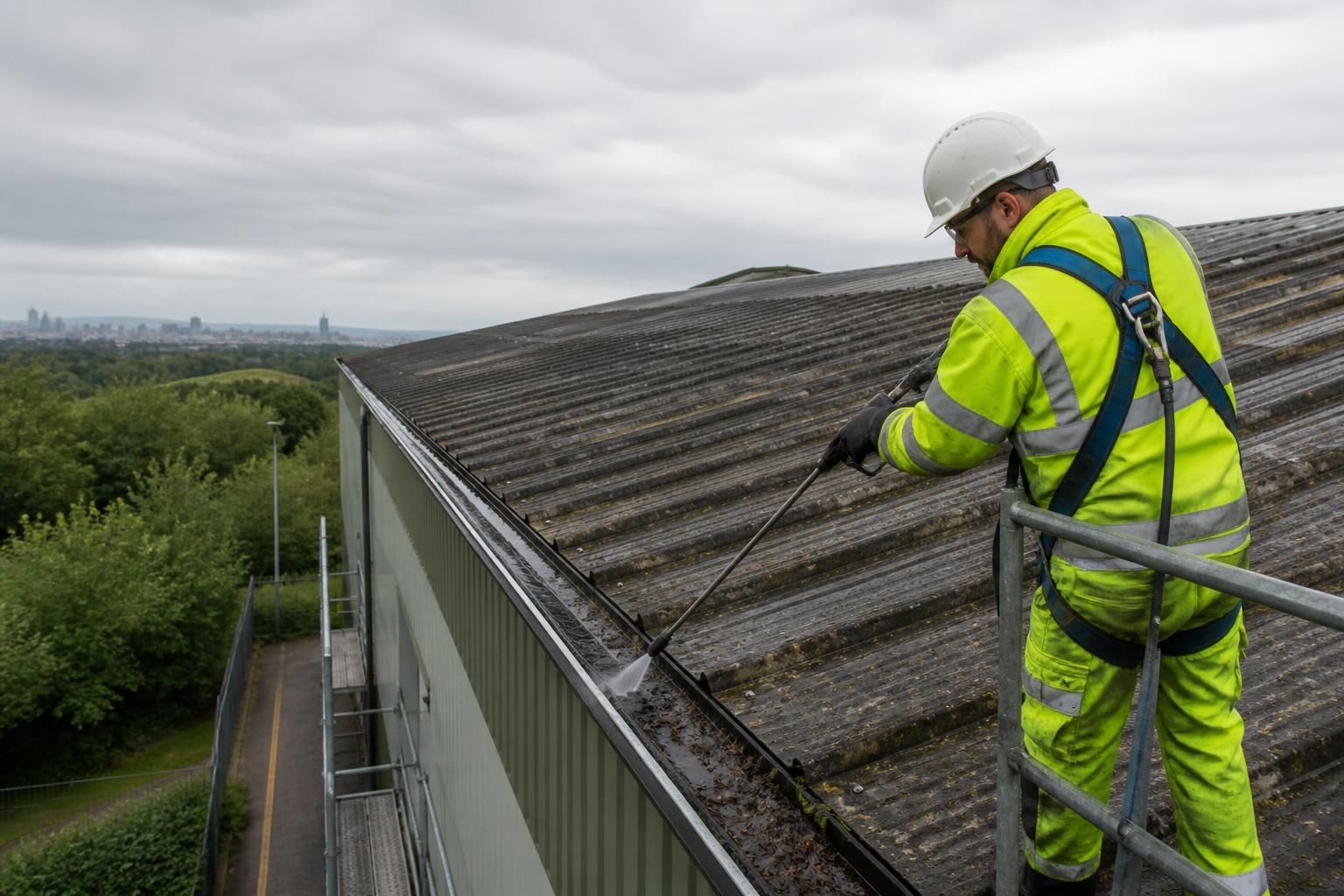
Soft washing uses controlled water pressure and, where necessary, a compatible cleaning solution to loosen algae, moss staining and atmospheric deposits. It is generally less aggressive than high-pressure jetting and reduces the risk of eroding tile surfaces, dislodging protective finishes or forcing water beneath overlapping tiles.
Low pressure does not mean uncontrolled spraying. The operator adjusts the flow, nozzle, distance and direction to suit the roof covering. Water is directed across the surface rather than beneath tile laps, flashings or ridge components. This approach can remove contamination while using only the amount of water needed for the task.
Applying steam where it is appropriate
Steam cleaning uses heated water vapour to soften organic growth and surface deposits. It can reduce the need for chemical treatment on suitable materials and may be useful where controlled removal is preferred. Steam is not appropriate for every roof, particularly where heat or moisture could affect coatings, sealants, fragile tiles or vulnerable construction details, so the material and condition of the roof must be assessed beforehand.
Whether using steam or low-pressure water, the cleaning process should be controlled around vents, solar equipment, roof openings, rendered walls, painted surfaces and landscaping. Any run-off should be managed rather than allowed to spread across adjoining areas.
Selecting cleaning products carefully
When a treatment is needed, the product should be selected for the specific contamination and roof material. Biodegradable or lower-impact products may be used where they are effective and compatible with the surface. The correct dilution and application rate are important: using more product does not necessarily improve cleaning and can increase the burden on drainage systems and surrounding habitats.
Strong acids, caustic products, solvents and unnecessary biocides should be avoided where a milder method will achieve the required result. Product labels, safety data and manufacturer guidance should be followed, including requirements for storage, application, rinsing and disposal. Treatments should not be applied before rain if rainfall could carry them beyond the controlled work area.
Containing water and preventing polluted run-off
One of the most important environmental controls is preventing dirty water, dislodged moss and cleaning chemicals from entering surface-water drains, watercourses, soil or neighbouring property. Before work begins, vulnerable drains and outlets can be identified and protected. Gutter outlets may be temporarily isolated, and suitable sheeting, collection points or wet-vacuum equipment can be used where conditions require additional control.
Collected water and sediment should be handled in accordance with the site conditions and relevant waste and drainage requirements. It should not be discharged to a surface-water drain simply because it is diluted. Where a connection leads to foul drainage, discharge must still be appropriate and permitted. The correct control measures depend on the building, local drainage system, volume and nature of the contamination.
Reducing water use and repeat cleaning
Water consumption is reduced by removing loose debris dry, using targeted spray patterns and avoiding prolonged rinsing. Equipment is selected to provide adequate control rather than maximum pressure. Cleaning only the affected areas, where a full wash is unnecessary, can also reduce water and product use.
After cleaning, a suitable roof treatment or maintenance programme may help slow the return of moss, algae and lichen. Any treatment must be compatible with the roof and applied only where it provides a genuine maintenance benefit. Keeping gutters, valleys and outlets clear also reduces standing water, blockages and the need for emergency intervention.
Protecting surrounding areas
Plants, lawns, vehicles, pathways, façades and neighbouring surfaces are protected from overspray and loosened debris. Sensitive areas may be covered or dampened where appropriate, with coverings removed promptly to prevent trapped moisture or heat damage. The work area is inspected after cleaning so that residue, fragments and collected waste are not left behind.
Eco-friendly cleaning is therefore a combination of method selection and site controls, not simply the use of a product described as green. A responsible roof tile and gutter cleaning process should minimise pressure, water and chemicals while achieving a sound cleaning result, contain contaminated run-off, and leave waste and drainage systems properly managed.
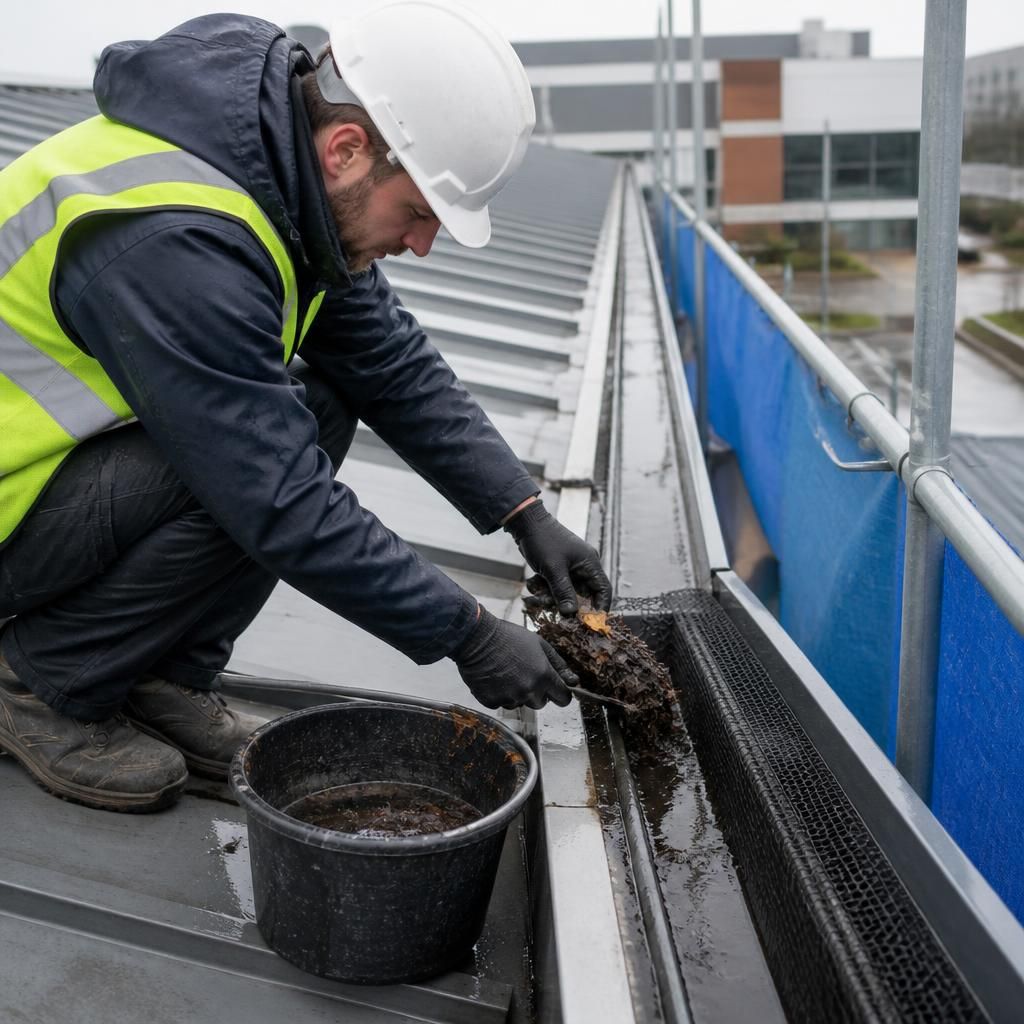
Containing dirty water and loosened debris is a key part of eco-friendly roof tile and gutter cleaning. Before washing begins, surface-water drains, downpipe outlets, planting and neighbouring surfaces are identified and protected so moss, silt and cleaning residues are not carried into the local drainage system.
Loose material is removed and collected before water is applied wherever possible. Gutter outlets can be isolated temporarily, while sheeting, collection points or wet-vacuum equipment may be used to control run-off where conditions require it. Collected debris and waste water are then handled according to their condition and the site’s drainage arrangements, rather than being flushed into surface-water drains.