
What should be considered when selecting cleaning equipment for roof tiles and gutters?
When selecting cleaning equipment for roof tiles and gutters, consider the roof material, level of soiling, required water pressure, access conditions, drainage arrangements and the risk of damage to tiles, pointing, coatings or guttering. Equipment should provide controlled, effective cleaning while supporting safe working practices and responsible management of wastewater and debris.
The right cleaning equipment for roof tiles and gutters must be selected according to the roof material, condition, level of soiling, access requirements and drainage arrangements. Effective equipment should remove moss, algae, dirt, leaves and other deposits without loosening tiles, eroding pointing, damaging protective coatings or deforming guttering. Pressure, water flow, temperature, attachments and access systems all need to be controlled as part of the method rather than chosen in isolation.
Start with a condition and material assessment. Concrete, clay, slate, fibre cement and coated tiles do not respond identically to cleaning. Older or weathered tiles may be porous, brittle or already cracked, while coated tiles can be damaged by excessive pressure, heat or unsuitable chemicals. The inspection should identify slipped or broken tiles, deteriorated bedding and pointing, fragile roof sections, blocked outlets, defective joints and areas where water could enter the building. Cleaning equipment cannot correct these defects, and they may need to be repaired before work begins.
The gutter material and design also influence equipment selection. PVC, aluminium, steel, copper and coated metal gutters have different tolerances to abrasion, heat and chemical products. Narrow channels, concealed gutters, valley gutters, hopper heads and downpipes may require different tools from standard open gutters. Equipment should be capable of reaching the full gutter profile without scraping surfaces, forcing joints apart or leaving debris around outlets.
Pressure and flow must be matched to the surface. High pressure is not automatically the most effective option. Excessive pressure can drive water beneath tiles, strip surface finishes, dislodge granular coatings, damage mortar and force debris into gutter joints or downpipes. A variable-pressure system, suitable nozzles and the correct stand-off distance allow the operator to work progressively. Lower pressure with an appropriate attachment may be sufficient for loose dirt, whereas firmly bonded deposits may require controlled treatment followed by rinsing.
Water flow is important because it affects rinsing, debris movement and productivity as well as pressure. A system with adjustable flow can reduce unnecessary water use and help prevent gutters or drainage points from being overwhelmed. Fan nozzles and rotary surface-cleaning attachments can distribute water more evenly than a concentrated jet, but they still need to be used only where the tile type and condition allow. Narrow, aggressive jetting should not be used as a default method across an entire roof.
Temperature and cleaning products should be considered alongside pressure. Steam or heated water can help remove organic growth, ingrained grime and some residues while reducing the need for aggressive pressure. However, heat is not suitable for every coating, sealant, membrane, gutter material or roof detail. Chemical treatments may be appropriate for biological growth, but the product must be compatible with the surface and applied in accordance with its instructions. Run-off, nearby planting, watercourses and building occupants must also be considered before treatment is selected.
Soft-washing equipment can be useful where a low-pressure application and dwell time provide a safer alternative to mechanical cleaning. It should include controlled dosing and application rather than unrestricted spraying. Treatments are generally followed by suitable rinsing or allowed to work according to the product requirements. The chosen approach should distinguish between removing existing deposits and treating residual spores or regrowth; these are related but separate tasks.
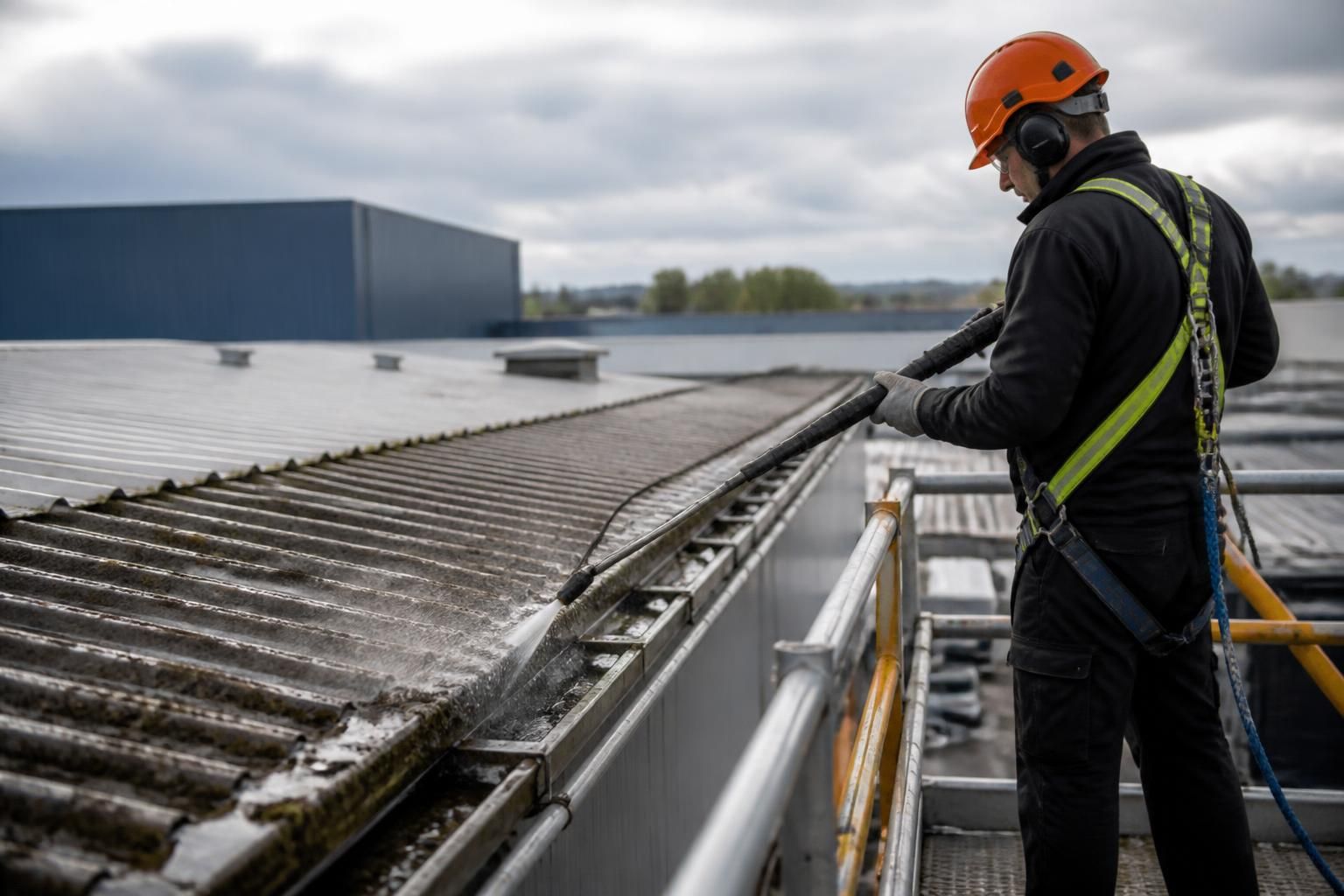
Access equipment is a major part of the selection process. The safest cleaning system is one that provides stable access, clear visibility and controlled handling of hoses and tools. Depending on building height, roof pitch, surrounding ground conditions and obstructions, this may involve mobile elevated work platforms, scaffolding, roof ladders, edge protection or other specialist access arrangements. The equipment must be suitable for the site, not simply available in the contractor’s general fleet.
Access planning should account for fragile roof areas, skylights, roof edges, overhead services, restricted entrances, soft ground and the position of vehicles or lifting equipment. Long hoses and extension poles can reduce the need to work directly on tiles, but they must not create trip hazards, excessive drag or loss of control. Where work at height is unavoidable, access equipment, personal protective equipment and fall-prevention measures should be selected following a site-specific risk assessment.
Gutter cleaning equipment should match the type and quantity of debris. Manual scoops and brushes may be suitable for loose leaves and silt, while gutter vacuums can remove debris from difficult or higher-level areas without requiring personnel to lean over the gutter edge. Vacuum systems should have suitable poles, inspection attachments and filtration arrangements. They must be powerful enough to remove the material present without damaging fragile guttering or drawing water into equipment that is intended only for dry debris.
Downpipes should be checked rather than assumed to be clear. Flexible rods, inspection cameras, controlled flushing or other suitable tools may be required to locate blockages and confirm that outlets discharge correctly. Any flushing method should be planned so that it does not send accumulated debris into underground drainage, overflow building entrances or create uncontrolled run-off. Where a downpipe is damaged or disconnected, cleaning equipment should not be used to conceal the defect.
Debris and wastewater management should be built into the equipment choice. Roof washing can release moss, silt, flakes of coating and cleaning residues. Gutter work can produce concentrated deposits that must be collected and removed. Drain covers, temporary bunding, collection systems, wet vacuums and other containment measures may be needed to prevent material entering surface-water drains or contaminating surrounding areas. On commercial sites, the method should also protect entrances, loading areas, vehicles, stock and pedestrian routes.
Water recovery is particularly important where the site has restricted drainage, sensitive landscaping or environmental controls. The operator should identify where water will travel before cleaning starts and select equipment that allows run-off to be contained, filtered, collected or discharged lawfully. Chemicals should never be selected solely because they produce rapid visual results; their storage, handling, dilution, application and disposal requirements must also be manageable on the site.
Equipment must be tested on a small, representative area. A controlled test helps establish whether the selected pressure, nozzle, temperature, chemical and dwell time are appropriate before full cleaning begins. The test should be checked for changes in colour, coating, surface texture, pointing, water penetration and gutter condition. If the result is unsatisfactory, the method should be adjusted or changed rather than increased in intensity without assessment.
Suitable equipment should also provide operators with control over the variables that matter. Useful features include adjustable pressure and flow, interchangeable nozzles, secure hose connections, effective filtration, emergency shut-off controls and attachments designed for the surface being cleaned. Equipment should be maintained, inspected and operated by people who understand roof construction, work-at-height risks, pressure-washing hazards and the effects of cleaning products.
For large commercial or industrial premises, selection should include practical site requirements such as water supply, electrical availability, equipment transport, noise, working hours, pedestrian segregation and the need to maintain access for tenants or deliveries. A system that is technically suitable but cannot be positioned safely or supplied reliably may not be suitable for the project.
In practice, the best choice is usually a controlled combination of access equipment, surface-appropriate cleaning tools, adjustable pressure or steam capability, gutter vacuuming or manual removal equipment, and planned containment for debris and wastewater. The final specification should follow a documented inspection and risk assessment, with the least aggressive method capable of achieving the required result used first. This approach protects the roof and gutter system while delivering a thorough, manageable clean.
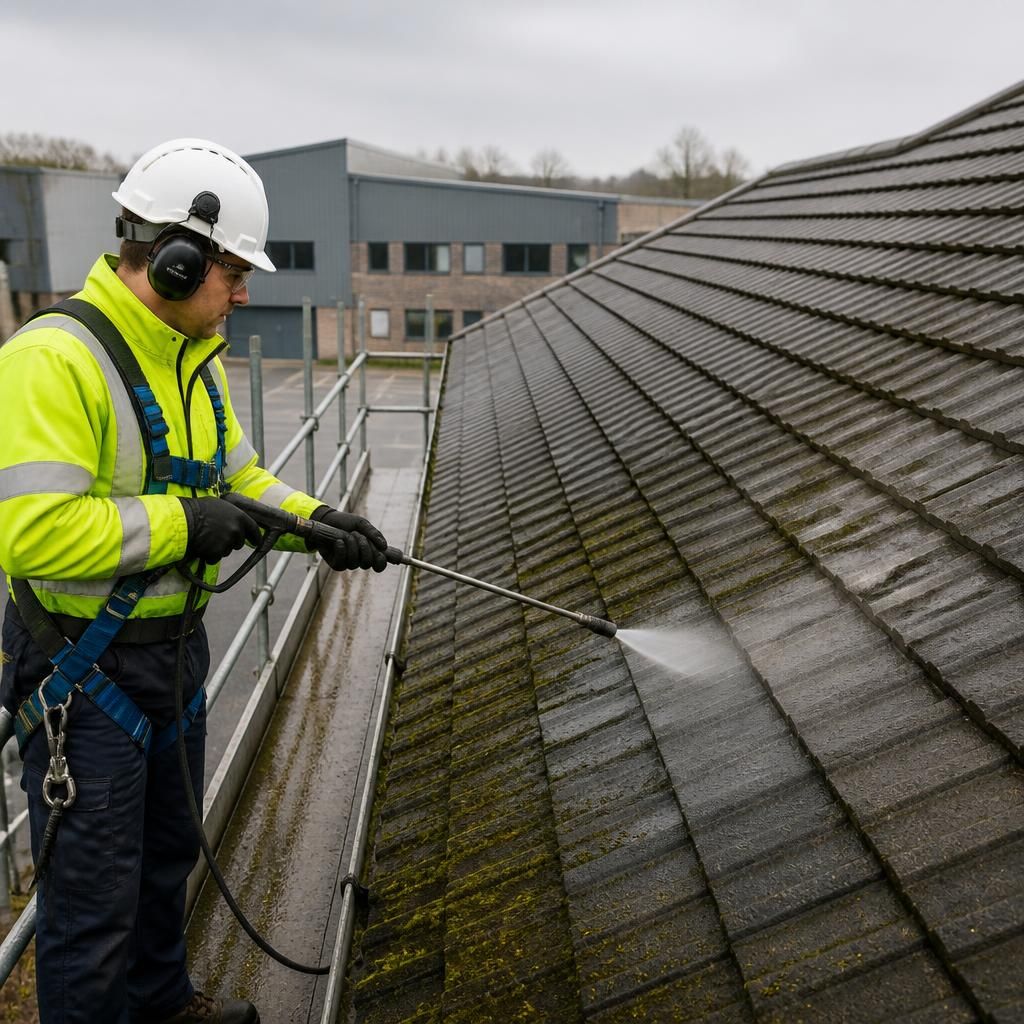
Testing the proposed cleaning method on a small, representative area is an essential part of selecting equipment for roof tiles and gutters. It shows whether the chosen pressure, flow, temperature, nozzle, attachment or treatment can remove the deposits without damaging the tile surface, coating, pointing or gutter material.
The test area should include the type of soiling and surface condition found across the roof. It should then be checked for changes in colour, texture, coating, water penetration and gutter condition. If the result is unsatisfactory, the equipment or method should be adjusted rather than simply increasing the pressure or dwell time. This controlled approach helps identify the least aggressive equipment capable of achieving a thorough clean.