
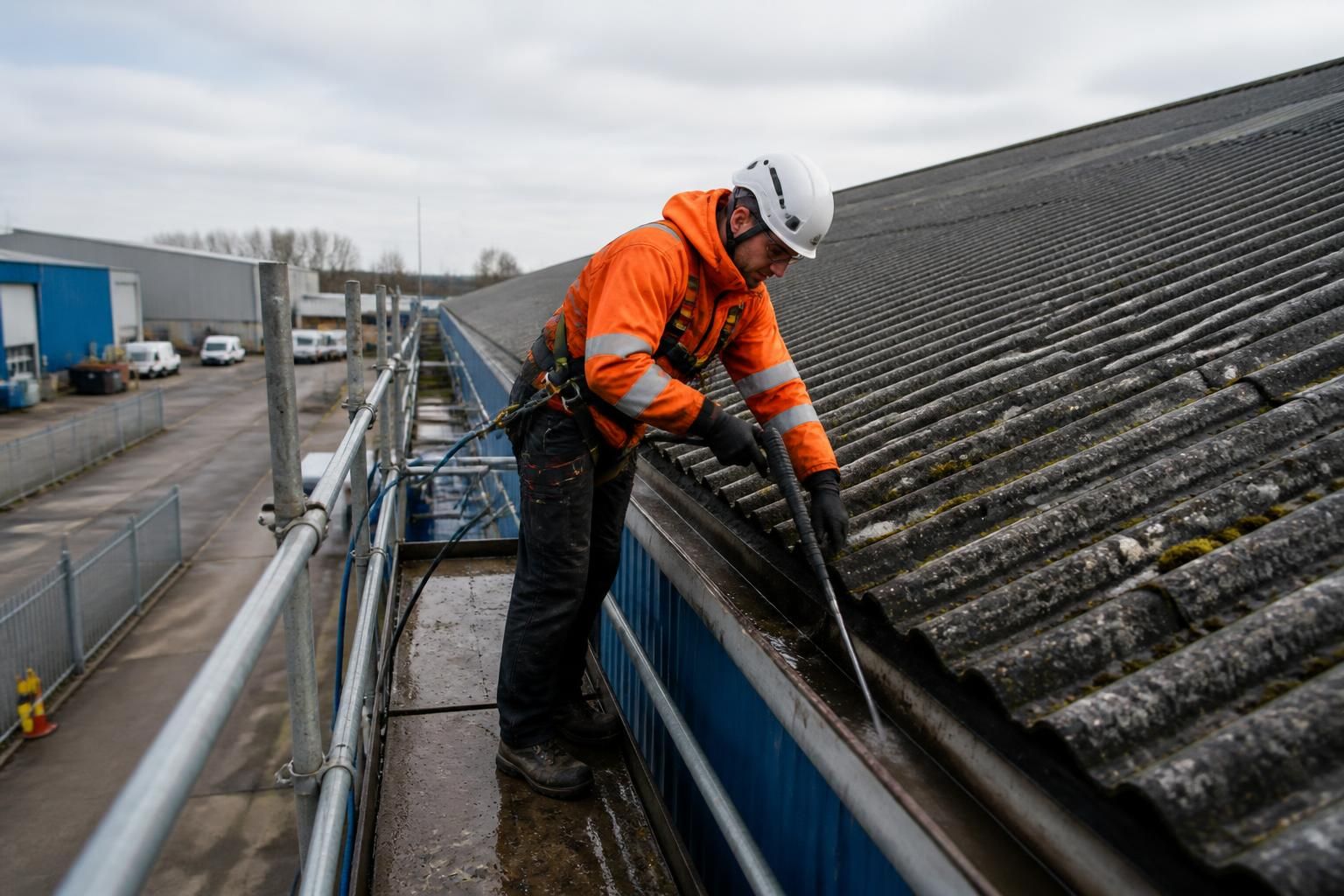
What safety measures should be taken when performing roof tile and gutter washing?
Safe roof tile and gutter washing requires a site-specific risk assessment, suitable access equipment, trained operatives and appropriate PPE before work begins. Operators must control fall, electrical, slip and falling-object risks, protect the building and surrounding area, and stop work when weather or roof conditions make access unsafe.
Safe roof tile and gutter washing requires a site-specific risk assessment, suitable access equipment, trained operatives and appropriate personal protective equipment (PPE) before work begins. The method must control fall, electrical, slip, falling-object and chemical risks while protecting the roof, building occupants, vehicles and surrounding area. Work should stop if weather or roof conditions make access unsafe.
Risk assessment and method statement
Before starting, the contractor should inspect the property and prepare a suitable risk assessment and method statement. This should consider the roof design, pitch, height, access points, tile condition, gutter layout, nearby roads and public areas, overhead services, fragile surfaces, weather exposure and any building-specific hazards. The control measures should be explained to everyone involved, with clear arrangements for supervision, communication, emergency response and stopping work.
The assessment should also identify whether the work can be completed from ground level or from a safe platform. Using a telescopic cleaning system or suitable access platform may remove the need to walk on the roof. Roof access should only be selected where it is necessary and can be carried out safely.
Safe access and fall prevention
Roof edges, roof openings, skylights and fragile coverings present serious fall hazards. Operatives should use properly inspected access equipment, such as scaffold, mobile access towers, mobile elevating work platforms or other suitable systems, selected for the site and the task. Ladders should generally provide access rather than serve as a working platform for prolonged or forceful washing.
Where roof access is unavoidable, suitable edge protection, work-restraint or fall-arrest arrangements may be required. Harness systems must be attached to appropriate, verified anchor points and used by people who understand their limitations. A harness alone does not prevent a fall, and a rescue plan is necessary because a suspended worker may be at risk if help is delayed.
Access equipment must stand on firm, level ground and be positioned away from unstable surfaces, unprotected edges and vehicle routes. It should be checked before use and kept clear of obstructions. Equipment must not be moved while occupied unless it is specifically designed and approved for that purpose.
Checking the roof and gutters before washing
Tiles, slates, ridge fittings, valleys, flashings and roof-mounted equipment should be inspected before pressure or steam cleaning begins. Cracked, loose, delaminated or displaced tiles can fail under foot pressure or water impact. Operatives should avoid stepping on fragile areas and should not assume that a roof is safe simply because it appears sound from ground level.
Gutters may be weakened by corrosion, poor fixings, trapped debris or saturated timber behind the fascia. They should not be used as handholds, footholds or support points. Downpipes, hopper heads and outlets should be checked so that water can drain safely without backing up beneath roof coverings or overflowing onto electrical equipment and walkways.
Controlling water, electricity and slip hazards
Water and electricity must be kept separate. External sockets, lighting, cables, solar equipment and other electrical installations should be identified and protected before washing. Electrical supplies may need to be isolated by a competent person where there is a risk of water ingress. Operatives should never direct water towards exposed electrical components.
Run-off can make roofs, scaffolding, paving and access routes slippery. Hoses should be routed to prevent trip hazards and secured where necessary. The work area should be kept tidy, with sludge, moss and waste removed promptly. Drainage routes should be monitored to prevent dirty water entering buildings, neighbouring premises or areas used by pedestrians and vehicles.
Personal protective equipment
PPE should be selected after other controls have been considered, rather than used as a substitute for safe access or suitable equipment. Depending on the method and site, this may include:
- slip-resistant safety footwear suitable for wet surfaces;
- head protection where there is a risk of falling tools or debris;
- eye or face protection against spray, fragments and cleaning products;
- waterproof protective clothing and gloves suitable for the work;
- hearing protection where equipment creates hazardous noise; and
- a correctly fitted harness and associated fall-protection equipment where the assessed system requires it.
Respiratory protection may be necessary when dry debris, biological growth or certain treatments could create airborne contamination. Any chemical-resistant PPE should match the product being used, and contaminated clothing should be removed or cleaned in line with the product instructions.
Safe use of pressure, steam and cleaning chemicals
Cleaning pressure and temperature should be appropriate for the tile, coating, mortar, sealant and gutter material. Excessive pressure can lift tiles, remove protective finishes, drive water beneath coverings or damage pointing and flashing. Operators should use controlled techniques, maintain a safe stance and avoid directing spray towards joints, vents or openings unless the method specifically allows it.
Hoses, lance fittings and connections should be inspected before use. Operatives should not point a lance at people, animals, windows, vehicles or unprotected surfaces. The equipment should be isolated before clearing blockages, changing attachments or carrying out maintenance.
Cleaning products, biocides and treatments should be used only where suitable for the surface and in accordance with the manufacturer’s instructions and the site assessment. Products should not be mixed unless expressly permitted. COSHH controls should cover storage, handling, dilution, PPE, spill response and disposal. Run-off must be managed so that treatment residues do not contaminate soil, watercourses or drainage systems.
Protecting people, property and the public
A clearly controlled work zone should be established below and around the cleaning area. Barriers, warning signs and, where necessary, a banksman or spotter can help prevent people entering areas exposed to falling debris, spray or moving equipment. Windows, doors, air intakes, vehicles, outdoor furniture, delicate landscaping and neighbouring property should be covered or moved where appropriate.
Tools and equipment should be secured when working at height, and materials must not be left where they could fall or be blown from the roof. Operatives should maintain effective communication with people on the ground, particularly when using access platforms, hoists or long hoses.
Weather and changing conditions
Rain, frost, ice, high winds, lightning, poor visibility and extreme heat can make roof washing unsafe or reduce the effectiveness of controls. Wet surfaces also increase the likelihood of slips and loss of footing. Conditions should be checked before work and monitored throughout the job. The team should have clear limits for postponing, suspending or rescheduling the work.
Freshly cleaned surfaces may remain slippery, so safe access should be maintained until they have drained and dried sufficiently. The area should be inspected before barriers are removed or normal pedestrian and vehicle use resumes.
Emergency arrangements and final checks
A competent team should know how to summon help, provide first aid and respond to a fall, equipment failure, chemical splash, electrical incident or uncontrolled water discharge. Emergency access must remain clear, and rescue arrangements should be practical for the actual roof and access system rather than relying solely on emergency services.
On completion, the contractor should check that tiles, gutters, downpipes, access points and surrounding surfaces have not been damaged. Waste and contaminated water should be handled appropriately, equipment should be removed safely, and any defects discovered during the work should be reported before the site is handed back.
For commercial and industrial premises, these controls should be coordinated with the building’s facilities team and any other contractors on site. Roof tile and gutter washing should be postponed when safe access cannot be provided; no cleaning method justifies exposing workers or members of the public to an uncontrolled fall or other foreseeable hazard.
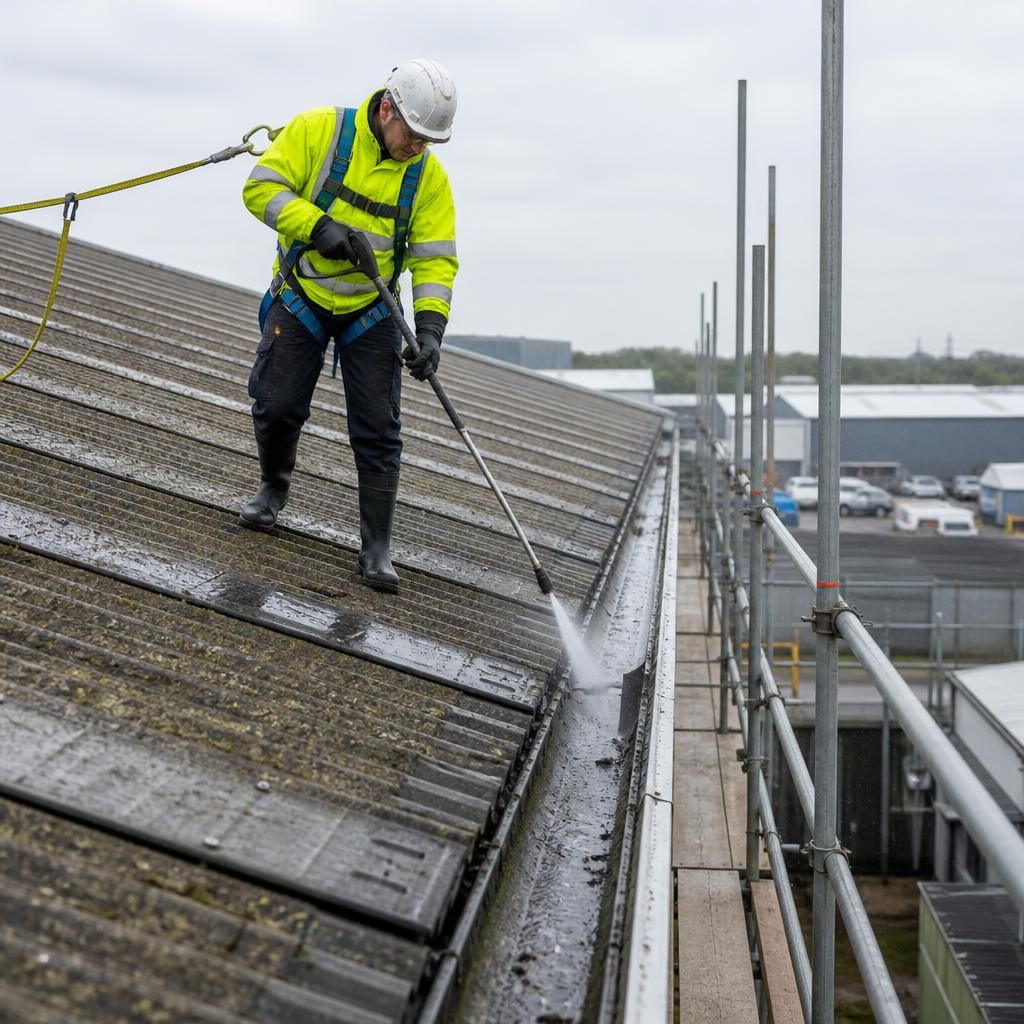
Safe roof tile and gutter washing starts with preventing falls, rather than relying on personal protective equipment after a worker has reached the roof. The contractor should assess whether the work can be completed from ground level using telescopic equipment or from a suitable access platform. Where roof access is necessary, the system must be selected for the roof’s pitch, height, condition and surrounding ground.
Scaffolds, towers, mobile elevating work platforms and harness systems should be inspected before use and operated by trained personnel. Roof edges, skylights and fragile tiles must be protected, while gutters should never be used as footholds or handholds. Any harness arrangement requires a suitable anchor point and a practical rescue plan. Washing should be postponed if rain, ice, high winds or poor visibility make safe access or footing unreliable.
Arrange a Safe Roof Tile and Gutter Washing Assessment
Contact Encanto Exterior Cleaning to arrange a safe roof tile and gutter washing assessment for your Birmingham, West Midlands or UK property. We will review access, roof condition, working-at-height controls and environmental risks before recommending a suitable cleaning method.