
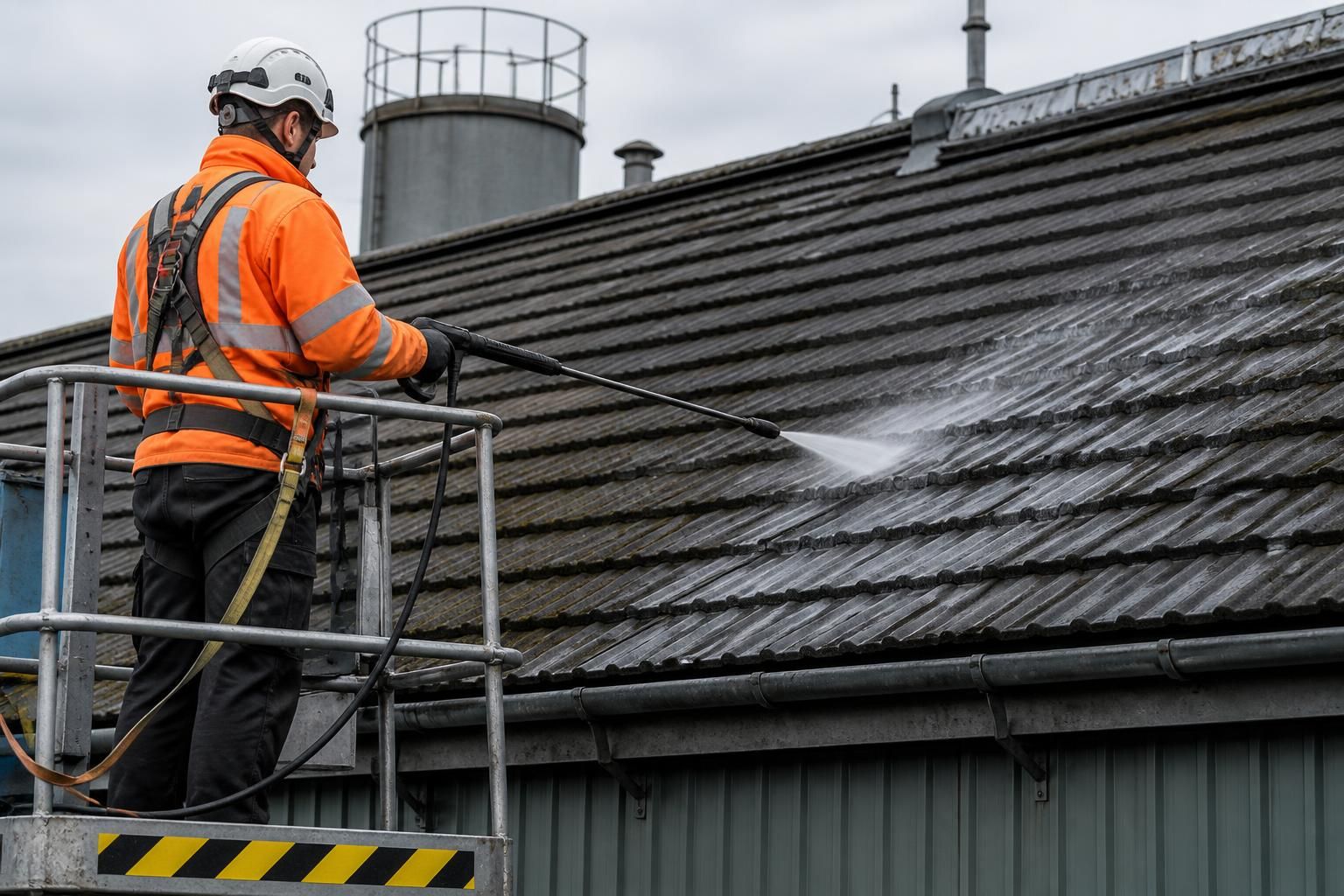
What safety measures should be considered during roof tile and gutter washing?
Roof tile and gutter washing should be planned through a site-specific risk assessment covering fragile surfaces, safe access, fall protection, weather conditions, water and electrical hazards, and ground-level exclusion zones. Competent operatives should use suitable access equipment and PPE, protect the property and surrounding area, and stop work if conditions become unsafe.
Safe roof tile and gutter washing depends on a site-specific risk assessment, suitable access equipment, effective fall protection and competent operatives. The assessment should account for the roof construction, fragile or damaged tiles, roof pitch, gutter layout, weather, nearby electrical services, chemical use, water discharge and people or vehicles below. Work should stop whenever conditions cannot be controlled safely.
Site assessment and method statement
Before cleaning begins, the contractor should inspect the building and prepare a suitable method statement. This should identify hazards, set out the proposed cleaning method and equipment, define exclusion zones, and explain how an emergency or rescue would be managed. The assessment should consider:
- Roof pitch, height, access points and the condition of tiles, slates, roof edges, valleys and ridge details.
- Fragile roof areas, rooflights, asbestos-containing materials, loose coverings and sections that cannot safely support a person.
- Gutter condition, including corroded brackets, loose joints, unstable fascias and blockages that could cause water to overflow unexpectedly.
- Overhead cables, electrical equipment, solar panels, aerials, ventilation outlets and other roof-mounted installations.
- Pedestrians, residents, employees, vehicles and members of the public who may be affected by falling materials, spray or equipment.
- Water run-off, cleaning products, nearby drains, planted areas and surfaces that could become slippery.
Operatives should follow the agreed method rather than improvising on the roof. If the condition of the building differs from the initial assessment, the work should be reviewed before continuing.
Safe access and fall prevention
Where possible, work should be carried out from a safe position at ground level or from a suitable platform. Depending on the building and task, this may include a scaffold, mobile elevating work platform, tower system or other professionally selected access equipment. Ladders should not be treated as a general work platform for prolonged washing, pressure washing or tasks requiring both hands.
Access equipment must be suitable for the ground conditions, working height, reach and expected loads. It should be set up on stable ground, inspected before use and operated by people with the appropriate training. Platforms, guardrails, toe boards and gates should be used as designed, and equipment should not be moved or repositioned while occupied unless it is specifically designed for that purpose.
Harnesses and restraint or fall-arrest systems may be required where collective protection is not practicable. They must be attached to suitable, verified anchor points and used with a planned rescue procedure. A harness on its own does not prevent a fall and should never be treated as a substitute for safe access, edge protection or proper training.
Protecting fragile roof surfaces
Roof tiles can crack, shift or become slippery when wet. Operatives should avoid walking directly on roof coverings unless the surface has been assessed as suitable and the correct access system is in place. Roof ladders, crawling boards, temporary platforms or other load-distributing equipment may be necessary, but these must be selected and secured for the particular roof.
Rooflights and other fragile surfaces can be difficult to identify, especially where they are dirty, weathered or covered by coatings. They should be treated as fragile until confirmed otherwise. Loose tiles should be repaired or made safe before washing, and no one should step on unsupported edges, ridge areas or gutters.
Weather and surface conditions
Rain, frost, strong winds and poor visibility can make roof cleaning unsafe. Water, moss and cleaning solutions can substantially reduce foot grip, while wind can affect ladders, platforms, hoses and spray control. The site supervisor should monitor conditions throughout the work and suspend operations if access equipment becomes unstable, surfaces cannot be controlled or visibility is inadequate.
Work should also be planned to avoid creating additional hazards for people at ground level. Wet paving, entrances and access routes may need to be protected, signed and checked regularly until they are clean and dry.
Water, pressure and electrical safety
Pressure washing equipment should be operated at a pressure and distance appropriate for the tile, pointing, guttering and associated details. Excessive pressure can dislodge tiles, force water beneath coverings, damage mortar or drive water into roof spaces and façades. Hoses should be routed to prevent trip hazards, snagging and excessive loading on access equipment.
Electrical supplies, connectors and powered equipment must be kept away from standing water and protected from spray. Residual-current protection, suitable outdoor-rated equipment and safe cable management should be used where required. Operatives should identify overhead electrical lines before positioning access equipment, ladders or long poles, maintaining the necessary clearance and following site controls.
Water should not be directed towards vents, electrical installations, open windows or areas where it could enter the building. Internal signs of water ingress should be reported immediately, and work should pause while the cause is investigated.
Personal protective equipment
PPE should complement, not replace, collective safety measures. Depending on the task, it may include a safety helmet with a secure chin strap, suitable non-slip safety footwear, gloves, eye protection and waterproof protective clothing. Face protection or respiratory protection may be required when using particular chemicals or generating spray or airborne debris.
PPE should be selected from the risk assessment and the product safety information. It must fit correctly, be compatible with harnesses and other equipment, and be inspected and maintained. Wet gloves, contaminated clothing and damaged footwear should be replaced or dealt with promptly.
Controls for cleaning products and contamination
Cleaning agents, biocides and treatments should be used only where appropriate for the roof material and in accordance with the manufacturer’s instructions and safety data. Operatives should understand the required dilution, contact time, application method, storage arrangements and first-aid measures. Chemicals should never be mixed unless the product instructions specifically permit it.
Run-off should be contained or directed safely so that it does not enter watercourses, contaminate neighbouring property or damage plants and surfaces. Gutter debris, moss and contaminated wash water should be collected and disposed of responsibly. People should be kept away from treated areas until the surface is safe to use.
Exclusion zones and protection of the public
An exclusion zone should be established beneath and around the work area where tools, tile fragments, sludge or water could fall. Barriers, cones and clear warning signs should be used, with a banksman or additional control where pedestrians or vehicles may approach. Entrances, pavements, roads and shared access routes may need temporary management or diversion.
Tools and hoses should be secured against falling or becoming dislodged. Materials should not be left on sloping surfaces, access platforms or roof edges. The work area should be checked regularly, and the ground should be left free from moss, sludge, loose debris and other slip or trip hazards when the task is complete.
Competence, inspections and emergency arrangements
Roof and access work should be carried out by trained, competent operatives who understand work-at-height controls, equipment limitations, manual handling, chemical safety and the cleaning method being used. Access equipment, harnesses, ladders, hoses and pressure-washing equipment should be checked before use and removed from service if defective.
A practical emergency plan should cover falls, suspension in a harness, injury, sudden weather changes, chemical exposure, electrical contact, building damage and water entering the property. It should identify how assistance will be raised, who is responsible for stopping equipment and how an injured person can be reached without creating another hazard. A rescue plan should not rely solely on emergency services arriving without prior site controls.
After cleaning, the contractor should inspect the roof and gutters for cracked or displaced tiles, damaged brackets, blocked outlets, leaks or other defects. Any issue outside the agreed cleaning scope should be recorded and reported rather than concealed by the finished appearance. These controls help protect operatives, occupants, the public and the building while allowing roof tile and gutter washing to be completed responsibly.
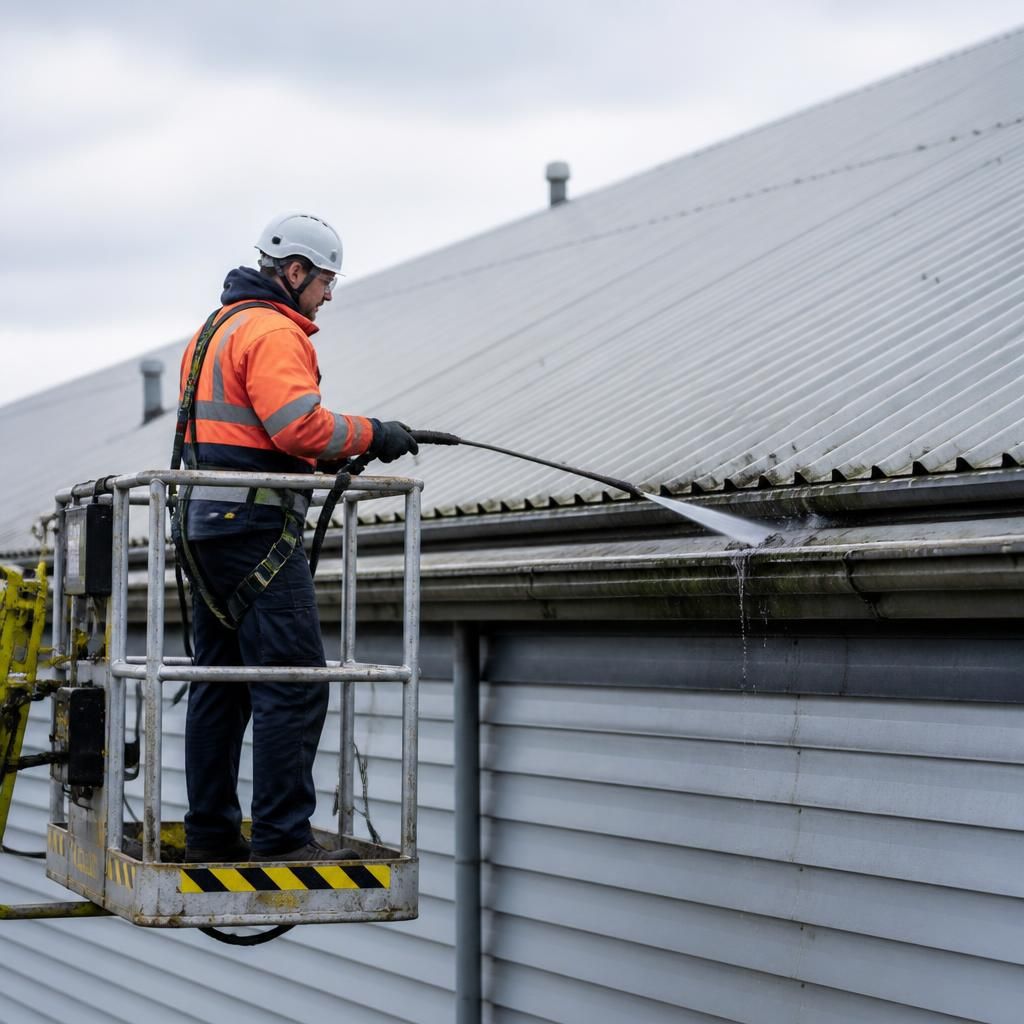
Safe roof tile and gutter washing starts with preventing falls, rather than relying on personal protective equipment after a fall has occurred. Operatives should work from suitable access equipment, such as a scaffold, platform or professionally selected mobile elevating work platform, wherever this provides safer access than walking on the roof.
Where collective protection is not practicable, a correctly fitted harness and restraint or fall-arrest system may be used with verified anchor points and a practical rescue plan. Wet tiles, moss, fragile rooflights and damaged guttering can create additional hazards, so access arrangements should be reviewed before work starts and stopped if the surface, weather or equipment becomes unsafe.
Arrange a Safe Roof Tile and Gutter Washing Assessment
Contact Encanto Exterior Cleaning to arrange a roof tile and gutter washing assessment, including a review of access, fall protection, roof condition and site-specific safety requirements. We will use the findings to confirm a suitable, controlled cleaning method for your property.