
What safety measures are taken during roof tile and gutter cleaning operations?
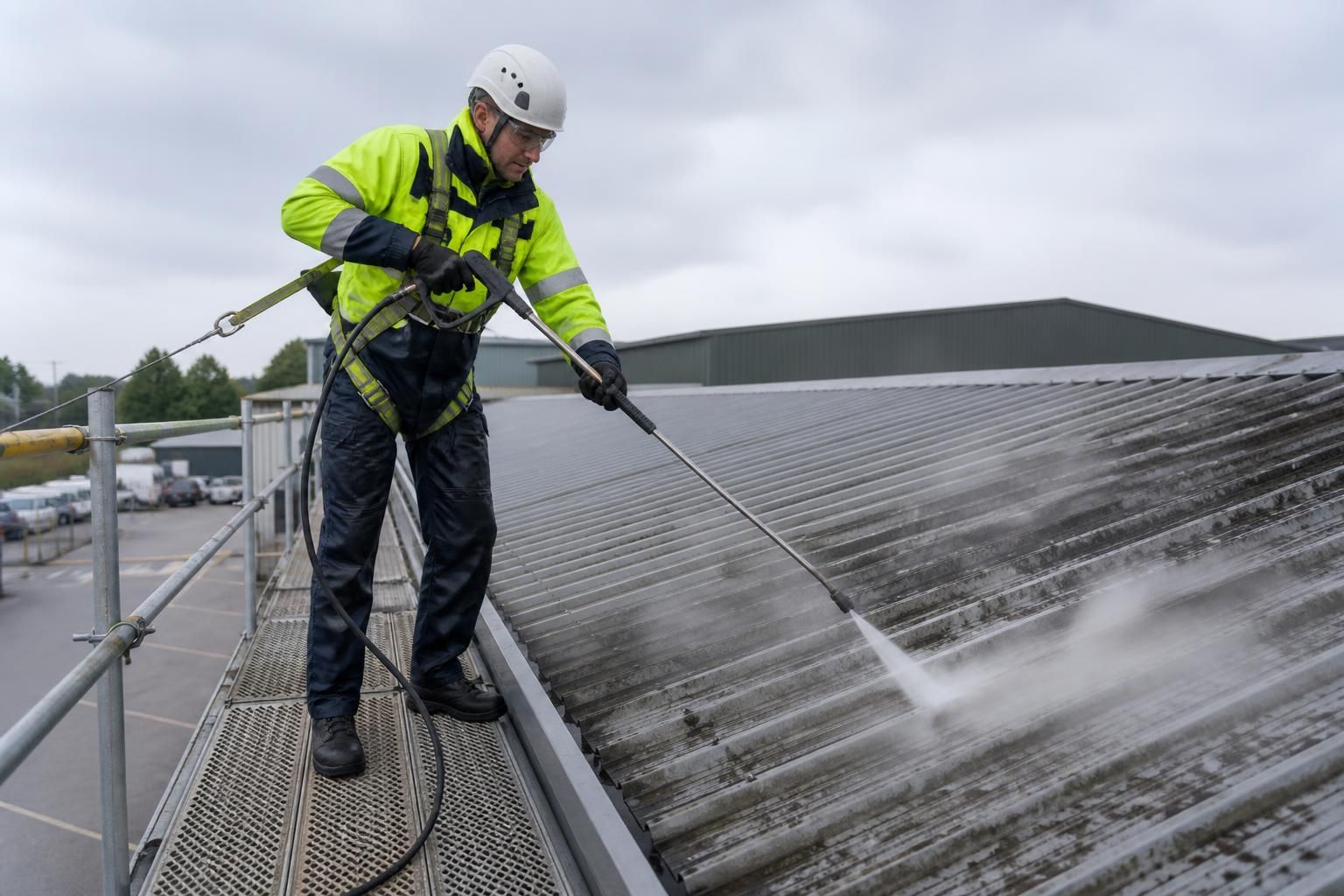
Professional roof tile and gutter cleaning operations use a site-specific risk assessment, suitable access equipment, appropriate personal protective equipment (PPE) and controlled work areas to reduce the risk of falls, injury and property damage. Work is also adjusted or postponed in unsafe weather, while fragile tiles, roof edges, windows, landscaping and nearby surfaces are protected throughout the cleaning process.
Safe roof tile and gutter cleaning starts with a site-specific risk assessment, suitable access equipment, competent operatives and controlled work areas. Before work begins, the team assesses the roof condition, access points, height, fall risks, fragile surfaces, weather, nearby people and property, then selects a cleaning method that limits risk to workers, the building and surrounding areas.
Site assessment and planning
The roof and its surroundings are inspected before equipment is positioned. This includes checking for loose, cracked or fragile tiles, weak roof sections, unstable gutters, skylights, roof lights, overhead cables, sloping ground and obstructions such as conservatories or plant equipment. The condition of fascias, soffits and gutter fixings is also considered because these may not be suitable for supporting a person or access equipment.
A method statement and risk assessment should identify the work sequence, access arrangements, control measures and emergency procedures. Where the building is occupied or located beside a public area, the plan should also account for entrances, pedestrian routes, vehicles, tenants, staff and members of the public.
Suitable access equipment
Operatives use access equipment appropriate to the height, roof design and task. Depending on the site, this may include properly positioned ladders, scaffold towers, mobile elevated work platforms or other specialist access systems. Equipment is inspected before use, set up on stable ground and used in accordance with the manufacturer’s instructions.
Ladders are used for suitable short-duration work and access rather than as a substitute for a more appropriate working platform. Where there is a risk of falling from an edge or through a fragile surface, additional collective or personal fall protection is required. Operatives should never climb directly onto roof tiles without first confirming that the surface is suitable and establishing a safe working method.
Fall prevention and roof protection
Work at height is organised to prevent falls wherever reasonably practicable. Guardrails, suitable platforms, edge protection, restraint systems or fall-arrest equipment may be used according to the risk assessment. Harnesses are only effective when connected to a suitable, secure anchor arrangement and when the team has considered rescue arrangements.
Fragile tiles, roof lights and vulnerable roof sections are identified and avoided or protected. Boards, crawling platforms or other appropriate measures may be needed to spread loads and prevent damage. Gutters, ridges, valleys, flashing and tile edges are not treated as footholds unless they have been assessed as suitable for the planned work.
Personal protective equipment
PPE is selected for the specific hazards rather than used as the only safety control. This may include:
- Safety footwear with suitable grip and ankle support.
- Head protection where there is a risk of falling objects or contact with equipment.
- Gloves suitable for handling debris, equipment and cleaning products.
- Eye protection or a face shield against spray, splashes and dislodged dirt.
- Hearing protection where equipment creates hazardous noise levels.
- Waterproof or high-visibility clothing where the site conditions require it.
- Respiratory protection where the assessment identifies a risk from dust, biological contamination or chemical vapour.
PPE is kept clean, checked before use and replaced when damaged. Operatives should also be trained to fit and use it correctly.
Controlled cleaning methods
The cleaning technique is chosen according to the tile material, condition and level of contamination. Excessive pressure can dislodge tiles, remove surface finishes, force water beneath coverings or damage pointing and flashing. Pressure, nozzle selection, distance and direction are therefore controlled, with test areas used where appropriate.
Steam or lower-pressure cleaning may be preferable for delicate or weathered surfaces. When biocides, detergents or treatments are required, the product instructions and relevant safety data are followed. Chemicals are stored, diluted and applied safely, and run-off is controlled so that it does not enter unsuitable drains, watercourses, neighbouring property or sensitive planting.
Hoses and cables are routed to reduce trip hazards and prevent them from pulling on access equipment. Electrical equipment is kept away from water wherever possible, and suitable inspection, protection and isolation arrangements are used on the site.
Protection of people and property
Ground-level work areas are kept clear and, where necessary, secured with barriers, cones, signage or a banksman. This prevents people from walking beneath the work area or approaching falling debris, spray, hoses and machinery. Vehicles, windows, doors, walls, paving, landscaping and external equipment may be covered or shielded before cleaning starts.
Debris is removed in a controlled manner rather than allowed to fall from the roof. Gutter waste is collected and disposed of appropriately, and downpipes may be temporarily disconnected, protected or checked to prevent blockages. Particular care is taken near entrances, public footpaths, parked vehicles and neighbouring buildings.
Weather and changing conditions
Rain, frost, ice, strong winds, poor visibility and extreme temperatures can make roof and access work unsafe. Wet tiles and platforms may become slippery, while wind can affect ladders, sheeting, hoses, elevated platforms and falling debris. Conditions are monitored throughout the operation, and work is paused or rearranged when the risk cannot be adequately controlled.
Weather can also affect the cleaning result and the safe use of treatments. A responsible schedule allows time for surfaces to dry and avoids applying products when rain or wind could cause uncontrolled run-off or spray drift.
Competence, supervision and emergency arrangements
Work at height and the operation of access equipment should be carried out by people with suitable training, experience and instruction. The team should understand the method statement, equipment limitations, tile and gutter hazards, chemical controls and site-specific restrictions. Appropriate supervision is maintained, particularly where the work involves complex access, fragile roofs or occupied premises.
Emergency arrangements are established before work starts. These should cover falls, injury, equipment failure, sudden weather changes, chemical exposure and the need to rescue someone using fall-arrest equipment. First-aid provision, communication methods and access for emergency services should be known to the team.
Checks after cleaning
On completion, access equipment is removed safely and the work area is checked for loose debris, blocked outlets, displaced tiles, damaged fittings, unprotected openings and residual slip hazards. Gutters and downpipes are checked where practicable, and any defects discovered during cleaning are reported rather than concealed. A final inspection also confirms that barriers, coverings and waste have been removed without leaving damage or hazards behind.
These measures reduce the main risks associated with roof tile and gutter cleaning, but the exact controls depend on the building, roof construction, access conditions, cleaning system and surrounding environment. A proper assessment before each project is therefore essential; a method that is safe for one property may be unsuitable for another.
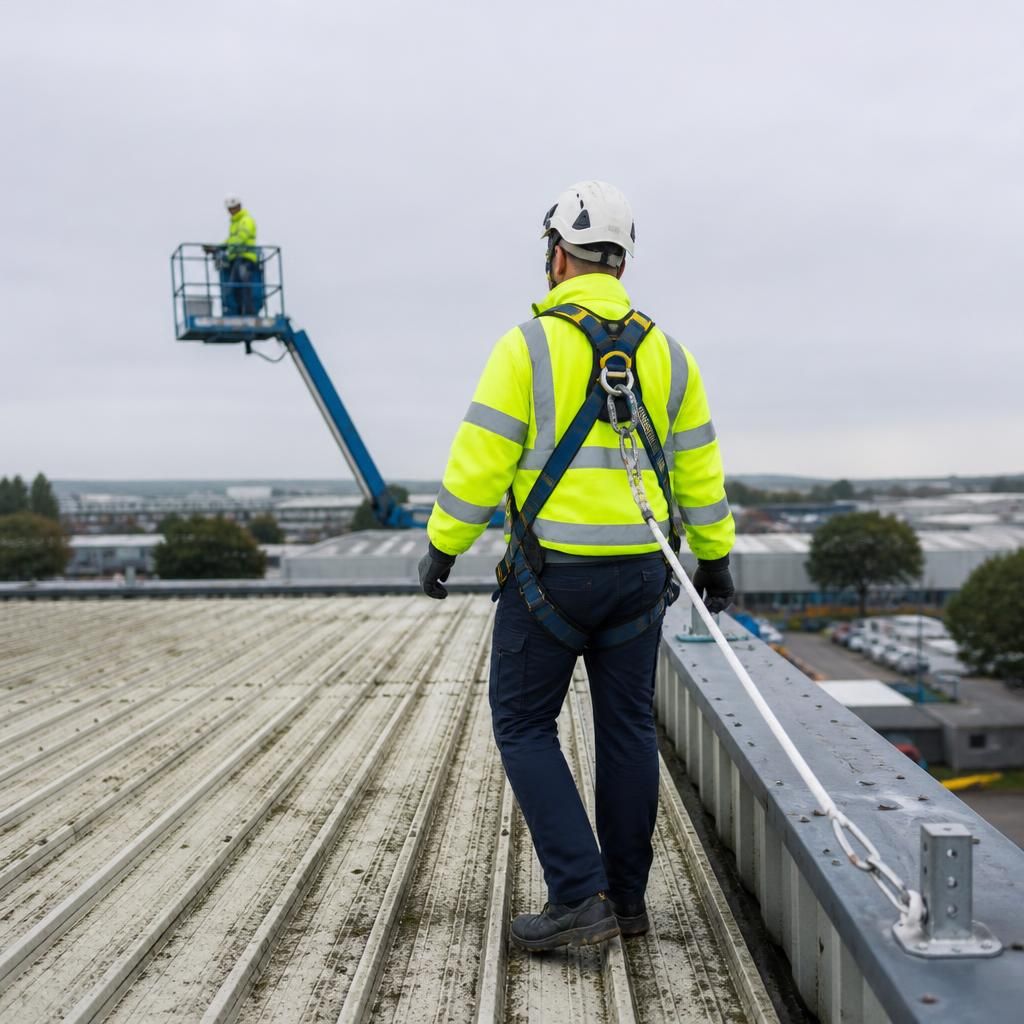
Safe roof tile and gutter cleaning depends on preventing falls before work begins, rather than relying on personal protective equipment alone. The roof condition, height, slope, fragile areas and surrounding ground are assessed so that suitable access equipment and fall-protection measures can be selected.
Depending on the property and task, this may include a properly positioned ladder, scaffold tower, mobile elevated work platform, edge protection or a suitable restraint system. Operatives do not use gutters, skylights, fragile tiles or roof edges as footholds unless they have been assessed as suitable. Equipment is checked, positioned on stable ground and used in accordance with the planned method. Work is postponed if rain, ice, strong winds or poor visibility make access unsafe.