
What environmental considerations should be made when choosing a roof tile and gutter cleaning method?
Choose a roof tile and gutter cleaning method that removes dirt, moss and debris effectively while minimising chemical use, water consumption and contaminated run-off. Consider the roof material, the risk to nearby drains and waterways, wastewater collection and disposal, and whether low-pressure or steam cleaning can achieve the required result without unnecessary environmental impact.
The most environmentally responsible roof tile and gutter cleaning method is the least aggressive process that will safely remove the contamination. In practice, this means assessing the tile material, identifying the type and extent of moss, algae or staining, limiting chemical and water use, and controlling all dirty run-off before work begins. A method that cleans quickly but allows biocides, silt or organic waste to enter surface-water drains may create a greater environmental impact than a slower, carefully managed process.
Assess the roof and contamination first. Moss, lichen, algae, bird fouling, soot and general atmospheric dirt do not all require the same treatment. Loose moss may be removed mechanically before any washing takes place, whereas ingrained staining may require low-pressure cleaning, steam or a carefully selected treatment. Avoiding a stronger process than necessary reduces water consumption, chemical use, noise, splash and the risk of damaging the roof covering.
The tile material is also important. Concrete, clay, slate and coated tiles have different levels of porosity, strength and resistance to abrasion. High-pressure washing can erode surfaces, dislodge protective finishes or force water beneath tiles. Damaged tiles are more likely to require replacement, which creates additional material and transport impacts. A method that preserves the existing roof is generally more sustainable than one that causes avoidable damage.
- Low-pressure washing can be appropriate where controlled water flow will remove the contamination without abrading the tile surface.
- Steam cleaning can be useful for certain deposits and may reduce reliance on chemical products, although the equipment, access requirements and water recovery arrangements still need to be considered.
- Manual scraping or brushing can remove loose moss with minimal water, but it must be carried out carefully to avoid damaging tiles, pointing, membranes or guttering.
- Biocidal or chemical treatments should only be used where they are suitable for the roof and genuinely necessary. The product label, application rate, weather conditions and run-off controls must be followed.
Minimise chemical use. Moss-killing products, detergents and biocides can affect soil, plants, aquatic life and drainage systems if they are misapplied or washed into the environment. A professional assessment should establish whether physical cleaning alone is sufficient. Where a treatment is required, choose a product appropriate for the surface and intended use, apply only the amount needed, and prevent spray drift onto gardens, planted areas, ponds, water butts and neighbouring property.
Weather conditions affect chemical risk. Cleaning or treatment should not normally proceed when heavy rain is expected, when strong winds could carry spray, or when the roof is likely to shed contaminated liquid rapidly into an unprotected drainage system. Product instructions may also specify restrictions relating to temperature, rainfall and drying time. These instructions are part of the environmental control process, not merely a technical recommendation.
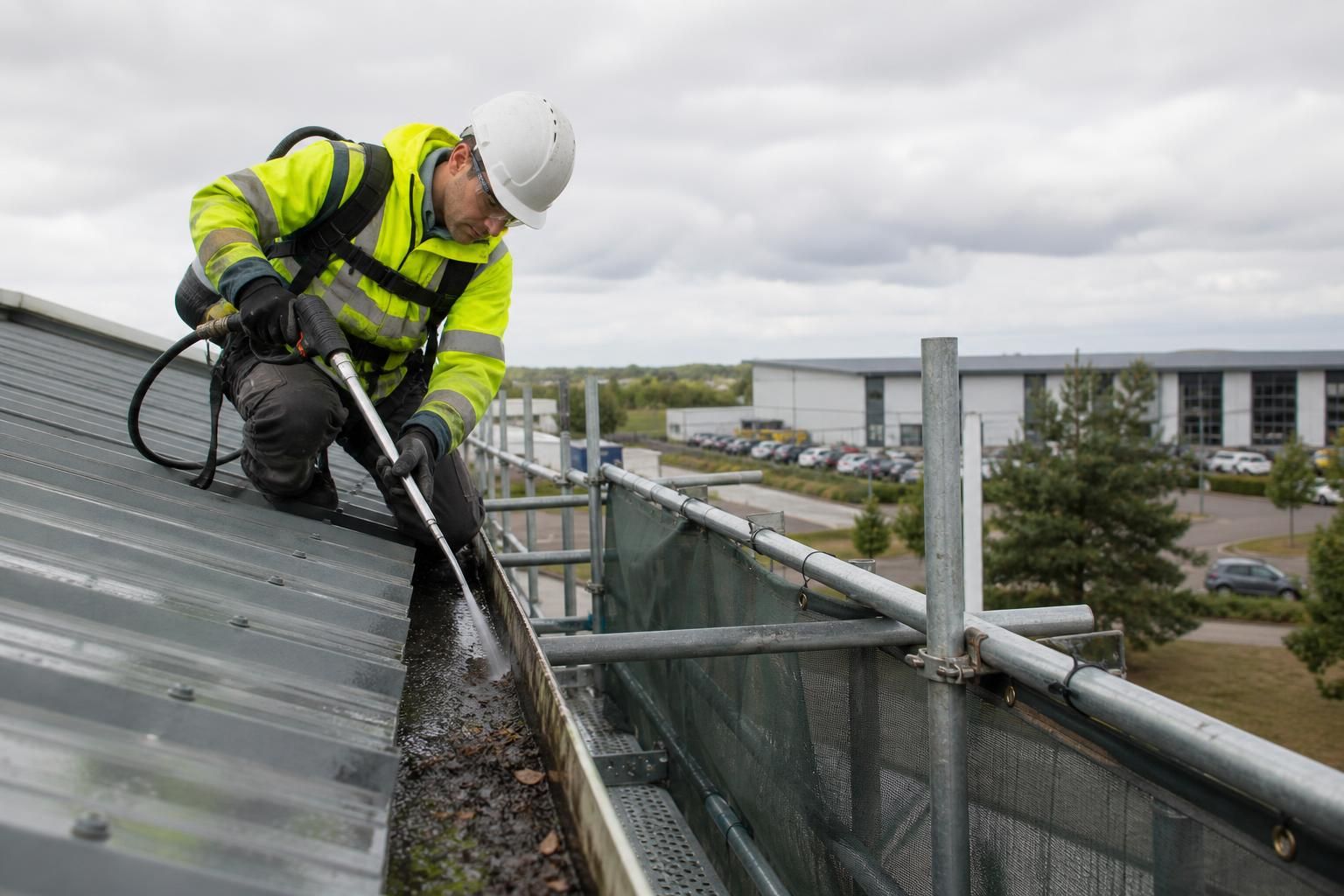
Control contaminated water and run-off. Roof cleaning can release silt, moss fragments, bird fouling, cleaning residues and dissolved contaminants. These materials should not be allowed to flow into surface-water drains, streams, ponds or other watercourses. Before work starts, the drainage layout should be checked and suitable measures planned, such as drain protection, temporary covers, collection points, wet vacuum recovery or controlled diversion to an approved disposal route.
Surface-water drains commonly discharge directly to the environment rather than to a treatment works. For that reason, a liquid that appears relatively clear may still contain substances that should not enter the drainage network. Wastewater should be handled in accordance with the relevant local requirements and the site’s drainage arrangements. Where there is uncertainty about disposal, work should pause until an appropriate route has been confirmed.
Manage gutter waste separately. Gutter debris often contains leaves, moss, sediment and bird fouling. It should be collected rather than washed through the downpipes. The waste must be assessed before disposal, particularly where there may be sharp materials, heavy contamination or other site-specific hazards. Commercial waste should be stored securely and transferred through an appropriate, traceable waste route in line with the applicable duty of care requirements.
Use water efficiently. Water usage depends on the roof size, level of contamination, equipment and chosen method. Efficient practice includes dry removal of loose debris, using controlled flow rather than unrestricted pressure, avoiding repeated passes, and recovering wastewater where the site conditions make this practical. Clean water should not be used to dilute contaminated run-off simply to make disposal easier. Water from a rainwater harvesting system or other non-potable source should only be used where it is suitable for the equipment, surface and cleaning process.
Protect surrounding habitats and property. Before cleaning, identify planted borders, ponds, watercourses, wildlife habitats, rainwater harvesting systems and areas used by people or animals. Cover or isolate vulnerable features where appropriate and prevent contaminated water from entering them. Nesting birds, bats and other protected wildlife can be present around roof spaces, eaves and outbuildings. If signs of protected species or active nesting are found, the work should be reviewed and specialist advice obtained before disturbance occurs.
Environmental protection also includes avoiding unnecessary noise, dust and fuel use. Electric equipment may be suitable for some sites, while efficient plant, sensible equipment selection and reduced travel can limit emissions. Access equipment should be positioned to prevent damage to soft ground, planted areas and drainage covers, and any accidental spill of fuel, oil or cleaning product should be contained and reported through the site’s procedures.
Ask how the work will be controlled. Before approving a cleaning method, check that the contractor can explain:
- why the proposed method is suitable for the specific roof tile and gutter materials;
- whether manual, low-pressure or steam cleaning could achieve the result with less chemical use;
- which products will be used and how their instructions and safety data will be followed;
- how drains, soil, planting, ponds and nearby watercourses will be protected;
- how dirty water and solid gutter waste will be collected, transported and disposed of;
- what precautions apply in poor weather or where protected wildlife may be present; and
- how the team will respond to an accidental release or unexpected roof material.
Particular care is needed where older roofing may contain asbestos cement, fragile coatings or unidentified materials. Such surfaces should not be pressure washed or treated on the assumption that they are ordinary tiles. The material should be identified and the work planned using the appropriate specialist controls.
Overall, the best environmental choice is not automatically the method using the least water or the fewest chemicals in isolation. It is the method that achieves the required standard while preserving the roof, preventing polluted run-off, limiting waste, protecting surrounding habitats and providing a responsible disposal route. A site-specific assessment before cleaning is therefore essential, particularly on large commercial properties where roof drainage connects to wider surface-water systems.
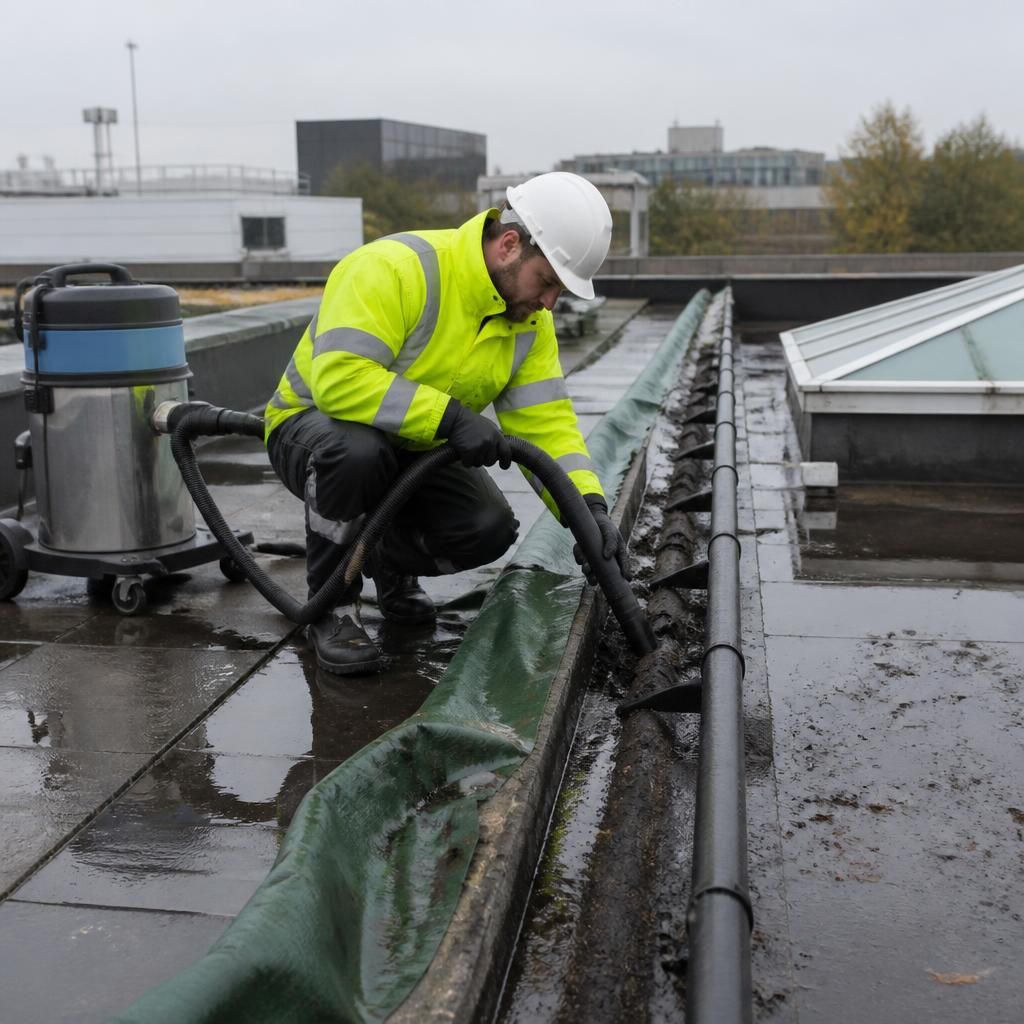
Controlling contaminated run-off is a key environmental consideration when cleaning roof tiles and gutters. Washing can release moss, silt, bird fouling and cleaning residues, which should not enter surface-water drains, ponds or watercourses. Before work begins, drains should be identified and protected, while dirty water and gutter debris are collected and directed to an appropriate disposal route.